The Dinner with the Grad-School Friends
NightbitchThe Dinner with the Grad-School Friends is the decisive breakdown of Nightbitch’s attempted return to adult artistic society. What begins as a rare evening of food, wine, mutual recognition, and professional conversation becomes an exposure of the exclusion she has been carrying since her son’s birth. Her friends’ apparently casual responses to her artistic ambitions reactivate her rage, and the resulting outburst transforms a dinner among artists into a grotesque passage from social performance to animal instinct. The event matters not simply because Nightbitch loses control in public, but because it reveals how thoroughly her suppressed anger has become bound to her body, her motherhood, and her emerging identity as an animal.
Causes and Background
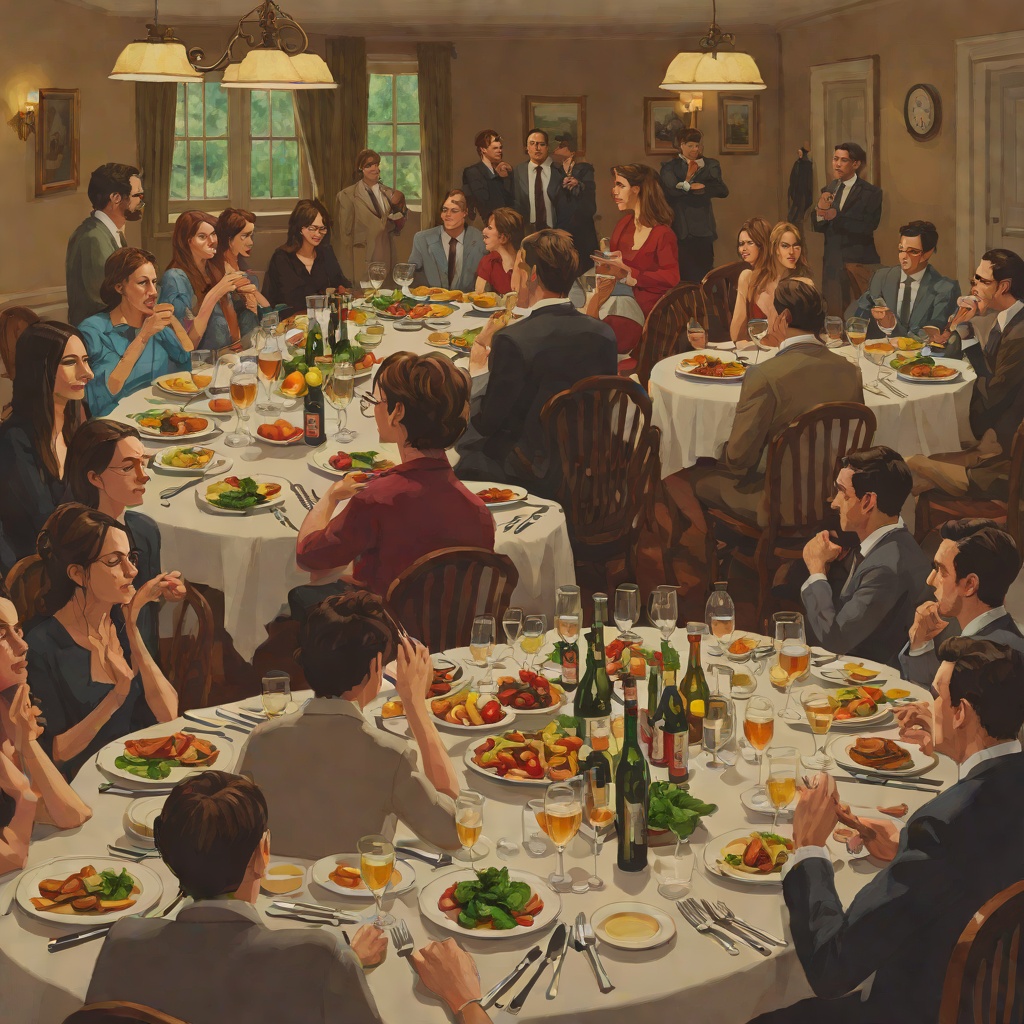
The dinner occurs just when Nightbitch’s domestic life seems, temporarily, to be stabilizing. Her son is sleeping independently in the kennel, her sex life with The Husband has been reignited, and she has begun making mommy friends while worrying less about her stalled career. The narrative presents this apparent improvement with deliberate irony: motherhood seems to be coalescing precisely as Nightbitch takes the liberty of going out on a weekend night with old graduate-school friends. Her companions include The Working Mother, a university teacher who is also a working artist, and The Videographer, another former friend from the art world. The invitation therefore offers more than recreation. It gives Nightbitch a chance to reenter the professional and intellectual life from which she feels displaced.
She experiences the occasion as an extraordinary novelty: someone else has cooked the dinner, wine is being served, and conversation takes place among accomplished women who can discuss their trials within a framework of mutual respect and admiration. Yet the pleasures of the evening are also a measure of what she has lost. The Working Mother can speak immediately and confidently about appropriation, artistic ownership, and public persona, describing a practice built from large-scale Instagram reproductions that has even brought her a sale of half a million dollars. The Videographer discusses installations about watching, being watched, information, power, and performance. Nightbitch listens, nods, and smiles, but her inward contempt for their work cannot conceal her painful awareness that they continue to occupy the artistic world while she has become nearly unable to speak within it.
When the women ask what Nightbitch is working on, she stammers, chuckles, turns red, and looks at the wall before describing the wildness of motherhood, the modern mother’s impulse toward violence, and the transformative force of anger. She says that the project is still at the concept stage and may ultimately become a performance piece. The response is not an explicit attack, but the friends’ quizzical expressions and their later description of her work as dramatic make her feel misunderstood and diminished. The crucial wound is not a clearly intended insult. It is the sense that they have not been considering her at all, and that she is no longer part of the conversation she once belonged to. She would have preferred to be invited into their world and then reject it; instead, she discovers that she may no longer be invited.
The Public Breakdown
The eruption begins while The Videographer jokes about being a narcissist and admits that she may actually be one. Nightbitch rises suddenly, tipping the table, scattering silverware, and sending a glass of water into The Working Mother’s lap. Her roar stops the restaurant’s conversation and creates an eerie silence. The scene reverses the dinner’s social code: the woman who has been expected to sit, listen, explain herself, and behave civilly becomes the loudest and most physically disruptive presence in the room.
She growls at the women and then barks repeatedly, forcing the animal sounds out of herself through violently contracting abdominal muscles and a pelvic floor shaped by years of Kegel exercises. Her bodily history is not separate from the transformation. The same body that has been disciplined for motherhood now produces an involuntary performance of ferality. In the middle of the restaurant she shouts, "I could crush a walnut with my vagina!" The declaration is absurd, aggressive, and unmistakably tied to the maternal body that has been treated as a site of labor, management, and embarrassment. It turns a supposedly private bodily capacity into a public weapon.
The surrounding diners register the episode as spectacle and threat. One friend shields her eyes as if facing the sun; another allows a slight smile to appear. An old man stares with his mouth open, while a small girl hides against her mother, who strokes her hair and glares at Nightbitch. Nightbitch is at once mortified by what she has done and unable to stop. She sweats, pants with her mouth open, wonders fleetingly whether she is entering early menopause, and begins to cry hot, angry tears while collecting her coat and bag. The Working Mother attempts to speak soothingly, but Nightbitch refuses the comfort with a raised hand.
Her exit extends the breakdown rather than ending it. She leaves in a lumbering, disruptive walk, more tornado than ordinary human movement, blowing napkins from tables, overturning cups, tripping, stumbling, and snorting. She wants to get outside before the transformation fully takes hold, yet the smell of red meat interrupts even that intention. At a table near the door, she grabs a half-eaten burger from a young couple, tears into the meat patty, and abandons the bun, lettuce, onion, and tomato on the floor. The spectacle of social humiliation becomes an act of appetite. She then moves through wet alleys and shrubs, seeking darkness in which she can pant, snort, and sob without being seen.
From Humiliation to Rampage
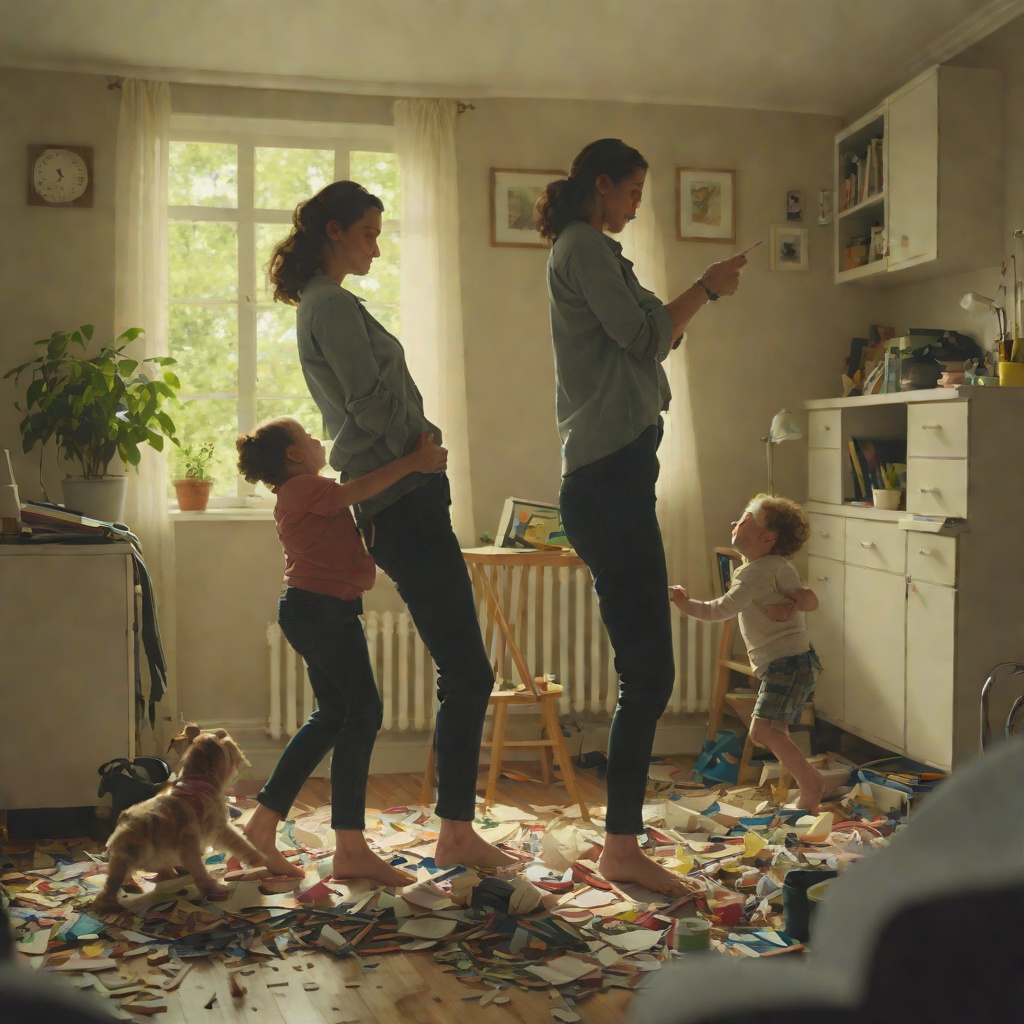
Nightbitch directs herself toward the nature preserve and the woods in the middle of town, following a stream toward her neighborhood. She has lost her sandals, and the icy water numbs her sore, bleeding feet. Instead of calming her, the landscape gives her rage a physical route. She pushes over fallen logs, pulls shrubs from the banks, and tries to force the accumulated misery of the years since her son’s birth out through her thighs, her paunch, her aching fingers, and the dark circles beneath her eyes. Her body becomes an archive of exhausted care and unexpressed resentment.
In the woods she produces a long, rasping growl composed of rage, breath, yearning, and sorrow. A raccoon answers from its hidden den. Startled and furious, Nightbitch dives toward its gleaming eyes, catches it, snaps its neck efficiently, and throws the body into the creek. She then fills the sky with a howl as large as her entire life. The killing is neither planned nor framed as self-defense; it is an immediate conversion of emotional excess into animal action. The raccoon’s death gives her a momentary form for feelings that ordinary speech, friendship, and social decorum have failed to contain.
The violence continues on the route home. By the time she reaches the place where she and The Boy throw rocks into the water on sunny afternoons, and then her own backyard, she has slaughtered three small rodents and an unfortunate bunny. The numerical accumulation makes the episode feel less like a single loss of control than a spreading nocturnal condition. She is no longer merely fleeing the dinner. She is moving through the town as a body governed by smell, muscle, hunger, and the imperative to make havoc.
The dinner’s animal logic later appears in other scenes and gains retrospective force. Nightbitch’s earlier defiance of Stanley’s carefully tended lawn, where she takes a monstrous shit, links public rage to an assault on petty property and neighborhood authority. Her later killing of The Cat intensifies the same bodily extremity: after tripping over the animal while searching for food, she pulls it across the floor, plunges a knife into its chest, tears open its belly, and shakes the body until it goes limp. These episodes clarify that the restaurant breakdown is not an isolated embarrassment. It belongs to a recurring pattern in which anger escapes through appetite, excretion, blood, and the refusal to remain a controlled human subject.
Consequences and Aftermath
The immediate consequence of the dinner is Nightbitch’s retreat from the social world she had hoped might recognize her. She returns home exhausted, dirty, wounded, and bloodied, but the route back has not restored her to ordinary domesticity. The woods, creek, rodents, and bunny have made her anger tangible, while the restaurant has shown her that the language of contemporary art cannot easily accommodate the life she is living. The proposed performance about maternal wildness is no longer merely an idea she can explain to former colleagues; it has already become a bodily event that exceeds explanation.
The event also helps establish the structure of Nightbitch’s artistic future. In the later backyard performance, The Working Mother and The Videographer remain seated, speechless and awestruck, while Nightbitch, as a dog, enters the stage, smashes a bell jar, and devours the steak prepared for her. The mothers flee when the animal lunges from the stage, but the two artists stay, crying softly from the sheer drama of what they witness. The dinner’s failed conversation is thus transformed into a later spectacle in which Nightbitch no longer has to describe maternal violence as art. She embodies it before an audience.
The same trajectory reaches a public theatrical extreme in the final performance. Nightbitch dances with gilded skeletons in an "enchanted hunt," then stalks and kills a bunny before turning toward the audience as though the spectators themselves have become prey. The theater erupts into panic, and some audience members enter an inexplicable forest where they encounter WereMothers, bird women, or disappearing goddess-like figures. These later events do not erase the dinner’s humiliation; they convert its private wound into a larger artistic and mythic language.
Narrative and Thematic Significance
The Dinner with the Grad-School Friends functions as a carnivalesque reversal of professional and domestic hierarchy. The accomplished women’s dinner, with its cultivated talk of appropriation, curation, and mediated reality, is overturned by the supposedly uncivilized body of the mother. Nightbitch’s barking, panting, crying, stealing of meat, and later animal killings degrade polished cultural performance into hunger and physical force, but the degradation is also liberating. What respectable discourse treats as noise becomes a different mode of knowledge, one that registers the reality of maternal rage more directly than professional language does.
The event further unsettles the boundary between human and animal. Nightbitch does not simply imagine herself as a dog from a safe distance; she experiences animality as instinct, rage, appetite, and freedom from justification. Her later reflection that being an animal means recognizing another creature as part of oneself gives the violence a disturbing counterpoint: the same identification that promises shared warmth and unbroken togetherness can also produce predation. The dinner is therefore a threshold between two forms of relation, one organized by polite mutual recognition and the other by bodily immediacy.
Its unreality is treated with an unusual calm. The Husband, despite being a man of science and having seen a dog in the nearly empty house, does not seriously investigate the animal’s presence, and Nightbitch feels no need to explain it. That mutual failure to demand a rational account allows the transformation to occupy the same narrative world as dinner reservations, restaurant tables, and professional anxieties. The later appearance of an unattached trio of dogs and the distant figure of Wanda White at the dog park extends this uncertainty. Wanda White is ultimately defined not as a person but as a place at which a person finally arrives, making the dinner’s apparent social destination—returning to the world of other artists—look like a lesser and more painful version of the arrival Nightbitch is seeking.
The event’s deepest significance lies in its refusal to separate motherhood from violence, or artistic ambition from the body that has been made to carry care. Nightbitch’s breakdown exposes the cost of being expected to choose happiness, adjust her attitude, and accept that her career has been displaced. Her later attraction to the WereMothers, who live communally, help one another, and remain in a constant state of babies, suggests that what she wants is not merely destruction. She wants a social form suited to bodily need, shared care, and freedom from established expectations. The dinner shows the moment when that desire can no longer remain an inward fantasy: it breaks the table, takes the meat, enters the woods, and begins to howl.