Daylight
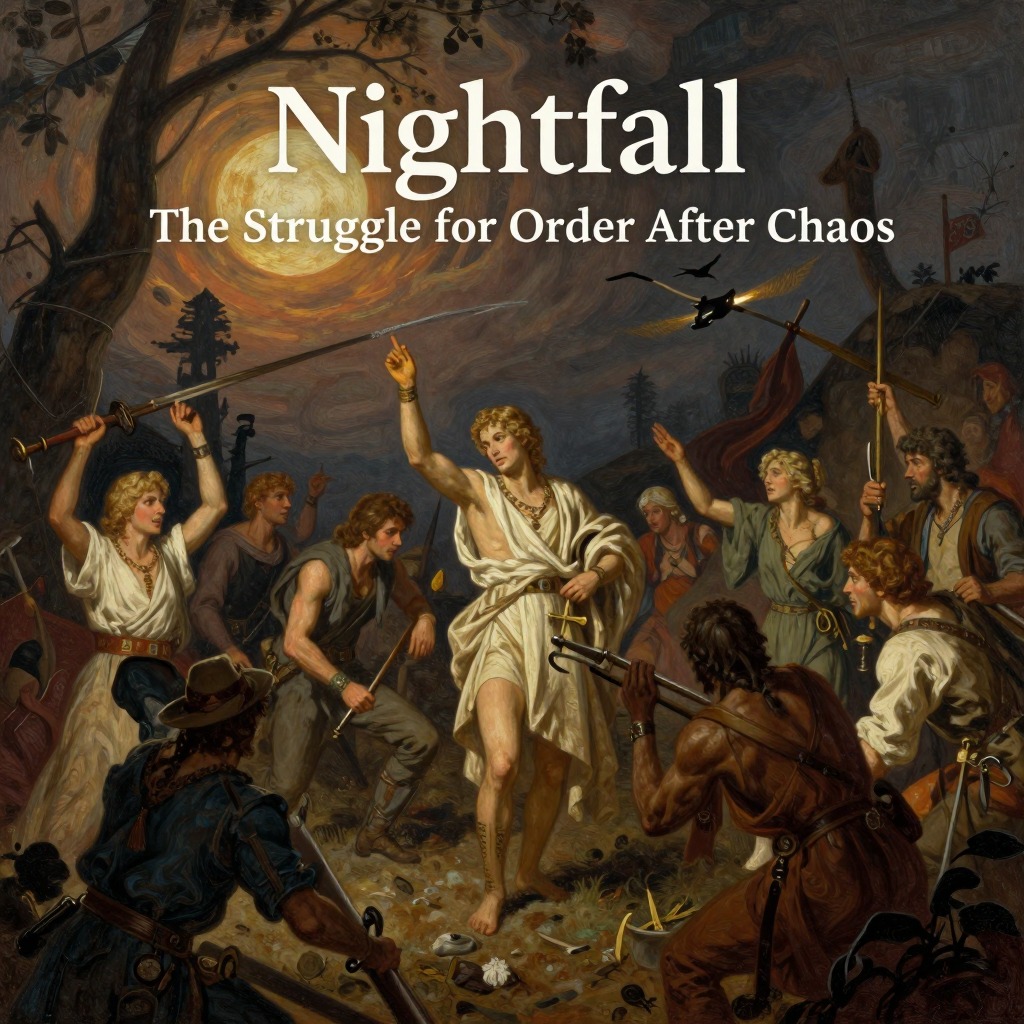
NightfallDaylight was one of the many small, makeshift provinces that emerged along the Great Southern Highway in the weeks following the catastrophic Nightfall eclipse. Like its neighbors—Restoration Province, Six Suns Province, Godland, and Imperial Province—it was a product of the sudden collapse of the old Federal Republic of Saro, a territorial fragment carved out of the chaos by local strongmen who had managed to retain some semblance of authority. These provinces were not defined by historical borders or cultural identity but by the practical need to impose order on a traumatized and fragmented population. Each controlled a short stretch of the highway and a narrow band of land on either side, and each enforced its own version of the universal post-Nightfall obsession: the suppression of fire.
Geography and Governance
Daylight lay somewhere south of Godland and north of the distant goal of Amgando National Park, a link in the chain of jurisdictions that the journalist Theremon 762 and the archaeologist Siferra 89 had to traverse on their long journey south. The province was typical of the new order: its border guards, like those of its neighbors, conducted "Search"—a ritualized inspection of all travelers for fire-making equipment, which was strictly prohibited. The penalty for attempting to start a fire was severe, and the authority of the local rulers was backed by the threat of violence. Theremon and Siferra, carrying needle-guns and bearing a passport from the Fire Patrol of Saro City, were able to pass through Daylight without serious incident, but the experience underscored the pervasive fear and suspicion that now governed human interaction.
The Search and the Fear of Fire
The Search policy was the defining feature of life in Daylight and the other highway provinces. It was a direct response to the horrors of Nightfall, when the sudden appearance of the Stars had driven much of the population mad, and the ensuing panic had led to the burning of entire cities. The authorities in these new provinces, whether former accountants, lawyers, or local toughs, had learned a single, brutal lesson: fire was the enemy. Anyone caught with matches, lighters, or any device capable of producing flame was subject to confiscation, fines, or worse. The Fire Patrol, a vigilante group operating out of the old university Sanctuary in Saro City, had established a monopoly on fire use, and its green-neckerchiefed officers were the only ones permitted to carry combustibles. In Daylight, as elsewhere, the rule was absolute, and travelers who resisted Search risked being beaten or killed.
Significance in the Post-Nightfall World
Daylight, like the other ephemeral provinces, was a symptom of the profound fragmentation that followed the eclipse. The old centralized government had vanished, and in its place a multitude of petty kingdoms had sprung up, each with its own laws, its own leaders, and its own paranoid obsessions. These provinces were not stable or permanent; they were makeshift arrangements, destined to be swallowed up by larger forces—whether the advancing army of the Apostles of Flame or the reconstituted authority of the provisional government at Amgando. Daylight's existence was a testament to the human capacity for improvisation in the face of catastrophe, but also to the deep psychological scars left by Nightfall. The fear of fire, the suspicion of strangers, and the desperate need for control were the legacies of that terrible night, and they shaped every aspect of life in the new world.