Prologue, before the main narrative
The Three Photographs
The unnamed narrator describes three photographs of Yozo spanning his life: a childhood picture showing a grotesque, monkey-like smirk; a handsome but eerily artificial student portrait; and a final, expressionless image of a grey-haired man in a dirty room. The narrator finds each photograph increasingly disturbing and inhuman, setting up the mystery of Yozo's character. This prologue establishes the central question of what it means to be human and foreshadows Yozo's tragic trajectory.
Early childhood, in the family home in the Northeast
Childhood Clowning
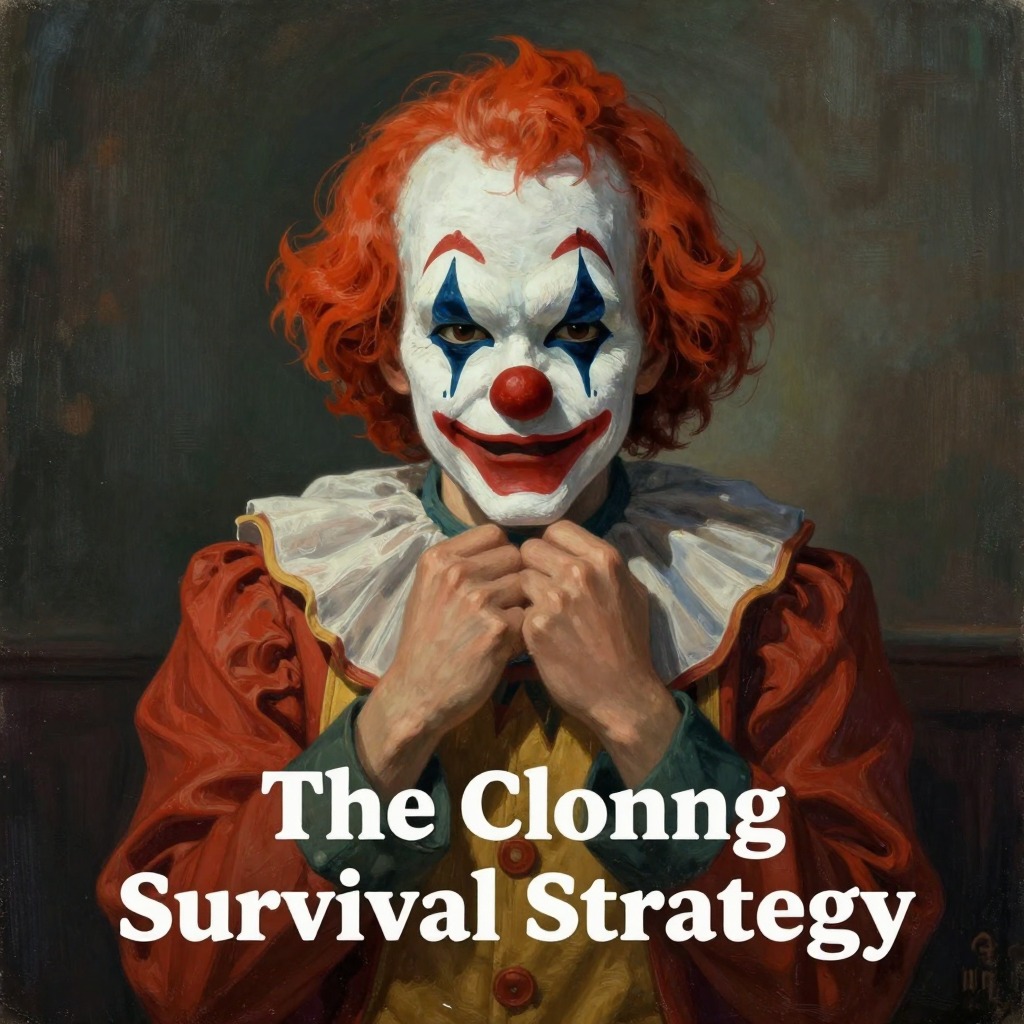
Yozo recalls his childhood as a life of shame, marked by an inability to understand human needs like hunger or the purpose of everyday objects. To mask his terror of others, he invents a persona of the clown, performing absurd antics to make his family laugh. He describes the oppressive mealtime rituals and his fear of his father's authority, which drives him to desperate acts of appeasement.
Childhood, during a visit from Yozo's father
The Lion Mask Incident
When Yozo's father asks what present he wants from Tokyo, Yozo cannot answer, paralyzed by fear of displeasing him. That night, he sneaks into the parlor and writes 'Lion Mask' in his father's notebook. His father later discovers the entry and laughs, interpreting it as a cute, mischievous act. Yozo feels a hollow triumph, having successfully manipulated his father's perception, but the incident deepens his sense of inauthenticity.
Childhood, in the family home
Servants' Abuse
Yozo reveals that he was sexually abused by the maids and menservants in his household. He endured the abuse in silence, unable to confide in his parents or anyone else, convinced that any complaint would be dismissed by the world's hypocritical logic. This trauma deepens his distrust of human beings and reinforces his belief that he must hide his true self behind a mask of clowning.
High school years, at the school by the sea
Takeichi's Exposure
At a new high school, Yozo's clowning is successful until the dull-witted classmate Takeichi sees through his act, accusing him of missing the horizontal bar on purpose. This moment of exposure plunges Yozo into terror, as he realizes someone can see his true nature. He desperately tries to win Takeichi's silence by feigning friendship, cleaning his infected ears and spending time with him.
High school years, after the exposure
Takeichi's Prophecies
After Yozo cleans his ears, Takeichi predicts that women will fall for him and that he will become a great painter. Yozo is disturbed by the first prophecy but inspired by the second. Takeichi also shows Yozo a reproduction of van Gogh's self-portrait, calling it a 'ghost picture,' which opens Yozo's eyes to a new, subjective way of painting. Yozo begins to create self-portraits in this 'ghost' style, hiding them from everyone except Takeichi.
After high school, early college years
Move to Tokyo
Yozo moves to Tokyo to attend college, at his father's insistence, living first in a dormitory and then in his father's town house in Ueno. He finds communal life appalling and cuts classes, spending his time reading and painting. He begins attending an art class in Hongo, where he meets Masao Horiki, a cynical art student who introduces him to drinking, prostitutes, and left-wing thought.
Early college years, in Tokyo
Friendship with Horiki
Horiki becomes Yozo's guide to Tokyo's underworld, teaching him how to drink, bargain, and navigate prostitutes. Yozo finds temporary relief from his fear of human beings in the company of prostitutes, whom he sees as kindred spirits. He also begins to attend secret Communist meetings, drawn not by ideology but by the irrationality and camaraderie of the movement.
After his father sells the Tokyo house, second year of college
Financial Struggles
When his father sells the Tokyo house, Yozo moves to a gloomy lodging house in Hongo and is immediately beset by financial worries. His allowance disappears quickly, and he sends desperate telegrams home for money. Under Horiki's tutelage, he begins to frequent pawnshops. He becomes increasingly involved in the Marxist movement, taking on dangerous liaison jobs, but the pressure and lack of money drive him to consider suicide.
Autumn of his second year in college
Encounter with Tsuneko
Yozo meets Tsuneko, a waitress at a Ginza café, and feels an immediate, unspoken kinship with her misery. They spend a night together, and Yozo experiences a rare moment of liberation and happiness. However, his fear of happiness and his habit of clowning drive him to leave her the next morning, making a cynical joke about 'love flying out the window when poverty comes in the door.'
Late November, second year of college
Horiki's Insult and Tsuneko's Poverty
Yozo brings Horiki to the café where Tsuneko works. Horiki, drunk, refuses to kiss her, calling her 'poverty-stricken.' This brutal judgment shocks Yozo, who suddenly sees Tsuneko as a fellow sufferer and feels a genuine, positive love for her for the first time. He drinks heavily, vomits, and passes out, waking in Tsuneko's room.
End of November, second year of college
Love Suicide at Kamakura
Tsuneko proposes death, and Yozo, overwhelmed by his dread of life, money troubles, and the movement's demands, agrees. They spend the morning wandering Asakusa, and when Yozo opens his wallet to find only three copper coins, the humiliation solidifies his resolve. That night, they throw themselves into the sea at Kamakura. Tsuneko dies, but Yozo is saved.
Winter, after the Kamakura incident
Aftermath of Suicide Attempt
Yozo is hospitalized and treated for a lung ailment. He is questioned by the police and a district attorney, where his feigned coughing of blood is gently exposed. The charge is suspended, and his guarantor, Flatfish, takes him to live in his house in Okubo. Yozo feels utterly wretched and is forbidden to leave the house, leading a half-wit's existence.
Spring, after the suicide attempt
Confinement with Flatfish
Yozo lives as a parasite in Flatfish's house, treated with contempt by Flatfish and his clerk. He is denied alcohol and tobacco, and spends his days reading old magazines. Flatfish's evasive, circumlocutory manner of speaking about Yozo's future frustrates and confuses him. When Flatfish finally hints at the possibility of returning to school, Yozo, misunderstanding, declares he wants to be a painter, which Flatfish mocks.
Late March, after the dinner with Flatfish
Runaway from Flatfish
Humiliated by Flatfish's mockery, Yozo runs away from the house at dawn, leaving a note saying he is visiting Horiki. He sells his books in Shinjuku and, with nowhere else to go, decides to actually visit Horiki. This marks a decisive break from his family's control and the beginning of his descent into a life of dependency.
Spring, after running away from Flatfish
Meeting Shizuko
At Horiki's house, Yozo meets Shizuko, a journalist who commissions illustrations. She takes pity on him and offers him a place to stay. Yozo moves into her apartment in Koenji, becoming a kept man. He begins drawing cartoons for her magazine, but his depression deepens, and he feels trapped by his dependence on her.
Spring to the following spring, in Koenji
Life with Shizuko and Shigeko
Yozo lives with Shizuko and her daughter Shigeko, who calls him 'Daddy.' He draws cartoons to earn money for drink, and his gloom intensifies. He is haunted by the memory of his lost 'ghost pictures' and feels a profound sense of loss. A moment of tenderness with Shigeko, who prays for her real father back, reveals the fragility of their makeshift family and Yozo's fear of being seen through.
During Yozo's time with Shizuko
Horiki's Visits and the 'Society' Debate
Horiki begins to visit Yozo again, acting as a benefactor and lecturing him. Yozo internally rebels against Horiki's use of the word 'society,' concluding that society is nothing but an individual. This philosophical insight gives him a temporary sense of freedom, but he continues to drink heavily and pawn Shizuko's clothes to fund his binges.
Spring, a year after moving in with Shizuko
Leaving Shizuko
After stealing and pawning Shizuko's clothes, Yozo returns home to overhear Shizuko and Shigeko happily playing with a rabbit. Realizing he is an intruder in their happiness, he silently leaves and does not return. He goes to a bar in Kyobashi, where the madam takes him in as a kept man.
Approximately one year, after leaving Shizuko
Life at the Kyobashi Bar
Yozo lives above the bar in Kyobashi, treated kindly by the madam and customers. He continues to drink heavily and draws pornographic cartoons for cheap magazines under a pseudonym. He feels a desperate craving for 'great savage joy' but finds only meaningless chatter and liquor. His fear of human beings persists, and he must fortify himself with drink before facing the customers.
Winter, during Yozo's time at the Kyobashi bar
Meeting Yoshiko
Yozo meets Yoshiko, a seventeen-year-old girl who works in a tobacco shop across from the bar. She pleads with him to stop drinking, and her innocent, trusting nature captivates him. After she helps him when he falls into a manhole, he jokingly proposes marriage, and she seriously accepts. Yozo is moved by her virginity and decides to marry her, hoping for a new life.
Spring, after meeting Yoshiko
Marriage to Yoshiko
With the help of the madam of the Kyobashi bar, Yozo marries Yoshiko and rents an apartment near the Sumida River. He gives up drinking and devotes himself to drawing cartoons. For a time, he experiences a semblance of happiness, enjoying simple pleasures with his trusting wife. He begins to hope that he might become a human being.
Summer, after Yozo's marriage
Horiki's Return and the Antonym Game
Horiki reappears, and Yozo, unable to refuse him, resumes drinking. One hot summer night, Horiki visits, and Yozo pawns Yoshiko's clothes to lend him money. They drink gin on the roof and play a game of tragic and comic nouns, and then a game of antonyms. The game turns dark when Horiki defines the antonym of crime as 'the law,' revealing his contempt for Yozo as a criminal.
The same summer night
Yoshiko's Violation
While Yozo and Horiki are on the roof, Horiki goes downstairs and discovers Yoshiko being violated by the shopkeeper. He calls Yozo to witness the scene. Yozo is paralyzed by a profound, ancestral terror, not anger. This event cleaves him 'between the eyebrows,' a wound that will never heal. His hair turns prematurely grey from that night.
After the violation, through the end of the year
Aftermath of the Violation
Yozo cannot forgive or blame Yoshiko. He is tormented by the defilement of her trustfulness, which he considers a sin. He resumes heavy drinking, his cartoons become pornographic, and he begins to suspect Yoshiko of further infidelities. His health deteriorates, and he becomes increasingly isolated and despairing.
End of the year, after the violation
Second Suicide Attempt with Dial
One night, Yozo finds a box of Dial sleeping pills he had hidden. He swallows the entire contents and lies down to die. He is discovered and survives after three days of unconsciousness. His first words upon waking are 'I'm going home,' and he weeps profusely. The incident is treated as an accident by the doctor.
After the suicide attempt, early the following year
Recovery and Trip to Izu
Flatfish and the madam of the Kyobashi bar visit Yozo in the hospital. Yozo, delirious, says he wants to go 'somewhere where there aren't any women.' After recovering, he uses money from Flatfish to take a trip to the hot springs of Izu, but he only drinks gin and returns sicker. He begins to cough blood.
Winter, after the trip to Izu
Meeting the Pharmacist Woman
One snowy night, Yozo vomits blood in the street. He stumbles into a pharmacy run by a woman on crutches. They recognize each other's unhappiness, and she gives him medicine, including morphine, claiming it is a harmless substitute for alcohol. Yozo begins to inject morphine, finding temporary relief from his anxiety.
After the first injection, over several months
Morphine Addiction
Yozo quickly becomes addicted to morphine, increasing his dosage to four shots a day. He has an affair with the pharmacist woman to secure his supply. He copies pornographic pictures to pay for the drug. His life spirals into a new depth of degradation, and he feels he has reached the 'extreme of shamelessness.'
During the morphine addiction
Letter to Father
As a last resort, Yozo writes a long, confessional letter to his father, hoping for salvation. The letter goes unanswered, deepening his despair and causing him to increase his morphine dosage. This failure confirms his belief that he is beyond help and that his father has abandoned him.
Summer, after the letter to his father
Commitment to the Mental Hospital
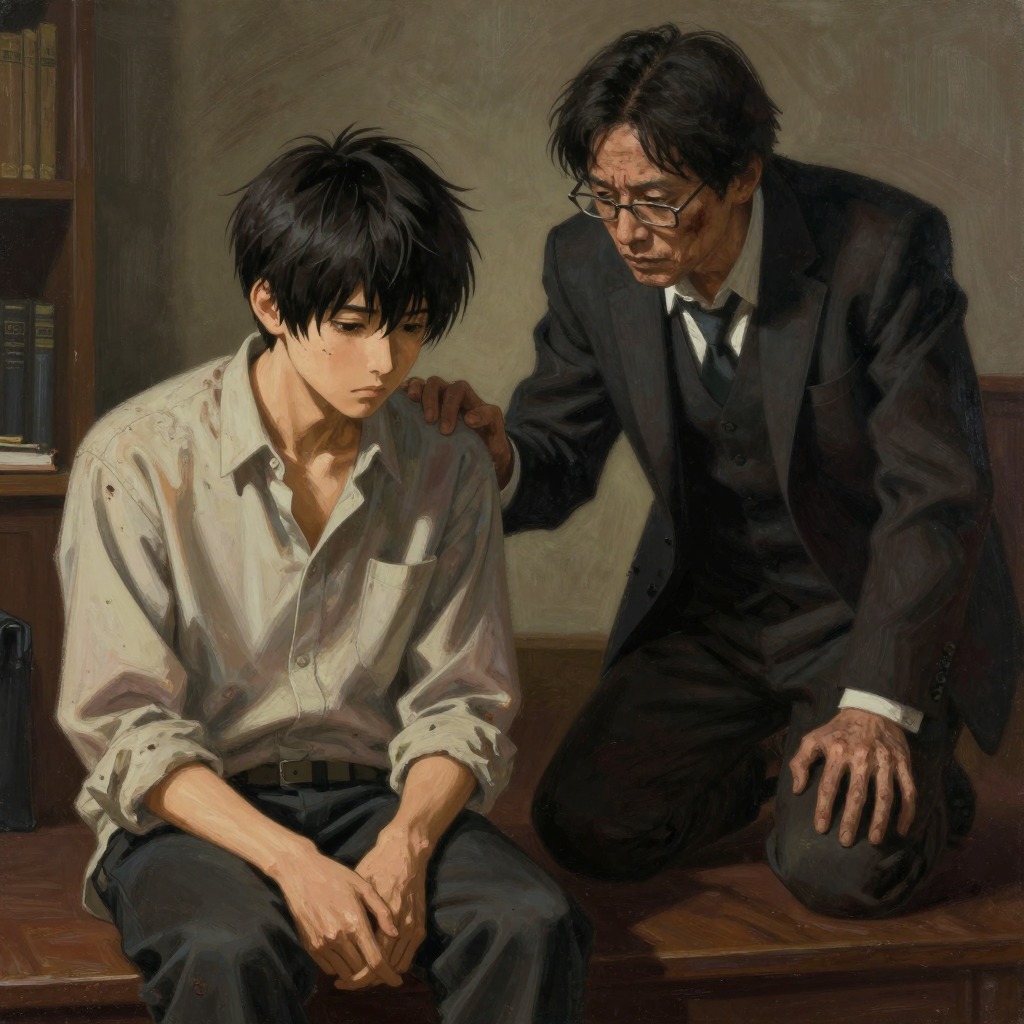
On the day Yozo plans to kill himself with an overdose, Flatfish and Horiki arrive and take him to a hospital. Horiki's gentle smile disarms Yozo, and he goes willingly. He is examined by a young doctor and then locked in a ward. He realizes he has been committed to a mental hospital, becoming a 'lunatic.'
Three months after entering the hospital, early autumn
Father's Death and Release
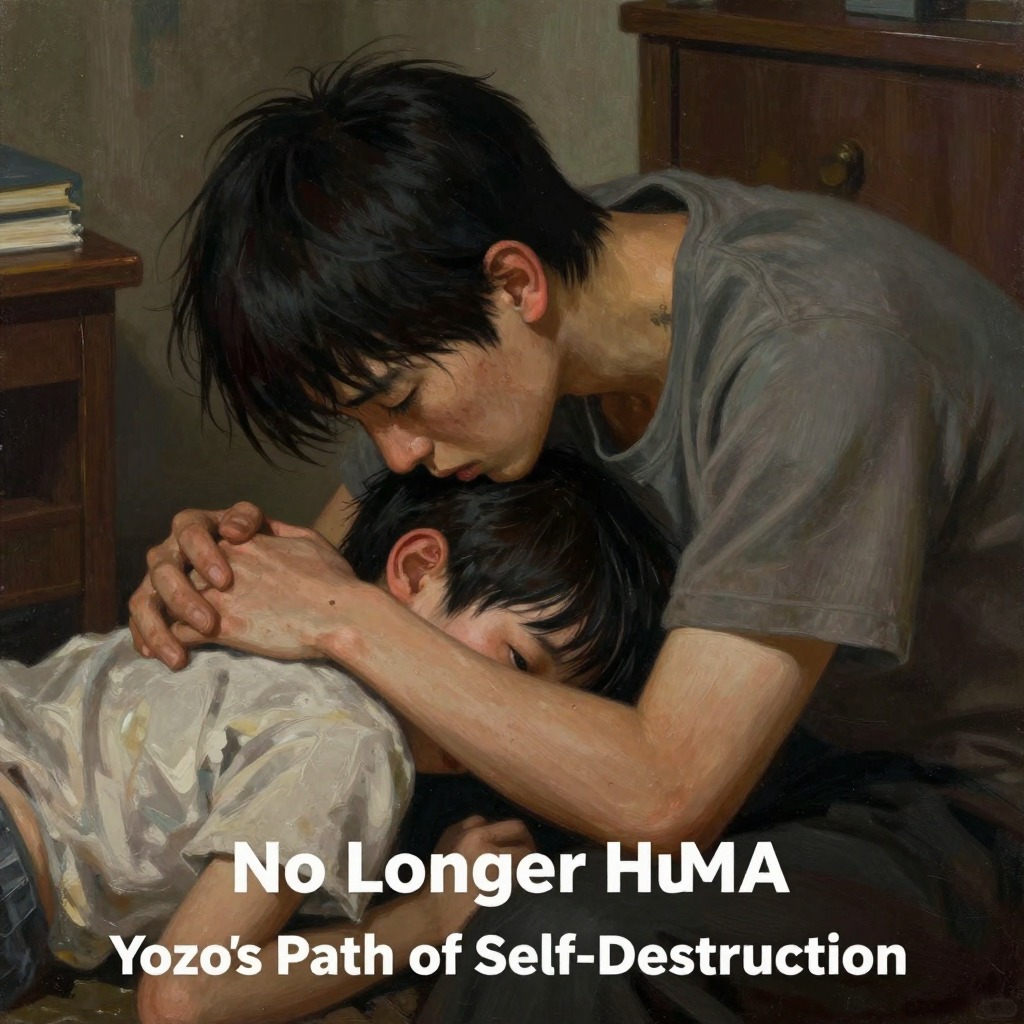
Yozo's elder brother and Flatfish come to take him out of the hospital. They inform him that his father has died of gastric ulcers. Yozo feels a profound emptiness, as if the vessel of his suffering has become hollow. His brother buys him a house in a remote coastal village and sends an old servant, Tetsu, to look after him.
Three years after leaving the hospital
Life in the Village
Yozo lives in a dilapidated house by the sea, looked after by the ugly old servant Tetsu. He is occasionally violated by her. His health fluctuates, and he coughs blood. He has become a 'reject,' devoid of happiness or unhappiness. His only truth is that 'everything passes.' He is twenty-seven but looks over forty.
During the three years in the village
The Laxative Incident
Yozo sends Tetsu to buy sleeping pills, but she returns with a laxative. He takes ten pills, thinking they are sleeping pills, and suffers from diarrhea all night. When he realizes the mistake, he laughs at the absurdity of his situation. He concludes that 'reject' must be a comic noun.
February, about ten years after the events
Epilogue: The Narrator's Discovery
The unnamed narrator visits a friend in Funabashi and stops at a coffee shop run by the madam of the Kyobashi bar. She gives him Yozo's three notebooks and photographs, saying they might make good material for a novel. The narrator reads them through the night and decides to publish them as they are.
End of the epilogue
Final Judgment: He Was an Angel
The narrator asks the madam if she cried reading the notebooks. She says no, but that Yozo was a good boy, an angel. This final, external judgment contrasts sharply with Yozo's own self-portrait of shame and failure, suggesting that his gentleness and capacity for love were invisible to himself but recognized by others.