Takeichi
Takeichi is the puny, scrofulous classmate who, by seeing through Yozo's deliberate failure on the horizontal bar and later introducing him to van Gogh's self-portraits, becomes the unwitting source of two prophecies that haunt Yozo's life: that women will fall for him and that he will become a great painter. He is the first person to detect the gap between Yozo's clowning and his true self, and the only one to whom Yozo ever shows his secret self-portraits. His two predictions—one inglorious, one hopeful—frame Yozo's entire trajectory, though only the first comes true.
Identity and First Encounter
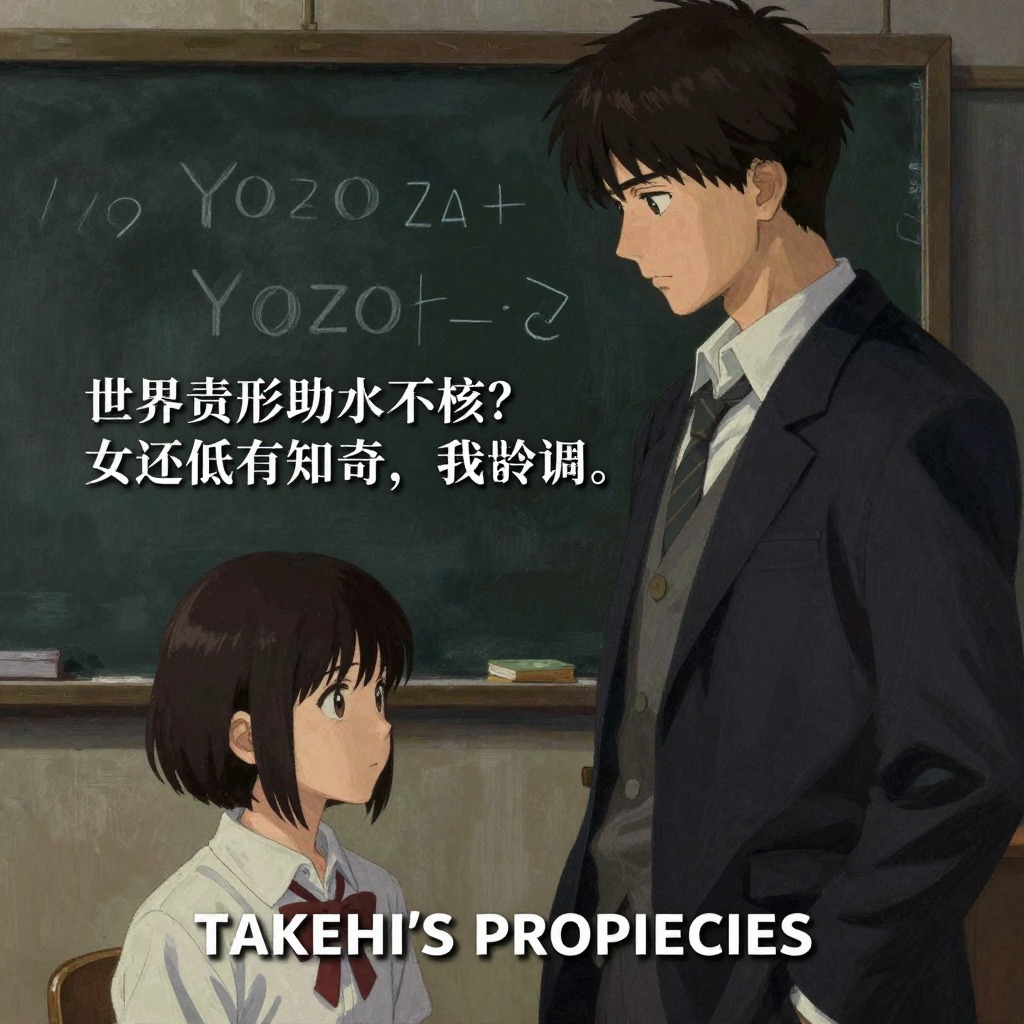
Takeichi is described as the puniest boy in the class, with a scrofulous face and a floppy jacket with sleeves too long for him. He is perpetually designated as an "onlooker" during physical training because of his clumsiness in military drill and physical education. Yozo initially fails to recognize any need to be on guard against him, considering him a simpleton. The decisive moment comes during a physical training period when Yozo deliberately misses the horizontal bar, sailing through the air and landing on his seat in the sand to make everyone laugh. Takeichi, who has crept up from behind, pokes Yozo in the back and murmurs, "You did it on purpose." This revelation strikes Yozo like a bolt from the blue, making him feel as if the world before him has burst into the raging flames of hell.
The Campaign to Win Him Over
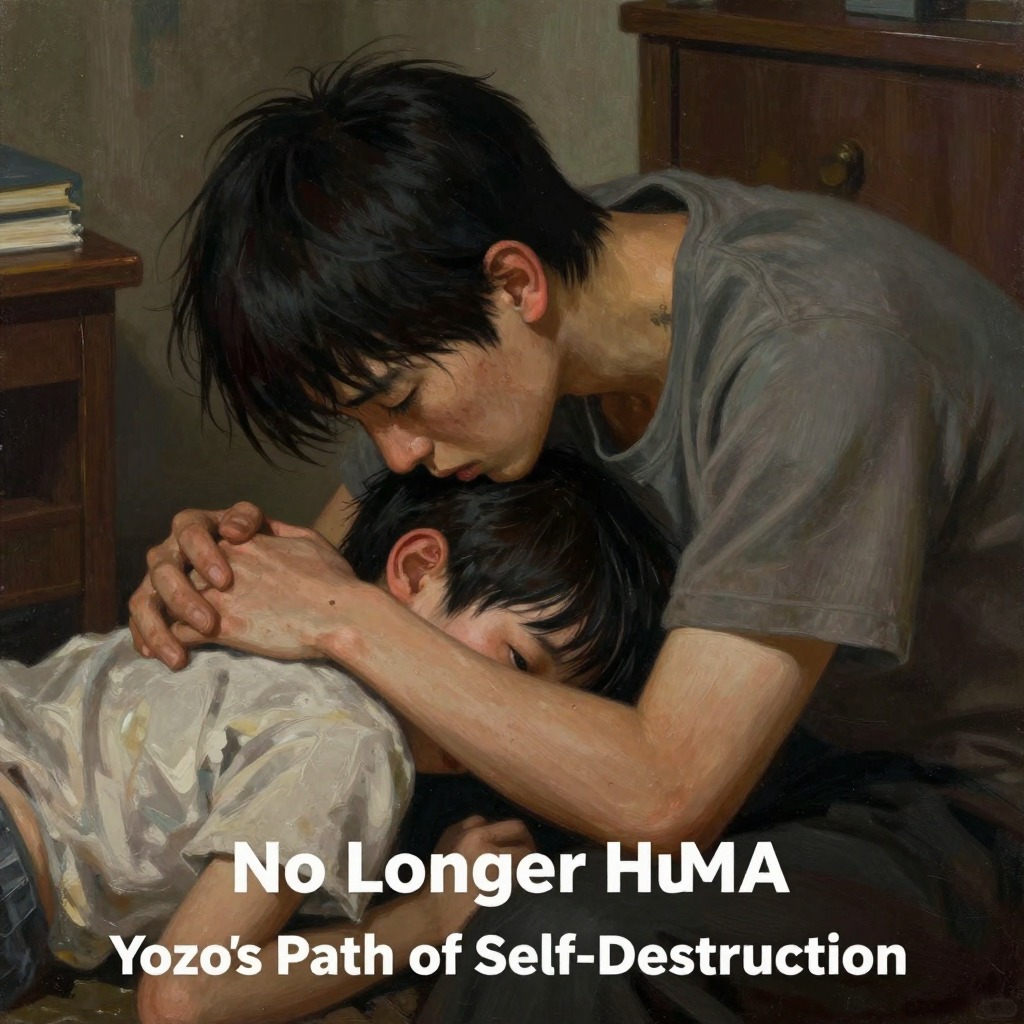
After Takeichi's exposure, Yozo is consumed by anxiety and dread. He fears that Takeichi will spread the word and reveal his secret. In response, Yozo clothes his face in the gentle, beguiling smile of a false Christian and strolls everywhere with Takeichi, his arm lightly around the boy's scrawny shoulders, his head tilted affectionately. He frequently invites Takeichi to play at the house where he is lodging, but Takeichi only gives him blank stares. One day after school, during a sudden downpour, Yozo notices Takeichi hovering dejectedly in the entrance way. Yozo grabs his hand and runs with him through the rain to his lodging house. There, Yozo examines Takeichi's ears, which are running with pus, and simulates exaggerated concern. He fetches cotton wool and alcohol, and while Takeichi lies on the floor with his head on Yozo's lap, Yozo painstakingly swabs his ears. It is during this moment that Takeichi, apparently unaware of the hypocrisy behind Yozo's actions, utters his first prophecy: "I'll bet lots of women will fall for you!"
The Ghost Pictures and the Second Prophecy
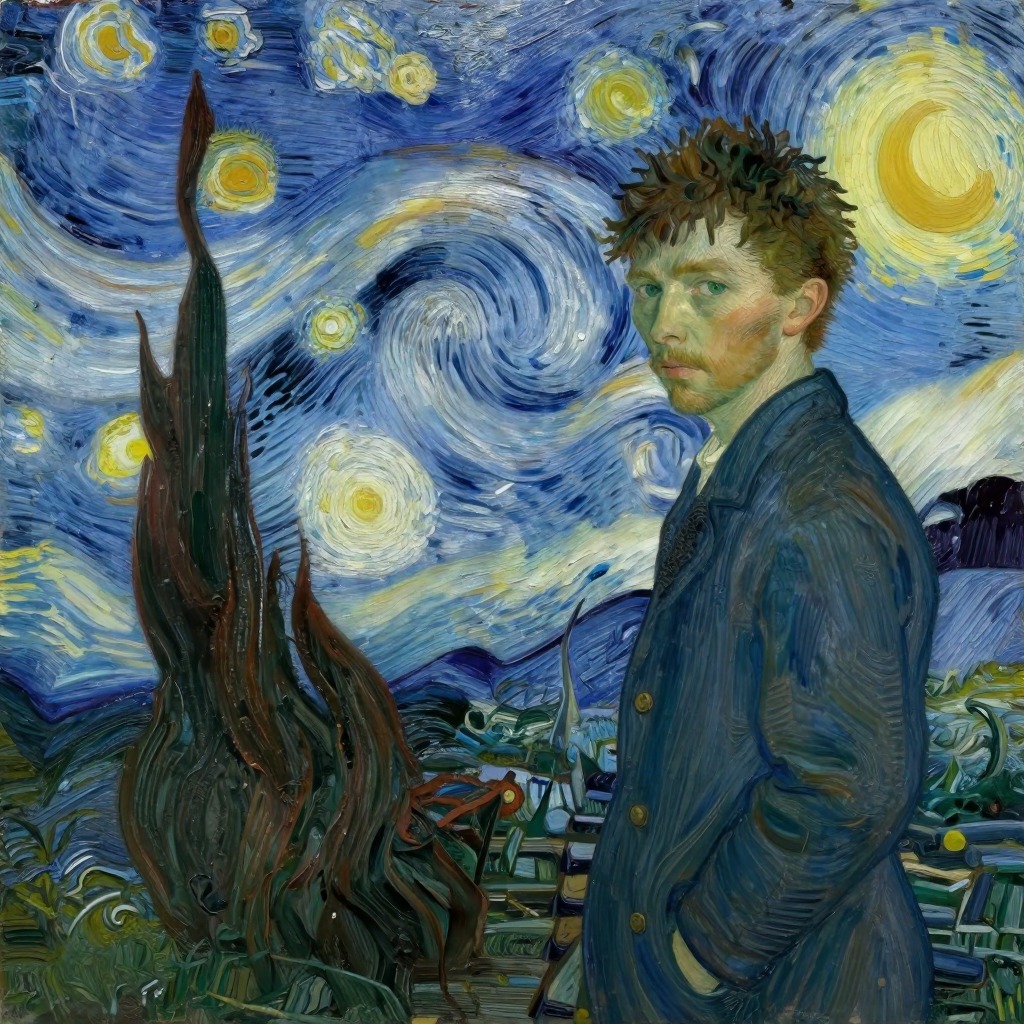
Takeichi makes one other important gift to Yozo. One day he comes to Yozo's room waving a brightly colored picture, which he proudly identifies as a picture of a ghost. Yozo is startled, recognizing it as the familiar self-portrait of van Gogh. Takeichi's comment that van Gogh's paintings look like ghosts and that he wishes he could paint pictures of ghosts like that initiates Yozo into a new understanding of art. Yozo realizes that painters who have been wounded by human beings have come to believe in phantasms and have dared to depict monsters just as they appeared. This revelation excites Yozo so much that he could have wept. He begins to paint self-portraits in a "ghost-style" technique, taking care that they not be seen by his female visitors. The pictures are so heart-rending as to stupefy even himself, revealing the true self he had so desperately hidden. To Takeichi—and to him alone—Yozo displays these easily wounded sensibilities. Takeichi is very enthusiastic and predicts, "You'll be a great painter some day."
The Two Prophecies and Their Fulfillment
When Yozo goes up to Tokyo, he carries on his forehead the two prophecies uttered by the half-wit Takeichi: that he would be "fallen for" and that he would become a great painter. The first prophecy proves true: women do fall for Yozo throughout his life, from the landlord's daughter to the comrade girl to Tsuneko, Shizuko, and Yoshiko. The second prophecy goes astray. Yozo never becomes a great painter; he ends up an unknown, second-rate cartoonist employed by the cheapest magazines. The self-portraits he painted in high school—the ones Takeichi called "ghost pictures"—become his lost masterpieces, and he is plagued by a heavy sense of loss, as if his heart had become empty. Whenever he speaks of painting, an undrunk glass of absinthe flickers before his eyes, and he is agonized by the frustrating thought that if only he could show those paintings, people would believe in his artistic talents.
Narrative Role and Significance
Takeichi functions as the first person to see through Yozo's elaborate performance, and his exposure triggers a crisis that forces Yozo to confront the gap between his clowning and his true self. He is also the only person to whom Yozo ever reveals his secret self-portraits, making him a unique witness to Yozo's hidden artistic ambition. His two prophecies—one about women, one about painting—become the twin poles around which Yozo's life revolves: the inglorious one comes true, the happy one fails. In the end, Takeichi remains a figure from Yozo's past, but his words echo throughout the narrative, shaping Yozo's understanding of himself and his fate.