Event 1
贝尔福宣言
The [Balfour Declaration](entity:event-recall-event-efeb447b2986) matters in [Edward Said](entity:character-recall-character-edward-said-658b99159564)’s account as both a consequential statement about [Palestine](entity:location-recall-location-palestine-d5e8fae9f5c4) and a recurring object of political interpretation. Its place in the [First World War](entity:event-recall-event-dc540822680c), the developing American role in the [Middle East](entity:location-recall-location-middle-east-e0f27235ab43), and the later polemics surrounding demonstrations held on its anniversary reveal how decisions made within imperial power structures can be narrated in ways that obscure local political agency and the history of colonization.
## Wartime Policy and American Interest
Said places the declaration within the wartime development of American policy, rather than treating it as a matter confined to British diplomacy. He notes that, during the First World War, the prospect of Zionism and the colonization of Palestine became a significant American policy interest and played an appreciable role in bringing the [United States](entity:location-recall-location-united-states-2f533bc8d0b9) into the war. British discussions before and after the declaration’s issuance in November 1917, he argues, show that American officials took it seriously. The declaration thus appears in his account as part of a broader political alignment, with consequences extending beyond the document and its issuing government.
The surrounding institutional history helps explain why Said emphasizes that wider frame. During and after the [Second World War](entity:event-recall-event-7e5722c923de), American interest in the Middle East increased markedly. Cairo, Tehran, and North Africa were important wartime arenas; meanwhile, [Britain](entity:location-recall-location-britain-3f5d255bbd7a) and France had pioneered the exploitation of the region’s oil, strategic, and human resources. Against that background, the United States prepared to assume a new postwar imperial role. The declaration’s importance is therefore connected, in Said’s analysis, to the longer transition from European to American power and to the strategic interests that helped shape that transition.
## Palestine and the Politics of Historical Omission
Said’s criticism is not that the declaration can be understood only through one political formula, but that accounts of the region often present selective histories as neutral expertise. In his discussion of [Bernard Lewis](entity:character-recall-character-bernard-lewis-7d34d3a508ba), he points to a conspicuous omission: Lewis could recount Arab opposition to Zionism without acknowledging the Zionist invasion and colonization of Palestine, which Said says took place despite and in conflict with the native Arab inhabitants. The omission matters because it removes a central circumstance from the history being interpreted. Opposition then appears detached from the political conditions to which it responded.
Said places that omission alongside Lewis’s treatment of democracy and Israeli rule. Lewis criticized the absence of democracy in the Middle East, with [Israel](entity:location-recall-location-israel-ecf64b6f6a44) as his exception, but, Said argues, did not discuss the Emergency Defense Regulations used to govern Arabs in Israel, preventive detention, settlements in the militarily occupied [West Bank](entity:location-recall-location-west-bank-67c35d35b75d) and Gaza, or the denial of Arab human rights, including immigration rights in former Palestine. These examples do not make the declaration itself a complete explanation of later events. They show instead how arguments about the region can privilege some political facts while leaving other conditions of power out of view.
That dispute reflects Said’s larger account of Orientalism: knowledge about the Orient is not separate from the power relations that enable it. An authoritative historical narrative can describe a conflict while narrowing the field of what counts as relevant history. In the case of the declaration, the contrast is between accounts that treat Arab opposition as a self-contained cultural or religious disposition and an account that situates it amid colonization, political claims, and unequal power. Said’s point is that omission is not simply a gap in detail; it can change the apparent causes and meaning of political action.
## The Cairo Demonstrations and Lewis’s Revisions
The declaration’s anniversary became the occasion for demonstrations in [Egypt](entity:location-recall-location-egypt-831f7ba4f646) on [November 2, 1945](entity:time-recall-time-november-2-1945-8c54e075d062). Said uses Lewis’s two accounts of the ensuing events to show how changes in description can produce a changed political interpretation. In the 1964 version, Lewis says that Egyptian political leaders called for demonstrations on the anniversary and that these rapidly developed into anti-Jewish riots. He cites attacks on Catholic, Armenian, and Greek Orthodox churches, then asks what those churches had to do with the declaration. Said observes that the cited evidence does not explain how the riot was anti-Jewish; the churches named do not, by themselves, establish the characterization.
In Lewis’s 1976 version, published in [Commentary](entity:organization-recall-organization-commentary-a4f9b09f77b5), the account is reframed. The earlier emphasis on political leaders sponsoring the demonstrations gives way to a description in which demonstrations were simply held. Lewis then presents the events as an anti-Jewish riot that broadened into a more general outbreak, again citing Catholic, Armenian, and Greek Orthodox churches as attacked and damaged. Said draws attention to two alterations: the changed account diminishes the stated role of political organizers, and its phrasing suggests that several churches of each named denomination were attacked, whereas the earlier version specifies one church of each kind. The event’s narrative changes even though the cited examples remain closely related.
For Said, these revisions serve Lewis’s polemical argument that Islam is an anti-Semitic ideology and that Muslim political behavior is governed by instinctive communal loyalties rather than historical or political circumstances. Said argues that the anecdote is arranged to make Islam appear as an irrational mass phenomenon and to encourage readers to regard Muslims as unchanging. His objection is not merely that Lewis uses a disputed label; it is that the account’s altered agency, suggestive wording, and selective evidence transform a demonstration associated with the anniversary of the declaration into support for a general claim about Muslim character.
## A Declaration in Contested Histories
The episodes surrounding the declaration bring together several strands of Said’s argument. The document figures in wartime diplomacy and the expansion of American interest in the Middle East; its anniversary becomes the setting for demonstrations whose meaning is subsequently contested; and later scholarship can either acknowledge or suppress the history of colonization in interpreting Arab opposition. Those strands are related, but Said does not collapse them into a single event or cause. Instead, he asks readers to trace the political conditions and the retrospective descriptions that make particular interpretations persuasive.
His broader purpose is to replace short, antagonistic explanations with historically situated analysis. The declaration and its aftermath cannot be understood by treating either the region’s peoples or their political actions as expressions of an unchanging essence. Said’s account insists on the importance of agency, context, and the unequal power to define what events mean. It also clarifies why disputes over the declaration’s history matter: the struggle is not only over the past, but over whether Palestinian claims and the realities of colonization remain visible in accounts of the present.
Event 2
黎巴嫩内战

The Lebanese Civil War, which began in 1975 and ended in 1990, appears in [Edward Said](entity:character-recall-character-edward-said-658b99159564)’s account both as a devastating contemporary conflict and as a test of who gets to define the Orient. A European journalist’s response to [Beirut](entity:location-recall-location-beirut-40bf87043a39)’s gutted downtown turns the city into a vanished landscape of European literary memory; Said sets that image against the lives of the Orientals who lived there and suffered through the war. The episode reveals the gap between representing a place and attending to the people whose histories unfold in it.
## Beirut Through a European Lens
During a visit to Beirut amid the terrible civil war of 1975–1976, a French journalist regretted that the gutted downtown had once seemed to belong to the Orient of [Chateaubriand](entity:character-recall-character-6996a4985e53) and [Nerval](entity:character-recall-character-cf29910b4dc1). The remark registers the city’s destruction through a European frame: Beirut is mourned as the setting of a familiar imaginative Orient, associated with romance, exotic beings, haunting memories, landscapes, and remarkable experiences.
Said recognizes that the journalist was right about the place from a European point of view, while stressing the limits of that point of view. The European visitor’s account gives privileged significance to a European representation of the Orient and to the apparent passing of the world that representation evoked. The journalist’s elegy thus makes Beirut’s fate legible through European cultural memory, rather than beginning with the inhabitants for whom the city was home.
## Residents and the Costs of Representation
Said identifies what the European account risks relegating to the margins: Orientals had lived in Beirut even in the time of Chateaubriand and Nerval, and during the civil war it was they who were suffering. Their presence and experience do not fit comfortably within the elegy for a European vision of the city. The contrast is not simply between two descriptions of Beirut; it is between a representation that enjoys communal meaning for French readers and the people whose lives are at stake in the place being represented.
In this reading, the war makes the political consequences of perspective difficult to ignore. The European observer can treat the Orient as an image apparently disappearing, while those who inhabit it endure the conflict itself. Said’s emphasis on residents’ suffering restores a human and historical dimension that the account’s European focus leaves in the background.
## Place in Said’s Argument
Said uses the Beirut episode to introduce Orientalism as more than an imaginative picture of a distant region. [The Orient](entity:location-recall-location-the-orient-a31e9b118435) has been, in his formulation, almost a European invention: a recurring place of romance and memory, and a significant element in European experience. Yet it is not merely imaginative. The journalist’s response shows how a real city and its contemporary fate can be understood through an inherited representation that privileges the observer’s culture.
The civil war’s appearance at the opening of the discussion also connects representation to contemporary history. Elsewhere, Said notes that the violence and bloodshed continued after the war’s 1990 end, and places the conflict alongside the failure of the Oslo peace process, the outbreak of the second intifada, and the suffering of Palestinians in the reinvaded [West Bank](entity:location-recall-location-west-bank-67c35d35b75d) and Gaza. The Beirut episode therefore opens onto a wider argument: accounts of the Orient can carry great cultural force while leaving the histories, varied lives, and immediate suffering of its inhabitants insufficiently recognized.
Event 3
九一一袭击事件
The [September 11 attacks](entity:event-recall-event-386102a65454) appear in [Edward Said](entity:character-recall-character-edward-said-658b99159564)’s argument not as an isolated rupture but as a turning point rapidly absorbed into a larger story of civilizational antagonism. Said places them amid violence involving Islam and the Arabs, the wars that followed in [Afghanistan](entity:location-recall-location-afghanistan-ea09a8d619a6) and [Iraq](entity:location-recall-location-iraq-57b030bc9041), and a political language that obscures historical experience; against that language, he argues for patient inquiry, humanistic criticism, and recognition of the interdependence of societies.
## The attacks in a continuing history
Said names September 11 as the most lurid and apocalyptic instance of the suicide-bombing phenomenon, linking it to the suffering and violence that surround the Israeli–Palestinian conflict and the wars against Afghanistan and Iraq. The sequence matters: the attacks enter an already charged history rather than inaugurating a self-contained conflict. The ensuing violence, he argues, is presented as part of a supposed clash of civilizations—unending and irreconcilable—yet he explicitly rejects that fatalistic conclusion.
The event also sharpens the book’s central challenge to fixed civilizational identities. Neither the Orient nor the West, Said insists, possesses stable existence outside human effort: each is formed partly through acts of affirmation and through the identification of an opposing Other. In a climate where fear, hatred, disgust, self-pride, and arrogance can be mobilized on a large scale, September 11 becomes a point at which political accounts of Islam and the Arabs, and of Western identity, acquire exceptional urgency and force.
## Aftermath and the politics of expertise
Said connects the attacks to the post-9/11 period, when media images of an unfamiliar enemy and the general label terrorist could sustain anger and insecurity. He warns that the circulation of such images can be exploited in a crisis. In his account, a small group of civilian elites at the Pentagon formulated a simplified view of the Arab and Islamic worlds, while media outlets supplied experts who validated the government’s line. Terror, preemptive war, and unilateral regime change dominated debate, backed by what Said calls the most bloated military budget in history.
This critique is not limited to the language of security. Said argues that policy expertise can function without substantial knowledge of the societies it claims to explain: commentators need not know Arabic, Persian, or even French to pronounce on what the Arab world needs. Technical fluency and an air of efficiency, he contends, can displace truthfulness, reflection, and real knowledge. In this process, human suffering in its density and pain disappears from view, while memory and the historical past are dismissed.
Said places the wars’ human and political consequences against claims that military power can remake the world. He notes that General Ariel Sharon, who led the 1982 invasion of [Lebanon](entity:location-recall-location-lebanon-77be8160c97f) in an effort to change its government, was later a partner in peace with George W. Bush; he also condemns the lack of sufficient dissent in the [United States](entity:location-recall-location-united-states-2f533bc8d0b9) from the proposition that military force alone could change the world’s map. The contrast makes his concern concrete: the language of peace and transformation can coexist with a record of invasion and civilian death, while debate treats force as an adequate substitute for historical understanding.
## Empire, memory, and historical context
Twenty-five years after its publication, Said says, Orientalism again raises the question of whether modern imperialism ever ended, or whether it continued in the Orient from Napoleon’s entry into [Egypt](entity:location-recall-location-egypt-831f7ba4f646). He objects to the rebuke that Arabs and Muslims dwell on empire’s depredations to avoid responsibility in the present. That accusation, he argues, drastically underestimates how imperial intervention has distorted the lives of subject peoples across generations and continues to work through the histories of Palestinians, Congolese, Algerians, and Iraqis.
Said asks why the Holocaust is recognized as having permanently altered contemporary consciousness while imperialism’s effects—and Orientalism’s continuing role—are not granted a comparable historical significance. He traces a sequence from Napoleon through the institutional rise of Oriental studies and the takeover of North Africa to later interventions in Vietnam, Egypt, and [Palestine](entity:location-recall-location-palestine-d5e8fae9f5c4), and to twentieth-century struggles over oil and strategic control in the Gulf, Iraq, Syria, Palestine, and Afghanistan. Set contrapuntally against that sequence are anticolonial nationalism, brief liberal independence, military coups, insurgency, civil war, religious fanaticism, and brutality against successive groups of natives. Each phase, he argues, produces its own distorted knowledge and reductive images of the other.
That longer history also clarifies why Said treats context as a matter of political consequence. The destruction of Iraqi libraries and museums, alongside dismissive talk of changing the [Middle East](entity:location-recall-location-middle-east-e0f27235ab43)’s map, exemplifies the presumption that history can be cleared away and societies reshaped to fit an external design. Such gestures, in his analysis, ignore the many peoples, languages, experiences, and cultures gathered within the region’s accumulated histories. The attacks and their aftermath cannot be understood by sweeping those histories aside.
## [Humanism](entity:concept-recall-concept-humanism-93e7f3fa9d08) against the civilizational frame
Said presents humanistic criticism as a way to open fields of struggle rather than confine debate to labels and antagonistic identities. It seeks a longer sequence of thought in place of polemical fury, and uses historical and rational reflection to loosen what he calls Blake’s mind-forg’d manacles. This approach does not deny injustice or suffering; it insists that they be situated in history, culture, and socioeconomic reality. Scholars and intellectuals, especially those who live across the cultural worlds of Islam and the West, have a responsibility to complicate formulas that divert thought from concrete human experience toward ideological fiction and collective passion.
For Said, humanism is not a retreat from power. Texts must be read as products of history, with their continuing worldly effects, and inquiry must attend to the ways power enters even specialized scholarship. This principle directly opposes accounts that treat political events as expressions of timeless cultural essences. It also explains why the attacks cannot stand as proof of an immutable conflict between Islam and the West: Said’s method requires attention to histories and relationships that such a binary suppresses.
His alternative is sustained work among cultures that overlap, borrow from one another, and live together, supported by patient and skeptical inquiry and communities of interpretation. He also points to the worldwide protests before the Iraq war as evidence that alternative communities and news sources can connect environmental, human-rights, and libertarian concerns across borders. Against the demand for instant action and reaction, the aftermath of September 11 thus becomes an argument for slower understanding and for humanism as resistance to injustice—not an endorsement of an inevitable civilizational war.
Event 4
阿富汗战争(2001—2021)

The [Afghanistan](entity:location-recall-location-afghanistan-ea09a8d619a6) War is presented as part of a post-September 11 sequence of military interventions that, for [Edward Said](entity:character-recall-character-edward-said-658b99159564), renewed rather than ended the history of imperial power in the Orient. His account links the war to a longer trajectory of intervention and to the political language that recasts complex societies as objects to be managed, while insisting that the human costs and histories effaced by that language remain central.
## Place in a Longer History
Said situates the Afghanistan War within a history that he traces from Napoleon’s entry into [Egypt](entity:location-recall-location-egypt-831f7ba4f646) in [1798](entity:time-recall-time-1798-93baa000a6b7) through the growth of Oriental studies and the takeover of North Africa, and onward through later interventions in Vietnam, Egypt, and [Palestine](entity:location-recall-location-palestine-d5e8fae9f5c4). He also identifies twentieth-century struggles over oil and strategic control in the Gulf, [Iraq](entity:location-recall-location-iraq-57b030bc9041), Syria, Palestine, and Afghanistan. The war therefore appears not as an isolated response to a sudden crisis, but as one episode in a sequence in which imperial action and the production of knowledge about the region have repeatedly shaped one another.
That sequence, in Said’s account, is not only a record of intervention. Its successive phases—from anticolonial nationalism and brief liberal independence to military coups, insurgency, civil war, religious fanaticism, and brutality against successive populations labeled as natives—produce their own reductive images and polemics. Afghanistan belongs to this contested history, where political change is repeatedly narrated through categories that simplify the people living through it.
## The War after September 11
Said groups the Afghanistan War with the war against Iraq as part of the aftermath of September 11. He rejects the notion that this violence confirms an inevitable, unending clash of civilizations. The framing of conflict as a confrontation between fixed civilizations, he argues, turns historically changing societies into opposing abstractions and makes hostility appear permanent and unavoidable.
The war also illustrates Said’s concern that military action can be discussed as policy while its consequences for human beings recede from view. He describes an American policy vocabulary dominated by terror, preemptive war, and unilateral regime change, promoted by a small group of civilian elites and amplified by media figures presented as experts. In that setting, force is debated as a means of remaking political realities, while the suffering and historical circumstances of those subjected to it receive less attention.
## Knowledge, Representation, and Imperial Power
Said connects military intervention to the authority of Orientalist knowledge: the power to describe a region as if its nature were settled and its future available for outside direction. His account of Napoleon’s occupation of Egypt provides a historical precedent. The French expedition joined military conquest to scholarly institutions and the Description de l’Égypte, turning the occupied country into an object of systematic classification and European representation. Although Napoleon’s occupation failed militarily, Said argues that its model endured, shaping the modern experience of the Orient through institutions of knowledge and domination.
Against this imperial archive, Said sets the account of the invasion by the Egyptian chronicler Abdal-Rahman al-Jabarti. The massive, state-backed Description and al-Jabarti’s three-volume testimony do not occupy equivalent positions: the former records Egypt from the standpoint of a power seeking to hold it within the French imperial orbit; the latter writes from the position of someone who paid the price of invasion. Their contrast makes visible how claims to objective knowledge can conceal the power relations that determine who describes an event and whose experience is displaced.
Said argues that the same problem persists when modern policy expertise pronounces on the region without substantial linguistic or historical knowledge. Specialized jargon can lend authority to sweeping claims about what the Arab world needs, while essentializing accounts of Islam and political violence push lived histories and human suffering aside. In this framework, the Afghanistan War is inseparable from the representations that help make intervention intelligible and that can obscure what it does.
## Historical Memory and Human Costs
Said’s central challenge is to recognize imperialism as a force that continues to work through successive generations, rather than treating the past as closed or its consequences as excuses for present difficulties. He contrasts the accepted recognition that the Holocaust permanently altered modern consciousness with the inadequate recognition of the lasting transformations wrought by imperialism and Orientalism. His comparison asks readers to treat the history of empire not as a remote prelude, but as a continuing condition of political life.
This insistence on historical depth also informs Said’s criticism of war as seen through mass media. Sensational images of distant conflicts can produce an impression of clean, precise violence while obscuring destruction and suffering. Labels such as terrorist can serve to keep audiences angry and mobilized, and a narrow policy debate can make preemptive war or regime change seem self-evident. Against that narrowing, Said calls for historically grounded interpretation: the Afghanistan War must be understood within the relations of power and accumulated histories that its simplest justifications leave out.
Event 5
伊拉克战争

The [Iraq War](entity:event-recall-event-994a2ad5cf73) appears in [Edward Said](entity:character-recall-character-edward-said-658b99159564)’s analysis as more than a military campaign: it is a continuation of imperial intervention in the [Middle East](entity:location-recall-location-middle-east-e0f27235ab43), enabled by Orientalist generalizations that make domination appear necessary and even benevolent. The invasion and occupation are presented as the practical outcome of a knowledge system that treats the region as an undifferentiated object of Western expertise, while disregarding its histories, peoples, and political agency. Said rejects the supposed inevitability of a civilizational conflict and sets against it an approach grounded in historical inquiry, intellectual responsibility, and coexistence.
## Background: Empire and the Making of the Orient
Said places the Iraq War in a long history of European and later American power in the region. In his account, the modern imperial phase begins with Napoleon’s invasion of [Egypt](entity:location-recall-location-egypt-831f7ba4f646) in [1798](entity:time-recall-time-1798-93baa000a6b7). Military intervention and the production of knowledge developed together: the French campaign generated institutions and scholarly descriptions that claimed to explain the Orient even as they helped make it an object of political control. Later powers inherited not only imperial ambitions but familiar ways of representing the people they sought to govern.
The large-scale French Description de l’Égypte, produced by a corps of scholars backed by a conquering army, demonstrates the disparity between imperial documentation and the testimony of the invaded. Abd al-Rahman al-Jabarti described the French invasion in three volumes from the perspective of someone living through it, while Napoleon’s imposing account was made from within the effort to keep Egypt in the French imperial orbit. For Said, placing the two records alongside one another shows why scholarship cannot be treated as detached from the unequal circumstances in which it is produced. It also counters the simplification of history into an abstract struggle between East and West.
## The Invasion and Its Justifications
Said describes the invasion and occupation of [Iraq](entity:location-recall-location-iraq-57b030bc9041) by [Britain](entity:location-recall-location-britain-3f5d255bbd7a) and the [United States](entity:location-recall-location-united-states-2f533bc8d0b9) as an imperial war advanced by a small group of unelected American officials on ideological grounds involving world dominance, security control, and scarce resources. The stated language of freedom and security, in his account, concealed those underlying interests. The war was hastened and rationalized by experts who, he argues, betrayed their scholarly calling by lending intellectual authority to the project.
Among the influential figures advising George W. Bush’s Pentagon and National Security Council, Said names [Bernard Lewis](entity:character-recall-character-bernard-lewis-7d34d3a508ba) and Fouad Ajami. He argues that their representations of the Arab world helped American hawks frame such ideas as a single Arab mind and a centuries-long Islamic decline that only American power could reverse. In this account, the expert’s authority does political work: complex societies are compressed into a diagnosis, and intervention is then offered as the remedy.
Said draws attention to the scale of the undertaking as well as its rhetoric. He contrasts Iraq’s actual significance to many Americans with the deployment of a vast military force across 7,000 miles, and asks readers to consider whether a country exporting bananas or oranges would have provoked the same war and public hysteria over allegedly vanished weapons of mass destruction. The comparison is a counterfactual, not a claim about what happened; its purpose is to expose how the perception of Iraqis as alien to Western values helped make invasion imaginable and defensible.
## Media, Expertise, and Cultural Destruction
For Said, the war was accompanied by a wider American policy discourse that did not require knowledge of Arabic, Persian, or French. Policy specialists could make confident arguments about a democratic domino effect in the Arab world without linguistic or local expertise. Books on terrorism, liberalism, Islamic fundamentalism, and American foreign policy competed for influence, he writes, according to how efficient and persuasive their claims sounded rather than how carefully they reflected real conditions.
That mode of argument depends on generalization and has a human cost: it removes the density of suffering and memory from public view. Said connects the hardening of American attitudes toward the Middle East with the looting and destruction of Iraq’s libraries and museums. The destruction of cultural institutions becomes a telling counterpart to the language of remaking the region: both treat a layered history as something that can be displaced or cleared away so that outsiders may impose a preferred future.
Said also situates the war within a wider media environment. [CNN](entity:organization-recall-organization-cnn-fc1d8abce1ee), Fox News, evangelical and right-wing radio, tabloids, and other publications, in his account, repeatedly circulated unverifiable stories and sweeping claims that stirred hostility toward a foreign enemy. In his later discussion of education and public debate, he warns that the electronic presentation of distant warfare can suggest technical precision while concealing human suffering and destruction. [After September 11](entity:time-recall-time-cd25cdabfab1), he argues, the label terrorist could be used to demonize an unfamiliar enemy, while media-produced experts validated a policy agenda centered on terror, preemptive war, and unilateral regime change.
## Continuity, Consequences, and Historical Memory
Said presents the Iraq War not as an isolated break but as one episode in the continued operation of imperial power since Napoleon’s entry into Egypt. He places it within a sequence that includes the development of Oriental studies, European control in North Africa, and later struggles over political authority and strategic resources in the Middle East. Alongside that history he traces anticolonial nationalism, periods of independence, military coups, insurgency, civil war, and the cycles of conflict that follow. Each phase, he observes, produces its own reductive images and polemics about the people being governed or opposed.
The argument also concerns what the war’s justifications leave out. Arabs and Muslims, Said writes, are told that recalling imperial depredations evades responsibility for present failures. He challenges that reasoning by stressing the prolonged distortion imperial intervention has introduced into the lives of Palestinians, Congolese, Algerians, and Iraqis. The history of empire, in this view, is not a closed past that can be set aside when judging the present; it continues to shape the conditions in which political outcomes are made.
Said sets the public recognition of the Holocaust’s lasting effect on contemporary consciousness beside the weaker recognition of what imperialism has done and what Orientalism continues to do. The comparison asks why one history is understood as having transformed knowledge while the other is so often reduced to an excuse offered by victims. It does not make the histories identical; it exposes an imbalance in whose suffering and historical consequences are allowed to revise the present’s understanding.
## An Alternative to the Civilizational Conflict
Against the idea that the Iraq War belongs to an endless and irreconcilable clash of civilizations, Said insists that the Orient and the West are not stable essences. Their apparent opposition is made and remade through human action, political identification, and the representation of an Other. Treating either side as a timeless unity converts historical difference into antagonism and encourages collective fear, contempt, and pride.
Said distinguishes between studying other peoples for the sake of understanding and pursuing knowledge as part of self-affirmation, belligerence, or war. The first requires careful study and analysis directed toward coexistence and a wider human understanding; the second seeks control and external dominion. This distinction explains his condemnation of scholars who supplied the invasion with demeaning stereotypes, while leaving open the possibility of scholarship that attends to historical complexity instead of serving power.
His alternative is a humanistic critique that lengthens the frame of discussion rather than allowing polemical fury to decide it in advance. Said calls for reflection on the histories and socioeconomic realities that abstract labels obscure, and for intellectuals to challenge ideas that turn difference into hostility. His account closes on a political and ethical horizon of coexistence: in the struggle for equality in [Palestine](entity:location-recall-location-palestine-d5e8fae9f5c4) and [Israel](entity:location-recall-location-israel-ecf64b6f6a44), he argues, the goal should be humane coexistence rather than further suppression and denial. That commitment defines the wider significance he gives the Iraq War: its violence and justifications must be understood historically, but the history need not dictate an endless conflict.
Event 6
六日战争
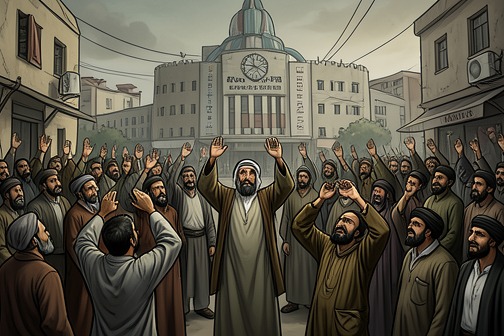
The Six-Day War is treated in Orientalism as a decisive point in the political and representational history of Arabs and Palestinians. It marks the beginning of [Edward W. Said](entity:character-recall-character-edward-w-said-ee2df0e7d768)’s own sustained political engagement and reshapes a Princeton class-reunion caricature almost overnight: what had been planned as vaguely Arab costume becomes, after the war, a procession of figures with their hands raised in abject defeat. For Said, that reversal shows how quickly political events are translated into stereotypes—and how those stereotypes can obscure the history and claims of the people they depict.
## Background and Political Setting
Said places the war within a longer history of imperial power and the production of knowledge about the Orient. He describes Orientalism as arising from circumstances that are profoundly fractious, not from detached scholarly curiosity alone. In his account, the war’s aftermath remained active decades later: [Israel](entity:location-recall-location-israel-ecf64b6f6a44) continued to occupy Palestinian territories and the [Golan Heights](entity:location-recall-location-golan-heights-adf073ef9c05), and the terms of struggle and ideas at stake for his generation of Arabs and Americans persisted.
The conflict also altered the setting in which Arabs and Islam were discussed in the [United States](entity:location-recall-location-united-states-2f533bc8d0b9). Said identifies the Arab-Israeli struggle and its effects on American Jews, liberal culture, and the wider population as one of three forces that made even basic perceptions of Arabs and Islam highly politicized. The other forces were a history of popular anti-Arab and anti-Islamic prejudice in the West, closely reflected in Orientalism, and the near absence of a cultural position from which people could identify with, or dispassionately discuss, Arabs and Islam. Great Power politics, oil economics, and the stark opposition of a freedom-loving Israel to supposedly evil and terroristic Arabs made a clear view still harder to achieve.
## The Princeton Caricature
Said makes the representational shift concrete through a Princeton tenth-reunion costume plan in 1967. The motif had been chosen before the June War and was only crudely suggestive of Arabs: robes, headgear, and sandals. The details did not amount to a developed account of Arab life; they supplied a ready-made costume for a broad stereotype.
After the war, once the Arab motif had become an embarrassment, the reunion plans were changed. The class would wear the originally planned costume but walk in procession with hands held above their heads, a gesture of abject defeat. The change made military defeat the defining image: in Said’s account, the Arab had moved from a faint outline of the camel-riding nomad to a caricature of incompetence and easy defeat. The scene matters not as an account of the war’s military course, which the book does not provide, but as a sharply dated example of how swiftly a political outcome could dictate a public image.
## From Defeat to Threat
The image did not remain fixed at defeat. Said contrasts the postwar procession with the representation of Arabs after the 1973 war, when the Arab appeared as a more menacing figure. Cartoons repeatedly placed an Arab sheik behind a gasoline pump, turning the Arab into an emblem of disruption and connecting him to the gasoline shortage.
The caricature’s visual details carried an older prejudice into this newer political moment. The sheik’s sharply hooked nose and evil, mustachioed leer marked him as a Semitic figure, so that popular anti-Semitic animus could be transferred smoothly from a Jewish to an Arab target. For Said, the transition from defeated caricature to threatening caricature is not a move from stereotype to reality. It shows how a negative image can be adapted to different circumstances while retaining its power to make the Arab appear responsible for dangers facing the West.
## Palestinian History and the War’s Aftermath
Said argues that the Arab is granted space in Western representation chiefly as a negative value: a disrupter of Israel’s and the West’s existence or, in another formulation, an obstacle to Israel’s creation in [1948](entity:time-recall-time-1948-913d072de9df). When Arabs are assigned a history, he writes, it is a history given to them—or taken from them—by Orientalist and later Zionist traditions. His discussion traces this denial of historical standing to portrayals of [Palestine](entity:location-recall-location-palestine-d5e8fae9f5c4) by [Lamartine](entity:character-recall-character-32fd1d5b06b4) and early Zionists as an empty desert waiting to bloom, whose inhabitants were treated as inconsequential nomads without a real claim to the land or a cultural and national reality. In the image Said describes, the Arab becomes a shadow that dogs the Jew.
The war also belongs to Said’s own political trajectory. He locates the start of his political engagement after the 1967 Arab-Israeli war and connects that engagement to the continuing aftermath of occupation. He describes spending much of the following thirty-five years advocating the Palestinian people’s right to national self-determination. At the same time, he insists that this advocacy attend to the reality of the Jewish people and the persecution and genocide they suffered. The desired end, as he frames it, is equality and coexistence in Palestine and Israel, not renewed suppression or denial. He also argues that Orientalism and modern anti-Semitism have common roots, making it essential for independent intellectuals to offer alternatives to models built on mutual hostility.
## Historical Memory and Significance
Said places the war’s political and representational consequences within a longer sequence of imperial intrusion. He challenges the claim that recalling empire’s depredations is simply a way for Arabs and Muslims to evade present responsibility. Such an accusation, he argues, reduces the distortion empire has introduced into the lives of subject peoples across generations and evades the continuing effects on Palestinians, Congolese, Algerians, and Iraqis. His comparison with the enduring transformation of consciousness produced by the Holocaust asks why the effects of imperialism and Orientalism should not likewise be recognized as an epistemic change.
That sequence runs from Napoleon’s entry into [Egypt](entity:location-recall-location-egypt-831f7ba4f646) through the rise of Oriental studies and the takeover of North Africa, and onward through later undertakings in Vietnam, Egypt, and Palestine and twentieth-century struggles over oil and strategic control in the Gulf, [Iraq](entity:location-recall-location-iraq-57b030bc9041), Syria, Palestine, and [Afghanistan](entity:location-recall-location-afghanistan-ea09a8d619a6). Set alongside this imperial history are anticolonial nationalism, brief periods of liberal independence, military coups, insurgency, civil war, religious fanaticism, and violence against successive groups labelled natives. Each phase, Said observes, generates its own distorted knowledge and reductive images. The Six-Day War’s changing caricatures of the Arab therefore exemplify a larger process: political struggle does not merely follow representation but repeatedly supplies the conditions in which inherited representations are revised and renewed.
The book’s response is humanistic critique: a longer sequence of historical analysis meant to open fields of struggle rather than trap debate in short, polemical bursts and antagonistic labels. Said argues that intellectuals who live across Islam and the West have a particular responsibility to dismantle reductive formulas and situate injustice in historical, cultural, and socioeconomic realities. In that framework, the war is significant both for the political engagement it helped initiate and for the way its aftermath exposed the speed with which public imagery could turn a people into a defeated or threatening type. The representation’s force lies precisely in what it excludes: the historical experiences, political claims, and human realities that would complicate the caricature.
Event 7
Second Intifada
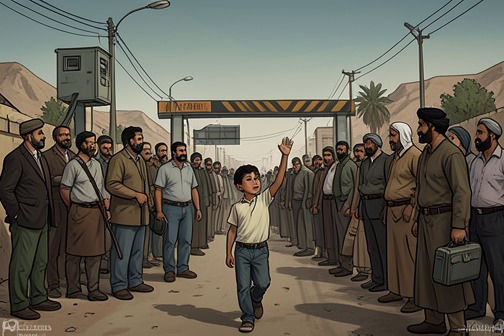
The [Second Intifada](entity:event-recall-event-122d39b69645) is identified by [Edward Said](entity:character-recall-character-edward-said-658b99159564) as one episode in the continuing conflict between [Israel](entity:location-recall-location-israel-ecf64b6f6a44) and the Palestinians. He places it after the failure of the Oslo peace process and alongside the suffering of Palestinians in the [West Bank](entity:location-recall-location-west-bank-67c35d35b75d) and Gaza, making it part of a broader argument against treating political violence as proof of an unbridgeable civilizational divide. Its significance in his account lies not in a detailed chronology of the uprising, which he does not provide, but in the way it exposes the human consequences of political narratives that reduce complex histories to fixed oppositions.
## Context and Course
Said links the outbreak of the Second Intifada to the failure of the Oslo peace process. He presents the uprising within a continuing sequence of conflict rather than as an isolated incident, turning attention to the political conditions and unresolved realities surrounding it. The passage gives no account of specific participants, actions, or dates beyond identifying the outbreak; its emphasis is on the place of the event in the wider crisis.
## Palestinians in the West Bank and Gaza
The uprising is discussed alongside what Said calls the awful suffering of Palestinians in the reinvaded West Bank and Gaza. He notes the routine use of Israeli F-16s and Apache helicopters against civilians and describes the violence as collective punishment. This framing connects the Second Intifada to the consequences borne by Palestinian civilians, rather than treating it solely as an abstract political dispute.
## Significance in Said’s Argument
Said situates the Second Intifada within a contemporary landscape of violence that also includes suicide bombings, the [September 11 attacks](entity:event-recall-event-386102a65454), and the wars against [Afghanistan](entity:location-recall-location-afghanistan-ea09a8d619a6) and [Iraq](entity:location-recall-location-iraq-57b030bc9041). He rejects the claim that these conflicts amount to an unending, implacable clash of civilizations. In his broader argument, neither the Orient nor the West is an unchanging entity: such identities are constructed through human effort and can be mobilized to intensify fear, hatred, and collective self-assertion. The uprising therefore appears as part of a politically specific and historically entangled conflict, not as confirmation of an eternal division between peoples.
Event 8
1982 Israeli invasion of Lebanon
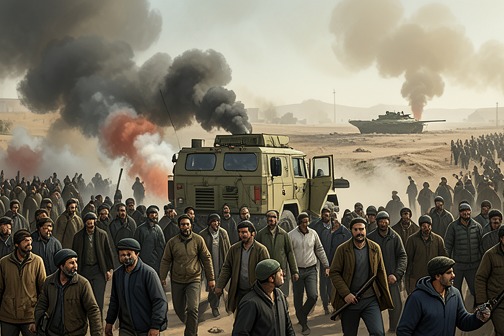
The [1982 Israeli invasion of Lebanon](entity:event-recall-event-1982-738dba8482e0) is presented by [Edward Said](entity:character-recall-character-edward-said-658b99159564) as an instance of military force used to reshape political arrangements, with a devastating civilian toll. Said cites the invasion as an example of the costs concealed by the language of strategic intervention and connects it to a broader critique of Western knowledge, imperial power, and the reduction of complex human histories to manageable political claims.
## The Invasion and Its Stated Aim
Said identifies Ariel Sharon as the leader of the 1982 invasion and says its purpose was to change the Lebanese government. He gives the human cost as 17,000 civilians killed. The account thus places a concrete political objective alongside a large civilian toll, rather than treating military action as an abstract instrument of policy.
The invasion also figures in Said’s criticism of a vocabulary that subordinates military power rhetorically while advancing political domination in practice. In his discussion of Orientalist projection, he describes a pattern of presenting intervention as instruction, restoration, or improvement for the region’s own benefit, while the people affected are neither consulted nor treated as the intended beneficiaries of the knowledge produced about them. The 1982 invasion supplies a later example of the political and human stakes behind that pattern.
## From Invasion to Claims of Peace
Said draws a pointed contrast between Sharon’s role in the invasion and his later position as a partner in peace with George W. Bush. The contrast makes the language of peace inseparable from the recent history Said invokes: a leader associated with an invasion intended to change a government is subsequently placed within a political partnership described in peaceful terms.
For Said, this contrast is part of a wider concern about the authority granted to military power in American policy. He argues that there had been too little dissent in the [United States](entity:location-recall-location-united-states-2f533bc8d0b9) from the claim that military power alone could change the map of the world. The invasion therefore matters in his account not only as an Israeli action in [Lebanon](entity:location-recall-location-lebanon-77be8160c97f), but also as evidence in a critique of interventionist assumptions that promise political transformation through force.
## Knowledge, Representation, and Human Consequences
Said’s discussion links political intervention to the production of knowledge about the Orient. He describes how colonial and Orientalist projects could turn living realities into texts, divide and classify what they encountered, and present the resulting descriptions as contributions to learning, even when the people described had not been consulted. The structure of that argument helps explain why the invasion appears alongside his criticism of contemporary policy: both raise the question of who has the authority to define a region’s needs and determine its political future.
His comparison of Napoleon’s description of [Egypt](entity:location-recall-location-egypt-831f7ba4f646) with the account by the Egyptian historian Abd al-Rahman al-Jabarti further clarifies the unequal positions from which histories are recorded. The large, state-backed Description de l’Égypte represents the perspective of a powerful invader; al-Jabarti’s three volumes record the invasion from the standpoint of the invaded. Said uses this contrast to insist that official or ostensibly objective accounts cannot be separated from the power relations that make them possible. In this framework, the civilian deaths he attributes to the 1982 invasion are not incidental to the analysis: they disclose the human reality that abstract accounts of strategic change can leave out.
## Place in Said’s Argument
The invasion is one example within a larger account of how imperial power, scholarship, public discourse, and policy can reinforce one another. Said does not treat it as proof of a permanent East–West opposition; he warns instead that such fixed binaries obscure historical circumstances and the interests of those who speak with authority. The episode’s significance lies in its specific conjunction of purpose, force, and civilian cost, and in how later political language can recast that history.
Said’s broader argument also resists reducing the history of the invaded to the record produced by the invader. His discussion of historical writing and postcolonial scholarship emphasizes the need to recover perspectives marginalized by elite and imperial accounts. Read in that light, his reference to the invasion insists that political analysis must attend both to the stated aim of changing a government and to the people whose lives were affected by the means chosen.
Event 9
越南战争

The [Vietnam War](entity:event-recall-event-507f6b1a707a) is a recurring historical reference in Orientalism, where it helps [Edward Said](entity:character-recall-character-edward-said-658b99159564) connect imperial intervention to the institutions and language that claim to interpret it. Rather than treating the war as an isolated military episode, Said places it in a wider history of Western power and argues that the political circumstances shaping knowledge cannot be separated from the knowledge itself.
## Scholarship and State Power
Said points to Noam Chomsky’s study of the instrumental connection between the Vietnam War and the idea of objective scholarship as applied to state-sponsored military research. The example makes the relationship between scholarship and power concrete: research presented as objective can be tied to the purposes of a state at war. Said uses this case to support his larger claim that knowledge production must be examined in relation to the political institutions and interests that shape it.
That relationship matters especially when imperial powers study places in which they have direct interests. Said argues that the political societies of [Britain](entity:location-recall-location-britain-3f5d255bbd7a), France, and, more recently, the [United States](entity:location-recall-location-united-states-2f533bc8d0b9) give their civil societies an urgent political investment in matters abroad that concern imperial interests. In the nineteenth century, for example, an Englishman’s interest in [India](entity:location-recall-location-india-39df7eae59c1) or [Egypt](entity:location-recall-location-egypt-831f7ba4f646) was never far removed from their status as British colonies. The Vietnam example thus belongs to an argument about the conditions under which scholarship is produced, not merely about the subject matter that researchers select.
## Part of a Longer Imperial History
Said places Vietnam within a historical sequence that begins with Napoleon’s entry into Egypt and continues through the rise of Oriental studies and the takeover of North Africa. He then names later undertakings in Vietnam, Egypt, and [Palestine](entity:location-recall-location-palestine-d5e8fae9f5c4), followed by the twentieth-century struggle over oil and strategic control in the Gulf, [Iraq](entity:location-recall-location-iraq-57b030bc9041), Syria, Palestine, and [Afghanistan](entity:location-recall-location-afghanistan-ea09a8d619a6). In this sequence, the Vietnam War is not an incidental comparison: it extends the account of intervention beyond the nineteenth-century origins of modern Orientalism.
The sequence is set against the rise of anticolonial nationalism and the successive political conditions that followed it, including a short period of liberal independence, military coups, insurgency, civil war, religious fanaticism, and brutality against newly designated natives. Said’s contrast does not reduce these histories to a single, interchangeable conflict. It shows instead how each phase produces its own distorted knowledge of other people, its own reductive images, and its own polemics.
## Knowledge, Representation, and Historical Memory
The war’s place in this account also clarifies Said’s objection to the claim that scholarship can be detached from the political circumstances of its authors. A European or American studying the Orient encounters it first from a position shaped by national identity and a history of involvement, not as an isolated individual without political context. The Vietnam example offers a parallel: state-sponsored military research makes visible the instrumental uses to which claims of objective knowledge may be put.
Said further insists that imperial consequences cannot be reduced to accusations that victims dwell on the past to evade present responsibility. He asks readers to recognize the enduring distortions empire introduces into the lives of peoples across generations, including Palestinians, Congolese, Algerians, and Iraqis. His comparison with the lasting transformation of consciousness caused by the Holocaust presses a broader question: why should the historical effects of imperialism, and the continuing work of Orientalism, receive less recognition? Vietnam belongs to this effort to bring intervention and its intellectual afterlife into the same historical frame.
## Humanistic Critique and Its Stakes
For Said, the answer to reductive accounts is not a competing simplification but a longer, more historically attentive analysis. He describes his project as using humanistic critique to open fields of struggle and replace short bursts of polemical fury with sustained thought. That approach seeks understanding and intellectual exchange rather than a belligerent collective identity. In this framework, the Vietnam War functions as evidence that questions of scholarship and questions of imperial action cannot be sealed off from one another.
Said’s treatment also resists turning the war into a self-sufficient emblem. Its significance comes from its relations to state research, imperial history, political interests, and the recurring production of distorted knowledge. By placing it among other interventions and alongside anticolonial responses, he directs attention away from a fixed opposition between East and West and toward the historical connections through which power, representation, and human consequences are made.
Event 10
第二次世界大战
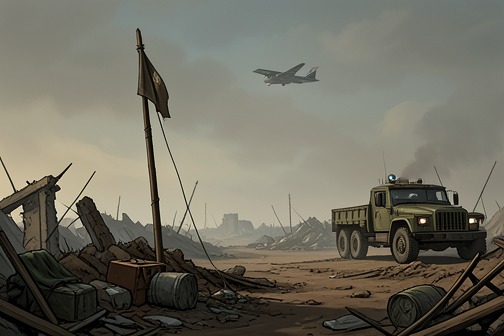
In [Edward Said](entity:character-recall-character-edward-said-658b99159564)’s account, World War II is a hinge in the modern history of Orientalism, not simply a chronological boundary. It ends the era in which [Britain](entity:location-recall-location-britain-3f5d255bbd7a) and France dominated the Orient and is followed by American ascendancy, as wartime campaigns and competition over oil, strategic position, and human resources helped prepare the [United States](entity:location-recall-location-united-states-2f533bc8d0b9) for a new imperial role. The transition was political and institutional as well as scholarly: European Orientalist traditions were accommodated and extended through American policy, research, and area studies.
## A turning point in imperial predominance
From the beginning of the nineteenth century until the end of World War II, Britain and France dominated the Orient and Orientalism. Said describes that influence as a cultural enterprise as well as a political one, encompassing scholarship, literary representation, colonial administration, military power, trade, and the production of specialist knowledge. World War II marks the end of this period of Franco-British dominance. After the war, the United States took the leading position and approached the Orient in ways that echoed the earlier British and French relationship.
The shift did not mean that the European intellectual inheritance simply vanished. Said argues instead that the tradition was taken up, normalized, adapted, and made widely available in the postwar United States. American Orientalism therefore emerged not as an entirely new formation, but as a successor that inherited established ways of representing the Orient while attaching them to a changed balance of power.
## Wartime conditions and American interest
During and after World War II, American interest in the [Middle East](entity:location-recall-location-middle-east-e0f27235ab43) escalated markedly. Cairo, Teheran, and North Africa were important arenas of war. In this setting, the exploitation of oil, strategic, and human resources—an undertaking pioneered by Britain and France—helped prepare the United States to assume a postwar imperial role. The war thus connected military geography and resource interests to the later expansion of American scholarship and policy engagement.
Said places this development within a longer history of Western involvement rather than treating it as a sudden postwar discovery. The region had already become important through the projects and rivalries of European powers; the wartime setting accelerated the United States’ entry into that field. The result was a transfer of predominance in which the older imperial relationship persisted under a new leading power.
## From cultural policy to research institutions
A central part of the American role was a cultural relations policy. In 1950, Mortimer Graves described an effort to acquire every significant publication in important Near Eastern languages since 1900, presenting the project as a matter of national security. Graves framed the need for greater American understanding around forces competing with the American idea for acceptance in the [Near East](entity:location-recall-location-40e86aab8d3f), especially communism and Islam. In Said’s account, the language of scholarship and cultural understanding was therefore closely connected to strategic policy.
The [Middle East Institute](entity:organization-recall-organization-7a1d2045fc70), founded in Washington in May 1946 under federal auspices, embodied this connection. Said identifies it as a model whose orientation was frankly strategic and responsive to public security and policy, rather than simply the pursuit of pure scholarship. The institutional network that developed around this postwar approach included the [Middle East Studies Association](entity:organization-recall-organization-21894d8dd4bb), foundation support, federal university programs and research projects, work by the Defense Department, the [RAND Corporation](entity:organization-recall-organization-rand-corporation-d8bf4b894b2b), and the Hudson Institute, as well as consultation and lobbying by banks, oil companies, and multinational corporations.
These organizations made the postwar transition durable. Research on the Middle East became connected to governmental programs, security priorities, economic interests, and public-policy advice. Said’s argument is not that every scholarly undertaking was identical, but that the institutional framework retained much of the traditional Orientalist outlook even as it presented itself in contemporary forms.
## [Area studies](entity:concept-recall-concept-area-studies-ad73e183f77a) and the policy-oriented expert
The postwar development of area-studies programs and institutes also changed the position of Oriental scholarship within universities. Said notes that the academic study of the Orient increasingly became a branch of national policy. The region was approached both for its strategic and economic importance and through inherited ideas of exotic difference. In the electronic age it appeared more immediately accessible to Western citizens, yet it was also more closely crossed by Western, especially American, interests.
[H. A. R. Gibb](entity:character-recall-character-b1f538770497) illustrates one route by which this scholarly tradition entered the American institutional setting. In the middle 1950s he became director of Harvard’s Center for Middle East Studies. Said distinguishes his influence from that of Philip Hitti at Princeton: Princeton’s department had produced important scholars and stimulated scholarly interest, while Gibb was more directly connected with the public-policy dimension of Orientalism. His position at Harvard helped focus the field on a [Cold War](entity:event-recall-event-c6baa02fafba) area-studies approach.
This institutional setting made expertise available for policy work. Elsewhere in his discussion, Said describes modern area experts as increasingly difficult to distinguish from advisers working within the policy sciences. The alliance between specialists in national-character analysis and experts in Islamic institutions could be used for military and national-security purposes. Strategies such as the stick-and-carrot technique and the Alliance for Progress drew on inherited claims about the Orient, recasting them as instruments for managing political relationships.
## The war’s wider historical frame
World War II also belongs to a broader sequence in Said’s account of imperial intervention and its aftermath. He places the war between earlier European domination and the postwar American ascendancy, while tracing the effects of imperial power through subsequent struggles over oil and strategic control in the Gulf, [Iraq](entity:location-recall-location-iraq-57b030bc9041), Syria, [Palestine](entity:location-recall-location-palestine-d5e8fae9f5c4), and [Afghanistan](entity:location-recall-location-afghanistan-ea09a8d619a6). Alongside that history, he sets the rise of anticolonial nationalism, periods of liberal independence, military coups, insurgency, civil war, and later forms of political conflict. Each phase, he argues, generates its own reductive accounts of other peoples.
The war’s significance, then, is not that it resolves the history of Orientalism, but that it reorganizes its political center. The end of British and French predominance accompanies the growth of American institutions and policy expertise, while the underlying relationship between knowledge and power continues. In Said’s analysis, World War II marks a change of imperial leadership and of scholarly apparatus, even as older representational habits persist within the new order.
Event 11
冷战

The [Cold War](entity:event-recall-event-c6baa02fafba) appears in Orientalism as both a historical condition and an intellectual pressure: it sharpened the political meaning of the East, tied the study of the Orient to national policy, and coincided with a contraction of the humanistic habits needed to understand cultural difference. In [Erich Auerbach](entity:character-recall-character-cd74cd4c3ee5)’s account, the postwar period that began with the Cold War threatened the diversity and particularity that comparative literature had sought to preserve; in the later policy and media landscape, the conflict’s inherited divisions persist as simplified oppositions and arguments for force.
## Postwar division and the political study of the Orient
The Cold War forms part of the extraordinary turbulence in East–West relations experienced by residents of the West from the 1950s onward. In this setting, “East” signified danger and threat, while also referring both to the traditional Orient and to Russia. The category therefore joined different places and political realities under a charged sign of opposition.
At the same time, universities expanded area-studies programs and institutes, making the scholarly study of the Orient a branch of national policy. Public interest in the Orient drew on its strategic and economic importance as well as its inherited exotic appeal. Electronic media made distant places more accessible to Western citizens, but this apparent proximity also reflected the growing reach of Western, especially American, interests. [The Orient](entity:location-recall-location-the-orient-a31e9b118435) became less an abstraction and more a region crisscrossed by those interests.
## Auerbach and the narrowing of humanistic inquiry
The Cold War’s beginning supplies the historical frame for Auerbach’s 1951 essay on the philology of world literature. His earlier book Mimesis, published in Berne in 1946 and written while he was a wartime exile teaching Romance languages in Istanbul, traced the diversity and concreteness of Western literary representation from Homer to Virginia Woolf. The later essay looks back on that project with a sense of loss: its method depended on historically situated, sensitive reading supported by erudition and command of several languages.
Auerbach’s concern was not simply that scholarship might accumulate less information. After the war, standardization of ideas and increasingly specialized knowledge narrowed the space for an investigative, continually questioning philology. The wider intellectual practice that made such reading possible was shrinking in scope and importance. Said connects that contraction to the disappearance of book culture grounded in archival research and to students’ increasing exposure to fragmented material from the internet and mass media. The Cold War thus stands at the opening of a postwar transformation in which global connection can coexist with intellectual homogenization.
## From inherited division to simplified expertise
The East–West division does not remain confined to universities. Media standardization reinforces older stereotypes of a mysterious Orient, and the [Near East](entity:location-recall-location-40e86aab8d3f) becomes especially politicized through Western anti-Arab and anti-Islamic prejudice and the struggle between Arabs and Israeli Zionism. In the later American policy environment, specialized expertise can pronounce on the Arab world without linguistic competence or substantial experience beyond Washington. Such confident, combative commentary reduces complex histories to formulae and, in doing so, removes human suffering from view.
Said places this style of argument within a longer history rather than treating it as an isolated Cold War residue. He traces a line from Napoleon’s entry into [Egypt](entity:location-recall-location-egypt-831f7ba4f646) through the rise of Oriental studies and colonial takeovers, and onward through later interventions and contests over oil and strategic control. He sets that sequence against anticolonial nationalism, liberal independence, coups, insurgency, civil war, and other struggles. Each phase produces its own reductive images and polemics. The Cold War’s polarizing language therefore belongs to a recurring pattern in which geopolitical conflict and knowledge about the Orient shape one another.
## Military power, memory, and the human cost
In Said’s account of the post-9/11 period, a relatively small group of Pentagon civilian elites formulates a simplified view of the Arab and Islamic worlds around terror, preemptive war, and unilateral regime change. Media outlets repeatedly debate these ideas while presenting experts who validate the government’s general line. This is not an account of a Cold War event itself, but it shows how the inherited framing of political difference can persist in later American policy and public discussion.
The costs of that framework are made concrete by the example of General Sharon, who led the 1982 invasion of [Lebanon](entity:location-recall-location-lebanon-77be8160c97f) in an effort to change the Lebanese government; 17,000 civilians were killed. Said notes the later partnership between Sharon and George W. Bush in the name of peace, and the scarcity of dissent in the [United States](entity:location-recall-location-united-states-2f533bc8d0b9) from the claim that military power alone can redraw the world’s map. Against such abstractions, he insists on historical context, moral argument, and recognition of interdependent human lives. The Cold War’s significance in the book lies not in a single narrated battle or resolution, but in the division it helped normalize and the intellectual and political habits that continued to reproduce it.
Event 12
约翰内斯堡世界可持续发展首脑会议

The Johannesburg World Summit on Sustainable Development is presented as a qualified sign that global cooperation can take shape even amid polarized political discourse. Its discussions of the environment, famine, inequality between advanced and developing countries, health, and human rights offer concrete grounds for a shared international constituency, while the complexity of those connections resists any claim that the world’s problems have been neatly resolved.
## Context of Polarization
[Edward Said](entity:character-recall-character-edward-said-658b99159564) places the summit against a political landscape in which public debate often corrals diverse people into supposedly unified camps such as America, the West, or Islam. He argues that such labels manufacture collective identities and fuel antagonism, obscuring the varied histories and experiences within them. In this setting, the summit matters not as proof that conflict has disappeared, but as a counterexample to the claim that global relations must be organized through civilizational opposition.
Said also describes reciprocal failures in political understanding. In the [United States](entity:location-recall-location-united-states-2f533bc8d0b9), specialized policy rhetoric can disregard the languages and histories of the people it describes; in Arab and Muslim societies, anti-Americanism can likewise rest on limited understanding of the United States. These failures narrow discussion and sustain resentment. The summit’s global agenda supplies a different frame: problems that cross national boundaries invite cooperation rather than the hardening of antagonistic identities.
## Shared Agenda and Significance
Despite its limitations, the summit revealed what Said calls a substantial area of common global action. Its agenda included environmental concerns, famine, the gap between advanced and developing countries, health, and human rights. These subjects are not presented as solved outcomes or as evidence of a single harmonious worldview. Their importance lies in showing that distinct societies can participate in practical discussions around conditions that affect them across national divisions.
The summit therefore lends new urgency to the idea of one world without making that idea simple. Said stresses that no one can fully know the extraordinarily complex unity of a globalized world. At the same time, he insists that the interdependence of its parts is real and leaves no genuine possibility of isolation. The event’s significance rests in holding these points together: cooperation is possible, but the world it addresses exceeds any easy summary.
## Relation to Humanistic Inquiry
Said’s larger argument calls for patient, historically grounded inquiry in place of polemical reactions that produce instant, rigid divisions. The summit’s multilateral work provides an example of common ground emerging through sustained attention to shared concerns, rather than through a demand that all participants adopt one collective identity. Its limitations matter as well: a global forum cannot erase unequal conditions or make the world’s connections fully transparent.
The summit thus supports neither complacency nor blanket rejectionism. It offers evidence that the global cultural and political landscape is not reducible to a contest between opposing blocs, while confirming that interdependence itself requires continued analysis. In Said’s account, this makes the event a modest but meaningful counterweight to reductive conflict: a setting in which overlapping interests can be worked through without pretending that the world has become simple or completely knowable.
Event 13
拿破仑入侵埃及
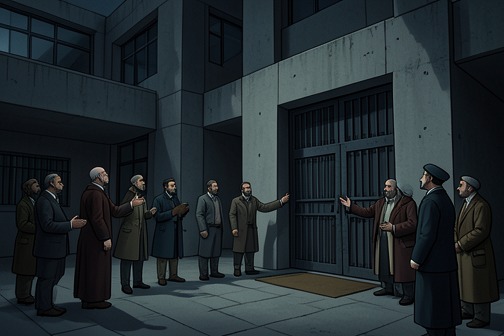
Napoleon’s invasion of [Egypt](entity:location-recall-location-egypt-831f7ba4f646) in [1798](entity:time-recall-time-1798-93baa000a6b7) was a military expedition whose enduring consequence, in [Edward Said](entity:character-recall-character-edward-said-658b99159564)’s account, was to establish a modern framework for representing and managing the Orient. The occupation did not succeed militarily, but its instruments of scholarship and administration helped make Egypt a laboratory for Western knowledge and an object of imperial authority. Its decisive legacy was a system in which the act of describing a society could also displace its historical coherence and prepare it for rule.
## Background and historical significance
Said situates the expedition amid a late-eighteenth- and early-nineteenth-century turn toward newly translated Oriental texts and a newly perceived relationship between East and West. Yet the invasion of 1798 gave that relationship a particularly consequential form: it joined military occupation to organized scholarly inquiry. It became, in Said’s formulation, a model of one culture’s scientific appropriation by a more powerful one, and set in motion processes that continued to shape European and American cultural and political perspectives.
The expedition also stands at the beginning of Orientalism’s modern imperial phase. Said argues that the encounter between [Europe](entity:location-recall-location-europe-90be8cc79c46) and the Orient cannot be understood as a meeting of equal, self-contained civilizations. It took place within a relationship of power, in which the stronger party could not only describe the Orient as supposedly possessing fixed characteristics but could also make it conform to those descriptions. In this sense, the invasion was not merely a historical backdrop to Orientalist thought: it helped establish the unequal conditions under which Orientalist knowledge would be produced and received.
## Occupation as a project of knowledge
The occupation’s intellectual and political program joined restoration, instruction, and control. Egypt was to be presented as a region recoverable from present decline and connected to a former classical greatness; it was also to be taught the ways of the modern West, ostensibly for its own benefit. Military power could consequently be downplayed in favor of the prestige of knowledge gathered through political domination. The occupied country was given a defined place in European memory and imperial strategy, including an assigned role as an appendage to Europe.
This project turned observation into an apparatus of classification. Its practitioners divided and indexed what they encountered, established new fields of specialization, and converted particular observations into general claims about Oriental nature, temperament, mentality, and custom. Living realities became the material of texts that appeared to confer possession of the places they described. The people whose societies were being documented were neither consulted as equals nor treated as the intended beneficiaries of the resulting scholarship; they served instead as the grounds for texts whose practical value belonged elsewhere.
The Description de l’Égypte became the great collective monument of this enterprise. Alongside the Institut, it helped establish Egypt and, subsequently, other Islamic lands as a field site, laboratory, and theater for Western knowledge. It lent the occupation the authority of a scholarly undertaking, while the expedition supplied the political circumstances and force that enabled its work. For Said, the combination matters: the Description was not simply a record produced alongside military conquest, but a central means by which conquest acquired an intellectual form and a lasting afterlife.
## Representation and the displacement of Egyptian history
The Description’s authority did more than bring Egypt into the view of modern European science. Its account displaced Egyptian or Oriental history as a history with its own coherence, identity, and sense of time. The history recorded by the European project could present itself as world history, although that universal frame effectively meant European history. To rescue an event from oblivion, in this account, was also to turn the Orient into a stage for European representations of it.
The resulting picture placed Egypt in a system of Western categories. Biological and zoological claims could make the country appear to confirm laws already formulated by European thinkers; descriptions of Oriental customs could serve as a contrast that elevated European habits as sober and rational. Such examples reveal the work done by representation: local difference became evidence for a general theory, and that theory in turn reinforced the authority of the observer. What appeared as the clarification of a silent or neglected past could therefore silence other ways of recounting that past.
Said’s contrast between the Description and the Egyptian historian Abdal-Rahman al-Jabarti makes this inequality concrete. The Description’s extensive volumes embodied the coordinated labor of a corps of scholars backed by a modern army. Al-Jabarti, by contrast, recorded the French invasion from the position of the invaded, in three volumes that Napoleon’s account left unknown and ignored. The contrast is not simply between a scholarly work and a personal testimony: it exposes how the supposed objectivity of an account depends on who has the power to produce, circulate, and authorize it. The European account speaks from the position of someone seeking to hold Egypt within a French imperial orbit; Al-Jabarti’s chronicle bears witness from the position of someone who paid the price of that project.
## Legacy beyond military defeat
Napoleon’s occupation failed militarily, but its wider projection survived that failure. The expedition helped give birth to the modern experience of the Orient as interpreted within a discourse whose agencies included the Institut and the Description. The model could also be extended beyond the immediate occupation: Egypt imagined as restored through enlightened administration would, in turn, transmit a civilizing influence to its Oriental neighbors. Other European powers would compete in the claimed mission, but that rivalry did not undo the underlying presumption that the region was available for Western management and interpretation.
The expedition’s significance therefore lies in the durability of the relationship it helped normalize between knowledge and power. The Description was an achievement of scholarship, but its claims to comprehensive knowledge belonged to an unequal imperial encounter and helped make that encounter productive beyond its military moment. In Said’s account, the invasion marks a foundational instance of Orientalism’s method: Western institutions describe, classify, and teach the Orient while restricting its ability to appear as an independent subject of history. The occupation’s defeat did not end this structure; the knowledge produced through it continued to shape how the Orient could be imagined, studied, and governed.
Event 14
乌拉比起义
The Urabi Revolt is identified in [Edward Said](entity:character-recall-character-edward-said-658b99159564)’s account as the Egyptian nationalist rebellion brought to an end by [Britain](entity:location-recall-location-britain-3f5d255bbd7a)’s occupation of [Egypt](entity:location-recall-location-egypt-831f7ba4f646) in 1882. Its significance in the book lies not in a detailed reconstruction of military events, which Said does not provide here, but in the way the revolt becomes a hinge between Egyptian resistance and British imperial rule—and a case through which imperial power presents its own intervention as knowledge, order, and improvement.
## The Revolt and the British Occupation
Said places the rebellion in the history of Egypt’s transition into British control. Britain occupied Egypt in 1882 and ended the nationalist rebellion associated with Colonel Arabi. That sequence makes the revolt more than a passing reference: it marks the point at which nationalist resistance was met by foreign occupation, and Egypt became an especially prominent example in British arguments about empire.
The account does not specify the revolt’s events, participants beyond Colonel Arabi, or its immediate political programme. It does, however, stress what followed its defeat: Britain’s occupation made the country a practical site for imperial administration and a showcase for claims about Western knowledge and authority. The revolt’s place in the narrative is therefore defined by the consequence of suppression and by the political story Britain built around the country afterward.
## Egypt as an Imperial Case
Said describes Egypt as an unusually useful example for British imperial argument. Before annexation, it could be treated in European accounts as an illustration of supposed [Oriental backwardness](entity:state-recall-state-98366fcba865); under British rule, it could be presented as proof of the achievements of English knowledge and power. The change in Egypt’s political status thus came with a change in how it was represented: the country was made to validate the authority of the power that governed it.
This representation depended on speaking for Egyptians as well as ruling them. In Said’s account of [Arthur James Balfour](entity:character-recall-character-arthur-james-balfou-b8b8fc2d91c0)’s defense of British policy, Egypt stands as a colony through which imperial claims are asserted, while Egyptians themselves are treated as people whose history and needs can be defined by others. The revolt, having been suppressed, appears within a larger framework that turns resistance into a prelude to foreign rule and makes the administration’s account of the country more prominent than the country’s own political voice.
## Knowledge, Rule, and Unequal Perspectives
Said connects the revolt’s historical setting to the wider entanglement of Orientalist knowledge and imperial power. He describes the Western account of the Orient not as an impartial description detached from events, but as a body of ideas formed and sustained within relations of domination. In the Egyptian case, the rebellion and its suppression belonged to a history in which political control made the country an object of study, classification, and administrative intervention.
The unequal conditions of that knowledge are clearest in Said’s contrast between the monumental French account of Egypt, the Description de l’Égypte, and the three-volume account by the Egyptian writer Abdal-Rahman al-Jabarti, who described the French invasion from the standpoint of the invaded. Said uses that contrast to show how the scale and authority of imperial scholarship can overshadow local testimony. Though the Description de l’Égypte concerns the earlier French invasion rather than the Urabi Revolt, the comparison clarifies the book’s broader method: Egyptian history cannot be understood by treating the imperial record as the only or neutral account.
## Place in Said’s Historical Argument
The revolt also belongs to a longer sequence in which European intervention repeatedly remade the political and intellectual description of the Orient. Said traces a line from Napoleon’s invasion of Egypt through the development of Oriental studies and the takeover of North Africa, and onward to later struggles over territory and strategic control. In that sequence, the Urabi Revolt is a local episode with a wider consequence: it sits at the intersection of Egyptian nationalism, British occupation, and the production of imperial knowledge.
Said’s argument does not reduce the revolt to a simple opposition between East and West. Rather, it insists on historical circumstances and unequal power: a nationalist rebellion was suppressed, the country was occupied, and the occupying power’s account of Egypt gained institutional authority. The revolt therefore helps expose how imperial narratives can displace the history and political agency of the people whose country they claim to explain.
Event 15
喀土穆围城战
The Siege of Khartoum is mentioned as one of the overseas crises through which [Arthur James Balfour](entity:character-recall-character-arthur-james-balfou-b8b8fc2d91c0) acquired and displayed his authority on imperial affairs. In [Edward Said](entity:character-recall-character-edward-said-658b99159564)’s account, its significance lies not in a narrated military course but in the way such episodes formed the background to British rule in [Egypt](entity:location-recall-location-egypt-831f7ba4f646) and to Balfour’s defense of that rule before the House of Commons.
## Place in Balfour’s Imperial Record
When Balfour spoke to the House of Commons on June 13, 1910, about the problems [Britain](entity:location-recall-location-britain-3f5d255bbd7a) faced in Egypt, Said emphasized the political experience behind his authority. Balfour had held several senior government offices and followed a succession of imperial conflicts and crises. The death of General Gordon in the Sudan, associated in this list with the Siege of Khartoum, appears alongside the Afghan and Zulu wars, the [British occupation of Egypt](entity:event-recall-event-british-occupation-of-e-e6c4bb3cb2c3) in 1882, the Fashoda Incident, the battle of Omdurman, the Boer War, and the Russo-Japanese War.
The list situates the siege within a career shaped by imperial affairs across different regions. It does not identify Balfour as a participant in the siege or describe what happened there; rather, it presents the crisis as part of the historical experience that lent weight to his pronouncements about Egypt. His official positions, education, public eminence, and apparent command of overseas events together made his account sound authoritative to his parliamentary audience.
## Imperial Knowledge and the Egyptian Question
Said connects Balfour’s lecture to a contemporary political challenge: some members of Parliament were questioning the necessity of England’s continued presence in Egypt. An occupation that had once been profitable had become more difficult to defend as Egyptian nationalism rose. Balfour’s explanatory and moralizing address therefore took place amid an argument over the legitimacy of British rule, not in a politically neutral setting.
The siege belongs to a longer history through which European powers represented the Orient as an object of knowledge and administration. In discussing Napoleon’s occupation of Egypt and the Description de l’Égypte, Said describes a project that organized observed details into classifications and general laws, while treating the region as material for European scholarship and imperial strategy. That discussion does not make the siege an episode in Napoleon’s expedition; it clarifies the broader pattern in which imperial events and the knowledge produced around them could reinforce European claims to interpret and govern the Orient.
## Historical Memory and Narrative Limits
Said’s later comparison between the Description de l’Égypte and the chronicles of Abdal-Rahman al-Jabarti makes the imbalance in historical authority explicit. The monumental French account, backed by an army and a corps of scholars, dwarfed the testimony of a writer describing the invasion from the position of the invaded. In Said’s formulation, the two bodies of writing belong to a shared historical experience, but they were produced from radically unequal positions of power.
The Siege of Khartoum receives no comparable account of its participants, course, or immediate outcome in the cited passages. Its function here is narrower and revealing: it appears in a compact imperial résumé, one item among crises that Balfour was positioned to follow. That placement shows how an event can enter political argument as evidence of an official’s expertise, while the experiences of those subject to imperial power remain outside the frame. Said’s concern is not to turn the siege into a self-contained battle narrative, but to expose the unequal historical and intellectual structures through which imperial events were remembered and made to signify.
Event 16
法绍达事件
The Fashoda Incident is mentioned as one of the overseas crises that shaped [Arthur James Balfour](entity:character-recall-character-arthur-james-balfou-b8b8fc2d91c0)’s imperial experience and public authority. In [Edward Said](entity:character-recall-character-edward-said-658b99159564)’s account, it belongs to a larger history in which European powers did not merely describe the Orient: political dominance helped make those descriptions authoritative and consequential.
## Reference in Balfour’s Imperial Career
Said situates the incident within the record of Balfour’s involvement in imperial affairs. When Balfour addressed the House of Commons on June 13, 1910, about the problems [Britain](entity:location-recall-location-britain-3f5d255bbd7a) faced in [Egypt](entity:location-recall-location-egypt-831f7ba4f646), he spoke with the standing of a long-serving politician and former prime minister. His experience included the [British occupation of Egypt](entity:event-recall-event-british-occupation-of-e-e6c4bb3cb2c3), the death of General Gordon in the Sudan, the battle of Omdurman, the Boer War, the Russo-Japanese War, and the Fashoda Incident. The list establishes the breadth of crises through which Balfour could present himself as knowledgeable about imperial affairs; the text does not recount what happened at Fashoda itself.
That accumulated authority mattered because Balfour was defending Britain’s presence in Egypt at a time when Egyptian nationalism was rising and the occupation had become harder to justify. Said connects Balfour’s experience to his argument that Egypt belonged to a category supposedly distinct from domestic British concerns. The incident therefore functions as part of the political background to Balfour’s later claim to explain and govern the imperial problem, rather than as a separately narrated episode.
## Imperial Knowledge and Unequal Representation
The incident’s broader significance follows Said’s account of Orientalism as knowledge bound up with power. He argues that European descriptions of the Orient were not simply detached accounts of an independently defined reality: they formed a durable body of theory and practice, supported by institutions and material investment. The Fashoda Incident appears within the record of imperial affairs that lent political figures such as Balfour credibility when speaking about the region.
Said also emphasizes the unequal conditions under which the Orient was represented. His example of [Gustave Flaubert](entity:character-recall-character-42a41affd25a) and Kuchuk Hanem shows how a European man could speak for an Egyptian woman who did not represent her own feelings or history in his account. More broadly, his discussion of the [Description de l'Égypte](entity:object-recall-object-description-de-l-gypte-298fbeb643b4) contrasts an immense scholarly project backed by a conquering army with the much less recognized testimony of Abdal-Rahman al-Jabarti, who described the French invasion from the standpoint of the invaded. These contrasts clarify the analytical frame in which the Fashoda reference sits: imperial events and the authority to interpret them are part of the same history of unequal power.
## Limits of the Episode’s Treatment
The book supplies no account here of the incident’s participants, immediate causes, location, course, or outcome. It should therefore not be treated as a fully narrated event within this passage. Its supported role is narrower: as a named episode in Balfour’s imperial résumé, it helps explain the accumulated experience invoked to authorize his speech about Egypt and the distinctions he drew between Egypt and Britain.
Said’s larger argument resists reducing such histories to a timeless opposition between East and West. He stresses that historical realities are made and remade, and that accounts of them may silence or displace other histories. The Fashoda reference contributes to that argument by locating Balfour’s authority within the history of imperial crises, while leaving the event itself outside the passage’s detailed narration.
Event 17
恩图曼战役
The Battle of Omdurman is mentioned in [Edward Said](entity:character-recall-character-edward-said-658b99159564)’s discussion of [Arthur James Balfour](entity:character-recall-character-arthur-james-balfou-b8b8fc2d91c0)’s 1910 speech on [Egypt](entity:location-recall-location-egypt-831f7ba4f646), where it forms part of a roll call of imperial affairs through which Balfour’s authority is established. Said gives no account of the battle’s course or participants; instead, its placement exposes how imperial experience could be invoked to support the right to explain and govern the so-called Orient.
## Place in Balfour’s Imperial Catalogue
On June 13, 1910, Balfour addressed the House of Commons about what he called the problems [Britain](entity:location-recall-location-britain-3f5d255bbd7a) faced in Egypt. He distinguished them from matters affecting the Isle of Wight or the West Riding of Yorkshire, presenting Egypt as belonging to a wholly different category. Said situates the Battle of Omdurman within the sequence of overseas crises that formed the background to Balfour’s authority: alongside the Afghan and Zulu wars, the [British occupation of Egypt](entity:event-recall-event-british-occupation-of-e-e6c4bb3cb2c3) in 1882, General Gordon’s death in the Sudan, the Fashoda Incident, the Boer War, and the Russo-Japanese War.
The battle is not described as an episode in its own right. Its function in the passage is biographical and rhetorical: it helps establish Balfour as a statesman who had occupied influential offices and followed imperial affairs at close range. The catalogue makes the battle evidence of familiarity with the imperial world, rather than an occasion to examine the people whose lives that world governed.
## Authority and the Right to Explain
Said emphasizes that Balfour’s authority rested on more than his record in imperial affairs. His political offices, education at Eton and Trinity College, Cambridge, social eminence, and learning across subjects from Bergson and Handel to theism and golf all reinforced his apparent command of the matter. The Battle of Omdurman belongs to this carefully accumulated credentialing: it helps make Balfour’s account of Egypt sound informed before he proceeds to explain why Egypt’s problems differ from those at home.
That authority had a political setting. Some members of Parliament were questioning the necessity of Britain’s continued presence in Egypt. An occupation once treated as profitable had become harder to defend as Egyptian nationalism rose. Balfour’s explanatory address therefore did more than classify a distant place; it answered a dispute about British rule. In Said’s reading, the catalogue of imperial experience supports the speaker’s standing to define the problem, while the Egyptians whose country is being discussed remain objects of that definition.
## The Battle as Imperial Knowledge
The battle’s brief appearance anticipates Said’s broader account of how imperial power and knowledge reinforced one another. In his discussion of Napoleon’s Description de l’Égypte, he describes a system that organized observations, established disciplines, and turned details into general claims about an unchanging Oriental character. The large-scale scholarly enterprise backed by military conquest could present its account as modern knowledge while displacing local histories and perspectives.
Said contrasts that imperial production of knowledge with the chronicles of Abdal-Rahman al-Jabarti, who described the French invasion from the standpoint of the invaded. The contrast clarifies what the Battle of Omdurman’s placement in Balfour’s catalogue does—and does not—make visible: an imperial event can circulate as a credential in a European account of the Orient, while the histories and testimony of those subjected to imperial power receive far less attention. The battle thus matters here less as a military narrative than as a trace within the language that authorizes imperial expertise.
Event 18
第二次布尔战争
The [Second Boer War](entity:event-recall-event-a70e63e52487) is mentioned in Orientalism as one of the overseas conflicts through which [Arthur James Balfour](entity:character-recall-character-arthur-james-balfou-b8b8fc2d91c0) acquired authority to speak about imperial affairs. The book does not recount the war itself; its significance lies in how the reference helps expose the entanglement of imperial experience, claims to expertise, and the production of knowledge about colonized peoples.
## Place in Balfour’s Imperial Credentials
On June 13, 1910, Balfour lectured the House of Commons about British involvement in [Egypt](entity:location-recall-location-egypt-831f7ba4f646). The author sets the speech against Balfour’s long political career and the range of imperial events he had followed, naming the Afghan and Zulu wars, the [British occupation of Egypt](entity:event-recall-event-british-occupation-of-e-e6c4bb3cb2c3) in 1882, General Gordon’s death in Sudan, the Fashoda Incident, the battle of Omdurman, the Boer War, and the Russo-Japanese War. This inventory presents the Second Boer War not as an isolated subject of military history but as one element in the accumulated experience that lent Balfour standing before Parliament.
That standing mattered because Balfour was addressing doubts about the continuing British presence in Egypt while Egyptian nationalism was rising. His past involvement in imperial affairs helped make his account sound authoritative; the author’s analysis asks readers to notice how such authority could shape debate over rule and its justification. The war is thus part of the political background to Balfour’s credentials, rather than an event independently described in the book.
## Imperial Knowledge and the Orient
The book places the Second Boer War within a larger account of how imperial power and knowledge reinforce one another. Its discussion of [Napoleon’s expedition to Egypt](entity:event-recall-event-napoleon-s-expedition-t-d3b4ee7c2a68) describes a project that made the region an object of European administration and scholarship: observation and classification turned details into general claims about an supposedly fixed Oriental nature. The resulting works could present themselves as contributions to learning even when the people whose lives they recorded had not been consulted and were treated as subjects for European representation.
The contrast between Napoleon’s Description de l’Égypte and the chronicles of Abd al-Rahman al-Jabarti clarifies the unequal conditions under which imperial histories are produced. The Description, backed by an army and the organized work of scholars, offered an account from the standpoint of a power seeking to hold Egypt within its imperial orbit. Al-Jabarti wrote from the position of the invaded. Read together, the accounts disclose a historical encounter shaped by unequal power, not an abstract or timeless opposition between East and West. The Boer War reference belongs to this wider framework: imperial conflicts form part of the setting in which political authority and claims to knowledge acquire force.
## Histories, Silences, and Afterlives
Orientalism argues that history can be remade through omission and imposed shapes, until the imperial power’s version of the Orient becomes something it can claim to possess and direct. Against that erasure, the book insists on the plurality of peoples, languages, experiences, and cultures displaced by simplified accounts. Its attention to the Second Boer War is brief, but the name participates in a wider inventory of imperial encounters that complicates any presentation of authority as detached from political history.
The book also rejects the idea that the effects of empire ended with formal episodes of conquest. It describes a long sequence running from Napoleon’s entry into Egypt through the rise of Oriental studies and the takeover of North Africa, and onward through later conflicts and struggles for strategic control. Each period, it argues, produces its own reductive images and disputed accounts of the other. Within this argument, the Second Boer War functions as a historical reference point rather than a narrated campaign: it helps locate imperial expertise in a continuing history whose silences and unequal representations remain consequential.
Event 19
日俄战争

The Russo-Japanese War is mentioned briefly as one of the overseas conflicts that [Arthur James Balfour](entity:character-recall-character-arthur-james-balfou-b8b8fc2d91c0) had followed before addressing the House of Commons in 1910. In [Edward Said](entity:character-recall-character-edward-said-658b99159564)’s account, it is not a narrated battle but part of the imperial and political experience that lent Balfour authority as he defended [Britain](entity:location-recall-location-britain-3f5d255bbd7a)’s presence in [Egypt](entity:location-recall-location-egypt-831f7ba4f646).
## Reference in Balfour’s 1910 Speech
On June 13, 1910, Balfour spoke to the House of Commons about what he called the problems Britain faced in Egypt, presenting them as belonging to a different category from domestic British concerns. Said situates that intervention amid rising Egyptian nationalism and growing difficulty in defending Britain’s continuing occupation. The Russo-Japanese War appears in the credentials Said assembles around the speech: Balfour had been positioned to follow a succession of overseas wars and crises, and the war is the last in the list.
## Place in the Imperial Record
The reference contributes to a portrait of Balfour as a statesman whose authority rested on long service and apparent command of imperial affairs. His experience included the Afghan and Zulu wars, the [British occupation of Egypt](entity:event-recall-event-british-occupation-of-e-e6c4bb3cb2c3), the death of General Gordon in Sudan, the Fashoda Incident, the battle of Omdurman, the Boer War, and the Russo-Japanese War. The list does not describe Balfour’s actions in the Russo-Japanese conflict or explain its particular effect on his views; it establishes the breadth of the imperial record he brought to bear when addressing Egypt.
## Narrative Significance and Limits
Said’s purpose is to examine how imperial authority was presented and justified, not to recount the Russo-Japanese War. Its placement among the episodes that Balfour had followed connects the conflict to the wider setting of his political authority, while the immediate controversy concerns Britain’s occupation of Egypt and Egyptian nationalism. The war therefore functions as contextual evidence in Said’s portrait of an imperial speaker; no course, participants, or outcome of the war is supplied in this passage.
Event 20
英阿战争

The Anglo-Afghan Wars enter [Edward Said](entity:character-recall-character-edward-said-658b99159564)’s account not as a detailed military narrative but as one element in a larger history of imperial intervention and Orientalist knowledge. Their mention helps show how familiarity with overseas conflict could bolster the authority of British officials, while the histories produced around imperial encounters risked subordinating the perspectives and agency of the people who experienced them.
## Place in British Imperial Experience
In discussing [Arthur James Balfour](entity:character-recall-character-arthur-james-balfou-b8b8fc2d91c0)’s authority on [Egypt](entity:location-recall-location-egypt-831f7ba4f646), Said recounts that Balfour’s public standing drew on a long career in British politics and imperial affairs. His experience included following the Afghan and Zulu wars, alongside the [British occupation of Egypt](entity:event-recall-event-british-occupation-of-e-e6c4bb3cb2c3), the death of General Gordon in the Sudan, the Fashoda Incident, the battle of Omdurman, the Boer War, and the Russo-Japanese War. The Afghan wars are thus part of a sequence of conflicts through which Balfour could present himself to Parliament as knowledgeable about imperial affairs.
That list matters to the episode Said describes: on June 13, 1910, Balfour addressed the House of Commons on what he called the problems [Britain](entity:location-recall-location-britain-3f5d255bbd7a) faced in Egypt. Egyptian nationalism had made the continuing British presence harder to defend, and members were questioning the necessity of British rule. Balfour’s accumulated experience of imperial crises lent authority to his intervention, even as the debate exposed the political work required to justify Britain’s position.
## War, Knowledge, and Imperial Authority
Said places the Afghan wars within a wider argument that Orientalism cannot be separated from power. In his account of Napoleon’s campaign in Egypt, European military presence enabled an immense scholarly project that classified, described, and interpreted the country in European terms. The resulting knowledge could present itself as a contribution to learning while rendering the people whose histories it described largely into objects of study. The Afghan wars belong to the broader imperial setting in which such knowledge and political dominion developed together, though Said does not provide a campaign history of those wars here.
The imbalance in the production of historical accounts is especially clear in Said’s comparison of Napoleon’s [Description de l'Égypte](entity:object-recall-object-description-de-l-gypte-298fbeb643b4) with the chronicles of Abdal-Rahman al-Jabarti, who wrote about the French invasion from the perspective of the invaded. The large-scale imperial record and the local account do not occupy equivalent positions: Said stresses that the French project could circulate with the authority of scholarship, while the testimony of the person who experienced the invasion remained little known and ignored by Napoleon. This contrast supplies a method for reading imperial history more generally: ask whose account acquires institutional authority, whose experience is marginalized, and what conditions shaped each record.
## Histories of Conflict and Their Afterlives
Said describes imperial history as a continuing process rather than a succession of isolated campaigns. In his account, the modern phase begins with Napoleon’s invasion of Egypt and extends through later interventions and contests over territory and strategic control. The Afghan wars are named within that history, but the evidence does not specify their dates, participants, individual battles, or outcomes. Their significance in this discussion is instead structural: they form part of the record of imperial conflict that helped sustain European claims to expertise about the societies subject to imperial power.
Said also warns that successive political eras produce their own reductive representations of others. Imperial rule, anticolonial nationalism, periods of independence, coups, insurgencies, and civil wars each give rise to distinctive images and arguments. Against accounts that treat the past as a simple opposition between East and West, he calls for historical analysis attentive to specific circumstances, unequal power, and the experiences obscured by official or polemical narratives. The Afghan wars therefore matter here as a point of reference within that larger critique, not as a self-contained event narrated in military detail.
## Significance in Said’s Argument
The episode concerning Balfour shows how an official’s experience of conflict could become a credential for speaking about societies under British rule. Said’s wider analysis challenges the assumption that such expertise is neutral simply because it is informed or presented as authoritative. Accounts of the Orient were made within unequal relations, supported by political institutions and material power, and could help define the people and places they claimed to explain.
This critique does not require replacing an imperial stereotype with an equally simplified counter-image. Said argues for studying historical relations in their complexity, including both the power that shaped the record and the perspectives that dominant accounts excluded. In that framework, the Anglo-Afghan Wars are a reminder of how imperial encounters entered the credentials and narratives of British authority—and of why the history of those encounters must be read with attention to who recorded them and whose experience the record leaves at its margins.
Event 21
祖鲁战争

The [Zulu War](entity:event-recall-event-bd05b2f39bdd) is invoked in [Edward Said](entity:character-recall-character-edward-said-658b99159564)’s account of imperial history as one of the overseas conflicts that formed part of the background to British claims of authority. Rather than narrating the war’s course, Said places its mention within a critique of how imperial experience and scholarship helped make the Orient legible to European power—and how that knowledge could displace the histories and voices of those being ruled.
## Place in Imperial Experience
Said refers to the Zulu War among the conflicts and crises followed by [Arthur James Balfour](entity:character-recall-character-arthur-james-balfou-b8b8fc2d91c0) during his long involvement in imperial affairs. The list also includes the Afghan wars, the [British occupation of Egypt](entity:event-recall-event-british-occupation-of-e-e6c4bb3cb2c3) in 1882, the death of General Gordon in the Sudan, the Fashoda Incident, the Battle of Omdurman, the Boer War, and the Russo-Japanese War. In this setting, the Zulu War is not an isolated subject of military history: it belongs to the accumulated imperial experience that helped establish Balfour’s authority when he addressed the British House of Commons about [Egypt](entity:location-recall-location-egypt-831f7ba4f646) in 1910.
That authority carried political weight. Balfour’s public eminence, education, learning, and experience of overseas affairs helped present his judgments on Egypt as informed and commanding, at a moment when Egyptian nationalism made the continuing British presence harder to defend. The war’s appearance in this catalogue therefore links imperial conflict to the credibility claimed by its administrators and advocates. Said’s account directs attention not only to what such officials had witnessed, but also to the position from which they interpreted the peoples and territories subject to imperial rule.
## War and the Production of Knowledge
Said’s wider argument is that imperial knowledge was not detached from the power that enabled its production. His discussion of Napoleon’s invasion of Egypt and the Description de l’Égypte shows how an occupation could generate an extensive body of scholarship that classified, recorded, and interpreted a region through European categories. Such work could present itself as a contribution to learning while treating local people and their histories as objects of study rather than as participants in shaping the account.
The Zulu War is not described in comparable detail, and Said does not supply its chronology, combatants’ actions, or outcome in the cited discussion. Its significance here is contextual: it appears among the conflicts through which British imperial authority was exercised and understood. Said’s method cautions against turning that brief reference into a self-contained account of the war; instead, it invites attention to how imperial histories accumulate authority, and to whose experiences may remain outside the narratives that power makes dominant.
## Silenced Perspectives and Historical Method
Said contrasts Napoleon’s imposing account of Egypt with the three-volume chronicle of Abdal-Rahman al-Jabarti, written from the standpoint of someone living through the French invasion. The contrast makes the conditions of historical representation visible: a large institutional record backed by an invading army does not become neutral merely by claiming scientific objectivity, while a record produced from the invaded society can reveal the unequal positions hidden by that claim. The same concern informs Said’s reference to the Zulu War within a catalogue of imperial experience: a conflict’s place in an official’s résumé is not the same as an account of the histories and perspectives of those it affected.
Said also describes how successive phases of imperial intervention, anticolonial nationalism, independence, coups, insurgency, civil war, and foreign control generate their own reductive images and polemics. His humanistic approach calls for longer historical analysis in place of brief, antagonistic formulas. Read in that frame, the Zulu War is a point of entry into a broader question about how conflict, scholarship, and imperial administration become intertwined—and why accounts of the past must attend both to the power that preserves them and to the voices that they leave unheard.
Event 22
维埃纳公会议
The Council of Vienne is presented by [Edward Said](entity:character-recall-character-edward-said-658b99159564) as an early institutional landmark in the formal history of Orientalism. Its 1312 decision to establish chairs in Arabic, Greek, Hebrew, and Syriac at five European centers illustrates how scholarly arrangements helped give organized study of the Orient a durable place in Western institutions, while Said cautions that the field itself was made rather than simply discovered.
## The 1312 decision
Said states that the Christian West considers Orientalism to have begun its formal existence with the Council’s decision in 1312. The plan established chairs in four languages—Arabic, Greek, Hebrew, and Syriac—at Paris, Oxford, Bologna, Avignon, and Salamanca. The example supplies a concrete institutional point of origin: the study of languages associated with the Orient was given designated positions within European centers of learning.
## A field constructed through study
The Council’s decision matters in Said’s account not merely as an administrative act, but as evidence of how a scholarly field acquires form. Fields are made and gain coherence over time as scholars devote themselves to what appears to be a commonly agreed subject. Orientalism therefore cannot be defined only by the work of individual professional scholars; it also depends on the prior idea that the Orient constitutes a geographical, cultural, linguistic, and ethnic unit that can be studied as one field.
Said stresses that such a field is not as simply bounded as its committed practitioners may claim. Even established disciplines such as philology, history, and theology can change enough to make a single, all-purpose definition of their subject matter difficult. The Council’s language chairs mark an institutional beginning, but do not settle what Orientalism is or determine the full scope of the realities it gathers under the name of the Orient.
## Institutional significance and limits
The Council’s example helps Said trace Orientalism’s formal existence without treating its institutional history as a neutral reflection of a self-evident object. Orientalism brings together varied social, linguistic, political, and historical realities under a geographical category. The decision to create chairs thus belongs to the history of organized European study, while the category that study presumes requires its own scrutiny.
Said also emphasizes the asymmetry of this arrangement: no corresponding field called Occidentalism is commonly imagined. A classicist, Romance specialist, or Americanist focuses on a relatively limited portion of the world, whereas Orientalism claims a much larger geographical reach. The Council of Vienne’s chairs are an early institutional marker within that distinctive history, not proof that the Orient forms a naturally unified or symmetrical scholarly subject.
Event 23
伯罗奔尼撒战争

The [Peloponnesian War](entity:event-recall-event-9cfb79ea91ec) enters [Edward Said](entity:character-recall-character-edward-said-658b99159564)’s discussion not as a narrated military campaign but as a historical context for changing Greek perceptions of Asia. Its increasingly frustrating and irrational years coincided with the arrival of foreign ecstatic religions from Asia Minor and the Levant, giving the Dionysian world of [Euripides](entity:character-recall-character-2ddea1e10667)’ The Bacchae a contemporary resonance. In Said’s reading, the war helps illuminate how European literature could register the Orient as both alluring and dangerous while keeping the power to represent it in European hands.
## Historical Context and Religious Change
Said places the Peloponnesian War within a history of cultural contact between Greece and Asia. During the war’s difficult years, cults associated with Bendis, Cybele, Sabazius, Adonis, and Isis were introduced from Asia Minor and the Levant and spread through Piraeus and [Athens](entity:location-recall-location-athens-829baca0905a). The evidence connects this religious movement to the play’s historical setting: Euripides was affected by the new aspect that Dionysian cults assumed in the light of these foreign ecstatic religions.
The war’s importance here is therefore contextual rather than a sequence of battles or political decisions. Its years are characterized as frustrating and increasingly irrational, and that atmosphere accompanies the spread of religious practices that challenged familiar Greek boundaries. Said’s account does not claim that the war alone explains Euripides’ play; it situates the drama amid a period when Asian religious influence was present in Greek cities and could shape how Dionysus was imagined.
## The War and The Bacchae
In Said’s discussion, The Bacchae is perhaps the most Asiatic of the Attic dramas. Dionysus is explicitly associated with Asian origins, while the play’s ecstatic forces carry the unsettling excesses that European representation assigns to the Orient. The historical arrival of cults from Asia Minor and the Levant gives this dramatic conception a concrete cultural setting: the play’s religious strangeness is not detached from contemporary encounters but is read in relation to them.
That context sharpens the drama’s conflict. Pentheus, king of Thebes, refuses to recognize Dionysus’ power and divinity, and is destroyed by his mother, Agave, and the other bacchantes. The ending brings general recognition of the god’s terrible power. Said links the play’s aesthetic and intellectual range to its historical moment, in which foreign religious movements had made the Dionysian cult newly consequential to Greek audiences.
## Oriental Difference and Representation
Said treats the war-era setting as part of a longer pattern in European imaginative geography. In the pair of Greek plays under discussion, the Orient is marked by defeat and distance, but also by insinuating danger: Eastern excess appears as an attractive yet destabilizing opposite to supposedly normal values. The boundary between [Europe](entity:location-recall-location-europe-90be8cc79c46) and Asia is not simply described; it is made meaningful through a contrast in which Europe possesses the authority to speak and Asia is rendered as the object of that speech.
The play’s lesson, as Said presents it, concerns judgment as well as sovereignty. Pentheus is destroyed not merely because he yields to Dionysus, but because he initially misjudges the menace posed by an alien power. The presence of Cadmus and Tiresias, knowledgeable older men who understand that sovereignty alone does not govern human affairs, introduces the need to assess unfamiliar forces and come to terms with them. Against this dramatic pattern, Said sets a broader representational one: Europe articulates the Orient, animating a space imagined as otherwise silent, while retaining the authority to scrutinize and define it.
## Significance in Said’s Argument
The Peloponnesian War matters to Said as a historical hinge between cultural encounter and cultural representation. The spread of Asian cults into Piraeus and Athens helps explain why an Attic drama could make Dionysus’ Asian origins and ecstatic power central, while the war’s disorienting character supplies a context for the play’s anxiety about forces beyond ordinary political control.
At the same time, Said uses this example to show how cultural contact does not necessarily dissolve the distinction between East and West. Asian influence enters Greek religious life, yet the drama remains a European articulation of Asia, framing it as distant, defeated, and potentially dangerous. The war thus belongs to the background of a recurring representational structure: the Orient becomes newly present in European culture, but is still spoken for and contained by European imagination.
Event 24
薛西斯入侵希腊
Xerxes’ invasion of Greece is recalled through [Aeschylus](entity:character-recall-character-2849ef103881)’s The Persians as more than a military defeat: in [Edward Said](entity:character-recall-character-edward-said-658b99159564)’s account, it becomes an early dramatic scene in which a European imagination speaks for Asia and casts the East as a defeated, alien counterpart to the West. The invasion’s significance here lies in the play’s transformation of victory into a picture of Asia’s grief and of the durable opposition between East and West.
## The invasion in Aeschylus’s play
Aeschylus’s The Persians, identified as the earliest extant Athenian play, portrays disaster overcoming the Persians when they learn that their armies have been destroyed by the Greeks. The defeated force had been led by King Xerxes. Said draws attention not only to the military outcome but to the play’s allocation of voice: the chorus sings an ode in which Asia itself seems to mourn, and its land is figured as empty and bereft.
The ode’s lament gives the defeat a collective and geographical scale. Rather than presenting the outcome solely as the destruction of an army, the drama makes Asia the speaking subject of loss. Its grief is therefore both part of the play’s representation of the Persian defeat and an imaginative image of an entire region responding to Greek victory.
## A European voice for Asia
Said’s central qualification is that Asia speaks in the play through, and by virtue of, the European imagination. The voice that laments the defeat is not treated as transparent evidence of how Asia understood itself; it is a dramatic representation produced within a Greek work. That distinction makes the scene consequential beyond its military subject: the victorious culture gives form and language to the defeated other.
The play depicts [Europe](entity:location-recall-location-europe-90be8cc79c46) as victorious over Asia, which Said describes as a hostile other world beyond the seas. The invasion thus supplies an early instance of an East–West demarcation that, in Said’s account, already seems bold by the time of the Iliad. Military antagonism becomes a representational arrangement: Greece occupies the position of victor, while Asia is made legible through defeat, distance, and lament.
## Loss, reversal, and remembered grandeur
The feelings assigned to Asia are emptiness, loss, and disaster. Said notes that these emotions seem thereafter to accompany Oriental challenges to the West. The dramatic image does not stop at present defeat, however: the lament also recalls a glorious past in which Asia had fared better and had itself been victorious over Europe. The relation between the regions is therefore represented not as an unchanging record of one side’s superiority, but as a contest whose remembered reversals intensify the meaning of the present loss.
Within the evidence Said emphasizes, the invasion’s enduring force is consequently imaginative as well as historical. A Greek victory is rendered as Asia’s desolation, and Asia’s own voice is mediated by the European drama that stages it. The scene establishes a pattern in which East and West appear as opposing worlds and the East’s response is narrated from the standpoint of the West’s representation.
Event 25
早期穆斯林征服
The early Muslim conquests altered the balance of power between [Europe](entity:location-recall-location-europe-90be8cc79c46) and the [Islamic world](entity:location-recall-location-islamic-world-4692803a882b) and left a lasting mark on European ideas about Islam. [Edward Said](entity:character-recall-character-edward-said-658b99159564) describes their reach across regions and centuries, then shows how European accounts converted the memory of Muslim power into a durable image of threat—one that obscured the conquered societies’ learning and complexity and helped shape later Orientalist knowledge.
## Expansion and European Response
After [Muhammad](entity:character-recall-character-b5f9350eefe7)’s death in 632, Islam’s military power grew, followed by expanding cultural and religious influence. Muslim armies took Persia, Syria, and [Egypt](entity:location-recall-location-egypt-831f7ba4f646), then Turkey and North Africa. During the eighth and ninth centuries, they conquered Spain, Sicily, and parts of France; by the thirteenth and fourteenth centuries, Islamic rule extended as far east as [India](entity:location-recall-location-india-39df7eae59c1), Indonesia, and [China](entity:location-recall-location-134e6ca3a450). The scale of this expansion, Said argues, helps explain why European responses included not only hostility but fear and awe.
Those responses did not amount to a sustained engagement with Muslim intellectual life. Christian writers who witnessed the conquests showed little interest in Muslim learning, high culture, or material magnificence. Instead, accounts could portray the armies as a devastating mass. Said cites an eleventh-century description by Erchembert, a cleric at Monte Cassino, as an example of language that made conquest appear as indiscriminate destruction. Such depictions registered Europe’s vulnerability while reducing the people and societies behind the advance to a threatening image.
## From Historical Threat to Lasting Image
Islam became associated in European thought with terror, devastation, and barbarism. Said describes the [Ottoman peril](entity:state-recall-state-8fac227a0c2e) as a continuing danger alongside Europe until the end of the seventeenth century. The threat did not simply disappear from European culture when immediate military danger receded: its stories, events, virtues, and vices became woven into the cultural record.
The memory was also available through popular forms. In [Renaissance](entity:time-recall-time-11a7f887e631) England, as recounted in Samuel Chew’s study *The Crescent and the Rose*, a person of average education could encounter detailed accounts of Ottoman history and its advances into Christian Europe on the [London](entity:location-recall-location-london-420923d4a60a) stage. The subject therefore circulated not only through specialist learning but through public entertainment, making the remembered conflict part of a broader European repertoire.
## Conquest, Knowledge, and Representation
Said’s account places the early conquests within a wider argument about how political power shapes knowledge of the Orient. In his discussion of Napoleon’s invasion of Egypt, he describes a later imperial project that joined military occupation to the collection and ordering of knowledge. The *Description de l’Égypte* presented the region through European categories and, in doing so, displaced Egyptian history with an account aligned to European claims about world history. This was not an episode in the early Muslim conquests; it shows how later European power could reorganize the meaning of earlier and contemporary histories.
The contrast between Napoleon’s monumental publication and the account of the invaded Egyptian writer Abd al-Rahman al-Jabarti makes the imbalance concrete. The French work was backed by an army and an organized corps of scholars; al-Jabarti’s three volumes recorded the invasion from the position of the invaded. For Said, comparing such records is more revealing than treating East and West as timeless, mutually opposed essences: the accounts belong to a history of unequal encounters and competing ways of describing them.
## Historical Significance
The conquests matter in Said’s argument both as real expansions of Islamic power and as a formative presence in European memory. European fear helped produce a simplified image of Islam, while that image endured in cultural forms even as the political circumstances changed. The history thus resists a story in which Europe merely observed an alien world: European representations were shaped by the experience of a powerful rival and later by Europe’s own imperial capacity to classify and narrate the Orient.
Said’s emphasis on historical context also cautions against treating the resulting images as transparent descriptions of Muslim societies. His broader critique asks readers to distinguish the people and histories of the region from the inherited representations through which Europe made them legible. The early conquests are consequently both a history of expansion and a point of reference in the much longer history of how Islam was represented in Europe.
Event 26
十字军东征
The [Crusades](entity:event-recall-event-crusades-82b7a8524e4b) occupy a pivotal place in [Edward Said](entity:character-recall-character-edward-said-658b99159564)’s account of how [Europe](entity:location-recall-location-europe-90be8cc79c46) imagined the Orient: they supplied a memory of religious conflict that made the [Islamic world](entity:location-recall-location-islamic-world-4692803a882b) legible as a familiar adversary and later helped authorize the claim that Western conquest could bring it liberty. Their significance in this argument lies not only in the medieval campaigns themselves, but in the way European writers repeatedly interpreted them—as a precedent, a lens, and eventually a redemptive justification for intervention.
## A remembered conflict and a European archive
Said places the Crusades within a much longer Western archive of encounters with the Orient. [The Bible](entity:object-recall-object-the-bible-322b834d7886) and Christianity, travelers who charted commercial routes, fabulists, Islamic expansion, and militant pilgrims all contributed to an internally structured body of literature. Within it, the journey, history, fable, stereotype, and polemical confrontation became recurring forms through which the Orient was experienced. The Crusades therefore entered a representational system rather than remaining only a sequence of military expeditions: their memory helped shape the language and expectations with which Europe approached the East.
That archive made the Orient oscillate between foreign novelty and a familiarity imposed by Western categories. When Islam appeared to medieval Europe as a radical new form of life, Said argues, the response was defensive: it was judged as a fraudulent version of Christianity. This reduction made the perceived threat more manageable by translating unfamiliarity into repetition. [The Orient](entity:location-recall-location-the-orient-a31e9b118435) could then be treated as known even when its actual histories and societies remained distant. The Crusades, alongside the [Bible](entity:object-recall-object-724ee608ad30), Islam, Alexander, and Napoleon, became formidable predecessors that later travelers and writers had to reckon with before they could present their own accounts as fresh encounters.
Until roughly the middle of the eighteenth century, the word Orient was often understood most rigorously as referring to the Islamic Orient. European cultural memory gave particular prominence to the fall of Constantinople, the Crusades, and the conquest of Sicily and Spain. These events signified a menacing Orient, though their prominence did not erase Europe’s broader awareness of Asia. The Crusades thus helped concentrate a diverse region into a dramatic figure of religious and political opposition, while also becoming one established component of the archive through which that opposition was narrated.
## Pilgrimage and the burden of precedent
After Napoleon’s expedition, the Orient became a destination of pilgrimage for major nineteenth-century writers, whether or not their work was academic. Said describes pilgrimage as a form shaped by Romantic restorative reconstruction. Every traveler saw the region differently, but the journey’s possibilities were bounded: most routes passed through the Biblical lands, and many pilgrims sought to relive or recover some part of Judeo-Christian or Greco-Roman actuality. The Orient already interpreted by scholars, and the remembered histories of the Bible, the Crusades, Islam, Alexander, and Napoleon, stood as a gauntlet of prior meanings between the contemporary traveler and the place encountered.
Writers including [Chateaubriand](entity:character-recall-character-6996a4985e53), Vigny, [Nerval](entity:character-recall-character-cf29910b4dc1), [Flaubert](entity:character-recall-character-a0b74e2c2624), [Kinglake](entity:character-recall-character-3e9e7c103d19), [Disraeli](entity:character-recall-character-259194b864b9), and Burton undertook their journeys in part to escape the mustiness of an existing Orientalist archive and to make their own writing a repository of experience. Yet the effort to begin anew could reproduce the same reductive habits. In Said’s account, the traveler’s mode of writing and the inherited forms of Orientalist knowledge shaped what the journey could reveal; a new itinerary did not by itself free the Orient from pre-existing European representations.
Chateaubriand’s *Itineraire de Paris a [Jerusalem](entity:location-recall-location-jerusalem-8e4409a0f555), et de Jerusalem a Paris* records a journey undertaken in 1805–1806 and published in 1810–1811. His account openly foregrounded the traveler’s self, and Said describes him as bringing personal objectives and assumptions to the Orient and then arranging people, places, and ideas according to an imperious imagination. Chateaubriand presented himself as a pilgrim in an older tradition and treated his journey as the completion of studies that had included the New World, Roman antiquity, and Celtic antiquity. The ruins of [Athens](entity:location-recall-location-athens-829baca0905a), Memphis, and [Carthage](entity:location-recall-location-carthage-dbc1b2ea2da4) would complete that circle, while travel would replenish his supply of images and confirm his view of religion as a universal language.
The Crusades gave this pilgrimage a political and moral script. Chateaubriand cast Bonaparte as the last Crusader and himself as the last Frenchman to leave home with the purposes and sentiments of an earlier pilgrim. His account treated the modern Orient not as an independent present to be understood on its own terms, but as a scene in which European religious memory could be renewed and affirmed. The campaign’s inherited meaning thus shaped not only his account of the past but also the purpose he assigned to his own journey.
## From holy war to a claim of liberation
Chateaubriand’s representation of Islam and the Crusades turned religious opposition into an argument for European tutelage. He characterized Islam as hostile to civilization, ignorance, despotism, and slavery, while presenting Christianity as having awakened the genius of a sage antiquity and abolished servitude. In his account, the question raised by the Crusades transcended ordinary judgments about aggression: the conflict became a test of which religious culture would prevail on earth. Said identifies this as a significant articulation of the idea that Europe could teach the Orient the meaning of liberty—an idea European writers would repeat as though Orientals, especially Muslims, had no knowledge of freedom.
The result was a reversal in which conquest could be described as rescue. Chateaubriand depicted the Arab as a civilized person fallen into savagery and portrayed the modern Orient as degraded enough to merit reconquest. He could present the Crusades as a just Christian counterpart to Omar’s arrival in Europe, then argue that even if the campaigns were aggression, their larger civilizational purpose outweighed the ordinary moral question. Said emphasizes the contradiction: Western domination was represented not as conquest, but as the delivery of liberty to people presumed incapable of possessing it themselves.
This reasoning also belonged to a wider Orientalist project that Said connects to Napoleon’s invasion of [Egypt](entity:location-recall-location-egypt-831f7ba4f646) and the knowledge produced through colonial occupation. The project aimed to restore the Orient to a supposed former classical greatness, instruct it in the ways of the modern West, and give it a defined place in European memory and imperial strategy. In that framework, military power could be subordinated in the rhetoric to the acquisition of knowledge, while the resulting descriptions were dignified as contributions to learning despite the absence of consultation with the people being described. The Crusades’ redemptive reinterpretation belongs to this same logic: European authority presents itself as service, and the represented society becomes the object of European historical purpose.
## Representation, counter-history, and legacy
Said’s analysis does not treat Orientalist accounts as neutral records of an eternal East–West conflict. He contrasts the massive, state-backed *Description de l’Egypte*, produced by a corps of scholars alongside a modern army of conquest, with Abdal-Rahman al-Jabarti’s three-volume account of the French invasion from the standpoint of the invaded. The contrast shows how apparently objective knowledge can reflect the position of a power trying to hold Egypt within its imperial orbit, while another account records the experience of those who paid the price of invasion. Read in that historical relation, documents do not simply testify to a fixed opposition between East and West; they emerge from unequal encounters and help shape the experiences that follow.
That method also clarifies the Crusades’ continuing importance in Said’s argument. Their memory could be used to make later imperial action seem like a recurrence of just struggle rather than a new exercise of domination. Chateaubriand’s vision of Europe as the teacher of liberty offers an early example of this enduring formulation. The Orient’s present was made subordinate to a European narrative of recovery, while European authority appeared as the agent able to recognize and restore an unrealized potential.
Said’s broader criticism is directed not at the study of Oriental languages, societies, and peoples as such, but at an essentialist system that approaches a heterogeneous, changing human reality as if it expressed a permanent Oriental essence opposed to an equally permanent West. That view conceals historical change and the interests bound up with scholarship’s imperial context. The Crusades matter within this critique because their remembered significance helped stabilize the opposition: they could be recalled as proof of danger, as a precedent for pilgrimage, or as a warrant for supposedly civilizing intervention. By tracing those changing uses, Said shifts attention from an imagined, timeless clash to the European practices of representation through which the clash was made to seem natural and its political consequences were defended.
Event 27
Fall of Constantinople
The [Fall of Constantinople](entity:event-recall-event-fall-of-constantinople-50008e73e4b7) appears in [Edward Said](entity:character-recall-character-edward-said-658b99159564)’s account not as a narrated battle but as a durable element of European cultural memory. Set alongside the [Crusades](entity:event-recall-event-crusades-82b7a8524e4b) and the conquest of Sicily and Spain, it helped make the Islamic Orient legible as a historical menace; Said’s larger argument shows how inherited images of danger can persist within knowledge and political power, even as they conceal the continuing human consequences of imperial intervention.
## Place in European Cultural Memory
Said situates the Fall of Constantinople within a European memory that gave prominence to events associated with the Islamic Orient. Until the middle of the eighteenth century, when repositories of Oriental knowledge such as [Barthélemy d'Herbelot](entity:character-recall-character-b582b1eea76f)’s [Bibliothèque orientale](entity:object-recall-object-biblioth-que-orientale-540f4f359c59) began to extend beyond their earlier emphasis, the term Orient was most rigorously associated with Islam. Its image could signify both the distant and exotic and, more pointedly, a militant threat. The Fall of Constantinople belonged to this accumulated history of perceived danger, alongside the Crusades and the conquest of Sicily and Spain.
That memory did not exhaust the European idea of Asia. Said stresses that the image of a menacing Orient did not efface the wider continent; it instead gave Islamic history a particularly forceful place within European representations. The event’s significance in his account is therefore interpretive: it matters as part of the historical repertoire through which [Europe](entity:location-recall-location-europe-90be8cc79c46) imagined the Orient, not as an episode whose military course the book recounts.
## From Inherited Image to Imperial History
Said connects the long history of European images of the Orient to a later sequence of imperial intervention. He traces a line from Napoleon’s entry into [Egypt](entity:location-recall-location-egypt-831f7ba4f646) through the rise of Oriental studies and the takeover of North Africa, and onward to imperial undertakings in Vietnam, Egypt, and [Palestine](entity:location-recall-location-palestine-d5e8fae9f5c4), as well as twentieth-century struggles over oil and strategic control in the Gulf, [Iraq](entity:location-recall-location-iraq-57b030bc9041), Syria, Palestine, and [Afghanistan](entity:location-recall-location-afghanistan-ea09a8d619a6). The Fall of Constantinople is not presented as a direct cause of these later events; rather, it forms part of the older cultural memory against which Europe’s changing relations with the Orient can be understood.
The account places imperial expansion beside the rise of anticolonial nationalism, periods of liberal independence, military coups, insurgency, civil war, religious fanaticism, and violence against successive groups labeled natives. Each phase produces its own distorted knowledge and reductive images of the other. In this wider sequence, the memory of the Fall of Constantinople illustrates how a past encounter can remain available for later representations, even as political circumstances and the forms of domination change.
## Memory, Erasure, and the Present
Said argues that the effects of empire cannot be reduced to accusations that Arabs and Muslims dwell on victimhood to avoid responsibility in the present. Such a dismissal, he contends, ignores the cumulative distortion empire has introduced into the lives of peoples described as lesser or subject races across generations. He asks why the Holocaust is widely recognized as having permanently altered modern consciousness while the consequences of imperialism, and the continuing work of Orientalism, are not granted comparable historical weight. The contrast makes memory itself part of the political struggle: some histories are acknowledged as transformative, while others are minimized.
The Fall of Constantinople belongs to a remembered European history of danger; Said’s account also insists on reading that memory contrapuntally, alongside the histories of imperial rule and anticolonial resistance. Across these opposed narratives, each period generates its own polemics and simplified images. His purpose is to replace short, antagonistic bursts of argument with a longer historical inquiry capable of making the fields of conflict intelligible rather than confining people within hostile collective identities.
## Significance in Said’s Argument
The event’s role is consequently emblematic rather than scenic. Said supplies no characters, sequence of action, or immediate aftermath for the Fall of Constantinople. He uses its place in European cultural memory to show how the Islamic Orient could be represented through a history of menace, while his analysis refuses to treat such representation as neutral or self-sufficient. The past matters both as remembered history and as material that later knowledge selects, organizes, and turns toward political ends.
This distinction supports Said’s broader call for humanistic criticism: interpretation must restore historical depth where reductive labels erase it, and connect distant events to the changing relations of power in which their meanings are made. The Fall of Constantinople thus marks one point in a much longer history of European representations of the Orient, a history that Said asks readers to examine without mistaking inherited images for complete accounts of the people and societies they claim to describe.
Event 28
勒班陀海战

The [Battle of Lepanto](entity:event-recall-event-0ddc75ded271), fought in 1571, serves in [Edward Said](entity:character-recall-character-edward-said-658b99159564)’s account as the closing marker of a centuries-long period in which Islam dominated or effectively threatened European Christianity. Said does not recount the battle itself; he uses its date to frame the historical pressure behind [Europe](entity:location-recall-location-europe-90be8cc79c46)’s persistent, politically charged representations of Islam and the Orient.
## Historical Setting
Said places Lepanto at the end of a span beginning in the late seventh century. Across those centuries, Islam, in Arab, Ottoman, North African, and Spanish forms, was not merely an object of European description: it was a power that could rival and threaten European Christianity. The proximity was geographical and cultural. Islam drew on Judeo-Hellenic traditions, borrowed creatively from Christianity, and held lands adjoining—and in places overlapping—the biblical lands. The Islamic heartland also lay in the region Europeans called the [Near East](entity:location-recall-location-40e86aab8d3f), close to Europe itself.
This closeness made the challenge difficult to treat as distant or abstract. Arabic and Hebrew, both Semitic languages, carried material of urgent importance to Christianity. Islam’s military and political successes, and the fact that it could outshine [Rome](entity:location-recall-location-rome-3ec0a741c1f4), remained part of the European historical consciousness. Lepanto therefore marks the end of a period in Said’s chronology, not the disappearance of the reasons that had made Islam a particularly sensitive subject for European thought.
## The Battle as a Historical Boundary
Said’s reference to Lepanto is concise and specific: from the end of the seventh century until the battle in 1571, Islam in its several regional and imperial forms dominated or effectively threatened European Christianity. The battle supplies a chronological limit for that claim. The passage does not identify combatants, describe tactics, state the battle’s immediate outcome, or trace its political aftermath; its role is to establish the scale and duration of the earlier challenge.
That distinction matters to the argument. Lepanto appears not as a self-contained military episode but as the endpoint of a long historical relation. The weight of the reference comes from the centuries it closes and from the continuing European awareness of Islamic power. Said’s focus is the intellectual and representational consequence of that history, rather than a reconstruction of the fighting.
## From Historical Pressure to Representation
Said connects this historical pressure to Orientalism: a body of language and thought that, he argues, does not simply describe the Orient but fixes it through inherited categories. Such categories are presented as self-evident and timeless, repeatedly asserting a distinction between an Oriental figure and a European counterpart. Their apparent certainty makes the assertion seem like evidence in itself, while repetition strengthens the authority of the speaker and the category.
The example Said gives is the recurring characterization of [Muhammad](entity:character-recall-character-b5f9350eefe7) as an impostor, a claim carried through [Orientalist discourse](entity:concept-recall-concept-bd830bfa92c4) and set against Jesus as its implied opposite. The pattern illustrates how a politically charged history can persist in representation: a complex relationship is compressed into a categorical contrast, and the contrast is made to feel settled by being stated again and again. Lepanto thus anchors the historical challenge behind the discourse, while Said’s analysis shows how representation can transform that challenge into durable, schematic knowledge.
## Significance in Said’s Argument
Lepanto’s importance here is chiefly chronological and interpretive. It gives a date to the long period in which Islamic power was a direct and unresolved challenge to European Christianity, helping explain why Orientalism developed an especially sensitive orientation toward Islam. Said’s account does not reduce Orientalist discourse to a simple reflection of military history; instead, it places the discourse alongside that history and examines how its repeated figures make the Orient appear fixed, alien, and inferior to a European equivalent.
The battle therefore functions as a boundary in Said’s historical framing, not as a narrated turning point whose military details or immediate consequences are supplied. Its brief mention opens onto a broader claim: Europe’s descriptions of Islam cannot be separated from the centuries in which Islam was a powerful neighbor and rival, yet those descriptions often present their inherited judgments as timeless facts rather than historically situated representations.
Event 29
Napoleon's Egyptian Expedition
[Napoleon's Egyptian Expedition](entity:event-recall-event-0e74664ed72e) joined military conquest to an ambitious program of scholarship, presenting the occupation of [Egypt](entity:location-recall-location-egypt-831f7ba4f646) as both a strategic operation and a European undertaking to know and reform the country. Its decisive legacy, in [Edward Said](entity:character-recall-character-edward-said-658b99159564)’s analysis, was the modern Orientalist model it set in motion: Egypt became a field for European knowledge-making and a theater for imperial power, while the record produced by the conquerors could displace the history and testimony of the conquered.
## Strategic Ambition and Textual Preparation
The expedition took shape against a longer contest for access to Asian wealth and influence. [Britain](entity:location-recall-location-britain-3f5d255bbd7a) and France had fought over [India](entity:location-recall-location-india-39df7eae59c1) in the mid-eighteenth century, and by 1769 the British had gained practical economic and political control of the subcontinent. The [Ottoman Empire](entity:location-recall-location-ottoman-empire-ee1b7cdfae77), meanwhile, had entered what Europeans regarded as a manageable decline. Egypt mattered to Napoleon as a way to strike at Britain’s empire by intercepting the Islamic route through which access to India passed.
Napoleon’s choice of Egypt also drew on ambitions formed before he reached the country. After his military successes in Italy and the Treaty of Campo Formio, the East offered him a new arena for glory; the prospect of acquiring a colony and injuring Britain strengthened its appeal. From adolescence he had read about the Orient, including a summary of Marigny’s history of the Arabs, and he imagined Egypt through the memories associated with Alexander. The expedition therefore began, in Said’s account, not simply with a military objective but with a country already made legible to Napoleon by European texts and inherited historical images.
That textual preparation had a practical guide in [Volney](entity:character-recall-character-70574f02e8f6)’s travel writing. Napoleon relied on Volney’s account of Egypt and Syria and on his discussion of the current war with the Turks. Volney set out three barriers to French hegemony: England, the Ottoman Porte, and, most difficult, the Muslims. His writing offered more than descriptions; it organized the obstacles an expeditionary force would face and supplied a framework for anticipating them. Egypt had acquired reality for Napoleon through texts as well as tactics, strategy, and history, and [Orientalist expertise](entity:concept-recall-concept-orientalist-expertise-260977cb91b7) was thus put directly to colonial use.
## Conquest and the Management of Religious Authority
The preparations Napoleon made in Italy in 1797 were unusually extensive. Earlier scholars such as Anquetil and [William Jones](entity:character-recall-character-64aec808be24) had learned about the Orient after arriving there, adapting their inquiries as they went. Napoleon instead meant to take the whole of Egypt and prepared in advance with a systematic, schematic plan. The expedition would not only occupy territory: it would carry with it a body of specialists and a prior European account of what the country was and how it could be approached.
When the French army appeared in Egypt, Napoleon tried to present the invasion in terms that might win Muslim support. His July 2, [1798](entity:time-recall-time-1798-93baa000a6b7), proclamation to [Alexandria](entity:location-recall-location-5315705d8200)’s people declared, in French, “nous sommes les vrais musulmans.” The army used its hostility toward the Mamelukes and appeals to revolutionary equality, while Orientalists helped manage contact with local people. The first Arab chronicler of the expedition, Abd-al-Rahman al-Jabarti, was particularly struck by the scholars’ role and by the spectacle of a modern European intellectual establishment operating alongside an invading army.
Napoleon’s political language was backed by an effort to engage Islamic institutions. The French translated what was said into Koranic Arabic and were instructed to attend to Islamic sensibilities. When it became apparent that the army was too small to impose itself on the Egyptians by force alone, Napoleon sought the support of local imams, cadis, muftis, and ulemas. He invited the sixty ulemas who taught at al-Azhar to his quarters, received them with military honors, and displayed admiration for Islam, [Muhammad](entity:character-recall-character-b5f9350eefe7), and the Quran. Said reports that Cairo’s population soon appeared to have lost its distrust of the occupiers. After Napoleon departed, he instructed his deputy Kleber to govern through Orientalists and Islamic religious leaders whom they could win over, judging other approaches too costly and foolish.
Said contrasts this selective effort to claim religious affinity with the Spanish [Requerimiento](entity:rule-recall-rule-requerimiento-f75c5565e911), the 1513 document that threatened Indigenous people with enslavement and the seizure of their property if they did not submit. The comparison makes clear that Napoleon’s approach was not simply a departure from coercion: scholarly mediation, religious appeals, and military occupation worked together as instruments of rule. The expedition’s solicitude toward Islamic sensibilities served an occupying power trying to secure authority over a population its army could not readily subdue.
## The Expedition as a Scholarly Institution
Napoleon took several dozen savants on the expedition and established the Institut d’Égypte as a living archive. Its members were to investigate the country across many fields, and its work began almost immediately with meetings, experiments, and fact-finding. Chemists, historians, biologists, archaeologists, surgeons, and antiquarians formed what Said describes as the learned division of the army. Their task was not separate from the occupation: it was to render Egypt accessible to European scrutiny and to translate the country into modern French knowledge.
The undertaking culminated in the Description de l’Égypte, a collective record published in twenty-three large volumes between 1809 and 1828. The project aimed to record everything said, seen, and studied. Its scale and scholarly contributions were significant, but for Said its defining feature is the relation it established between knowledge and possession. A country entered European learning as an object that could be divided into fields, described, indexed, and interpreted by the institutions of the occupying power, without Egyptians being consulted as authors of the project or treated as its beneficiaries.
Said identifies in the Description a repertoire of Orientalist operations: restoring a region to a supposed former classical greatness, instructing it in Western modernity, and subordinating the appearance of military force to the prestige of knowledge. The work gave Egypt a shape and identity useful to European memory and imperial strategy, while treating it as a natural appendage to [Europe](entity:location-recall-location-europe-90be8cc79c46). It converted observations into generalizations and generalizations into purported laws about Oriental character, mentality, customs, and types. In this scheme, the activity of recording did not merely preserve an already constituted country; it helped produce Egypt as an object within a European system of knowledge and power.
The Description’s preface, written by the Institut’s secretary Jean-Baptiste-Joseph Fourier, frames Egypt as a focal point linking Africa and Asia, Europe and the East, memory and actuality. Yet the historical narrative the work preserved centered on Napoleon’s glory. Fourier declared that history would remember Egypt as the theater of that glory and preserve the circumstances of the extraordinary event. Said argues that saving the event from oblivion in this manner also turned Egypt into a theater for European representations: the occupying power’s account became the account through which the country entered modern historical visibility.
## Imperial Record and Counter-Account
The contrast between the Description and al-Jabarti’s chronicles exposes the unequal conditions under which the expedition’s history was recorded. Napoleon’s work was produced by a corps of scholars backed by a modern army of colonial conquest; al-Jabarti described the French invasion from the standpoint of the invaded. Said sets the Description’s imposing, systematic volumes against al-Jabarti’s three-volume testimony, emphasizing that Napoleon’s account could present itself as objective while serving the interests of a power attempting to hold Egypt within the French imperial orbit. Al-Jabarti’s account, by contrast, came from someone who paid the price of the invasion and was, figuratively, captured and vanquished.
This juxtaposition is not simply a choice between two documents or a reversal that makes the local account automatically innocent. For Said, the works together constitute a historical experience: they register different positions within an encounter shaped by unequal power. Treating the Description as a transparent scientific portrait would conceal the political conditions of its production; treating the invasion as an eternal conflict between East and West would likewise replace its historical dynamics with a fixed stereotype. The comparison directs attention to who could command the means of recording, classification, and circulation, and whose experience entered the archive on what terms.
## Failure and Lasting Consequence
The military occupation of Egypt failed, but that failure did not end the expedition’s influence. Said presents it as the beginning of a modern European experience of the Orient organized through the institutions and discourses established in Egypt. The Institut and the Description made the expedition’s conjunction of conquest, research, and representation reproducible beyond the immediate campaign. Egypt served as a live province, laboratory, and theater for Western knowledge about the Orient, and other European powers, especially Britain, would compete in the mission of claiming to regenerate and administer the region.
The expedition also helped establish the conditions under which later Orientalist scholarship and travel writing operated. The institutional accumulation and dissemination of Oriental material, the authority of learned societies, the growth of professorships and periodicals, and the work of European residents all belonged to a world in which study could reinforce imperial access. For Said, residence and scholarship did not stand outside power: Europeans in the Orient lived as representatives of empires whose military, economic, and cultural reach already contained the region. Personal experience could be converted into authoritative, reusable statements, joining eyewitness testimony to a larger scholarly archive.
The expedition’s lasting significance is therefore not reducible to its battlefield outcome. It supplied a durable model in which Europe could act as the knowing subject and Egypt as the described, classified, and governed object. The scale of the Description did not cancel the presence of Egyptian historical experience; al-Jabarti’s chronicle makes that experience visible beside the imperial record. Rather, the contrast shows why the expedition’s knowledge project matters: the authority to represent Egypt was part of the power to occupy it, and the scholarly legacy outlived the failed occupation itself.
Event 30
苏伊士运河开通
The opening of the Suez Canal in November 1869 was both a major engineering event and, in [Edward Said](entity:character-recall-character-edward-said-658b99159564)’s account, a culmination of Orientalist thought and action. Celebrated as a union of East and West, the canal materially redrew their relationship: a waterway that promised connection also helped turn the Orient from a distant, supposedly resistant realm into a space integrated into European knowledge, commerce, and imperial power.
## Background: Knowledge, Conquest, and the Canal
Said situates the canal within the chain of projects set in motion by [Napoleon Bonaparte](entity:character-recall-character-18500b44d50d)’s [1798](entity:time-recall-time-1798-93baa000a6b7) invasion of [Egypt](entity:location-recall-location-egypt-831f7ba4f646). That expedition joined military occupation to systematic scholarship, presenting Egypt as a field in which Western knowledge could be produced and applied. Its monumental scholarly product, [Description de l'Égypte](entity:object-recall-object-description-de-l-gypte-298fbeb643b4), helped establish the region as a laboratory and theater for European understanding of the Orient. In Said’s account, this was not detached study: the expedition modeled the appropriation of one culture by a stronger power, and its consequences continued to shape cultural and political perspectives.
The canal belonged to a wider afterlife of that expedition. Said distinguishes among literary works that drew on the Orient, Ernest Renan’s scientific project of classifying Semitic languages, and the geopolitical projects represented by [Ferdinand de Lesseps](entity:character-recall-character-79637bbf1cc2)’s canal and [Britain](entity:location-recall-location-britain-3f5d255bbd7a)’s occupation of Egypt in 1882. These projects differed in scale and kind, but together they made the Orient an object of European textual, scientific, and political intervention. Renan believed his scholarship had recreated the Orient as it truly was; the canal, by contrast, made that intervention visible as infrastructure, joining geographical transformation to the ambition to reorganize relations between [Europe](entity:location-recall-location-europe-90be8cc79c46) and the East.
## The 1869 Opening and Its Public Spectacle
The canal’s inauguration was celebrated in November 1869. In a contemporary notice, Thomas Cook’s Excursionist and Tourist Advertiser announced that the ceremony would take place on November 17, with nearly every European royal family represented. Cook called the canal a line of water communication between Europe and the East, a project imagined for centuries but achieved through modern engineering. His account invoked ancient attempts at a canal between the seas and praised de Lesseps’s perseverance and foresight for turning what had been a dream into a tangible undertaking.
The language of celebration made the event seem larger than its engineering. A papal envoy’s address on November 16 portrayed the gathering as an exceptional moment in human history: Africa and Asia met at the site, representatives and flags from across the world assembled, and the Cross faced the Crescent. The speech imagined the two ends of the globe drawing together, recognizing one another, and approaching a shared human fraternity. Its religious and universal language transformed a canal inauguration into a spectacle of reconciliation and destiny.
De Lesseps’s own public rhetoric helped stage this vision. For years, his speeches, letters, and pamphlets described achievement as a collective struggle, repeatedly emphasizing creation, action, perseverance, and the realization of a goal he had conceived and executed. At the opening, the crowded gathering seemed to pay homage to his scheme as though divine approval could complete what engineering had begun. The pageantry presented the canal as a common human triumph, even as Said reads it as an expression of European power reaching into the Orient.
## A New Geography of Power
For Said, the canal’s importance lies not only in the physical route it opened but in the political meaning attached to that opening. The West had once figured Asia as distant and alien, and Islam as a hostile force beyond European Christianity. In the Orientalist sequence Said describes, the Orient was first made knowable, then invaded and possessed, and then recreated through the work of scholars, soldiers, and judges. They recovered earlier languages, histories, peoples, and cultures, treating them as the authentic classical Orient and using that constructed past to judge and rule the modern one.
The canal supplied the material counterpart to this intellectual reordering. A land barrier became a water artery, and the Orient’s supposed separation from the West was recast as a problem already overcome. The opening celebration’s language of reunion thus carried another implication: the West had arrived in the Orient to stay. The canal did not merely connect two previously divided regions; in Said’s argument, it helped make their division appear obsolete and their relationship administratively manageable.
This transformation also changed the terms in which Oriental identity could be discussed. After de Lesseps, Said argues, the Orient could no longer be treated simply as belonging to another world. The category “Oriental” increasingly functioned as an administrative or executive designation, subordinated to demographic, economic, and sociological classifications. Even advocates and critics of imperialism could treat the Oriental, like the African, as a member of a subject race rather than solely as an inhabitant of a distinct geographical region. The canal’s significance therefore extended beyond movement through water: it helped translate geography into a framework for governing populations.
## Legacy and Interpretation
Said calls the canal the logical conclusion of Orientalist thought and, more strikingly, of Orientalist effort. The inauguration condensed older representations, modern technology, and imperial ambitions into one visible undertaking. Its promise of connection did not simply dissolve difference on equal terms. In Said’s reading, the celebratory image of a single world concealed how Western knowledge and power had first defined the Orient, claimed authority over its past, and recast it as a partner on terms shaped by European intervention.
The canal also belonged to a historical process that was not final or uncontested. Said notes that the West’s presence was celebrated as permanent in 1869, but that in July 1956 Gamal Abdel Nasser would invoke de Lesseps’s name while Egypt took over the canal. That later act exposed the limits of the opening ceremony’s image of a settled, harmonious union: the waterway remained a site where political authority over the Orient could be claimed and challenged. For Said, the canal’s enduring importance is precisely this double character. It joined regions in material fact while helping to install a powerful account of who could know, direct, and govern the relationship.
Event 31
法国入侵阿尔及尔

The [French invasion of Algiers](entity:event-recall-event-e83d74f677ae) is presented as a concrete junction between Orientalist scholarship and French colonial action. In [Edward Said](entity:character-recall-character-edward-said-658b99159564)’s account, Silvestre de Sacy translated the proclamation addressed to Algerians when France occupied Algiers in 1830. The episode gives institutional form to Said’s broader argument: expertise in Eastern languages did not stand apart from imperial power, but could help make that power legible and operative.
## Scholarly Expertise and State Service
De Sacy’s role in the occupation followed a long career in which scholarship and public administration were closely joined. From 1805 he served as the resident Orientalist at the French Foreign Ministry, where his initial work included translating military bulletins and Napoleon’s 1806 manifesto. His duties connected linguistic work to the state’s wartime and diplomatic purposes; later, he trained interpreters for the French Oriental dragomanate as well as future scholars.
When France occupied Algiers in 1830, De Sacy translated the proclamation to the Algerians. Said places this act within a wider pattern of official reliance on his expertise: the foreign minister regularly consulted him on matters concerning the Orient, and the minister of war did so on occasion. Translation here was not an incidental scholarly task. It formed part of the practical interface between French authorities and the population they sought to govern.
## An Institutionally Embedded Orientalism
Said treats the episode as one element in De Sacy’s larger influence on French Oriental studies. De Sacy helped shape teaching and scholarly practice, assembled a systematic body of texts, and linked academic Orientalism to public policy. His work in post-Revolutionary France thus joined educational institutions, scholarly authority, and government service rather than keeping them in separate spheres.
The Algiers proclamation makes that connection visible in a specific colonial setting. De Sacy’s command of language enabled him to translate for the occupying power, while his standing as a scholar and official adviser gave that linguistic work institutional authority. The account does not describe the proclamation’s wording or its reception among Algerians; its significance lies in the documented role assigned to the Orientalist expert during the occupation.
## Significance in Said’s Argument
The episode supports Said’s analysis of Orientalism as more than a body of ideas or an abstract account of the Orient. Scholarly knowledge operated through institutions and material relationships, including foreign ministries, interpreter services, and colonial administration. De Sacy’s translation of the 1830 proclamation provides a pointed example of that entanglement: the same expertise that organized the study of Oriental languages could also be enlisted in the conduct of French rule.
Said’s account does not offer the invasion as a self-contained narrative of military events. Instead, it uses De Sacy’s work to trace how Orientalist scholarship could accompany and facilitate imperial action. The French occupation of Algiers therefore marks, in this passage, not only a colonial event but also a revealing instance of scholarship put to administrative use.
Event 32
万隆会议

The Bandung Conference of 1955 serves as a decisive marker in [Edward Said](entity:character-recall-character-edward-said-658b99159564)’s account of the crisis of Orientalism. By the time of the conference, the formerly colonized Orient had gained political independence from Western empires and was confronting a new configuration of imperial power, led by the [United States](entity:location-recall-location-united-states-2f533bc8d0b9) and the [Soviet Union](entity:location-recall-location-soviet-union-6cec7d1fe3b4). The event made it impossible to treat the political transformation as though the old colonial order had simply continued unchanged, even as Orientalist thought struggled to recognize the changed world.
## Historical Background
Said places the conference within a longer dialectical response to empire that had begun in the 1920s and extended across the Third World. The Bandung moment belongs to the consequences of that response: political independence altered the position of the peoples whom Orientalism had represented as passive and unchanging. It also changed the conditions under which Western knowledge about the Orient could claim authority.
This transformation followed a history in which imperial power and the production of knowledge had been closely linked. Said traces a line from Napoleon’s entry into [Egypt](entity:location-recall-location-egypt-831f7ba4f646) through the rise of Oriental studies and the takeover of North Africa, then to later imperial undertakings in Vietnam, Egypt, and [Palestine](entity:location-recall-location-palestine-d5e8fae9f5c4), and to twentieth-century struggles over oil and strategic control in the Gulf, [Iraq](entity:location-recall-location-iraq-57b030bc9041), Syria, Palestine, and [Afghanistan](entity:location-recall-location-afghanistan-ea09a8d619a6). He places that sequence alongside anticolonial nationalism, liberal independence, coups, insurgency, civil war, and later conflict. These changing phases generated their own distorted representations and polemics, making independence a challenge not only to imperial rule but also to the knowledge systems that had accompanied it.
## The Conference and the Changed Political Order
Said identifies Bandung in 1955 as the point by which the entire Orient had gained political independence from the Western empires. Independence did not mean that imperial power had disappeared: the United States and the Soviet Union now formed a new configuration of imperial powers. The political setting had changed, and with it the relation between Orientalist knowledge and the societies it purported to describe.
The formerly colonized Orient now confronted Orientalism as a politically armed subject rather than merely the object of Western description. Said’s emphasis is on this reversal in historical circumstances. The peoples whom Orientalist conceptions had cast as passive and fatalistic had participated in national liberation movements that disrupted those conceptions. Bandung therefore signifies a changed political reality that Orientalism could neither easily absorb nor honestly ignore.
## Orientalism’s Responses
Said describes two principal responses available to Orientalism after this change. It could carry on as if nothing had happened, preserving its inherited account of the Orient. Or it could adapt its established methods to the new circumstances. Both options retained the underlying assumption that the Orient did not fundamentally change: from that perspective, political novelty could be dismissed as the old Orient distorted by new misunderstandings.
A third possibility—dispensing with Orientalism altogether—was considered by only a tiny minority. This limited willingness to abandon the framework reveals the durability of a system that could adjust its language or continue its old claims rather than relinquish its authority. The conference thus figures not as the end of Orientalism but as a moment when its persistence became harder to reconcile with the political independence around it.
## Significance in Said’s Argument
Said presents Bandung as a measure of the crisis produced by the mismatch between Orientalist knowledge and the reality it claimed to explain. The crisis involved more than the failure of particular descriptions: national liberation had unsettled the image of the Orient as a collection of passive, fatalistic subject peoples. Yet the established framework could survive that challenge by treating change as superficial or as a misunderstanding, rather than revising its assumptions.
The conference also clarifies Said’s broader argument that knowledge and power cannot be studied separately. Political independence changed the conditions of representation, but it did not automatically end the intellectual habits formed under empire. Bandung’s significance lies in this tension: it marks a real redistribution of political agency and, at the same time, the limited response of a durable discourse that had difficulty recognizing the change.
Event 33
第一次世界大战
The [First World War](entity:event-recall-event-dc540822680c) is a turning point in [Edward Said](entity:character-recall-character-edward-said-658b99159564)’s history of Orientalism: it joined inherited claims about the Orient to the practical work of governing, surveying, and dividing territory. In Said’s account, the war did not simply interrupt an academic tradition. It brought its knowledge into closer alignment with imperial administration, made the Orient a privileged field of Western action, and drew scholarly experts into the machinery of policy. The resulting history is at once a history of European competition and a struggle over who could describe the region, determine its future, and make its peoples legible to power.
## Imperial Plans and the Partition of Asiatic Turkey
The war sharpened Anglo-French rivalry in the territories of the weakening [Ottoman Empire](entity:location-recall-location-ottoman-empire-ee1b7cdfae77), even as the two powers agreed in principle on the eventual partition of Asiatic Turkey. [Britain](entity:location-recall-location-britain-3f5d255bbd7a)’s presence in [Egypt](entity:location-recall-location-egypt-831f7ba4f646) and Mesopotamia, and its influence across the [Red Sea](entity:location-recall-location-red-sea-8a08098c4e2c), Persian Gulf, and Suez Canal, stood alongside France’s regional ambitions and its claim to protect Maronite, Chaldean, and Nestorian Christians. Their competition was not merely abstract: France promoted projects including a planned Syrian-Mesopotamian railway across territory that was more or less under British control.
Before and during the war, secret diplomacy sought first to divide the Near Orient into spheres of influence and then into mandated or occupied territories. French expansionist sentiment had gathered around partition schemes, and a striking press campaign for dividing Asiatic Turkey appeared in Paris in 1914. In Britain, committees studied and recommended policy, including the [Bunsen Committee](entity:organization-recall-organization-bunsen-committee-d8363d0fb074). The joint Anglo-French planning associated with Mark Sykes and Georges Picot aimed to arrange geographical space while also easing rivalry between the powers. Sykes’s memorandum treated a future Arab rising as a possibility the two governments needed to prepare for together, lest it become a curse rather than a benefit. The planning thus framed local political action in advance as a problem for imperial coordination.
## Knowledge Put to Work
For Said, the war brought latent Orientalist doctrines and the experience of administering the modern Orient into an unusually dramatic convergence. Western territorial acquisition made descriptions of the present increasingly urgent, while the archive supplied concepts through which officials interpreted what they encountered. Said points to [Evelyn Baring, 1st Earl of Cromer](entity:character-recall-character-evelyn-baring-1st-e-347939d080af): ideas about the Oriental acquired from traditional Orientalist learning seemed, in his rule over millions of people, to be confirmed by the very administrative circumstances that gave those ideas political force. The same convergence appeared in French colonial experience in Syria, North Africa, and elsewhere.
The wartime surveying of Asiatic Turkey made the relationship especially visible. Said compares the region to the Sick Man of [Europe](entity:location-recall-location-europe-90be8cc79c46) laid out for surgery: its weakness, characteristics, and topographical outline presented for the purposes of dismemberment. [Orientalist expertise](entity:concept-recall-concept-orientalist-expertise-260977cb91b7) was important to that process. Such knowledge could join the work of description to the practical operations of imperial planning, with the expert helping define the region that governments were preparing to divide.
That instrumental role had precedents in the imperial use of regional specialists. In 1882, the British scholar Edward Henry Palmer was sent to [Sinai](entity:location-recall-location-c93bc810e617) to assess opposition to British rule and whether it might be enlisted in support of the Arabi revolt; he was killed while carrying out the mission. During the war, [D. G. Hogarth](entity:character-recall-character-c1ef3d7481e2), whose book was titled The Penetration of [Arabia](entity:location-recall-location-fb53ea67fcf2), became head of the [Arab Bureau](entity:organization-recall-organization-arab-bureau-6e40154f490c) in Cairo. These examples show why Said distinguishes the scholar’s authority from a supposedly detached academic position: expertise could also function as intelligence and administration, and could place its holder inside the political enterprise it described.
## Agents, Narrative, and the Limits of Imperial Vision
Said sets the imperial agent against the bureaucratic institution of Orientalist scholarship. He draws on Hannah Arendt’s observation that the imperial agent is the counterpart of bureaucracy: if Orientalism organized knowledge through a conservative vision of an unchanging Orient, agents such as [T. E. Lawrence](entity:character-recall-character-t-e-e682eddaa09d) served that vision on the ground. In Lawrence’s account of his own work, the ambition to stimulate political movement and offer a basis for national aspirations coexists with a hierarchy that places the value of the subject provinces below that of a single English life. The passage also imagines a future commonwealth in which different peoples stand together, but its language retains the distinction between dominant and subject races.
This tension gives Lawrence’s role its significance in Said’s analysis. Imperial policy sought to set the Orient in motion, to shape that movement according to Western designs, and then to keep it within bounds. Said describes the drama as a sequence: an Orient represented as lifeless is urged into political action; that action is given a Western form; and the agent’s retrospective account registers failure and betrayal. The narrative of intervention therefore cannot be reduced to a simple account of liberation or control. Its contradictions reveal how imperial projects could encourage political agency while reserving for Western actors the authority to define its proper direction.
The agent’s work also exposes a conflict between static vision and historical narrative. Orientalist vision treated the Orient as stable and eternally unchanged; narrative, by contrast, makes movement and historical change visible. For Said, the war brought the Orient into history through the activity of agents, but this entry into political life did not mean that imperial powers would accept an independent course for it. The prevailing view continued to deny Orientals a tradition of freedom. Political mobilization could be welcomed as a force to be directed, but not necessarily recognized as self-determination.
## The Enduring Imperial Framework
Said situates the war within a much wider history of colonial expansion. The late-eighteenth- and nineteenth-century institutions and intellectual practices he studies belong to the first phase of what he calls the greatest age of territorial acquisition; by the end of the war, Europe had colonized 85 percent of the earth. Modern Orientalism, in this account, was not only an intellectual or theoretical enterprise. Its systematic accumulation of knowledge tended toward the accumulation of people and territory, and the reconstruction of languages and histories could prepare the way for what armies, administrations, and bureaucracies later carried out on the ground.
The scale of imperial scholarship is visible in Said’s comparison of Napoleon’s Description de l’Égypte with the three-volume account of the French invasion written by Abd al-Rahman al-Jabarti from the perspective of the invaded. The Description presented itself with the authority of systematic scientific labor, supported by an army of conquest; Jabarti’s chronicle recorded the experience of someone who paid the price of that invasion. Said notes that Napoleon’s account was objective from the standpoint of a powerful state seeking to hold Egypt within the French imperial orbit. Read together, the two bodies of writing are not inert evidence of an eternal East–West conflict but parts of a specific historical encounter shaped by unequal power and unequal access to authority.
The war also forms part of the history of expanding American involvement. Nineteenth- and early-twentieth-century American missionary institutions—including presses, schools, universities, and hospitals—contributed to regional welfare, but Said argues that their imperial character and support from the [United States](entity:location-recall-location-united-states-2f533bc8d0b9) government made them comparable in important respects to French and British institutions. During the First World War, American interest in Zionism and the colonization of [Palestine](entity:location-recall-location-palestine-d5e8fae9f5c4) played a role in bringing the United States into the war. British discussions before and after the [Balfour Declaration](entity:event-recall-event-efeb447b2986) of November 1917, Said observes, reflected the seriousness with which that declaration was treated in the United States.
Said’s account therefore makes the First World War a hinge between Orientalist scholarship and the political ordering of the modern [Middle East](entity:location-recall-location-middle-east-e0f27235ab43). Its territorial plans, expert agents, and administrative practices show how claims to knowledge could acquire material force. But the essay also insists that imperial archives do not exhaust the history they seek to describe: the contrast between the Description and Jabarti’s account, like the war’s unresolved tension between mobilization and control, makes visible the competing positions from which the past is recorded and the future claimed.
Event 34
苏伊士运河国有化
[Egypt](entity:location-recall-location-egypt-831f7ba4f646)’s nationalization of the Suez Canal in July 1956 is presented as a decisive reversal in the history of Western power in the Orient. The canal had embodied an imperial ambition to overcome distance and bind East and West into a single world under Western influence; when Gamal Abdel Nasser took control of it, that supposedly settled relationship was shown to be politically reversible. In the book’s account, the event brings the material history of the canal into focus as part of a larger argument about Orientalism, imperial power, and the agency of the people whose histories imperial knowledge tried to subordinate.
## Background: The Canal as an Imperial Project
The canal’s significance in the book exceeds its practical function as a passage between seas. It represents the culmination of a long process in which the Orient was first rendered knowable, then invaded and possessed, and finally reconstructed through the work of scholars, soldiers, and judges. Their accounts excavated earlier languages, histories, races, and cultures, presenting a classical Orient as the authentic measure by which to judge the modern one. The canal, in this account, was the physical counterpart to that intellectual project: it made the region more accessible to Western power while helping to recast it as part of a shared, administrable world.
The rhetoric surrounding the canal gives this ambition a universal, even providential, cast. A vision of divine breath passing between Occident and Orient imagines the route as a means of bringing people together. Yet the book sets that language of universal connection against the historical consequence it emphasizes: the West had come to the Orient intending to remain. The contrast exposes how a promise of connection could accompany an unequal extension of power rather than mutual understanding.
## Nationalization and Reversal
In July 1956, Nasser announced Egypt’s taking over of the canal by invoking the name of [Ferdinand de Lesseps](entity:character-recall-character-79637bbf1cc2). That act supplies the account’s sharp reversal: a route associated with Western arrival and lasting presence becomes the object of Egyptian political control. The episode is not elaborated as a military narrative; its significance here lies in the change of agency and in the contrast between the canal’s imperial history and Egypt’s capacity to alter its terms.
The nationalization also complicates the idea that the canal had permanently erased the Orient’s distinction from the West. Its opening had seemed to dissolve the old distance, turning a land barrier into a maritime artery and recasting resistant difference as partnership. But that partnership was never simply an equal settlement. Nasser’s action demonstrates that the political meaning of the route remained contested, and that the region’s societies were not merely passive terrain in a history directed from [Europe](entity:location-recall-location-europe-90be8cc79c46).
## Orientalism, Power, and Historical Agency
The episode belongs to the book’s argument that the Orient is not a fixed essence waiting to be described. It has been made and remade through power working by way of knowledge, with historical complexity and the diversity of peoples, languages, experiences, and cultures repeatedly pushed aside. The canal’s story gives that claim a material dimension: imperial projects can reshape geography and political relationships, but their results are neither natural nor beyond revision.
The book likewise distinguishes understanding other peoples through careful study from knowledge deployed in campaigns of self-affirmation, belligerence, and domination. Against portrayals of Arab and Muslim societies as inherently backward or incapable of political self-definition, it insists on their capacity to struggle for their own visions of what they are and wish to become. Egypt’s taking over of the canal is a concrete instance of that wider insistence. Its narrative function is therefore double: it marks the reach of the imperial project while making visible the possibility of contesting and changing the order that project sought to establish.
Event 35
Napoleon’s expedition to Egypt

[Napoleon’s expedition to Egypt](entity:event-recall-event-napoleon-s-expedition-t-d3b4ee7c2a68) was a turning point in the modern European construction of the Orient: an invasion joined to an ambitious project of scholarship that converted political domination into authoritative descriptions of Egyptian history and society. Although the occupation’s military aims failed, its institutions and habits of representation endured, helping transform the Orient from a subject of European texts into colonial space administered, studied, and claimed by European powers.
## Conquest and the production of knowledge
The expedition’s intellectual program presented European learning as a means of restoring [Egypt](entity:location-recall-location-egypt-831f7ba4f646) to an imagined former greatness and instructing it in the modern West. Its ambitions extended beyond collecting information: the project sought to give the Orient a defined identity and place in memory, to treat it as an appendage to [Europe](entity:location-recall-location-europe-90be8cc79c46), and to turn knowledge gathered under occupation into a contribution to modern learning. Egyptians were not consulted as collaborators in this enterprise; they became pretexts for texts whose principal usefulness lay elsewhere.
The project’s methods made its imperial reach visible in scholarly form. The expedition’s work divided and classified what it observed, turning details into generalizations and generalizations into supposedly fixed laws about Oriental nature, temperament, mentality, custom, and type. In the account’s analysis, this transformation made living realities appear available for possession through description. The Description de l’Égypte, enabled by the expedition and reinforced by its institutions, became the monumental expression of that union between Western knowledge and political power.
## Whose history the Description records
The Description did not simply add a European account to an existing record. It displaced Egyptian and Oriental history as a coherent history in its own right, replacing it with a narrative that identified itself with world history—understood here as a euphemism for European history. To preserve an event from oblivion, in this framework, was also to make the Orient a stage for European representation. The region was brought into the clarity and authority of modern European science, but on terms that made its history legible through European categories.
That shift also determined what Egypt was made to signify. Scientific observations in the Description could be used to confirm laws of zoological specialization, while descriptions of Oriental customs served as a contrast to European sobriety and rationality. The account even notes that bodily characteristics associated with the preservation of the dead were investigated for possible application to European bodies. Such examples show how the description of Egypt could serve purposes defined beyond Egypt itself: the Orient became both an object of study and a resource for European theories and ambitions.
The difference between the imperial record and an account from the invaded is underscored by the contrast with Abdal-Rahman al-Jabarti. The Description’s massive volumes represented the systematic labor of a corps of scholars backed by a modern army of conquest; al-Jabarti described the French invasion from the position of those who experienced its costs. The French account could claim scientific objectivity, but its position was that of a power seeking to hold Egypt within its imperial orbit. Al-Jabarti’s chronicles expose that position by making visible a perspective the Description ignored.
## A model that outlived occupation
The failure of the military occupation did not undo the larger project. Instead, the expedition inaugurated a modern experience of the Orient interpreted within a framework of knowledge and power established in Egypt. The Institut and the Description served as agencies through which that framework could be organized and disseminated. The proposed image of an Egypt restored by enlightened administration, then radiating civilization to its neighbors, gave imperial rule the appearance of a scholarly and civilizing mission.
The expedition’s legacy was institutional as well as conceptual. The book traces the modern imperial context of Orientalism to Napoleon’s invasion in [1798](entity:time-recall-time-1798-93baa000a6b7), while emphasizing that the encounter was marked from the beginning by an imbalance between the stronger European power and the people it invaded. The imposing scale of the Description could dwarf the testimony of an individual Egyptian chronicler, but the difference in scale did not make the imperial account neutral. Together, the two records belong to a historical experience shaped by unequal power, not to an eternal opposition between East and West.
## Travel, residence, and colonial space
The expedition also established an early pattern for later European residents and travelers in the Orient. Alongside bookish scholarship, residence and direct contact became sources of authority: Anquetil, Jones, and the Napoleonic expedition defined early contours that continued to influence Orientalists living in the region. Yet residence did not mean ordinary participation in local life. Europeans were positioned as representatives of empires whose military, economic, and cultural reach encompassed the Orient. Their personal observations could then be converted into official statements and absorbed into a broader scholarly archive.
In the nineteenth century, European engagement with the Orient gradually changed from textual and contemplative interest into administrative, economic, and military appropriation. The resulting shift was geographical as well as political: travelers and scholars increasingly adopted an intimate, proprietary attitude toward the region, which was penetrated, worked over, and taken hold of. Over time, Western handling turned what had been imagined as alien space into colonial space. The expedition’s importance therefore lies not only in the occupation itself, but in the durable relationship it helped establish between European knowledge of the Orient and European power over it.
## Historical significance
The expedition’s account of Egypt illustrates how representations can be made and remade by power while suppressing the histories and varied experiences of the people they claim to describe. The book rejects the premise that such representations reveal an unchanging, authentic Orient; its concern is instead with the historical conditions that allowed one account to dominate and another to be overlooked. Al-Jabarti’s presence in the record makes that imbalance concrete without reducing the history to a simple, timeless conflict between civilizations.
The expedition is consequently presented as more than a failed campaign. It helped make Orientalism a material and institutional enterprise, one capable of surviving its initial military setting and shaping later scholarship, administration, and popular understanding. Against that inheritance, the account insists on distinguishing study grounded in careful understanding from knowledge enlisted in self-affirmation and domination, and on recognizing that the histories of the region were made, contested, and capable of being rewritten.
Event 36
Crusades

The [Crusades](entity:event-recall-event-crusades-82b7a8524e4b) matter in [Edward Said](entity:character-recall-character-edward-said-658b99159564)’s account less as a narrated military campaign than as a European interpretive precedent: travelers invoke them to cast intervention in the Orient as defense, redemption, and the restoration of civilization. Said shows how [Chateaubriand](entity:character-recall-character-6996a4985e53)’s account makes conquest appear to be a gift of liberty, while the people and histories of the contemporary Orient recede behind a Christian and European vision.
## The Crusades as a European Precedent
For nineteenth-century European pilgrims, the Orient was not an unmarked destination. Their journeys passed through Biblical lands and were shaped by prior histories and authorities: the [Bible](entity:object-recall-object-724ee608ad30), the Crusades, Islam, Napoleon, and Alexander. These predecessors acted as a gauntlet the traveler had to run. The Crusades thus entered travel writing not only as a past event but as a framework for interpreting the region and its present inhabitants.
The pilgrimage itself was often described as a search for personal renewal or fresh experience. Yet, as Said explains, travelers’ efforts to escape the established Orientalist archive could reproduce its reductions. Chateaubriand’s use of the Crusades makes that contradiction particularly clear: a journey presented as discovery becomes a stage on which inherited assumptions about Christian [Europe](entity:location-recall-location-europe-90be8cc79c46) and the Orient are restated.
## Chateaubriand’s Redemptive Interpretation
In his account of the journey, Chateaubriand presents the Crusades as more than an attempt to recover the Holy Sepulchre. He makes them a contest over which faith would prevail: a religion he associates with ignorance, despotism, and slavery, or Christianity, which he credits with reviving the genius of antiquity and abolishing servitude. The conflict is thereby framed as a struggle between civilization and its supposed enemy rather than as European aggression against the lands and peoples of the Orient.
That interpretation rests on a wider portrait of the region as degenerate and in need of restoration. Chateaubriand treats the Arab as a civilized person fallen into a savage state, and describes Arab society, religion, and manners as inferior to European civilization. In this scheme, the Crusades can be called just even when their violence is acknowledged: their purpose is said to transcend ordinary questions of aggression because they supposedly serve a higher civilizing cause.
## Conquest Recast as Liberty
Said identifies in Chateaubriand’s account an early and consequential formulation of the claim that Europe must teach the Orient the meaning of liberty. Chateaubriand imagines that Orientals, especially Muslims, lack such knowledge and require the intervention of conquerors. European rule is therefore made to appear not as domination but as liberation—a reversal that allows the imperial project to present its own power as benevolent necessity.
The redemptive frame also limits what the traveler can see. Chateaubriand treats the Old Testament and the Gospels as guides to [Palestine](entity:location-recall-location-palestine-d5e8fae9f5c4), looking through sacred and European reference points rather than attending to the modern inhabitants and their destinies. [The Orient](entity:location-recall-location-the-orient-a31e9b118435)’s value lies chiefly in what it enables him to experience and affirm about himself. Its contemporary realities are displaced by a story in which Europe recognizes, and claims the authority to restore, a civilization that it first represents as lost.
## Historical Meaning in Said’s Argument
Said’s point is not that the Crusades simply supply a false historical claim that could be corrected and discarded. Their importance lies in the durable interpretive pattern they authorize: a European account of the Orient as backward and unfree, paired with a European self-image as the bearer of liberty and civilization. Once conquest is described as rescue, imperial power can present intervention as moral obligation rather than self-interest.
The pattern connects travel writing to the broader relationship of knowledge and power. Said argues that the Orient was not only described as Oriental according to European conventions; it could also be made subject to those conventions through unequal relations of authority. In Chateaubriand’s treatment of the Crusades, the past becomes a warrant for a present claim: European intervention is framed as redemptive, while the people whose lands are being interpreted are denied comparable authority to define their own histories and political futures. The Crusades therefore recur in the book as an ideological resource through which the Orient is made legible to Europe and European domination is recast as liberation.
Event 37
British colonial rule in India
[British colonial rule in India](entity:event-recall-event-british-colonial-rule-i-1ae23ca34492) is presented as a force that disrupted established social structures while claiming, in some accounts, to prepare the way for a new historical order. [Edward Said](entity:character-recall-character-edward-said-658b99159564) uses [Karl Marx](entity:character-recall-character-1dd62656b788)’s writings on British rule in [India](entity:location-recall-location-india-39df7eae59c1) to expose a contradiction: Marx recognizes the suffering and cruelty of colonial intervention, yet also assigns [Britain](entity:location-recall-location-britain-3f5d255bbd7a) a role in a supposedly necessary transformation of Asia. The contradiction matters because it shows how humane sympathy can coexist with a framework that makes the colonized world a collective object of European history.
## Colonial disruption and historical argument
In his 1853 analyses of British rule in India, Marx identified what he called an Asiatic economic system and set beside it the human depredation brought by English colonial interference, rapacity, and cruelty. He returned repeatedly to the possibility that, even while destroying Asia, Britain might make a real social revolution possible. Said emphasizes the difficulty this creates: the reader must hold together a natural revulsion at the suffering of people whose society is being violently transformed and an argument that presents the transformation as historically necessary.
Marx described the dissolution of village communities as the loss of an ancient civilization and of inherited means of subsistence. He nevertheless argued that those communities had also restricted human thought and helped sustain what he characterized as [Oriental despotism](entity:expression-recall-expression-oriental-despotism-6ed396f0d090). That explanation does not erase the harm he acknowledged. Instead, it places that harm within a larger account in which the destruction of existing social arrangements may be judged against a future historical outcome. The strain between the immediate human cost and the abstract account of historical necessity is central to Said’s reading of Marx.
## Condemnation and the double mission
Marx expressly condemned the motives and methods of British action: England, he wrote, pursued its interests through vile motives and enforced them stupidly. But he treated that condemnation as distinct from the question of whether a revolution in Asia’s social condition was necessary. If it was, he concluded, Britain could become an unconscious instrument of history despite its crimes. The formulation makes colonial harm and historical purpose coexist rather than resolving one into the other.
This reasoning culminates in Marx’s description of Britain’s double mission in India: one destructive, the other regenerative. The destructive mission meant the annihilation of Asiatic society; the regenerative one meant laying the material foundations of Western society in Asia. Said identifies the image of a lifeless Asia awaiting regeneration as a form of Romantic Orientalism. The asymmetry is built into the terms of the argument: Asia appears as the society to be destroyed and remade, while the West supplies the model of what is to come.
## The limits of Marx’s sympathy
Said does not dismiss Marx’s attention to human suffering. He stresses that Marx could not easily set aside the distress involved in the dissolution of village life, and that Marx’s economic analyses register both colonial cruelty and the upheaval it caused. Yet, in Said’s account, the Romantic vision of regeneration ultimately takes precedence. The people undergoing change recede behind the large historical proposition that Britain, despite itself, is advancing a social revolution.
The resulting tension leads Said to ask where Marx’s sympathy goes when the Orientalist image assumes control of the explanation. His answer is connected to the scale at which Orientalist writing commonly treats humanity. Rather than dwelling on individual lives and identities, it organizes people into expansive abstractions: Orientals, Asiatics, Semites, Muslims, Arabs, Jews, races, mentalities, or nations. Marx, Said argues, is not exempt from this habit. The collective Orient is easier to fit into a theory of history than the varied human identities that colonial transformation affects.
## Representation, power, and the colonial encounter
Said places Marx’s account within a broader relationship of power between the West and the East. Colonial dominance concerns not only material intervention but also the authority to define the people subject to it. His example of [Gustave Flaubert](entity:character-recall-character-42a41affd25a) and Kuchuk Hanem makes that authority personal: [Flaubert](entity:character-recall-character-a0b74e2c2624), a foreign and comparatively wealthy man, could represent the Egyptian woman to his readers, while she did not speak or represent her own experience in his account. For Said, the encounter exemplifies the wider imbalance that enabled Western discourse to describe the Orient from a position of strength.
That imbalance helps explain why accounts of colonial change can combine recognition of suffering with claims to historical purpose. The colonized society is made legible through general categories and judged according to a framework whose authority lies outside it. In Marx’s account as Said reads it, the language of regeneration preserves an inherited inequality even as the analysis condemns British rapacity. The contradiction is not simply a lapse in compassion; it reveals how historical explanation itself can absorb the people whose lives it purports to interpret.
## Said’s critical purpose
Said’s discussion does not treat Orientalism as merely a collection of false claims that could disappear once corrected. He describes it as a durable system of ideas connected to institutions and material investments, one that shapes how the Orient enters Western understanding. Marx’s treatment of British rule in India becomes a revealing instance of that durability: a critique of colonial exploitation can still rely on an account of Asia as a single, passive object of destruction and renewal.
The episode also clarifies the purpose of Said’s wider argument. He distinguishes knowledge produced through careful study and understanding from knowledge enlisted in self-affirmation, belligerence, and domination. His criticism of Marx is therefore neither a denial of Marx’s condemnation of British conduct nor a claim that sympathy was absent. It shows instead how the collective categories of Orientalist thought can redirect sympathy toward a grand historical scheme—and leave the particular people subjected to colonial rule in the background.
Event 38
1860 Mount Lebanon conflict

The [1860 Mount Lebanon conflict](entity:event-recall-event-1860-mount-lebanon-conf-2d2172ce9d22) is presented not as an isolated local episode but as a point where European intervention, religious difference, and the production of knowledge about the region converged. France supported the Maronites while [Britain](entity:location-recall-location-britain-3f5d255bbd7a) supported the Druzes, and both powers claimed to act in the interests of minority communities. In [Edward Said](entity:character-recall-character-edward-said-658b99159564)’s account, that language of protection also reveals how European states made local populations objects of policy and imperial competition.
## Conflict and European Intervention
Said places the clashes between Maronites and Druzes in 1860 within the expanding European attention to the [Middle East](entity:location-recall-location-middle-east-e0f27235ab43) and the Levant. France’s support for the Christians and Britain’s support for the Druzes show that the two powers did not approach the conflict through a shared policy. Their positions instead reflected competing interventions in the region.
The episode also belonged to a broader European political context. The Eastern Question had become increasingly prominent on [Europe](entity:location-recall-location-europe-90be8cc79c46)’s Mediterranean horizons, while Russia, [Germany](entity:location-recall-location-germany-2e3723c2f347), and Austria-Hungary were also extending their interests in the Orient. France’s actions in [Lebanon](entity:location-recall-location-lebanon-77be8160c97f) were thus one element of a wider contest over influence, not simply an isolated expression of its North African policy.
## Minorities as Objects of Policy
The conflict brought the question of minorities close to the center of European politics in the East. European powers claimed to represent and protect the interests of groups including Jews, Greek and Russian Orthodox communities, Druzes, Circassians, Armenians, Kurds, and smaller Christian sects. These claims made religious and communal identities consequential in the formation of European policy.
Said stresses the difference between a population’s existence and the way outside powers organized knowledge and plans around it. Minorities were studied, planned for, and designed upon by European states as they improvised and constructed policies toward the Orient. The language of protection therefore accompanied a process in which local communities became subjects of external classification and political calculation.
## Knowledge, Power, and Historical Representation
Said uses the 1860 clashes to make visible the layers of official learning, institutional pressure, and political interest that covered the Orient as both territory and subject matter during the latter half of the nineteenth century. The conflict was part of a setting where European knowledge did not stand apart from power: the interests that governments claimed to defend were also a basis for studying and planning the region.
This framing connects the episode to Said’s larger argument that the Orient was not merely described but made legible through systems of knowledge bound to domination. Such systems could smooth over the histories and agency of the people being discussed, presenting them instead through external categories and strategic concerns. The conflict’s significance in the book lies less in a detailed account of its course than in how it exemplifies the entanglement of European policy, minority representation, and imperial knowledge.
Event 39
Franco-Prussian War

The [Franco-Prussian War](entity:event-recall-event-franco-prussian-war-2df14ec465c7) became a catalyst for a French geographical movement that joined scholarly authority to national revival and colonial ambition. In [Edward Said](entity:character-recall-character-edward-said-658b99159564)’s account, the defeat of 1870–1871 did not remain a military setback: it helped redirect public attention toward exploration, territorial acquisition, and the claim that scientific geography could restore France’s standing. The movement’s language of knowledge and civilization repeatedly served a material contest with [Britain](entity:location-recall-location-britain-3f5d255bbd7a) for influence in the Orient.
## Defeat and the Geographical Movement
By the end of 1871, the [Société de géographie de Paris](entity:organization-recall-organization-soci-t-de-g-ogra-df6a3960045c) declared that it would no longer confine itself to scientific speculation. Its appeal urged citizens not to forget that French preponderance had been contested when France ceased competing in the conquests of civilization over barbarism. The society’s shift made geography a public and political undertaking: the study of space was explicitly linked to national power and the acquisition of territory.
The war also prompted an interpretation of defeat as a failure of expertise. In 1881, Guillaume Depping argued that the schoolmaster had triumphed in the 1870 war, meaning that Prussian scientific geography had prevailed over French strategic carelessness. In this reading, geographical knowledge was not a neutral academic specialty but a source of practical advantage, and rebuilding France’s authority required expanding its capacity to map, explore, and act abroad.
## Exploration, Commerce, and Colonial Proposals
The French government’s Journal officiel published repeated discussions of the virtues and profits of geographical exploration and colonial adventure. Readers could encounter [Ferdinand de Lesseps](entity:character-recall-character-79637bbf1cc2) on opportunities in Africa and Garnier on exploration of the Blue River. The emphasis soon shifted from scientific geography to commercial geography, making the connection between national pride in scientific achievement and the comparatively direct motive of profit explicit. One advocate described geographical societies as means of breaking the fatal charm that kept France bound to its shores.
The expansionist program took strikingly concrete forms. Jules Verne was enlisted to lead a proposed worldwide campaign of scientific exploration; another scheme envisioned making a vast new sea just south of the North African coast; a further project would bind [Algeria](entity:location-recall-location-algeria-cca81da0e8e4) to [Senegal](entity:location-recall-location-senegal-3cfc6c79e7c6) by railroad, described by its promoters as a ribbon of steel. These proposals cast geographical imagination as a route to material transformation and imperial reach, not simply as the pursuit of knowledge.
## Rivalry with Britain and the Orient
Said identifies two closely connected impulses behind French expansionism in the last third of the nineteenth century: a desire to compensate for the Prussian victory of 1870–1871 and a determination to match British imperial achievements. France’s longstanding rivalry with Britain in the Orient made the latter ambition especially powerful. French thinkers and officials appeared haunted by Britain’s lead, anxious to catch up and emulate it in matters concerning the region.
That rivalry shaped the intellectual classification of colonial space as well as policy. In the late 1870s, the [Société académique indo-chinoise](entity:organization-recall-organization-soci-t-acad-miqu-c86ca5656431) reformulated its goals to bring [Indochina](entity:location-recall-location-indochina-b669267e7f87) within the domain of Orientalism so that [Cochin China](entity:location-recall-location-cochin-china-09f714de4ff3) could become a French [India](entity:location-recall-location-india-39df7eae59c1). Military figures attributed France’s lack of substantial colonial possessions to the military and commercial weakness exposed in its war with Prussia, as well as to its long-standing colonial inferiority relative to Britain. A leading geographer, La Roncière Le Noury, presented the expansion of the Western races and its effects on human destiny as a subject for future historians, while treating white peoples’ taste for travel as a sign of intellectual supremacy.
## Geography as Imperial Justification
The episode illustrates how scientific and commercial vocabularies could converge in support of territorial ambition. Geography furnished a language in which conquest could appear as exploration, civilization, and national recovery; commercial arguments then made the expected gains plain. [The Orient](entity:location-recall-location-the-orient-a31e9b118435) was increasingly imagined as a space to cultivate, harvest, and guard, with images of agricultural care and sexual possession accompanying the broader project of imperial control.
Said places this French movement within a wider history in which imperial interventions and the knowledge produced about the Orient reinforce one another. His account of the war’s aftermath therefore links a specific national defeat to a lasting political consequence: the expansion of geographical institutions and expertise helped turn competition for empire into an apparently scholarly enterprise, while France’s pursuit of parity with Britain intensified its ambitions overseas.
Event 40
Urabi revolt
The [Urabi revolt](entity:event-recall-event-urabi-revolt-b9eee677c2f8) is presented as an Egyptian nationalist rebellion whose suppression by [Britain](entity:location-recall-location-britain-3f5d255bbd7a) exposed the political stakes behind European representations of the Orient. Rather than recounting the revolt’s military course, [Edward Said](entity:character-recall-character-edward-said-658b99159564) uses its aftermath to contrast imperial realities with French scholarly and literary visions of the East, and to show how knowledge could accommodate or legitimate domination.
## Rebellion and British Suppression
Said refers to the British suppression of Arabi’s nationalist rebellion in the context of Britain’s occupation of [Egypt](entity:location-recall-location-egypt-831f7ba4f646), which had begun two years before 1884. He identifies the rebellion as nationalist and treats its suppression as a concrete exercise of imperial power, not simply a background detail in European writing about the region.
The episode also marks a difference between Britain’s immediate political presence and the more exotic or scholarly interests Said associates with nineteenth-century French travelers. In Cairo in 1884, the painter Ludovic Lepic lamented that the Orient was dead there. Said places this remark against the occupation and rebellion: European accounts of the Orient could continue to imagine or study it, even as British rule and the suppression of Egyptian resistance altered the political conditions on the ground.
## Renan and the Uses of Civilization
Said singles out Ernest Renan as the one French figure in this passage who condoned the British suppression. Renan characterized the rebellion’s suppression as a disgrace to civilization, a judgment Said presents as an instance of the racialized realism he attributes to Renan. The formulation invokes civilization to assess a nationalist uprising and its repression, making the language of civilizational judgment part of the political framing rather than a neutral description of events.
That contrast matters within Said’s account of French Orientalism. French pilgrims often pursued an attractive, exotic reality shaped by private myths and literary needs; Renan, by contrast, approved the British response to Egyptian resistance. The rebellion therefore connects cultural representation to imperial policy: the same broad European field that made the Orient an object of study and imaginative projection could also supply terms through which colonial suppression was evaluated.
## Historical Significance in Said’s Argument
Said uses the revolt to challenge accounts that treat the Orient as a timeless object, separate from the forces acting upon it. The rebellion and its suppression belong to a changing historical situation, while European representations could filter that situation through assumptions about civilization, difference, and authority. In this example, the political event is not elaborated as a sequence of battlefield actions; its significance lies in the relation between Egyptian nationalist resistance, British occupation, and the European commentary that accompanied them.
The passage also supports Said’s broader distinction between knowledge pursued through careful understanding and knowledge bound to self-affirmation, belligerence, or domination. His discussion of the revolt makes visible how political power can shape the terms in which resistance is remembered and judged. At the same time, the limited details he supplies do not establish the rebellion’s precise course, participants beyond the nationalist movement, or its immediate outcome beyond the suppression condoned by Renan.
Event 41
British occupation of Egypt
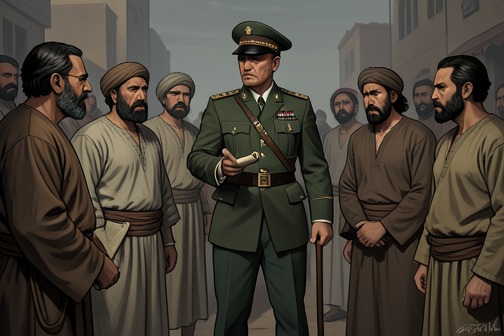
The [British occupation of Egypt](entity:event-recall-event-british-occupation-of-e-e6c4bb3cb2c3) began in 1882 and became a defining example of how imperial authority could be sustained by a union of political control and claims to superior knowledge. In [Edward Said](entity:character-recall-character-edward-said-658b99159564)’s account, [Egypt](entity:location-recall-location-egypt-831f7ba4f646) was not simply governed: it was represented as backward and in need of Western direction, while British rule was presented as proof of the success of that direction. The occupation’s history thus exposes a central imbalance: those who ruled claimed the right to speak for Egypt, even as Egyptian nationalists demanded the power to determine its future.
## Occupation and the defense of British rule
The occupation followed the suppression of the nationalist rebellion associated with Colonel Arabi. It soon became an increasingly difficult presence to defend as Egyptian nationalism rose. By 1910, debate in the British House of Commons made the political problem explicit: some members questioned the necessity of England’s presence in Egypt, an occupation that had once been profitable but was now harder to justify. [Arthur James Balfour](entity:character-recall-character-arthur-james-balfou-b8b8fc2d91c0) responded by portraying Egypt as a special imperial problem, unlike places within [Britain](entity:location-recall-location-britain-3f5d255bbd7a), and by invoking the authority of his long experience in public and imperial affairs.
Balfour’s argument depended on a hierarchical account of knowledge. He represented British familiarity with Egyptian history as a reason for British authority, suggesting that the country was better understood by its rulers than by its own people. In this logic, Egypt’s ancient civilization could be acknowledged while its modern political claims were discounted: Egyptians were cast as a subject population whose past greatness did not confer the right to govern themselves. The language of understanding therefore served not simply to describe Egypt but to support rule over it.
## Cromer, administration, and the logic of tutelage
From 1882 to 1907, [Evelyn Baring, 1st Earl of Cromer](entity:character-recall-character-evelyn-baring-1st-e-347939d080af), served as Britain’s representative and effective master in Egypt. Balfour praised his administration in Parliament in 1907 and supported a retirement award of fifty thousand pounds. He described Cromer’s tenure as having raised Egypt from social and economic degradation to exceptional prosperity among Oriental nations. Yet Balfour did not explain how he measured Egypt’s supposed moral prosperity. The account instead points to British exports to Egypt, which equaled exports to the whole of Africa, as a measure of economic success benefiting both countries unevenly.
The deeper measure of imperial success was the continued British tutelage of Egypt. Scholars, missionaries, businessmen, soldiers, and teachers had helped prepare and carry out the occupation; high officials such as Cromer and Balfour then claimed the authority to direct Egypt’s development. This arrangement made government appear as instruction and intervention as improvement. Said emphasizes that the underlying theory was stark: Westerners would dominate, while Orientals would be dominated, with occupation, control of internal affairs, and the use of a subject population’s resources treated as ordinary consequences of that division.
Cromer made this principle explicit in his writing on subject races. Although he professed that British decisions should be guided by what rulers believed best for the governed, he rejected the political demands that would have made Egyptians authors of their own government. He opposed free native institutions, the end of foreign occupation, and national sovereignty. Against Egyptian nationalism, he proposed an enlarged cosmopolitanism, claiming that Egypt’s future lay beyond a narrowly national political identity. The contradiction is central: the colonized population’s interests were invoked as the reason for rule, but its expressed wishes could be dismissed whenever they challenged imperial authority.
## Knowledge, representation, and unequal voices
The occupation operated through a reciprocal relation between knowledge and control. British officials treated their expertise about Egypt as a warrant for administering it; the greater the power to govern, the greater the demand for information that would make governance effective. In this arrangement, Egypt appeared as an object that could be classified and managed, while Egyptian demands for self-government were rendered evidence of inadequate understanding rather than legitimate political claims.
Said connects this structure to a wider Orientalist practice of speaking for people whose voices the governing account excludes. His example of [Gustave Flaubert](entity:character-recall-character-42a41affd25a)’s encounter with Kuchuk Hanem, an Egyptian dancer and courtesan, shows the intimate form of the same imbalance: [Flaubert](entity:character-recall-character-a0b74e2c2624) represented her to European readers, while she was not given a voice with which to describe her own emotions or history. The episode is not the occupation itself, but it clarifies the broader pattern at work in imperial representation: a European observer’s social and political advantage could become authority to define the person observed. In Egypt, that authority operated at the scale of government as well as literature.
Colonial description could also displace local historical perspectives. The immense French Description de l’Égypte, produced in the context of Napoleon’s invasion, treated Egypt through the categories and purposes of European knowledge. Set against it, the three-volume account of the invasion by the Egyptian historian Abdal-Rahman al-Jabarti records events from the position of the invaded. The contrast shows why an official or scholarly account cannot be assumed to be neutral merely because it presents itself as systematic: the circumstances and power of its production shape what it can make visible and whose history it can suppress.
## Imperial legacy and historical significance
British administration was not the only consequence of the occupation. The more intimate, proprietary European handling of the Orient, accumulated through scholarship and travel as well as colonial rule, helped turn a place imagined as alien into colonial space. In this context, British authority in Egypt differed from French attraction to the region: Britain possessed an actual political presence, while France could be portrayed as culturally appealing without exercising the same control over Egyptian territory. The distinction made the competition between European powers another part of the story of how Egypt was claimed and represented.
The occupation’s significance therefore exceeds the duration of a particular administration. It illustrates how imperial rule could be defended through a system that joined intervention to claims of expertise, described domination as benevolent tutelage, and represented national resistance as a failure to recognize what was supposedly best for the subject population. Said’s account also refuses to let that system stand as the whole of Egyptian history. The insistence that history can be rewritten, but also made and unmade through silences and exclusions, places the occupation within a contested past: one in which imperial representations sought to speak for Egypt, while Egyptian political agency remained indispensable to understanding what British rule meant.
Event 42
Chateaubriand’s voyage to the Levant

[Chateaubriand’s voyage to the Levant](entity:event-recall-event-chateaubriand-s-voyage-0e3d9d901108), undertaken in 1805–1806 and published in the 1810–1811 Itinéraire de Paris à Jérusalem, was less an inquiry into the region than a pilgrimage through which its author staged his own religious, literary, and national identity. He brought a ready-made self and a dense store of expectations to the journey, then made the Orient answer to them. The resulting account mattered not only as travel writing: it gave early, memorable form to the claim that [Europe](entity:location-recall-location-europe-90be8cc79c46) could conquer the Orient in the name of liberty and Christian renewal, while showing how an imperial imagination could make the traveler, rather than the people and places encountered, the center of the story.
## Journey and Pilgrim’s Purpose
The book records a journey made after [Chateaubriand](entity:character-recall-character-6996a4985e53) had traveled in North America. Its hundreds of pages were accompanied by his admission that “je parle eternellement de moi.” Stendhal, hardly a self-effacing writer, attributed Chateaubriand’s failure as a knowledgeable traveler to what he called his “stinking egotism.” The criticism points to more than a conspicuous autobiographical manner: Chateaubriand arrived with personal objectives and assumptions already in place, and then arranged people, places, and ideas as if his imagination could meet no resistance.
The journey’s purposes included a design of symmetry and completion. Having seen the natural monuments of the New World, Chateaubriand wanted to complete his studies with the Orient’s monuments of knowledge. After examining Roman and Celtic antiquity, he turned toward the ruins of [Athens](entity:location-recall-location-athens-829baca0905a), Memphis, and [Carthage](entity:location-recall-location-carthage-dbc1b2ea2da4); he also sought to replenish his supply of images and confirm the universal significance he assigned to religious feeling. The journey was thus not simply a route through places. It was a planned addition to a personal archive, intended to complete the traveler’s intellectual and imaginative circuit.
His pilgrimage identity was itself a construction. Chateaubriand called Bonaparte the last Crusader and described himself as the last Frenchman to leave his country for the [Holy Land](entity:location-recall-location-holy-land-0607738951e2) with the ideas and sentiments of an earlier pilgrim. That self-description made the modern journey continuous with a Christian past and turned travel into a role he could inhabit. His account of religion followed the same pattern: he presented religion as a universal language, yet treated Islam as an inferior religion and approached it through assumptions that had already determined what the encounter could mean.
## [The Orient](entity:location-recall-location-the-orient-a31e9b118435) Recast as a Christian Mission
Chateaubriand’s account repeatedly substitutes his prior judgments for what the journey might have taught him. He called the Qur’an “le livre de Mahomet” and claimed that it contained no principle of civilization or precept capable of elevating character. He went further, asserting that it preached neither hatred of tyranny nor love of liberty. These declarations do not emerge as conclusions reached through open inquiry; the book’s analysis emphasizes that he freely invented as he went along, making the Orient confirm a verdict carried there in advance.
This verdict shaped his descriptions of people as well as texts. He depicted the Oriental Arab as civilized humanity fallen back into savagery. When Arabs tried to speak French, he likened his own response to Robinson Crusoe’s thrill on hearing his parrot speak for the first time. The comparison reduces human speech to an exotic spectacle for a European observer. Bethlehem offered, in his account, a rare semblance of what he regarded as real—European—civilization, but he even misread the place’s etymology. Elsewhere he characterized Arab civilization, religion, and manners as barbaric and antithetical, language that made reconquest seem deserved.
The [Crusades](entity:event-recall-event-crusades-82b7a8524e4b) supplied the historical argument for that conclusion. Chateaubriand denied that they were aggression, presenting them instead as a just Christian counterpart to Omar’s arrival in Europe. Even on the supposition that the Crusades had been aggressive, he argued that their true stakes surpassed ordinary questions of conquest: they set a civilization hostile to knowledge, liberty, and freedom against a Christian civilization that had revived the genius of antiquity and abolished servitude. By framing the conflict in these terms, he could cast European violence as a moral and civilizational remedy rather than as domination.
## Liberty as a Justification for Conquest
The book identifies Chateaubriand’s writing as an early significant instance of a theme that would acquire great authority in European accounts: Europe teaching the Orient the meaning of liberty. Chateaubriand and those who followed him assumed that Orientals, especially Muslims, knew nothing of it. In his description, they lacked both liberty and propriety, worshipped force, and, without conquerors administering what he called heavenly justice, resembled leaderless soldiers, citizens without legislators, and a family without a father.
The implication was explicit: Orientals required conquest. The account presents the striking continuity between a French traveler writing in 1810 and the later colonial reasoning associated with Cromer in 1910. In both, Western conquest could be declared not conquest at all, but liberation. Chateaubriand cast that reversal in Romantic Christian language: Europe was to revive a dead world and recognize a potential supposedly hidden beneath its degenerate surface. The traveler should therefore use the Old Testament and the Gospels as guides in [Palestine](entity:location-recall-location-palestine-d5e8fae9f5c4), reading the present through sacred texts rather than seeking to understand the modern people and their future.
That method contains the central contradiction of the pilgrimage. Chateaubriand’s vision claimed to disclose the Orient’s need for renewal, yet, as the book observes, it revealed nothing to him about the modern Oriental or his destiny. The liberty at issue served principally as Chateaubriand’s own release from what he construed as the Orient’s hostile wastes. The region became a stage for the traveler’s spiritual and interpretive freedom, while the people inhabiting it appeared as objects to be judged, redeemed, or reconquered.
## The Traveler’s Ego and the Afterlife of the Journey
For Chateaubriand, the Orient was a depleted canvas awaiting restoration by his imagination. The more he contemplated the wonders he had assigned to it, the more his account returned to the authority of the self that had created them. This is the reverse of Lane’s method: where Lane’s prose, in the book’s comparison, suppresses the ego to offer detailed representation, Chateaubriand makes everything he says about the Orient dependent on his own volatile presence. The difference is not that one account simply escapes Orientalist construction. The book stresses that both approaches exerted influence over how the Orient was described, though one claimed impersonal scientific authority and the other made the region the terrain of personal fantasy.
The voyage’s ending sharpens the connection between travel and self-preservation. In [Egypt](entity:location-recall-location-egypt-831f7ba4f646), Chateaubriand could do no more than look at the Pyramids from a distance, so he sent an emissary to inscribe his name on the stone, calling it one of the little obligations of a pious traveler. The gesture turns a distant monument into a surface for the author’s mark. At the end of the Itinéraire, he looks back on twenty years spent studying the chances and sorrows of exile and says that each of his books had prolonged his existence. He had no home and no prospect of acquiring one; should heaven grant him eternal rest, he promised to devote himself silently to erecting a monument to his country. On earth, he was left with his writing: if his name survived, it had been enough; if it did not, it had been too much.
The Pyramid inscription and the closing reflection illuminate one another. Writing and inscription function as acts of life: Chateaubriand’s name had to touch even a remote stone if his existence was to continue through his work. The book contrasts this with Lane’s surrender of the personal self to a technical discipline, in which scholarship might remain useful without surviving as a human document. Chateaubriand instead made the account signify himself; if it could not prolong his life, it risked becoming superfluous. His pilgrimage therefore returns, at its close, not to a transformed understanding of the Orient but to the author’s effort to extend his own presence.
The two writers also mark the limited alternatives available to later travelers who took their work into account, sometimes copying from it verbatim: scientific writing in Lane’s manner or personal utterance in Chateaubriand’s. The former could treat collective descriptions as possible and mistake its own observations for realities made by the Orient; the latter could reduce the Orient to private fantasy, however aesthetically elevated. Chateaubriand’s journey is consequential within this argument precisely because its self-display does not make its political vision harmless. The traveler’s intensely personal voice and his image of European redemptive authority reinforce one another, allowing an imperial claim to present itself as both an act of civilization and the drama of an individual life.
Event 43
Lamartine’s 1833 voyage to the Orient

[Lamartine’s 1833 voyage to the Orient](entity:event-recall-event-lamartine-s-1833-voyage-e223eac75564) is presented as a pilgrimage that turns into a political fantasy: the traveler’s European imagination progressively overwrites the places and people he encounters, until his account treats the Orient as territory that [Europe](entity:location-recall-location-europe-90be8cc79c46) may occupy and dispose of. [Edward Said](entity:character-recall-character-edward-said-658b99159564) traces this shift from poetic expectation to imperial vision, showing how a journey ostensibly undertaken to see the East instead makes it conform to inherited texts and culminates in a claim of European right-to-power.
## A Journey Prepared in Advance
[Lamartine](entity:character-recall-character-32fd1d5b06b4) set out in 1833 describing the journey as something he had long dreamed of and as a major act of his inner life. He did not approach it as an uncommitted observer. His sympathies and antipathies were already arranged: he hated [Rome](entity:location-recall-location-rome-3ec0a741c1f4) and [Carthage](entity:location-recall-location-carthage-dbc1b2ea2da4), loved Jews, Egyptians, and Hindus, and imagined himself becoming their Dante. A formal verse farewell to France listed what he intended to do in the Orient before he embarked. The journey therefore began with a plan for what the East would mean, rather than with an open-ended account of what its people and places might disclose.
At first, encounters appeared to confirm Lamartine’s poetic predictions or furnish material for analogy. He cast Lady Hester Stanhope as the Circe of the desert, called the Orient the homeland of his imagination, characterized Arabs as primitive, and read biblical poetry into the landscape of [Lebanon](entity:location-recall-location-lebanon-77be8160c97f). The contrast between Asia’s expansiveness and Greece’s comparative smallness likewise became part of his prearranged interpretive scheme. In Said’s account, these responses reveal the traveler turning observation into confirmation: people and landscapes gain significance chiefly through their fit with his literary and historical expectations.
## [Palestine](entity:location-recall-location-palestine-d5e8fae9f5c4) and the Authority of Imagination
After reaching Palestine, Lamartine became, in Said’s description, an irrepressible maker of an imaginary Orient. He judged the plains of Canaan more impressive as represented in paintings by Poussin and Lorrain. The journey, previously described as a translation, became a prayer that exercised memory, soul, and heart more than sight or understanding. This change makes the imbalance between physical travel and imaginative possession explicit: the experience of being present gives way to the act of recollecting and remaking what is present.
His observations increasingly subordinate what he sees to European religious and literary reference. A woman recalls Haidee in Don Juan; the relation between Jesus and Palestine is compared to Rousseau and Geneva; the actual Jordan matters less to him than the spiritual mysteries it evokes. Lamartine describes Orientals, especially Muslims, as lazy and portrays their politics as capricious, passionate, and without a future. Another woman brings Atala to mind. He disputes whether Tasso or [Chateaubriand](entity:character-recall-character-6996a4985e53) had represented the [Holy Land](entity:location-recall-location-holy-land-0607738951e2) correctly, while his confident discussion of Arabic poetry proceeds despite his ignorance of Arabic. The details vary, but the operation recurs: existing texts and personal associations determine the meaning of the people, language, and places encountered.
Lamartine casts the region as a land of wonders and himself as its appointed poet in the West. Said emphasizes the self-authorizing logic of this role: Lamartine becomes a prophet simply by residing in the Orient. Residence, rather than linguistic knowledge or demonstrated authority among the people he describes, is made sufficient warrant for speaking about the region. The pilgrimage thus turns physical presence into a credential for imaginative representation.
## From Pilgrim to European Sovereign
By the narrative’s end, Lamartine has reached the Holy Sepulchre, which he treats as the beginning and end of time and space. Yet reaching this destination does not lead him into sustained attention to the surrounding world. Instead, he retreats from geographical reality toward contemplation, solitude, philosophy, and poetry. The pilgrimage’s endpoint confirms the inward direction of the journey: the region becomes material for a consciousness increasingly absorbed in its own religious and aesthetic designs.
That inward movement expands into a political one. Lamartine rises above the geographical Orient and becomes, in Said’s reading, a latter-day Chateaubriand, surveying the East as if it were a personal—or at least French—province available for disposal. He is no longer merely a traveler in particular places. His consciousness identifies itself with Europe as a whole, and he imagines the Orient undergoing an inevitable future dismemberment under European suzerainty. His political vision assigns Europe the right to occupy territories and coasts, establish free cities, colonies, and commercial ports, and offer its protection to nations he describes as lacking territory, homeland, rights, laws, and security.
The shift is consequential: in Said’s account, Lamartine’s pilgrimage does not merely reproduce inherited representations but carries them toward a program of geopolitical control. The traveler’s personal interpretations become a continental claim. The populations before him appear not as political agents with histories and claims of their own, but as fragments awaiting European direction. What begins as a literary and religious journey thus culminates in an imagined authority to rearrange the region.
## Erasure and the Political Ending
Said calls Lamartine’s vision an unusually complete recapitulation of the Orient as fabricated by Orientalism. The traveler’s imperious consciousness first penetrates the region through observation and analogy, then seems to disappear into impersonal, continent-wide control. The places visited, people met, and experiences lived leave only faint echoes in the account’s generalizations. Rather than preserve their particularity, the narrative converts them into material for a political vision that recalls the Napoleonic dream of world hegemony.
The closing political summary makes that erasure especially visible. Said stresses that the Orient’s geopolitical reality has been overlaid by Lamartine’s plans for it; the final traces of particularity are rubbed out in the résumé politique with which the Voyage en Orient concludes. The ending is therefore not simply a return from travel. It completes the transformation of travel into a scheme: Europe appears as the power that can define the region’s future, while the people and histories encountered along the way recede from view.
Said’s account also places this transformation within a broader relation of unequal representation. He argues that Orientalist descriptions acquire force not merely from what they claim to know, but from the power that allows a European writer to represent others and have that representation circulate. Lamartine’s voyage supplies a concentrated example: poetic expectation shapes observation, observation is generalized into claims about whole populations, and those claims support a vision of European suzerainty. Its significance lies in that sequence, in which an individual’s imaginative possession of the East becomes continuous with a political fantasy of possessing and directing it.
Event 44
Nerval’s 1842–1843 voyage to the Orient

[Nerval’s 1842–1843 voyage to the Orient](entity:event-recall-event-nerval-s-1842-1843-voya-7f424b27c7a8) took the form of an unfinished personal and aesthetic quest rather than a settled account of a region mastered by travel. In *Voyage en Orient*, encounters in [Egypt](entity:location-recall-location-egypt-831f7ba4f646) and elsewhere mingle with dreams, digressions, and borrowed scholarship: the journey depends on Orientalist knowledge, yet resists the finality of treating the Orient as a stable object to be classified and possessed.
## Preparation and purpose
[Nerval](entity:character-recall-character-cf29910b4dc1) arrived with substantial prior reading in classical literature, modern writing, and academic Orientalism, although his knowledge was less systematic and disciplined than [Gustave Flaubert](entity:character-recall-character-42a41affd25a)’s. His later claim in *Les Filles du feu* that he knew the Orient only through a half-forgotten school memory is contradicted by *Voyage en Orient*. The discrepancy matters: his imaginative freedom did not arise from an absence of inherited representations. Rather, he carried those representations into the journey and used them within a highly personal project.
For Nerval, the voyage followed the wider nineteenth-century search for renewal in an antique and exotic Orient, but its purpose was especially private. He followed the traces of personal sentiments and dreams, in a manner compared with Sterne’s Yorick. The region became a place of déjà vu, repeatedly revisited in writing after the physical journey ended. Even where his Oriental writings register disappointment, disenchantment, or demystification, the Orient remains available to his imagination as more than a documentary subject.
## A journey made of fragments and digressions
*Voyage en Orient* is not a single, continuous travel narrative. It gathers notes, sketches, stories, and fragments, while Nerval’s wider engagement with the Orient also appears in *Les Chimères*, his letters, fiction, and other prose. His account alternates impressions, dreams, and memories with ornate, mannered passages in an Oriental style. The actual difficulties and circumstances of travel in Egypt, [Lebanon](entity:location-recall-location-lebanon-77be8160c97f), and Turkey coexist with deliberate digression, making the journey wander from its apparent route rather than proceed toward a single explanatory destination.
Nerval’s account also turns on an energetic narrative consciousness, equipped, as he says, with two Arabic words: *tayeb*, assent, and *mafisch*, rejection. The pair suggests a selective way of meeting an antithetical world, accepting or refusing what it presents while seeking its concealed principles. Yet the account does not resolve that search into a systematic knowledge. Its movement is an “antinarrative” and a “para-pilgrimage”: Nerval invests himself in the Orient through an enduring intention to bring thought into contact with physical action, an intention never fully realized.
His imagined Orient is charged with concealment and desire. He is predisposed to see it as a land of dreams and illusion, and reads the veils he observes in Cairo as concealing a rich female sexuality. Egypt in particular becomes a maternal center, mysterious yet accessible, from which wisdom seems to flow. That symbolic investment helps explain why travel impressions do not settle into neutral description: places and encounters are drawn into a personal mythology even as their particularity resists complete narrative closure.
## Intimacy, stories, and uncertain identities
Nerval’s encounter with Zaynab distinguishes his experience from that of Edward William Lane. Like Lane, he recognizes the social necessity of marriage in an Islamic society, but he also becomes attached to a woman. The liaison is presented as more than an accommodation to social convention: Nerval imagines joining himself to a young woman of the soil as a return to an original homeland and to sources of poetry and ancestral faith. He also casts the desire as a wish to live his life like a novel, deliberately creating complication and action around himself. The imagined union thus belongs at once to the social world of the journey and to its self-conscious literary design.
Even the two substantial plotted tales, “The Tale of the Caliph Hakim” and “The Tale of the Queen of the Morning,” do not provide the stable narrative that their scale might promise. Both involve multiple identities, and incest is explicitly one of their motifs. Instead of fixing identity or bringing events to a material resolution, they lead further into a haunting interior world of paradox and proliferating dreams. The stories reinforce the voyage’s refusal of a firm boundary between travel experience, personal dream, and imaginative construction.
## Borrowed authority and an unresolved return
The account’s resistance to systematic description does not mean that it escapes Orientalist writing. Nerval incorporates numerous pages copied from Lane’s *[An Account of the Manners and Customs of the Modern Egyptians](entity:object-recall-object-an-account-of-the-mann-b0c7f4e61b19)*. The borrowed material carries the confidence of a recognized scholarly source, but in Nerval’s work even its lucidity seems to dissolve within the cavernous, endlessly decomposing character of his imagined Orient. The contrast is revealing: he draws on documentary authority while failing—or declining—to organize the region through a single, controlling framework.
That dependence becomes most visible against the scale of Nerval’s ambition. His appetites seek to gather experience and memory without discrimination, but the voyage does not produce a stable Oriental reality or a systematic account of it. After the journey, its particular embodiments remain brilliant but fragmented, and the self that undertook the search is described as no less drugged and worn out than before. [The Orient](entity:location-recall-location-the-orient-a31e9b118435) consequently appears in retrospect as a negative realm in which failed narratives, disordered chronicles, and transcription of scholarly texts become possible vessels for what cannot be secured by direct experience.
The return to [Europe](entity:location-recall-location-europe-90be8cc79c46) sharpens this sense of loss. Reaching Malta on the way back to the European mainland, Nerval recognizes that the Orient has already become one of his morning dreams, soon displaced by the vexations of the day. This ending does not complete the pilgrimage by reconciling desire with knowledge. Instead, the voyage persists as recollection and absence: it remains reliant on Orientalist texts and images, but its fragments and unresolved dreams keep it from becoming a comprehensive act of appropriation.
Event 45
Flaubert’s 1849–1850 voyage to the Orient

[Gustave Flaubert](entity:character-recall-character-42a41affd25a)’s 1849–1850 voyage to the Orient became both a rich source for his literature and a test of the distance between seeing a place and entering its life. His letters and travel notes record people, settings, and bodily detail with startling exactness; his fiction reshapes that material through Western learning, theatrical presentation, and an enduring association between the Orient and sexual spectacle.
## Preparation and Expectations
[Flaubert](entity:character-recall-character-a0b74e2c2624) arrived with extensive prior reading in classical and modern literature and academic Orientalism. Unlike [Gérard de Nerval](entity:character-recall-character-d1bae75e7c80), whose public account understated what he knew, Flaubert was candid about the learning that preceded his journey. Yet travel offered more than confirmation of a scholarly picture: it served a personal and aesthetic search for a visionary alternative to provincial France, imagined as a world of vivid color, spectacle, and mystery rather than grey routine.
In a letter to his mother, Flaubert said that the Orient exceeded even his expectations. What had been vague in his mind, he wrote, appeared clearly delineated; facts had replaced suppositions, with the force of rediscovered dreams. That confidence in recognition sits beside a more difficult result of the journey: the country he encountered did not simply match an image but confronted him with a living reality he could observe more readily than join.
## Encounters and the Traveling Eye
Flaubert’s travel notes and letters make the journey a record of sharply observed bodies, places, and incongruities. He took pleasure in their bizarreries rather than smoothing them into a single account, and his eye-catching details became carefully fashioned phrases. His remark that inscriptions and bird droppings were the only signs of life in [Egypt](entity:location-recall-location-egypt-831f7ba4f646) turns close observation into an uneasy judgment: the scene is rendered with precision, yet the life it registers seems diminished to traces. In Upper Egypt, ancient Egyptian art drew from him a similarly divided response. He admired its preciosity and deliberate lubricity, then wondered whether such images meant that dirty pictures had existed even in antiquity.
That attention to exact detail could become a clinical spectacle. At Kasr el-'Aini Hospital, Flaubert recorded a physician’s examination of patients with syphilis: at a signal, men stood on their beds, unfastened their trousers, and exposed their chancres as if following army drill. He noted the patients’ wounds and deformities, then described the dissecting room, where an Arab cadaver lay open on a table. The scene’s lurid exactness is not incidental to his literary method. In his novels, illness likewise appears as though staged for clinical inspection; the travel record’s conjunction of dissection and beauty also recalls the ceremonial death of Matho at the end of Salammbo. The account suppresses any sustained expression of repulsion or sympathy, making exact rendering—not an acknowledged relationship with the people observed—the organizing principle.
## Kuchuk Hanem and the Sexualized Orient
The most celebrated episode of Flaubert’s travels centered on Kuchuk Hanem, an Egyptian dancer and courtesan whom he met at Wadi Haifa. His earlier reading in Edward William Lane had acquainted him with the almehs and khawals, but the encounter gave a more intimate and troubling force to the learned associations surrounding the almeh. The word meant a learned woman; in eighteenth-century Egyptian society, it referred to women accomplished in reciting poetry. By the mid-nineteenth century it had become a guild-like title for dancers who were also prostitutes, a shift embodied by Kuchuk Hanem herself.
Flaubert watched her dance “L’Abeille” before sleeping with her. He made her a model for several fictional women, valuing a combination of learning, sensuality, and delicacy that he also described in terms of mindless coarseness. His account lingers on the bedbugs’ nauseating odor mingling with the scent of her sandalwood-perfumed skin, yoking bodily discomfort to attraction. He later told Louise Colet that the Oriental woman was merely a machine, unable to distinguish one man from another. The claim makes his gaze explicit: Kuchuk’s distinct presence is converted into a generalized image of feminine availability, even as his writing turns the encounter into an occasion for elaborate reverie.
Watching Kuchuk asleep, her head against his arm and his finger slipped beneath her necklace, Flaubert recalled nights in Paris brothels and listened to songs whose words meant nothing to him. The remembered scene joins travel observation to fantasy and literary material, but it also exposes the limits of his participation. [The Orient](entity:location-recall-location-the-orient-a31e9b118435), like Kuchuk, did not respond to his presence; Flaubert remained a watcher, unable or unwilling to enter the life before him. Across his journey, sexual promise and threat became a recurring Western association with the Orient, given particular artistic force in his work but not thereby freed from the asymmetry of the observing gaze.
## Travel Transformed into Literary Form
The journey’s significance extends beyond the episodes Flaubert recorded: travel became material for a deliberately constructed literary world. The book describes his Oriental novels as labored, learned historical reconstructions. [Carthage](entity:location-recall-location-carthage-dbc1b2ea2da4) in *Salammbô* and the visions in *The Temptation of Saint Anthony* grew from extensive reading in predominantly Western sources on religion, warfare, ritual, and society. His fiction retained memories of travel, but did not simply reproduce them; experience was reorganized into theatrical forms, with attention not only to what appeared before him but to the way it presented itself to his gaze.
That transformation also answered a persistent difficulty. Before the continuing life of the Orient, Flaubert experienced a detached powerlessness, or at least an unwillingness to become part of what he saw. The problem predated his journey and remained afterward. In *The Temptation of Saint Anthony*, he countered it through encyclopedic presentation: reality unfolds as books, spectacles, and pageants offered to a distant observer. The work’s learned abundance thus becomes a formal response to the gap between observation and participation, rather than proof that the gap has been overcome.
The parade of knowledge in Saint Anthony’s vision recalls the theatrical displays Flaubert encountered on the journey, including the examination of patients at Kasr el-'Aini Hospital and Kuchuk Hanem’s dance. Anthony is a celibate beset chiefly by sexual temptations; at the end, he is granted a delirious vision of life being born. The scene is pointedly ironic. During his travels Flaubert had felt himself incompetent to enter the processes of life, and Anthony’s final wish to become matter and life remains a desire whose fulfillment the work does not establish.
Flaubert’s own reflections make the epistemic limit explicit. He observed that concentrating on details could make the whole harder to grasp, even as separate pieces seemed to fall into place of themselves. The result could be spectacular form, but not full participation for the Westerner who shaped it. He also feared that, without spirit and style, the mind would lose itself in archaeology—in regimented antiquarian accumulation. The journey therefore supplied both vivid materials and a problem of knowledge: exact looking could animate literary form, yet leave the life observed at a distance.
Event 46
Burton’s pilgrimage to Mecca and Medina

[Richard Francis Burton](entity:character-recall-character-e971b233a115)’s pilgrimage to Mecca and [Medina](entity:location-recall-location-medina-40a680d0edac) stands at the point where lived experience and imperial knowledge meet. Disguised as an Indian Muslim doctor, fluent in Arabic and deeply versed in Islam, Burton accomplished a journey that required him to negotiate the rules of a society he had entered as a foreigner. [Edward Said](entity:character-recall-character-edward-said-658b99159564) treats that achievement as real cultural immersion, but not as unmediated access: the pilgrimage’s authority is also Burton’s authority to interpret, classify, and narratively manage the life around him. Its decisive significance lies in this double movement, in which the traveler’s freedom from European conventions becomes inseparable from a European claim to mastery over the Orient.
## Background and Form
Burton’s accounts of travel in the East occupy a middle position between two established modes of Orientalist writing. One is represented by Edward William Lane, whose authority rests on the detached observation of society and customs; the other by French travel writers, whose narratives make the traveler a central figure in adventure and fantasy. Burton’s work combines these tendencies. He writes as an authoritative commentator on the societies he visits, but also makes his own passage through them the narrative’s organizing experience.
The pilgrimage form is especially important in this account of Burton. His Oriental narratives follow journeys to places of religious, political, and economic significance; in The Land of Midian Revisited, the journey even returns to sites visited before. In the pilgrimage to Mecca and Medina, the traveler is not simply a recorder stationed outside the events. He is their principal character, moving through obstacles and making the progress of his own knowledge part of what the reader is asked to follow.
## Entry into the Pilgrimage
Burton’s access depended on practical knowledge as well as disguise. Speaking Arabic flawlessly and possessing an intimate command of Islam, he presented himself as an Indian Muslim doctor and accomplished the pilgrimage to Mecca. The disguise enabled his passage, but the account does not reduce success to a costume or a single stratagem: Said emphasizes the knowledge of language, belief, conduct, and social codes that made Burton capable of moving through a culture whose conventions he understood.
The journey also depended on Burton’s willingness to loosen his European origins enough to live, for its purposes, as an Oriental. Said contrasts this achievement with that of [T. E. Lawrence](entity:character-recall-character-t-e-e682eddaa09d), arguing that Burton became an Oriental more successfully. The distinction concerns not a change of origin but a capacity to absorb and use another society’s systems of information and behavior. The narrative’s foreign traveler repeatedly confronts obstacles in an unfamiliar place and prevails because his knowledge is sufficient to negotiate them.
## Knowledge as Passage and Narrative Authority
For Said, Burton’s unusual strength was his awareness that social life is governed by rules and codes. He understood the Orient, and Islam in particular, as systems of information, behavior, and belief: to belong to them was to know certain things in particular ways. He also recognized that these systems had histories and were shaped by geography and by the specific circumstances of social development. The pilgrimage is therefore more than a record of physical movement. Its prose presents a consciousness steering through an unfamiliar society by learning how its practices work.
That emphasis on situated knowledge distinguishes Burton’s generalizations from claims made without comparable firsthand experience. Said points to Burton’s discussions of kayf among Arabs and of education as suited to the Oriental mind, which he describes as a rebuttal to Thomas Babington [Macaulay](entity:character-recall-character-c6c10cbbb90c)’s assertions. In Said’s account, such passages bear the marks of a writer who had lived in the region, observed its life, and tried to see it from within. Burton’s expertise is presented as something earned through residence and encounter, not merely inherited from scholarly convention.
Yet the same knowledge that makes passage possible also establishes Burton’s authority over what the passage means. [The Orient](entity:location-recall-location-the-orient-a31e9b118435) is never given directly in the writing: it comes to the reader through Burton’s interventions, which Said describes as knowledgeable and often prurient. The narrative repeatedly reminds readers that Burton has mastered the information through which Oriental life is made legible. His footnotes, like those in his translation of [One Thousand and One Nights](entity:object-recall-object-one-thousand-and-one-n-b20156d189bc), serve as testimony to that mastery. The traveler crosses into another society, but the account places his commentary above the society it represents.
## Individual Defiance and Imperial Consequence
Burton’s relation to authority makes this narrative position contradictory rather than simply triumphant. He was a fiercely individualistic traveler, conscious of himself as a rebel against the uniform authority of European teachers and professional scholars. His writing could display a pleasure in knowing more than academic Orientalists and in handling material with greater wit, tact, and freshness. The East also offered him an imagined freedom from Victorian moral authority. In that respect, the journey gave his resistance to European constraints a setting and a form.
But rebellion did not remove Burton from the imperial order. Said stresses that he could think of himself at once as a rebel against authority and as a potential agent of authority in the East. His sympathetic self-association with Arabs coexisted with imperialism, and his knowledge did not dissolve that political contradiction. Instead, the pilgrimage shows how individuality encounters and merges with the voice of Empire: both depend on an organized command of rules, codes, and habits of knowledge.
Said makes the merger visible in Burton’s description of [Egypt](entity:location-recall-location-egypt-831f7ba4f646) as a prize tempting European ambition. The example exposes how the idiosyncratic master of Oriental knowledge can feed into a broader European ambition to rule the region. The pilgrimage’s achievement is therefore inseparable from its representational consequence. Burton’s ability to live among people and negotiate their social codes gives his account an experiential authority, while the narrative’s control of that experience makes the society appear available to European understanding and management.
## Significance
The pilgrimage anticipates the later figure of the Orientalist who is also an imperial agent. Said places Burton in a line that includes T. E. Lawrence, Edward Henry Palmer, [D. G. Hogarth](entity:character-recall-character-c1ef3d7481e2), [Gertrude Bell](entity:character-recall-character-0cc2b9263396), Ronald Storrs, [St John Philby](entity:character-recall-character-2e2469eb29be), and William Gifford Palgrave. Burton’s two purposes—using residence in the East for scientific observation and preserving his individuality—do not remain balanced. His individuality ultimately submits to the conditions of observation, because Said argues that the knowledge he possesses is possible only through a European’s self-conscious way of seeing society as a system of rules and practices.
The journey thus resists a simple story of either successful identification or detached colonial observation. Burton’s immersion matters: his linguistic and religious knowledge enables a passage that Said regards as exceptionally complete. But immersion does not grant the reader transparent access to the people among whom he travels. Their world reaches the page through his accumulated expertise and narrative interventions. The pilgrimage’s central tension is that the traveler can become sufficiently at home in an unfamiliar system to move through it, while the authority he gains continues to organize that system as an object of European knowledge and power.
Event 47
Anglo-French partition planning of the Ottoman Near East

[Anglo-French partition planning of the Ottoman Near East](entity:event-recall-event-anglo-french-partition-782e74fc4ae5) was the effort by [Britain](entity:location-recall-location-britain-3f5d255bbd7a) and France to organize Ottoman territories into spheres of influence and prospective mandates or occupied zones. In [Edward Said](entity:character-recall-character-edward-said-658b99159564)’s account, these plans grew from imperial rivalry but also depended on a shared presumption: that the region was a legible space whose future European powers could allocate. Their significance lies both in the diplomacy itself and in the knowledge framework that made partition appear administratively reasonable, even as local political actors and claims to self-determination complicated it.
## Imperial Interests and Rivalry
By the early twentieth century, British and French interests converged in the territory of the weakening [Ottoman Empire](entity:location-recall-location-ottoman-empire-ee1b7cdfae77), but the two powers occupied different strategic positions. Britain was established in [Egypt](entity:location-recall-location-egypt-831f7ba4f646) and Mesopotamia and used a series of treaties with local rulers, whom Said describes as powerless, to exert control over the [Red Sea](entity:location-recall-location-red-sea-8a08098c4e2c), Persian Gulf, Suez Canal, and much of the land between the Mediterranean and [India](entity:location-recall-location-india-39df7eae59c1). France, by contrast, was presented as hovering over the region and intervening through projects modeled on [Ferdinand de Lesseps](entity:character-recall-character-79637bbf1cc2)’s canal enterprise. Among these were proposed railway schemes, including a Syrian-Mesopotamian line planned across territory regarded as largely British.
French activity also rested on a declared role as protector of Christian minorities, including Maronites, Chaldeans, and Nestorians. That claim gave French policy a particular rationale, but it did not displace the larger territorial contest. Despite their differences, Britain and France agreed in principle that Asiatic Turkey should eventually be partitioned. The rivalry therefore operated alongside a shared commitment to European management of Ottoman lands: the powers competed over position while accepting the premise that the territory’s political future could be decided between them.
## Plans for Partition
Partition planning developed before and during the [First World War](entity:event-recall-event-dc540822680c). Secret diplomacy first sought to define spheres of influence and then to arrange territories as mandates or occupied zones. In France, expansionist feeling associated with the geographical movement increasingly focused on plans to divide Asiatic Turkey; in Paris, a conspicuous press campaign for partition was launched in 1914. In Britain, committees were commissioned to study and recommend how the region should be divided.
The [Bunsen Committee](entity:organization-recall-organization-bunsen-committee-d8363d0fb074) was among the commissions from which joint Anglo-French teams emerged. The most famous team was headed by Mark Sykes and Georges Picot. The plans presented geographical space as something that could be apportioned equitably, and this division was also meant to ease Anglo-French competition. Yet the administrative language of an equitable allocation did not alter the underlying fact that the powers were designing the region’s political map without treating its inhabitants as equal decision-makers.
Sykes’s memorandum connected cooperation between Britain and France to the prospect of an Arab rising. He anticipated that such a rising would occur sooner or later and argued that the two powers needed better relations if it was not to become a curse rather than a blessing. The remark reveals the plans’ double purpose: partition was a means of managing relations between the European powers, while anticipated Arab political action was treated as a factor to be contained or managed within their calculations.
## Self-Determination and the Limits of Agreement
Anglo-French agreement did not settle the region’s political future. The Wilsonian program for national self-determination introduced an irritant into the negotiations because, as Sykes recognized, it seemed to invalidate the framework of colonial and partitioning schemes the powers had jointly constructed. The resulting conflict was not simply between two European governments: the region’s fate was also being contested among the imperial powers, local dynasties, nationalist parties and movements, and Zionists.
Said does not attempt to recount the entire complex history of the [Near East](entity:location-recall-location-40e86aab8d3f) in the early twentieth century. Instead, he emphasizes the assumptions through which the powers viewed the region and acted upon it. Britain and France regarded the Orient as a unified geographical, cultural, political, demographic, sociological, and historical entity over whose destiny they possessed a traditional entitlement. It was, in this view, an area east of [Europe](entity:location-recall-location-europe-90be8cc79c46) whose significance was defined in European terms, with European science, scholarship, understanding, and administration credited with having made it what it was. That outlook supplied a deeper rationale for partition than diplomatic convenience alone.
## Knowledge, Power, and Historical Consequences
The partition plans belong to a longer history of imperial intervention and Orientalist knowledge. Said connects the modern imperial sequence to Napoleon’s invasion of Egypt, the rise of Oriental studies, and the takeover of North Africa, then traces related undertakings in Vietnam, Egypt, and [Palestine](entity:location-recall-location-palestine-d5e8fae9f5c4) and the twentieth-century struggle over oil and strategic control in the Gulf, [Iraq](entity:location-recall-location-iraq-57b030bc9041), Syria, Palestine, and [Afghanistan](entity:location-recall-location-afghanistan-ea09a8d619a6). In this longer view, dividing territory is not an isolated diplomatic episode: it is one form of a continuing effort to shape political space and to represent that space through categories useful to imperial power.
The knowledge system behind this activity did not depend on a simple claim that the Orient was unfamiliar. It also assumed that the region could be made intelligible and manageable from outside, as an entity available for classification and administration. Said’s account of the Description de l’Égypte provides a related example of this displacement: European description could substitute its own account for Egyptian history and identify that account with world history, understood in practice as European history. The lesson for the partition episode is that maps and plans were consequential not only because they proposed borders or jurisdictions, but because they made European intervention appear to be the authoritative account of the region’s needs and future.
Said places such imperial arrangements within a continuing debate over responsibility and historical memory. He rejects the argument that attention to imperial depredations merely allows Arab and Muslim societies to evade responsibility in the present, stressing instead the long succession of ways empire continues to shape the lives of Palestinians, Congolese, Algerians, and Iraqis. His account sets this persistence alongside the rise of anticolonial nationalism, liberal independence, military coups, insurgency, civil war, and later political violence; each phase, he argues, produces its own reductive images and polemics. Partition planning is thus significant as both a historical attempt to organize Ottoman territory and an instance of the broader imperial process whose consequences outlast the diplomatic moment.
## Interpretive Significance
The episode illustrates the gap between a language of orderly allocation and the uneven distribution of political agency. European powers could describe their schemes as a rational division of geographical space, but their authority to make that division rested on an assumption of entitlement that discounted the region’s own histories and political claims. The anticipated Arab rising and the challenge of self-determination expose the limits of a plan conceived chiefly through relations among imperial governments.
Said’s critique does not reduce the history to a timeless opposition between East and West. He argues that Orientalism should be examined as a historically powerful system tied to political and economic institutions, rather than dismissed as a collection of false ideas that truth alone could dissolve. The Anglo-French schemes therefore matter as both policy and representation: they sought to reorganize territory, and they expressed a way of seeing the Near East as an object of European knowledge and control. His broader alternative is humanistic critique, which widens discussion by restoring historical context, complexity, and the possibility of coexistence in place of reductive identities and antagonistic debate.
Event 48
第一届国际东方学家大会

The [First International Congress of Orientalists](entity:event-recall-event-3866071fe02c) was held in Paris in 1873. In [Edward Said](entity:character-recall-character-edward-said-658b99159564)’s account, it marks an early public sign that Islamic and Semitic scholarship was lagging behind other areas of Orientalist learning: scholars saw the ancient-Semitic field as advancing, but judged the modern-Semitic section by a markedly less ambitious standard. The congress therefore matters not simply as an academic gathering, but as evidence of how inherited religious frameworks and racialized classifications persisted within learned study.
## Setting and Scholarly Context
Said places the congress within a longer history of [Islamic Orientalism](entity:concept-recall-concept-islamic-orientalism-3c0045a1d3bb) that, compared with other human sciences and even other branches of Orientalism, remained methodologically and ideologically backward and relatively insulated from developments in the humanities and from historical, economic, social, and political circumstances. He suggests that this lag was already discernible in the late nineteenth century, partly because Semitic and Islamic studies had not substantially loosened their ties to the religious background from which they emerged.
The first congress, convened in Paris in 1873, made the contrast visible to other scholars. In surveying the congresses held between 1873 and 1897, the English scholar R. N. Cust distinguished the ancient-Semitic field, which he said advanced Oriental learning, from the modern-Semitic section. The latter was crowded, but its discussions, in his assessment, were of limited literary interest and belonged to the habits of an older generation of dilettante scholarship rather than to the comparative philological and archaeological spirit of the nineteenth century.
## Cust’s Criticism of the Modern-Semitic Section
Cust described the modern-Semitic sessions as lacking both modern philological and archaeological approaches. He compared their reports to those of university tutors from an earlier century debating the interpretation of a Greek play or the accentuation of a vowel, activities he presented as superseded by comparative philology. His criticism was directed not at a lack of attendance—the section was crowded—but at the narrowness and antiquarian character of the subjects being discussed.
One example sharpened his objection: he questioned whether it was worthwhile to debate whether [Muhammad](entity:character-recall-character-b5f9350eefe7) could hold a pen or write. The issue, in Said’s presentation, is not just the triviality Cust attributed to a particular topic. The question shows how modern Islamic scholarship could remain occupied with antiquarian disputes even as other scholarly fields claimed newer methods and broader intellectual aims.
## Racialized Categories and Lasting Significance
Said reads the polemical antiquarianism Cust described as a scholarly expression of European anti-Semitism. The label “modern-Semitic” was intended to include both Muslims and Jews, and, despite its apparently academic form, carried forward a racial classification. The opposition between “the Aryan” and “the Semite” made that classification especially clear: the former operated as a counter-abstraction to the latter, while Semites were treated as a group to which such inherited labels were particularly applicable.
For Said, the congress survey exposes more than an uneven distribution of scholarly methods. Orientalism helped give academic and intellectual legitimacy to atavistic categories, and that legitimacy persisted into modern discussions of Islam, Arabs, and the Near Orient. He contrasts the declining acceptability of general claims about “the Negro mind” or “the Jewish personality” with the continued possibility of research framed around an “Islamic mind” or “Arab character.” The congress’s significance thus lies in the way an apparently specialized scholarly division reveals the broader endurance of racialized assumptions within the study of Muslim and Arab societies.
Event 49
Arab Revolt
The [Arab Revolt](entity:event-recall-event-215089559278) appears in [Edward Said](entity:character-recall-character-edward-said-658b99159564)’s analysis as a movement that British imperial knowledge helped encourage and attempted to direct, but could not prepare for or control. In Lawrence’s retrospective account, the rebellion becomes at once a political undertaking and a drama centered on the Western expert: Arabs are stirred into action, their movement is given a Western shape, and its failures are finally absorbed into Lawrence’s own sense of betrayal. Said’s account makes that narrative form consequential. The revolt’s history does not simply pass through Lawrence’s writing; there, his vision threatens to stand between the reader and the Arabs’ own political struggle.
## Imperial calculations and an unforeseen rebellion
Said presents the rebellion of the Sherif of Mecca in the setting of British wartime calculations. Some Englishmen, with Kitchener prominent among them, believed an Arab uprising against the Turks could help England fight [Germany](entity:location-recall-location-germany-2e3723c2f347) while also defeating Germany’s ally, Turkey. Their assumptions about the character, power, and territory of Arabic-speaking peoples led them to anticipate a successful rising and to prescribe its character and method. The British Government gave formal assurances of assistance, and the Englishmen allowed the rebellion to begin.
Those assurances did not mean that the Allies were ready for what followed. The rebellion surprised many of them, and its emergence found them unprepared. It aroused divided responses, creating powerful friends as well as enemies; amid the jealousies those responses set against one another, the rebellion’s affairs began to miscarry. The distance between imperial expectation and political consequence is central to Said’s presentation: British expertise claimed to forecast and guide the movement, but the revolt developed into a difficult, unstable undertaking rather than the readily managed instrument its sponsors had imagined.
## Lawrence’s account and the making of meaning
Said uses Lawrence’s summary of the opening chapter of *[Seven Pillars of Wisdom](entity:object-recall-object-seven-pillars-of-wisdo-efdae75036ec)* to show how this intervention becomes a form of authorship. In Lawrence’s account, English knowledge helps set a movement in motion, but the movement produces mixed and ambiguous results that become material for further expert interpretation. The revived Orient appears as a complicated, tragicomic actuality, marked by betrayed hopes; Lawrence’s retrospective voice then offers itself as the articulate, prophetic definition of that complexity. Said’s concern is not only what Lawrence says happened, but how a Western author’s account claims authority over the significance of events in which Arabs acted.
The narrative’s underlying drama has three linked movements. First, the Orient is treated as lifeless, timeless, and without force until an outside agent stimulates it into motion. Second, the movement thus awakened is made to take an essentially Western shape. Third, the newly aroused Orient is contained within Lawrence’s personal vision, whose retrospective perspective carries a powerful sense of failure and betrayal. The sequence turns political intervention into a story in which the Western agent both initiates movement and becomes the principal interpreter of what that movement means.
Lawrence’s stated ambition enlarges that role. He presents himself as seeking to make a new nation and restore lost influence, giving twenty million Semites a foundation for their national aspirations. But his declaration also sets a limit on the value he assigns to the project: all the subject provinces of the Empire, he says, were not worth one dead English boy. He describes the revolt as having restored some self-respect, goals, and ideals in the East, while imagining a future commonwealth in which people of many racial backgrounds would stand together in the service of the world. These claims of advancement coexist with a hierarchy that places the sacrifice of an English life above the subject provinces whose political future the project purported to serve.
## Agency, representation, and the retrospective failure
Said argues that the revolt acquires meaning in Lawrence’s narrative through Lawrence’s own act of assigning it meaning. Lawrence represents himself as helping to raise an Arab movement and then as bearing its consequences. The image of the movement’s rise and collapse becomes part of his self-interpretation: the revolt’s historical narrative, with its temporary successes and bitter failure, is reduced to his vision of himself as an unresolved civil war. Said describes this as a conversion of political events into personal drama. The revolt remains the ostensible subject, but Lawrence’s consciousness supplies its organizing center.
That claim to represent the movement rests on an unstable relationship between identification and control. Lawrence’s account presents a sense of having taken on another’s experience and personality, yet Said emphasizes the unresolved conflict within Lawrence between [the White Man](entity:expression-recall-expression-the-white-man-f17937ec663b) and the Oriental. Lawrence knows that he has power over the Orient and is conscious of his duplicity, but his narrative does not acknowledge that the Arabs might have pursued their conflict with the Turks without him. The possibility that Arab history could proceed independently of the expert’s intervention is displaced by the image of Lawrence as the movement’s indispensable interpreter and agent.
The rebellion’s failure intensifies rather than dissolves that claim. Lawrence later develops a theory that old men stole the triumph from him; in Said’s reading, this explanation belongs to a continuing effort to understand the movement’s outcome through Lawrence’s disappointment. When the revolt is taken over by others, its aims are betrayed, or its dream of independence is invalidated, Lawrence’s frustration becomes the emotional measure of the loss. He identifies himself with the struggle of a new Asia supposedly being born, so that political defeat appears not only as the failure of Arab hopes but as the disappointment of the Western figure who had made himself their spokesman.
## Historical narrative and Orientalist vision
Said places Lawrence’s treatment of the revolt in a broader conflict between narrative and vision. A narrative of events would follow political action in its unfolding; an Orientalist vision instead surveys the Orient as a comprehensive scene and organizes its details through general categories. Lawrence’s work remains conspicuously storylike, yet Said finds that vision ultimately displaces narrative within it. The movement’s many events and conflicting interests are gathered into the authority of one expert perspective, which claims to make the whole legible.
This displacement carries a political effect. If the revolt is known chiefly through the expert who helped shape it, then his interpretation can appear more coherent and authoritative than the participants’ own histories. Said describes Lawrence as becoming both the mourning continent and the consciousness that expresses an almost cosmic disenchantment. The reader encounters the revolt through an expert power that briefly claims to be the Orient itself; the historical Arab movement is finally reduced to Lawrence’s experiences on its behalf. One voice thereby stands in for a whole history, making a mediated representation seem like direct access.
For Said, that is why Lawrence’s role cannot be separated from the larger relation between scholarship and imperial action. The revolt was not merely a subject for a later book: British knowledge helped shape the conditions under which it began, while Lawrence’s account turned the movement into an object of retrospective expert narration. The gap between the promise of national independence and the failure of that promise remains, but it is filtered through the disappointment of the Western agent. The result brings Asia momentarily close to the West through Lawrence’s claimed identification, only to leave its difference and estrangement intact. The revolt thus exemplifies Said’s central concern: the power to represent a political movement can become a power to displace its own history.
Event 50
以色列建国
The establishment of [Israel](entity:location-recall-location-israel-ecf64b6f6a44) appears in [Edward Said](entity:character-recall-character-edward-said-658b99159564)’s analysis not as an isolated political event but as a decisive context in which Orientalist and Zionist representations assigned Palestinians a diminished place in history and political life. Said argues that [Palestine](entity:location-recall-location-palestine-d5e8fae9f5c4) was imagined as an empty landscape awaiting renewal, while its Arab inhabitants were treated as incidental; later, the Arab was represented as an obstacle to Israel’s creation or as a threatening shadow. His account also examines the limits of sympathetic interpretation: [Louis Massignon](entity:character-recall-character-394a35de8f65) defended Palestinian refugees and Arab rights, yet often framed the conflict through inherited religious categories rather than the contemporary political transformations that [Jacques Berque](entity:character-recall-character-jacques-berque-a8408a0399d1) urged him to recognize.
## Palestine as an Imagined Landscape
Said connects the political meaning of Israel’s establishment to a prior representational history. Palestine had been depicted by Alphonse de [Lamartine](entity:character-recall-character-32fd1d5b06b4) and early Zionists as an empty desert waiting to bloom. The inhabitants who lived there were cast as inconsequential nomads, supposedly without a substantial claim to the land or a cultural and national reality of their own. In this account, the language of emptiness did more than describe a landscape: it made existing people easier to disregard when imagining the territory’s future.
Said places this erasure within a wider Orientalist pattern in which European knowledge claims the authority to define the Orient. In his discussion of [Gustave Flaubert](entity:character-recall-character-42a41affd25a)’s encounter with Kuchuk Hanem, he emphasizes that [Flaubert](entity:character-recall-character-a0b74e2c2624) spoke for her and represented her without her speaking for herself. That example is not an episode in the history of Israel’s establishment, but it clarifies a recurring structure in Said’s analysis: the power to describe another person or people can operate alongside material and political advantage. Applied to Palestine, the inhabitants are not simply omitted from a picture of the land; their capacity to represent their own history and claims is discounted.
## From Inconsequence to Obstacle and Threat
Said describes the Arab in representations surrounding Israel as receiving attention chiefly as a negative value. The Arab is cast as a disrupter of Israel’s and the West’s existence, or as an obstacle that could be overcome in creating Israel in [1948](entity:time-recall-time-1948-913d072de9df). Even when the Arab is assigned a history, Said argues, it is a history supplied or taken away by Orientalist and later Zionist traditions. The result is a figure made legible chiefly through opposition to another people’s national story.
Said develops this imagery through the figure of the Arab as a shadow following the Jew. Because Arabs and Jews are both treated as Oriental Semites in the scheme he analyzes, the Arab becomes a receptacle for inherited Western mistrust of the Orient. At the same time, Said argues, the Jew of pre-Nazi [Europe](entity:location-recall-location-europe-90be8cc79c46) is recast in a heroic image associated with the adventurer, pioneer, and Orientalist. The contrast produces unequal narrative positions: one figure is granted heroic agency, while the other is fixed to a past made for him and to a destiny of reaction and punishment.
This representation also narrows the political meaning of Arab presence. Said notes that the Arab is portrayed as an oil supplier, and that accounts of Arab oil often connect the 1973–1974 oil boycott, which he says principally benefited Western oil companies and a small Arab ruling elite, to claims that Arabs lack the moral qualification to possess such reserves. In this rhetoric, ownership itself becomes suspect and the prospect of invading Arab oil fields is voiced as a solution. These depictions do not supply an account of the establishment of Israel’s chronology or military course; they show how its surrounding political field is narrated through representations that turn Arab claims into a problem or danger.
## Sympathy and the Limits of Religious Framing
Louis Massignon offers a complicated counterpoint. Said credits him with assigning the West substantial responsibility for invading and colonizing the East and attacking Islam. Massignon also worked on behalf of Muslim civilization and, especially after 1948, supported Palestinian refugees and the rights of Arab Muslims and Christians in Palestine against Zionism. His criticism of Israeli policy could be forceful, and his advocacy makes him a significant dissenting voice in Said’s account.
Yet Said argues that Massignon’s sympathetic engagement remained constrained by a framework that placed the Islamic Orient in an essentially ancient time and the West in modernity. Massignon continued to regard the Oriental as a Semite rather than a modern person, a category that shaped his understanding of contemporary Arab experience. In a 1960 dialogue with Jacques Berque about the Arabs, the discussion repeatedly turned to whether contemporary Arab problems were fundamentally a Semitic problem. Berque gently proposed that Arabs, like other peoples, had undergone what he called anthropological variation; Massignon rejected that possibility.
Said finds the consequence of this framework particularly visible in Massignon’s treatment of Palestine. Despite sustained attempts to understand and report on the conflict, Massignon did not, in Said’s judgment, move beyond the quarrel of Isaac and Ishmael or, in his dispute with Israel, the tension between Judaism and Christianity. When Arab towns and villages were captured by Zionists, Massignon’s religious sensibilities were offended. His concern was real, but Said’s analysis shows how even an advocate of Palestinian rights could interpret a modern political struggle through inherited religious categories that narrowed its historical and political dimensions.
## Historical Power and the Work of Representation
Said’s account distinguishes between recognizing Palestinian claims and granting Palestinians authority over the story told about them. In his discussion of the British politician [Arthur James Balfour](entity:character-recall-character-arthur-james-balfou-b8b8fc2d91c0), he notes that Balfour could acknowledge the native inhabitants of Palestine as having prior presence while denying that they had comparable authority to determine its future. The wishes of 700,000 Arabs, Said reports, counted for little beside the destiny assigned to what he calls an essentially European colonial movement. Recognition of prior residence, in this formulation, did not entail recognition of political agency.
The establishment of Israel thus serves in Said’s discussion as a point around which competing historical claims are represented unequally. His concern is not to offer a complete narrative of the state’s founding, but to show how a people can be made to appear politically marginal through descriptions of land, identity, and history. His broader argument insists that histories are made and rewritten through silences and imposed shapes, and that such representations cannot be separated from relations of power. Read in that context, the figure of the Arab as shadow or obstacle is not a neutral description of a population: it is part of a narrative order that privileges some claims to the future while obscuring others.
Event 51
赎罪日战争

The Yom Kippur War enters [Edward Said](entity:character-recall-character-edward-said-658b99159564)’s argument as a test of who is permitted to represent a people in moments of conflict. Rather than recounting military operations, Said examines the war’s appearance in American media and popular imagery: the Arab side was assigned an American spokesman, while postwar cartoons made the Arab a menacing emblem of the gasoline shortage. The episode exposes how political crisis can reactivate established stereotypes and make representation itself part of the struggle.
## The War in Western Media
During the anxious days of the October Arab-Israeli War, the New York Times Magazine commissioned two articles, one representing the Israeli side and one the Arab side. An Israeli lawyer presented the Israeli position; the Arab position was assigned to a former American ambassador to an Arab country, who had no formal training in Oriental studies. Said treats this imbalance as significant, but cautions against reducing it to a simple claim that Arabs were considered incapable of representing themselves. Both Arabs and Jews, he argues, were being made to speak for a Western audience through choices that placed them within an externally managed frame.
The magazine’s pairing thus reveals a distinction between being given a voice and controlling the conditions under which that voice is heard. The Arab perspective entered the publication, but through an American former official rather than an Arab contributor. Said’s point is not that the two cases were identical; it is that both communities could be represented as objects for Western readers, with editorial selection shaping how the conflict became legible.
## Changing Images of the Arab
Said places that media example alongside a broader change in popular depictions of Arabs. At Princeton’s tenth-reunion class in 1967, a planned Arab-themed costume—robes, headgear, and sandals—was altered after the June War. The class would instead process with hands raised above their heads, turning the Arab image into a figure of defeat. The war had shifted a crude stereotype of the camel-riding nomad into a caricature of incompetence and easy surrender.
After the 1973 war, the imagery changed again. Cartoons repeatedly showed an Arab sheik beside a gasoline pump, making the Arab a threatening presence amid the oil shortage. The figure’s features also drew on an anti-Semitic visual vocabulary, transferring hostility traditionally directed at Jews onto Arabs. In Said’s account, the change from defeated figure to menacing one did not grant Arabs a complex history or individuality; it assigned them a new negative role in response to Western anxieties.
## Representation, History, and Power
The war’s media framing belongs to Said’s wider critique of Orientalism: the production of knowledge and images that make the Orient appear fixed, legible, and available for outside interpretation. In the magazine example, the question is not simply whether a statement about either side is accurate. It is also who is chosen to speak, for whom, and within what framework. Representation can acknowledge a conflict while leaving the people involved with little authority over how their experience is presented.
Said connects such episodes to the longer history of imperial intervention and to the continuing reduction of Arab and Muslim societies to simplified judgments about their political and social condition. He insists that the history of imperial power cannot be dismissed as an excuse for present failures: its consequences continue across generations, while each political phase produces its own reductive images and polemics. The war therefore functions in his argument as a moment when older habits of representation adapt to current events rather than disappear.
## Significance
Said’s treatment of the Yom Kippur War is concerned with the consequences of framing, not with a battlefield chronology. The competing images of the Arab—as defeated in one setting and menacing in another—show how readily a group can be assigned a role that changes with political circumstances while remaining defined from outside. The magazine’s choice of an American former ambassador to present the Arab side makes that problem institutional as well as visual.
For Said, a more responsible account of conflict must restore historical context and recognize the capacity of people to describe their own circumstances. His criticism does not call for replacing one fixed image with its opposite. It asks readers to resist the formulas that turn human beings into symbols of defeat, threat, or political inconvenience, and to widen discussion beyond the inherited categories that make such representations seem natural.
Event 52
1973—1974年阿拉伯石油禁运
The 1973–1974 Arab oil boycott appears in [Edward Said](entity:character-recall-character-edward-said-658b99159564)’s analysis as more than a dispute over oil: it becomes a test of how political events are represented. Accounts that use the boycott to question whether Arabs are entitled to their oil reserves, he argues, convert a particular exercise of resource power into a generalized indictment of Arab character. The result is a public narrative in which Western intervention can be proposed as a response to a threat that the narrative itself has helped construct.
## The boycott and the question of ownership
Said notes that the boycott is commonly presented as proof that Arabs lack the moral qualifications to possess vast oil reserves. In this telling, the action is detached from its circumstances and treated instead as evidence about the people who control the resource. Arab oil is not discussed simply as a matter of political and economic power; it becomes a test of whether Arabs may legitimately retain what is theirs.
Said adds an important qualification about who benefited: the boycott principally benefited Western oil companies and a small ruling Arab elite. That distribution complicates accounts that treat the episode as a straightforward confrontation between an Arab public and the West. Yet the prevailing representation, as he describes it, shifts attention away from those beneficiaries and toward a broader suspicion of Arab entitlement.
## From a political act to a racialized threat
The question Said identifies in discussions of Arab oil is why Arabs should be entitled to keep reserves that are described as threatening the developed, free, democratic, and moral world. This formulation places the West in the role of a threatened standard of civilization and casts Arab ownership as a danger requiring explanation. The boycott thus becomes part of a wider pattern in which political claims are recast as evidence of an essential Arab defect.
Said connects this representation to images of the Arab as a negative presence in Western accounts: an obstacle, a source of disorder, or a menace to be contained. In the oil context, that framing turns resource ownership into a threat to the world beyond the region. The argument is not that the boycott had no consequences, but that its public meaning is shaped by assumptions that make Arab power appear inherently illegitimate.
## Intervention and the imperial frame
From questions about Arab entitlement, Said traces a frequent suggestion that the Arab oil fields be invaded by the marines. The movement from depicting oil as a danger to proposing military seizure is central to his criticism: intervention is made to seem like a remedy for a threat, while the political assumptions behind that threat remain unexamined. The imagined invasion is not presented as an outcome of the boycott, but as a revealing consequence of the way the episode is framed.
Said situates this argument within the longer history of imperial power and knowledge. He links the modern Orientalist tradition to Napoleon’s invasion of [Egypt](entity:location-recall-location-egypt-831f7ba4f646) and describes how descriptions of the Orient could turn living societies into objects to be classified and governed. In that broader frame, the oil boycott’s representation repeats an older pattern: a region’s resources and history are filtered through accounts that serve external power, while the people associated with them are reduced to a fixed and suspect type.
## Historical meaning and the limits of the stereotype
Said’s wider method insists that events be read within long histories rather than in isolated bursts of polemic. He describes imperialism as a force that continues to shape the lives of Palestinians, Congolese, Algerians, and Iraqis across generations, and argues that each historical phase produces its own reductive images of the other. The oil boycott enters this continuing history not as a self-explanatory proof of Arab character, but as an episode whose meaning is contested through political language.
That distinction reflects Said’s broader argument about Orientalism. His objection is not to the study of other societies in itself, but to an essentialist system that treats complex, changing realities as permanent opposites: an unchanging Orient observed from above by an equally fixed West. Read in that context, the boycott’s significance lies both in the politics of oil and in the story told about Arab ownership. Said’s account challenges that story by restoring attention to the distribution of benefit, the historical production of suspicion, and the imperial assumptions that can make intervention seem justified.
Event 53
Napoleon’s invasion of Egypt (1798)
[Napoleon’s invasion of Egypt (1798)](entity:event-recall-event-napoleon-s-invasion-of-7354f3c147d3) joined military occupation to a systematic project of knowledge, making [Egypt](entity:location-recall-location-egypt-831f7ba4f646) a model for the modern European construction of the Orient. Its decisive legacy was not the success of French rule but the durable framework it established: an imperial account could present itself as universal science while displacing Egyptian history and the voices of Egyptians.
## Background and Imperial Knowledge
The invasion marked a turning point in [Europe](entity:location-recall-location-europe-90be8cc79c46)’s modern encounters with the Orient. In the account examined by [Edward Said](entity:character-recall-character-edward-said-658b99159564), Napoleon’s occupation set in motion processes between East and West that continue to shape cultural and political perspectives. It was a form of appropriation in which a stronger power could study, classify, and represent another society while exercising control over it.
This project framed intervention as improvement. Its program proposed restoring Egypt from supposed barbarism to classical greatness, instructing it in modern Western ways, and presenting European administration as beneficial. Military domination could thus be subordinated in the account to the prestige of knowledge: occupation became a means of collecting information, establishing disciplines, and claiming authority over Egyptian history, time, and geography.
## The Description and Its Representational Project
The invasion’s monumental scholarly product, the Description de l’Égypte, made Egypt a setting for European knowledge about the Orient. Its method gathered and ordered observations, turning details into generalizations and generalizations into purportedly enduring laws about Oriental nature, temperament, custom, and mentality. The project treated the living society as material to be recorded and interpreted, although the people being described had neither been consulted nor treated as the intended beneficiaries of that knowledge.
The Description did more than add information about Egypt to a European archive. It displaced Egyptian history as a coherent history in its own right, identifying its account with world history—a designation that, in this analysis, effectively meant European history. To preserve an event from oblivion became a way of making the Orient a theatre for European representation. Egypt was brought into the clarity of modern European science on terms set by the describing power, and could then serve as evidence for European theories or as a contrast that reinforced European claims to rationality.
## Competing Accounts of the Invasion
The imbalance between imperial scholarship and the testimony of the invaded is captured by the contrast between the Description and the three-volume account of the invasion by Abdal-Rahman al-Jabarti. The Description’s massive, coordinated volumes testified to the work of a corps of scholars backed by a modern army of conquest. Al-Jabarti, by contrast, recorded the French invasion from the position of someone who experienced its consequences. Napoleon’s account could appear objective while serving a French imperial effort to hold Egypt within France’s sphere of influence; al-Jabarti’s account made visible the standpoint and cost concealed by that appearance of neutrality.
The contrast does not reduce the two works to timeless representatives of opposing civilizations. Read together, they form part of a historical experience from which later events and interpretations developed. Their different scale, institutional backing, and positions relative to power show why the production and authority of historical knowledge matter: the archive is shaped not only by what is recorded, but by who has the means to record, circulate, and define it.
## Aftermath and Significance
The French occupation failed militarily, but its wider projection remained fertile. The invasion helped establish a discourse in which Egypt and other Islamic lands could be treated as a live province, laboratory, and theatre for Western knowledge. The Institut and the Description were among the agencies through which this framework was produced and disseminated. Other European powers, particularly [Britain](entity:location-recall-location-britain-3f5d255bbd7a), would compete in the mission to represent and administer the Orient, even as imperial rivals disputed one another’s influence.
The episode therefore matters less as a successful conquest than as a durable conjunction of force and interpretation. Its legacy was a system capable of presenting a particular European position as objective, converting local histories into material for imperial accounts, and making knowledge useful to the exercise of power. Said’s criticism does not deny that Egypt has histories or that peoples can act in shaping their futures; it challenges the authority of an imposed representation to stand in for them.
Event 54
Balfour Declaration
The [Balfour Declaration](entity:event-recall-event-efeb447b2986) is treated by [Edward Said](entity:character-recall-character-edward-said-658b99159564) not as an isolated diplomatic reference but as a point in the longer history of imperial power, competing national claims, and the writing of the past. Its anniversary became the occasion for demonstrations in [Egypt](entity:location-recall-location-egypt-831f7ba4f646) on [November 2, 1945](entity:time-recall-time-november-2-1945-8c54e075d062); Said’s comparison of accounts of those demonstrations shows how the framing of an event can shift responsibility from political actors to an allegedly instinctive religious crowd. The declaration also belongs to a broader history in which imperial decisions and the knowledge used to interpret them affected [Palestine](entity:location-recall-location-palestine-d5e8fae9f5c4) and other societies across generations.
## Historical and imperial context
Said places the Balfour Declaration within the history of imperial intrusion that, in his account, cannot be reduced to a complaint that people have failed to take responsibility for their present. Such a reduction overlooks how empire has distorted the lives of peoples described as lesser or subject populations over successive generations. He names Palestinians alongside Congolese, Algerians, and Iraqis as peoples whose lives remain entangled with that continuing history.
The declaration’s place in this longer sequence is not simply symbolic. Said links the line running from Napoleon’s entry into Egypt through the rise of Oriental studies and the takeover of North Africa to later imperial undertakings in Vietnam, Egypt, and Palestine, and to twentieth-century contests over oil and strategic control in the Gulf, [Iraq](entity:location-recall-location-iraq-57b030bc9041), Syria, Palestine, and [Afghanistan](entity:location-recall-location-afghanistan-ea09a8d619a6). He sets that imperial sequence contrapuntally against anticolonial nationalism, brief periods of liberal independence, military coups, insurgencies, civil war, and later brutality against those newly labelled natives. Each phase, he argues, generates its own distorted knowledge and reductive images of the other.
Said also presents the declaration’s issuing as connected to [United States](entity:location-recall-location-united-states-2f533bc8d0b9) war policy, citing a study of the Palestine Papers for that connection. In this account, the declaration belongs to a political history whose consequences cannot be understood apart from the larger arrangements of imperial strategy and the struggles that followed.
## The November 2, 1945 demonstrations
On November 2, 1945, Egyptian political leaders called for demonstrations marking the anniversary of the Balfour Declaration. The demonstrations quickly developed into anti-Jewish riots. In the earlier account Said cites, a Catholic church, an Armenian church, and a Greek Orthodox church were attacked and damaged. The specificity matters: the account identifies three churches and distinguishes the religious communities associated with each, rather than leaving the scale or targets of the violence indistinct.
Said asks what Catholics, Armenians, and Greeks had to do with the declaration. The question draws attention to the distance between a demonstration organized around a political anniversary and attacks on communities not identified as the declaration’s authors or sponsors. The riots therefore register both the danger of violence spreading beyond its stated political occasion and the importance of retaining concrete details when recounting what happened.
## Competing accounts and political meaning
Said sets the earlier account beside a version published in [Commentary](entity:organization-recall-organization-commentary-a4f9b09f77b5) in 1976. The later version says that demonstrations were held, rather than specifying that political leaders called them. Said argues that this grammatical change obscures agency: the earlier account names organizers, while the later formulation makes the demonstrations seem like an expression of collective instinct. The later retelling further says that the demonstration developed into an anti-Jewish riot and then into a more general outbreak in which several Catholic, Armenian, and Greek Orthodox churches were attacked. Said contrasts that generalized description with the earlier account’s precise identification of three churches.
For Said, these shifts help make the incident serve a polemical claim: that Islam is an irrational mass phenomenon governed by unreflecting passions and hostility toward Christians and Jews. He argues that this interpretation turns a historically situated event into evidence for an unchanging religious essence. Instead of attending to who called the demonstrations, how they developed, and which churches were damaged, it recasts Muslims as a population ruled by instinct and therefore to be feared. The contrast between the two accounts becomes a case study in how retelling redistributes responsibility and converts particular events into stereotypes.
## A contested history of Palestine
The declaration’s continuing significance lies, in Said’s treatment, within an unresolved struggle over Palestinian history, political rights, and representation. He describes having advocated Palestinian national self-determination for thirty-five years while also giving full attention to the persecution and genocide suffered by the Jewish people. For him, equality in Palestine and [Israel](entity:location-recall-location-israel-ecf64b6f6a44) should be directed toward coexistence, not further suppression or denial. He also argues that Orientalism and modern anti-Semitism have common roots, while insisting that political analysis must not collapse distinct histories into a single antagonistic formula.
Said’s broader answer is historical and humanistic: widen the field of discussion rather than confining it to inherited labels and belligerent collective identities. The declaration, the demonstrations held on its anniversary, and the competing accounts of the resulting violence show why such attention matters. The record is not only about what occurred, but also about how later narratives assign agency, define whole communities, and obscure the long imperial contexts in which political conflicts unfold.
Event 55
班多恩会议
The Bandung Conference is invoked by [Edward Said](entity:character-recall-character-edward-said-658b99159564) as a historical counterpoint to accounts that make Islam’s important relationships run chiefly through the West. Its significance in his critique lies in what its omission reveals: a narrative can present itself as a comprehensive history while excluding political connections that challenge its Western-centered account of change and cooperation.
## The Conference as an Omitted Context
Said identifies the absence of Bandung from a major account of Islamic history as part of a wider neglect of anti-colonial politics and the Third World. In his assessment, the book assumes that Islam’s worthwhile relationships have been with the West, and its treatment of modern change reinforces that assumption by equating change with modernization. The conference matters here not as a separately narrated episode, but as a reference point that exposes what this framework leaves out.
## The Narrative Built Around Its Absence
The omission helps sustain the book’s optimistic claim that historical circumstances have been cleared for a new relationship between the West and Islam, founded on equality and cooperation. Said challenges that conclusion by asking whose actions cleared this ground, and for what purpose. Without attention to Bandung, Africa, or the Third World more broadly, the account can move from its selective history to a vision of partnership without reckoning with political developments beyond the West-centered frame.
## Significance in Said’s Critique
Bandung’s brief appearance sharpens Said’s larger objection to treating Islam as a stable, self-contained subject whose history is intelligible mainly through its connection to [Europe](entity:location-recall-location-europe-90be8cc79c46) and the [United States](entity:location-recall-location-united-states-2f533bc8d0b9). The conference functions as evidence of a wider field of historical relations that the account excludes. Its omission is therefore consequential: it helps turn a partial selection of events into an apparently comprehensive story, while obscuring the anti-colonial context needed to evaluate claims about modern change and equality.
Event 56
Cairo demonstrations and riots in Egypt on November 2, 1945
The [Cairo demonstrations and riots in Egypt on November 2, 1945](entity:event-recall-event-1945-11-2-d5f8c117a0dd), are examined by [Edward Said](entity:character-recall-character-edward-said-658b99159564) as a case study in how historical narration can reshape political action into evidence for a stereotype. Comparing two accounts by [Bernard Lewis](entity:character-recall-character-bernard-lewis-7d34d3a508ba), published in 1964 and 1976, Said traces changes in agency, scale, and interpretation: a demonstration called by political leaders against the [Balfour Declaration](entity:event-recall-event-efeb447b2986) becomes, in the later version, an outbreak attributed to instinctive communal loyalties. For Said, the differences expose not simply imprecise retelling but a polemical method that makes Muslims appear governed by unchanging religious passions.
## Background and Political Occasion
The demonstrations took place on the anniversary of the Balfour Declaration. In Lewis’s 1964 account, Egyptian political leaders called for demonstrations on that date. Said’s description identifies the occasion as anti-imperialist and stresses that the first version explicitly assigns responsibility for calling the demonstrations to political leaders. The event therefore enters the discussion as a political action with a stated anniversary and organizers, not merely as an eruption of communal feeling.
Lewis’s 1976 version, published in [Commentary](entity:organization-recall-organization-commentary-a4f9b09f77b5), changes the presentation. It says that demonstrations were held in [Egypt](entity:location-recall-location-egypt-831f7ba4f646) on the anniversary of the British Government’s issue of the Balfour Declaration, without naming the political leaders who sponsored them. Said draws attention to that grammatical shift: removing the agents makes the demonstrations seem less like an organized political response and more like the spontaneous expression of communal loyalty. The date and occasion remain, but the account’s framing of who acted has changed.
## Two Accounts and Their Revisions
In the 1964 version, Lewis says the demonstrations rapidly developed into anti-Jewish riots. He then names a Catholic, an Armenian, and a Greek Orthodox church as having been attacked and damaged. Said asks what these churches had to do with the Balfour Declaration, pointing to a gap between the asserted anti-Jewish character of the riot and the evidence Lewis supplies to support that description. The specific list does not, in Said’s reading, establish the characterization attached to it.
The 1976 account elaborates the sequence differently. It says that the demonstration soon developed into an anti-Jewish riot and that the riot then became a more general outbreak in which several churches—Catholic, Armenian, and Greek Orthodox—were attacked and damaged. Lewis also adds that the demonstration’s sponsors had not intended an anti-Jewish outcome. Said notes two consequential revisions: political leaders disappear as the stated actors who called the demonstration, and the earlier account’s three specifically identified churches become “several churches” of three denominations. The alterations expand the reported scale of damage while blurring the distinction between the political organizers and the alleged course of the riot.
The two versions thus preserve a shared outline but produce different impressions. In 1964, leaders call a demonstration, which rapidly becomes an anti-Jewish riot; the churches are listed as the apparent evidence. In 1976, demonstrations simply occur, an anti-Jewish riot follows, and the event broadens into a general outbreak. For Said, these shifts are interpretively loaded: they recast organized political action as a manifestation of religious or communal instinct, while making the account sound more broadly representative of such instinct.
## Said’s Critique of the Interpretation
Said argues that Lewis’s purpose is polemical rather than scholarly: the episode is used to portray Islam as an anti-Semitic ideology, not merely as a religion. Yet Said identifies a logical tension in Lewis’s broader account. Lewis presents Islam as a frightening mass phenomenon while also describing the nationalist movement as not genuinely popular; the difficulty does not, in Said’s view, interrupt the argument. The riot is instead made to exemplify a population ruled by passions and unreflective hatreds.
In this interpretation, the reported event is made to carry a much wider claim: that Muslims do not change, and that political or historical accounts of them must begin and end with their religious identity. Said emphasizes how the altered anecdote helps support this claim without stating its most inflammatory implications outright. He presents the movement from “Revolt” to “Return”—the titles of Lewis’s 1964 chapter and its substantially reused 1976 version—as part of the same effort to explain continued Muslim resistance to Israeli hegemony over the [Near East](entity:location-recall-location-40e86aab8d3f).
Said’s objection is not that religion should be excluded from accounts of Muslim political life. He recognizes that the role of religion matters in current affairs. His criticism is that Lewis uses the episode to essentialize Muslims, treating a historically situated action as proof of a fixed collective character. The changes in wording, agency, and reported number of churches therefore matter because they guide the reader toward a conclusion about an entire society that the cited details do not establish.
## Historical and Narrative Significance
The episode exemplifies Said’s larger argument that each political phase produces its own representations of the other. A demonstration held on the anniversary of the Balfour Declaration is not presented in isolation: in Lewis’s versions, the account becomes a way to characterize Islam and Muslim political behavior across time. Said’s close comparison restores attention to how the narrative is made—who is named as acting, what damage is described, and what conclusions are drawn from it.
That scrutiny also fits Said’s broader demand that injustice and suffering be discussed in a context grounded in history, culture, and socioeconomic reality, rather than through reductive formulas. His account of the 1945 episode contests the conversion of a political demonstration and subsequent violence into a self-sufficient anecdote about religious hatred. By setting the two tellings against each other, he shows how a repeated event can acquire a more sweeping and hostile meaning through small but consequential revisions in its narration.
Event 57
伊朗伊斯兰革命
The [Iranian Islamic Revolution](entity:event-recall-event-03a54b3ea522) appears in [Edward Said](entity:character-recall-character-edward-said-658b99159564)’s account of Orientalism’s reception as a transformative event that followed the book’s publication and sharpened the political stakes of its argument. Said stresses that he had not foreseen it: the revolution made it harder to separate criticism of Orientalist power from contemporary struggles over identity, religion, and political authority, even as he resisted treating East and West as timeless, opposing essences.
## Background and Reference
Said completed Orientalism in 1977, and it was published in 1978. Looking back in 1994, he recalled that he had no way of knowing that [Iran](entity:location-recall-location-iran-68b7d1718482) would become the site of an exceptionally far-reaching Islamic revolution a year after publication. He places the revolution among the subsequent developments that altered the conditions in which readers understood his critique of Western representations of the Arab and Islamic worlds.
The revolution is not recounted as a sequence of events or attributed to particular participants in the passages at hand. Its significance here is retrospective: it marks the unexpected political force of a changing present that could not be contained by the established scholarly image of an unchanging Orient.
## Political Context and East–West Conflict
Said connects the revolution to the prolonged and violent conflict between [Israel](entity:location-recall-location-israel-ecf64b6f6a44) and the Palestinians, including Israel’s 1982 invasion of [Lebanon](entity:location-recall-location-lebanon-77be8160c97f) and the beginning of the intifada in late 1987. He also notes that the end of the [Cold War](entity:event-recall-event-c6baa02fafba) did not bring the apparent East–West conflict to an end. In this political framing, Arabs and Muslims continued to be cast on one side of a confrontation with the Christian West.
Other developments compounded that polarization: the [Soviet Union](entity:location-recall-location-soviet-union-6cec7d1fe3b4)’s invasion of [Afghanistan](entity:location-recall-location-afghanistan-ea09a8d619a6); challenges to the status quo by Islamic groups in [Algeria](entity:location-recall-location-algeria-cca81da0e8e4), Jordan, Lebanon, [Egypt](entity:location-recall-location-egypt-831f7ba4f646), and the Occupied Territories; the creation of Islamic brigades to fight the Russians from bases in Pakistan; the [Gulf War](entity:event-recall-event-1c869af0ded6); and continuing American support for Israel. The revolution thus belongs to a wider sequence of crises and responses that made “Islam” a subject of alarmed journalism and scholarship, sometimes without precision or adequate knowledge.
## Reception and the Force of Identity
Said argues that these conflicts intensified the pressure on people to identify themselves as either Westerners or Easterners. The revolution’s place in this account is therefore not simply as a national political event: it helped form the charged historical setting in which Orientalism was received and debated. The opposition between “us” and “them” hardened identities rather than clarifying the diverse histories and political commitments at stake.
For some readers in the Arab and [Islamic world](entity:location-recall-location-islamic-world-4692803a882b), Orientalism seemed to answer a West that had not listened to, or forgiven, the Oriental for being Oriental. One early Arabic review presented Said as a champion of Arabism and a defender of the downtrodden, ready to confront Western authorities. Said acknowledges that this response conveyed a real sense of enduring Western hostility, but its romanticized, adversarial framing could obscure the book’s critical purpose.
## Significance to Said’s Argument
Said did not present the revolution as proof of an essential Islamic identity or as confirmation of a permanent civilizational conflict. He argues that Orientalism was intended as a critique of a powerful system of representation, not an affirmation of irreconcilably opposed Arab and Western identities. The revolution’s unforeseen arrival helps explain why that distinction was difficult to maintain: political events intensified the very binary his analysis challenged.
His broader criticism also rejects the idea that societies can be adequately understood through ready-made judgments about backwardness, democracy, or women’s rights. Knowledge grounded in careful study and a willingness to understand differs, in Said’s account, from knowledge mobilized for domination. Read in that framework, the Iranian Islamic Revolution underscores the urgency of engaging with changing political realities without turning them into evidence for an unchanging image of the Orient.
Event 58
1982年以色列入侵黎巴嫩
In [Edward Said](entity:character-recall-character-edward-said-658b99159564)’s account, the [1982 Israeli invasion of Lebanon](entity:event-recall-event-1982-738dba8482e0) is one episode in a widening cycle of political conflict that sharpened the perceived divide between East and West. Its significance lies not in a detailed account of military events, which Said does not provide here, but in the way the invasion figures within a history that intensified Arab and Muslim experiences of Western encroachment and hardened adversarial identities.
## Place in Said’s Account
Said recalls the invasion while explaining why his argument against essentialist ideas of an enduring East and an enduring West proved difficult to accept. He had not known, when his book was published, that the Iranian Revolution would follow a year later, or that conflict between [Israel](entity:location-recall-location-israel-ecf64b6f6a44) and the Palestinians would take such prolonged and violent forms, extending from the 1982 invasion of [Lebanon](entity:location-recall-location-lebanon-77be8160c97f) to the beginning of the intifada in late 1987. The invasion thus marks a point in a continuing political history, not an isolated event.
The passage does not set out the invasion’s participants, immediate causes, course, or military outcome. Instead, Said places it beside other developments that made the East–West conflict seem unending, even after the [Cold War](entity:event-recall-event-c6baa02fafba) ended. His focus is on how events were experienced, represented, and made to reinforce political categories.
## Conflict and Hardened Identities
Said links the invasion to a climate in which people faced pressure, almost daily, to declare themselves either Westerners or Easterners. The opposition did not remain an abstract distinction between regions or traditions: conflict and the responses to it made the division feel urgent and personal. In this account, the invasion belongs to a sequence through which identities could become more deeply fixed as opposing sides.
That hardening is central to Said’s criticism of essentialism. He argues that the apparent persistence of an East–West conflict should not be taken as proof that either side possesses an unchanging essence. The invasion matters as part of the historical circumstances that strengthened the binary, while the binary itself obscured the changing political conditions that produced it.
## Political Aftermath and Interpretation
Said situates the invasion within the wider Palestinian struggle and alongside subsequent events, including the onset of the intifada in late 1987. He also describes a broader field of contests and responses: the [Soviet Union](entity:location-recall-location-soviet-union-6cec7d1fe3b4)’s invasion of [Afghanistan](entity:location-recall-location-afghanistan-ea09a8d619a6); challenges to the status quo by Islamic groups in several countries and the Occupied Territories; American and European policies; the [Gulf War](entity:event-recall-event-1c869af0ded6); continuing support for Israel; and the emergence of Islam as a subject of anxious, sometimes poorly informed journalism and scholarship. This surrounding chronology shows how the invasion became part of a continuing political context rather than a self-contained episode in Said’s discussion.
For Said, the cumulative effect was a reinforced sense of persecution among people experiencing Western encroachment, and a hardened division between “us” and “them.” His reference to the invasion therefore supports a distinction between studying political conflict in its historical specificity and treating it as evidence of an eternal clash between East and West. The event’s place in the account is both concrete and cautionary: it registers the gravity of the conflict while exposing the risks of turning history into a fixed opposition.
Event 59
苏联入侵阿富汗
The [Soviet invasion of Afghanistan](entity:event-recall-event-49931a483c99) is cited by [Edward Said](entity:character-recall-character-edward-said-658b99159564) as one element in a widening cycle of late-twentieth-century conflict that reinforced the division between East and West. Rather than narrating the invasion’s military course, Said places it among interventions, political struggles, and public responses that made “us” and “them” identities feel increasingly compulsory. Its significance in his account lies in how such events shaped the setting in which the [Islamic world](entity:location-recall-location-islamic-world-4692803a882b) was discussed and understood.
## Place in a Longer History of Intervention
Said situates the invasion within a longer sequence in which imperial power and the production of knowledge about the East have developed together. He traces a line from Napoleon’s invasion of [Egypt](entity:location-recall-location-egypt-831f7ba4f646) and the rise of Oriental studies through later campaigns and strategic contests, including conflicts over oil and control in the Gulf. The Soviet invasion of Afghanistan belongs to this continuing history of intervention, not as an isolated episode but as one of the events through which political power and accounts of the region were repeatedly reshaped.
This history, in Said’s account, is not captured by a simple opposition between an active West and a passive East. Each phase of intervention and resistance produces its own distorted knowledge and reductive images. His emphasis is on the historical sequence and the changing interests behind those images, rather than on treating the invasion as proof of an eternal civilizational conflict.
## [Cold War](entity:event-recall-event-c6baa02fafba) Conflict and Political Response
Said places the invasion in a cluster of late Cold War developments. He names it alongside the [Gulf War](entity:event-recall-event-1c869af0ded6), continuing support for [Israel](entity:location-recall-location-israel-ecf64b6f6a44), and the emergence of Islam as a subject of alarmed, not always informed, journalism and scholarship. He also refers to the creation of Islamic brigades to fight the Russians from bases in Pakistan, showing how the conflict formed part of a wider field of rival interventions and political responses.
In this account, the invasion and its surrounding conflicts intensified the pressure on people to identify themselves as either Westerners or Easterners. The resulting opposition between “us” and “them” did not simply describe the events; it hardened identities and narrowed the space for understanding. Said regards that polarization as politically consequential and intellectually impoverishing.
## Knowledge, Representation, and Consequences
Said’s broader argument is that political events do not produce neutral descriptions automatically. The invasion is recalled amid conflicts that generated new polemics and images of the other, as each era supplied its own account of who was responsible, what Islam represented, and how the region should be understood. Such representations could intensify a sense of persecution while also encouraging a fixed East–West framework that obscured historical differences and connections.
Against that simplification, Said argues for historically situated analysis attentive to the realities of particular societies and to the changing conditions of conflict. The Soviet invasion of Afghanistan matters in this framework not because the book recounts its battlefield events, but because it helps mark how late Cold War struggles, policy responses, and public commentary reinforced antagonistic identities. His account ultimately resists turning those struggles into evidence of an unchanging divide.
Event 60
第一次巴勒斯坦大起义
In [Edward Said](entity:character-recall-character-edward-said-658b99159564)’s account, the [First Palestinian Intifada](entity:event-recall-event-136ae7306bf9) is one point in a protracted history of conflict between Palestinians and [Israel](entity:location-recall-location-israel-ecf64b6f6a44), not an isolated event that can be understood through a fixed opposition between East and West. Its significance lies partly in the way Said situates it: alongside the 1982 invasion of [Lebanon](entity:location-recall-location-lebanon-77be8160c97f), within the longer history of imperial intervention and Orientalist knowledge, and against a demand for Palestinian national self-determination. He argues that understanding this struggle requires attending both to Palestinian dispossession and to Jewish persecution, with equality and coexistence—not further suppression or denial—as the humane goal.
## Place in a Longer Conflict
Said describes the battle between Israel and the Palestinians as taking increasingly savage and protracted forms, from the 1982 invasion of Lebanon to the onset of the Intifada in late 1987. The sequence links the uprising to an ongoing conflict rather than treating it as a self-contained episode. In this framing, the Intifada belongs to a political history whose later developments complicate any claim that the end of the [Cold War](entity:event-recall-event-c6baa02fafba) ended the apparent confrontation between East and West.
That confrontation was repeatedly represented as a division between Arabs and Islam on one side and the Christian West on the other. Said stresses that such a binary does not explain the historical dynamics; it hardens identity and encourages reductive accounts of the people caught within the conflict. The Intifada is thus situated within both a struggle over [Palestine](entity:location-recall-location-palestine-d5e8fae9f5c4) and a contest over the terms through which that struggle is understood.
## Empire, Representation, and Historical Memory
Said places the Palestinian experience in a much longer history of imperial intrusion. He traces a line from Napoleon’s entry into [Egypt](entity:location-recall-location-egypt-831f7ba4f646) through the rise of Oriental studies and the takeover of North Africa, and onward through later interventions and strategic contests involving Palestine and the region. Across generations, he argues, empire continues to shape the lives of peoples such as Palestinians, while each phase of conflict produces its own reductive images and polemics.
This account challenges the dismissal of attention to imperial depredations as mere evasion of present responsibility. Said argues that such a dismissal overlooks the immense and enduring distortion empire has introduced into the lives of subordinated peoples. The Intifada’s historical setting therefore includes not only immediate political confrontation but also the continuing effects of imperial power and the representations through which those effects are minimized or misunderstood.
## Palestinian Rights and Coexistence
Said connects his discussion of the Palestinian struggle to his long-standing advocacy of the Palestinian people’s right to national self-determination. He insists that this advocacy must give full attention to the history of Jewish persecution and genocide as well as to Palestinian claims. For him, recognizing one history does not require denying the other; the central political question is whether the struggle for equality in Palestine and Israel will lead toward coexistence or toward renewed suppression and denial.
This insistence also informs Said’s account of Orientalism. He identifies common roots between Orientalism and modern antisemitism, making it inadequate to recast the conflict as a simple story of an innocent, unified East opposed to a hostile West. He calls instead for independent intellectuals to offer alternatives to models built on mutual hostility, and for discussion of injustice to remain grounded in history, culture, and socioeconomic reality.
## The Intifada in a Hardening Political Climate
Said places the uprising amid a wider series of developments that sharpened the political division. These included the [Soviet invasion of Afghanistan](entity:event-recall-event-49931a483c99), challenges to the status quo by Islamic groups in [Algeria](entity:location-recall-location-algeria-cca81da0e8e4), Jordan, Lebanon, Egypt, and the Occupied Territories, and American and European responses such as the creation of Islamic brigades to fight the Russians from bases in Pakistan. The [Gulf War](entity:event-recall-event-1c869af0ded6), continuing support for Israel, and journalism and scholarship increasingly preoccupied with Islam further intensified the atmosphere.
In Said’s analysis, people were pressed repeatedly to declare themselves either Westerners or Easterners. The resulting opposition between us and them reinforced and hardened identities, leaving few outside its reach. The Intifada therefore appears in his account both as a development in the Palestinian struggle and as part of a climate in which political events were continually interpreted through antagonistic collective categories.
## Narrative and Political Significance
Said does not supply a scene-by-scene account of the Intifada in these passages. Instead, he names its onset in late 1987 and makes its significance legible through historical placement: its relation to the 1982 invasion of Lebanon, the broader conflict over Palestine, and the recurring tendency to reduce complex histories to a conflict of civilizations. That framing redirects attention from a simple East–West story toward the political histories and human consequences such a story obscures.
The event’s place in Said’s argument is therefore inseparable from his demand for a more capacious account of history. He opposes short bursts of polemical fury and identities organized around hostility, proposing sustained interpretation and intellectual exchange instead. The Intifada is presented within that unresolved struggle: Palestinian self-determination and equality remain at stake, while coexistence depends on refusing both historical erasure and further denial.
Event 61
海湾战争
The [Gulf War](entity:event-recall-event-1c869af0ded6) enters [Edward Said](entity:character-recall-character-edward-said-658b99159564)’s argument not as a self-contained military narrative but as one episode in a prolonged history of imperial intervention, political conflict, and the hardening of East–West identities. Its significance lies in how it helped intensify an “us” and “them” opposition that Said considered misleading, while reinforcing the need to understand conflicts through their historical and social contexts.
## Place in a Longer History
Said situates the war within a succession of interventions and struggles that he traces from Napoleon’s invasion of [Egypt](entity:location-recall-location-egypt-831f7ba4f646) in [1798](entity:time-recall-time-1798-93baa000a6b7) through the rise of Oriental studies, colonial takeovers in North Africa, and later contests over strategic control. He names [Iraq](entity:location-recall-location-iraq-57b030bc9041), alongside Syria, [Palestine](entity:location-recall-location-palestine-d5e8fae9f5c4), and [Afghanistan](entity:location-recall-location-afghanistan-ea09a8d619a6), among the places implicated in twentieth-century struggles over oil and strategic power. The Gulf War thus belongs to a historical sequence in which military action and knowledge about the region repeatedly shaped one another, rather than standing apart as an isolated crisis.
That sequence also includes anticolonial nationalism, brief periods of liberal independence, military coups, insurgencies, civil wars, and other forms of political violence. Said stresses that each phase produces its own reductive images and polemics about the people cast as the latest “natives.” The war is part of this changing history, not evidence of an unchanging opposition between two peoples or civilizations.
## Conflict and Polarized Identity
In describing the political climate after the [Cold War](entity:event-recall-event-c6baa02fafba), Said lists the Gulf War among developments that helped keep East–West conflict alive in the public imagination. The opposition was represented as Arabs and Islam on one side and the Christian West on the other. Alongside continued support for [Israel](entity:location-recall-location-israel-ecf64b6f6a44), the [Soviet invasion of Afghanistan](entity:event-recall-event-49931a483c99), and challenges to the status quo by Islamic groups in several countries, the war contributed to an atmosphere in which people were pressed to identify themselves as either Westerners or Easterners.
For Said, this forced alignment deepened and hardened collective identities. It encouraged the belief that “us” and “them” named stable, opposed groups, obscuring the tangled histories and relations that had produced the conflicts. His criticism is directed not at recognizing political disagreement or suffering, but at turning them into an abstract civilizational confrontation that forecloses historical understanding.
## Knowledge, Memory, and the War’s Representation
Said connects contemporary conflict to the power of representation. He argues that descriptions of the Arab and Muslim societies as backward or deficient in democracy and women’s rights often present contested political concepts as if they were simple, measurable properties. When foreign-policy commentators speak without knowledge of the languages and lives of the people concerned, their accounts can prepare the ground for intervention while making local histories and agency harder to see.
He also objects to accounts that treat the effects of empire as a pretext for avoiding present responsibility. Such reasoning, he argues, overlooks how imperial intrusion continues to shape the lives of Palestinians, Congolese, Algerians, and Iraqis across generations. The Gulf War appears within this broader dispute over historical memory: whether current crises are considered apart from their antecedents, or understood as part of a continuing history whose consequences remain active.
## Significance in Said’s Argument
Said’s alternative to antagonistic labels is humanistic critique: sustained historical inquiry that opens the field of discussion rather than narrowing it to polemic. He calls for attention to the circumstances in which conflicts arise and to the varied experiences that binary formulas suppress. The Gulf War’s place in his account therefore underscores a recurring distinction between knowledge directed toward understanding and coexistence, and knowledge used to affirm power, encourage belligerence, or justify control.
The episode does not resolve the conflict between these ways of seeing. Instead, it helps show how a war can be absorbed into a larger discourse that divides the world into opposed identities. Said’s emphasis falls on resisting that simplification: the relevant history includes intervention and its effects, but also the changing political struggles and human experiences that no fixed East–West formula can adequately represent.
Event 62
Armenian genocide

The [Armenian genocide](entity:event-recall-event-armenian-genocide-27af4f2984e9) enters Orientalism not through a narrative of the events themselves, but through a dispute over whether the violence is acknowledged as genocide. [Edward Said](entity:character-recall-character-edward-said-658b99159564) reports that Armenian and human-rights organizations brought criminal and civil suits against [Bernard Lewis](entity:character-recall-character-bernard-lewis-7d34d3a508ba) in France, where he was charged with denying that a genocide of Armenians took place under the [Ottoman Empire](entity:location-recall-location-ottoman-empire-ee1b7cdfae77). For Said, the case exemplifies how contested historical representation has consequences in the present and belongs within a longer account of power, memory, and the production of knowledge.
## The legal dispute
Said cites reports published in [Libération](entity:organization-recall-organization-lib-ration-8ae62fd1c6c1) and [The Guardian](entity:organization-recall-organization-the-guardian-63eb94186a2f) in March 1994. According to those reports, Lewis faced both criminal and civil proceedings brought by Armenian and human-rights organizations in France. The charge concerned statements in French newspapers in which he denied that a genocide of Armenians had occurred under the Ottoman Empire. Said presents the matter as a legal allegation and proceeding, not as a report of a final judgment or outcome.
The comparison that gives the episode its force is legal and historical: Said notes that the statute invoked in the case also made it a crime in France to deny that the [Nazi Holocaust](entity:event-recall-event-06b89680842d) had taken place. This comparison situates the Armenian genocide dispute within a public struggle over the recognition of mass violence. The account does not describe the events of the genocide, specify the content of the challenged newspaper statements, or report how the suits were resolved.
## History, denial, and representation
The case appears in Said’s criticism of what he calls tendentious generalization: accounts that reduce complex histories to fixed claims about peoples and societies. By drawing attention to a charge of genocide denial, he connects historical representation to the authority of scholars and to the public circulation of their claims. The legal proceedings matter in this argument not as a substitute for historical inquiry, but as evidence that disputes over how violence is named can become matters of public and institutional consequence.
Said’s wider analysis stresses that knowledge about the past is shaped by the positions from which it is produced and disseminated. His discussion of Napoleon’s account of [Egypt](entity:location-recall-location-egypt-831f7ba4f646), set beside the chronicles of Abdal-Rahman al-Jabarti, emphasizes the imbalance between an imperial archive backed by military power and the testimony of someone writing from the invaded society. Elsewhere, his account of Orientalist representation describes how powerful outsiders could speak for people whose own voices were excluded. The Lewis episode extends this concern to a modern dispute over whether a historical atrocity is acknowledged, while the evidence here does not establish a direct historical connection between that dispute and Said’s other examples.
## Place in Said’s argument
Said frames the charge against Lewis as one instance of the broader stakes of writing history. In his account, imperial power and its legacies do not end with political occupation: they continue to affect public memory and the ways later generations interpret the past. The Armenian genocide dispute therefore figures among the contemporary controversies through which claims about historical violence, scholarly authority, and public responsibility are contested.
The entry’s limited scope is significant. Orientalism identifies the organizations bringing the suits, the country where they were filed, the nature of the allegations, and the statute invoked, but it offers no detailed history of the genocide and no resolution of the legal case. What it does provide is a clear place for the controversy in Said’s argument: historical interpretation is neither detached from power nor without consequences for how collective suffering is recognized.
Event 63
纳粹大屠杀

The Holocaust is invoked as a measure of how historical atrocity can permanently alter collective consciousness, and as a challenge to the unequal recognition of imperial violence. [Edward Said](entity:character-recall-character-edward-said-658b99159564) places that comparison within a broader critique of how empire continues to shape lives and historical understanding long after formal conquest; elsewhere, he notes that French law against Holocaust denial was the legal precedent under which [Bernard Lewis](entity:character-recall-character-bernard-lewis-7d34d3a508ba) faced a charge concerning the [Armenian genocide](entity:event-recall-event-armenian-genocide-27af4f2984e9).
## Historical Recognition and Imperial Memory
Said asks readers to grant the consequences of imperialism an epistemological significance comparable to that accorded to the Holocaust. His point is not that the histories are identical, but that the Holocaust is widely acknowledged to have permanently altered modern consciousness while the distortions introduced by empire are too readily treated as past or as excuses for present failures. That contrast exposes a hierarchy of remembrance: one history is recognized as transformative, while the enduring effects of another are liable to be minimized.
The argument unfolds across generations rather than around a single act of conquest. Said traces a line from Napoleon’s entry into [Egypt](entity:location-recall-location-egypt-831f7ba4f646) through the development of Oriental studies and the takeover of North Africa, and onward to later imperial undertakings in Vietnam, Egypt, and [Palestine](entity:location-recall-location-palestine-d5e8fae9f5c4), as well as twentieth-century struggles over oil and strategic control in the Gulf, [Iraq](entity:location-recall-location-iraq-57b030bc9041), Syria, Palestine, and [Afghanistan](entity:location-recall-location-afghanistan-ea09a8d619a6). Set against that imperial sequence is the history of anticolonial nationalism, followed by liberal independence, military coups, insurgency, civil war, religious fanaticism, and brutal conflict. In Said’s account, each period generates its own distorted knowledge and reductive images of the other. Remembering imperialism therefore means attending to the historical succession through which its consequences continue, rather than treating the present as detached from the past.
## The Holocaust as a Point of Comparison
The comparison gives Said a way to question why one history’s lasting effects are readily recognized while the effects of empire are often recast as complaints about victimhood. He describes Arabs and Muslims being told that dwelling on imperial depredations evades responsibility in the present. That rebuke, he argues, makes a shallow calculation of imperial intrusion: it overlooks the immense distortion imposed on the lives of subject peoples across successive generations, including Palestinians, Congolese, Algerians, and Iraqis.
This is a comparison about historical attention and consequence, not an equation between different experiences. The Holocaust supplies the example of a past whose continuing significance is publicly conceded; Said uses that acknowledgment to press for a fuller account of how imperial domination, and the knowledge systems that accompany it, also remain active in the present. His question directs attention to what a society chooses to treat as a permanent transformation and what it permits to fade into background history.
## Legal Memory and the Armenian Genocide Case
A distinct reference appears in Said’s account of a legal controversy in France. He reports that in 1994 Bernard Lewis faced criminal and civil suits brought by Armenian and human-rights organizations. The charge concerned statements in French newspapers denying that a genocide of Armenians had taken place under the [Ottoman Empire](entity:location-recall-location-ottoman-empire-ee1b7cdfae77). According to Said’s note, the case invoked the same French statute that made denial of the [Nazi Holocaust](entity:event-recall-event-06b89680842d) a crime.
The reference does not make the lawsuit an event in the Holocaust’s own history; it shows the Holocaust’s place in the legal language through which another genocide-denial dispute was pursued. The statute functions here as a point of comparison and a mechanism of accountability: Holocaust denial supplies the established legal category against which the charge concerning Armenian history is framed. By recording the proceeding, Said links public acknowledgment of atrocity not only to collective memory but also to the contested boundaries of historical denial and responsibility.
## Memory, Testimony, and Historical Context
Said’s broader method resists accounts that turn history into a contest between sealed collective identities. In discussing colonial Egypt, he contrasts Napoleon’s monumental Description de l’Égypte, produced by a corps of scholars backed by a conquering army, with Abdal-Rahman al-Jabarti’s three-volume account from the perspective of the invaded. The contrast makes the conditions of historical record visible: a powerful empire can present its knowledge as objective while the testimony of those who experienced conquest remains unknown or ignored. Read together, the records form a historical experience more complex than a fixed conflict between East and West.
That concern with situated testimony informs Said’s insistence that injustice and suffering be discussed in their historical, cultural, and socioeconomic contexts. He connects Orientalism and modern anti-Semitism through common roots, while arguing that the struggle for equality in Palestine and [Israel](entity:location-recall-location-israel-ecf64b6f6a44) should seek coexistence rather than renewed suppression or denial. In this framework, remembering the Holocaust and confronting imperial history are not competing tasks. Both require resisting abstractions that erase suffering, attending to the histories from which present conflicts emerge, and making room for accounts that dominant narratives have obscured.
Event 64
Bernard Lewis Armenian genocide denial case

The [Bernard Lewis Armenian genocide denial case](entity:event-recall-event-b8d2d978bed1) was a pair of criminal and civil suits brought against [Bernard Lewis](entity:character-recall-character-bernard-lewis-7d34d3a508ba) in France, reported in March 1994. Armenian and human-rights organizations accused Lewis of denying that a genocide of Armenians had taken place under the [Ottoman Empire](entity:location-recall-location-ottoman-empire-ee1b7cdfae77). [Edward Said](entity:character-recall-character-edward-said-658b99159564) presents the case as a pointed example of the stakes of historical representation: scholarly claims about the past do not stand apart from the people and histories they describe, or from the power that can make some accounts authoritative and others difficult to hear.
## The Reported Legal Action
According to accounts cited by Said from [Libération](entity:organization-recall-organization-lib-ration-8ae62fd1c6c1) on March 1, 1994, and [The Guardian](entity:organization-recall-organization-the-guardian-63eb94186a2f) on March 8, Lewis faced both criminal and civil suits in France. The plaintiffs were Armenian and human-rights organizations. The charge was that he had denied, in French newspapers, that a genocide of Armenians occurred under the Ottoman Empire. The evidence establishes the suits and the allegation brought against him; it does not state their eventual outcome.
Said notes that the charge was brought under the same French statute that made denial of the [Nazi Holocaust](entity:event-recall-event-06b89680842d) a crime. That comparison identifies the legal framework surrounding the case; it does not make the two histories interchangeable. Rather, it shows how a claim about historical violence could become a matter of public and legal accountability, not solely an academic disagreement.
## Said’s Use of the Case
Said refers to the episode as a particularly telling instance of Lewis’s habits of tendentious generalization. The case thus appears within a broader critique of scholarly authority: accounts presented as knowledge can shape how histories are understood, and their effects cannot be separated neatly from the political conditions in which they circulate. For Said, the dispute makes visible the consequences of reducing complex histories to assertions that silence or diminish the experience of those represented.
The legal proceedings also sharpen Said’s distinction between understanding other peoples through careful, historically situated study and producing knowledge as part of a campaign of self-affirmation or domination. His argument does not treat the mere existence of a lawsuit as proof of the underlying allegation. Instead, he uses the reported accusation to illustrate why generalizations about history and peoples should be examined for their evidentiary and political force.
## Historical Memory and Power
The case connects to Said’s account of the longer relationship between imperial power and the production of knowledge about the East. He traces a sequence from Napoleon’s invasion of [Egypt](entity:location-recall-location-egypt-831f7ba4f646), through the growth of Oriental studies and the takeover of North Africa, to later struggles over strategic control. In his analysis, each political phase generates its own reductive images and polemics. This history helps explain why disputes over representation are not simply contests between abstract ideas: they concern whose account becomes accepted and whose experience is pushed aside.
Said also argues that imperial effects continue across generations, even when victims are told that recalling them evades responsibility in the present. He asks why the lasting transformation of historical consciousness associated with the Holocaust is not likewise accorded to the consequences of imperialism and to the work of Orientalist knowledge. The Lewis case, as Said invokes it, brings that problem into focus through a specific reported allegation about Armenian history, while leaving the legal outcome unstated.
## Significance in the Argument
The case exemplifies Said’s insistence that history is made, revised, and sometimes distorted through acts of representation. His larger response is humanistic critique: sustained historical analysis that widens discussion rather than confining it to antagonistic labels. On that account, scholarship must be assessed not only for the authority it claims but also for how its generalizations relate to concrete histories and the people whose pasts they describe.
The episode therefore functions as an illustration rather than a full narrative of the litigation. The available account identifies the parties, the allegation, the French legal provision, and the contemporary reports on which Said relies. It does not provide pleadings, testimony, a judgment, or a final disposition, so the case’s documented role here is chiefly to illuminate Said’s argument about historical denial, scholarly responsibility, and the unequal power to represent the past.