Crisis of Orientalism
OrientalismThe Crisis of Orientalism names the widening failure of a powerful Western system of knowledge to comprehend societies that no longer fit its inherited picture of an unchanging, passive Orient. It is at once a crisis of representation and of political authority: as anticolonial movements and independent states alter the conditions of life, Orientalist accounts continue to filter events through categories formed under empire. Edward Said presents this mismatch not as a passing scholarly error but as evidence of the material strength and political entanglements of Orientalist knowledge—and as an opening to distinguish study aimed at understanding from knowledge enlisted for control.
A System Confronts Historical Change
By the end of World War I, Said argues, Africa and the Orient had become not merely intellectual subjects but privileged terrain for Western power. The reach of Orientalism matched the reach of empire; their close alignment, rather than any simple failure to describe the Orient accurately, set the conditions for the later crisis. The modern Orientalist’s claim to stand apart as an objective judge obscured the assumptions carried by professional detachment. The Orient under judgment was already an Orient shaped by Orientalist categories, while an unbroken arc of knowledge and power joined Western statesmen and scholars in defining the terms of its representation.
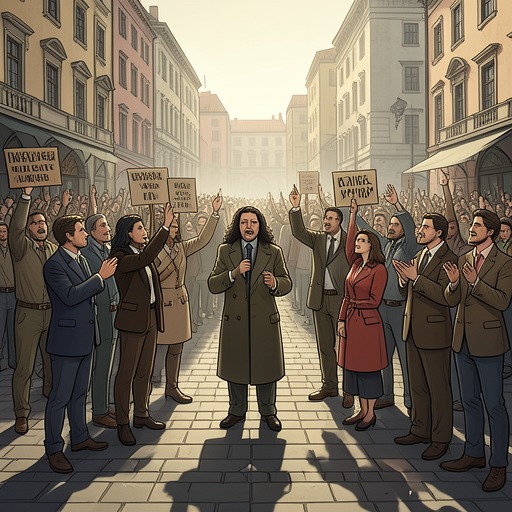
That structure met a changed political world after the First World War. From the 1920s onward, responses to empire across the Third World were dialectical: the societies represented by Orientalism did not merely remain within its descriptions but acted against imperial rule. At the 1955 Bandung Conference, the Orient had gained political independence from Western empires and faced a new configuration of power, represented by the United States and the Soviet Union. Orientalism could not readily recognize this politically armed, independent world as the Orient it had claimed to know.
Said identifies two common responses to that rupture. Orientalists could proceed as though nothing had changed, or adapt inherited methods and ideas to new conditions. But a system committed to the belief that the Orient never changes could interpret novelty only as a betrayal of an older reality, or as misunderstanding by those newly able to speak and act for themselves. A third possibility—to dispense with Orientalism—was considered by only a small minority. The crisis thus involved not only the failure of particular descriptions but a constrained choice about whether knowledge would confront change or preserve its own authority.
Independence and the Limits of Orientalist Categories
Abdel Malek’s account gives the crisis two connected dimensions. National liberation movements undermined the image of subject peoples as passive and fatalistic. At the same time, specialists and the wider public became more aware of a time lag between Orientalist scholarship and the societies it studied, and between Orientalism’s methods and the developing methods of the human and social sciences. The problem was therefore not only that history had contradicted a stereotype. The discipline’s conceptual instruments had themselves become inadequate to the changing object they claimed to explain.
Said illustrates that inadequacy through Orientalist treatments of Islam. Scholars including Renan, Goldziher, Macdonald, von Grunebaum, H. A. R. Gibb, and Bernard Lewis could treat Islam as a cultural synthesis separable from the economics, sociology, and politics of Muslim societies. In this framework, historical conditions and colonial impact became peripheral, while Islam was reduced, in Renan’s formulation, to “tent and tribe.” The abstraction made the subject appear stable by disregarding the worldly circumstances and historical developments that would complicate the supposedly essential Islam.
That habit also shaped responses to what inherited texts had not prepared readers to encounter. Rather than accept that the categories might be insufficient, the Orientalist could attribute the unexpected to outside agitation or to the supposed irrationality of the Orient. Even The Cambridge History of Islam, which Said identifies as the summation of Orientalist writing on Islam, could not prepare readers for developments since 1948 in Egypt, Palestine, Iraq, Syria, Lebanon, or the Yemens. When older dogmas no longer seemed usable, an Orientalized social-science vocabulary offered portable abstractions such as elites, political stability, modernization, and institutional development. Their technical sound did not resolve the underlying distance between inherited explanations and lived political realities.
The Orient as Actor, Not Reaction
The crisis is also a crisis of agency. Orientalism had represented the Orient as fixed in time and place for Western purposes, so that whole periods of its cultural, political, and social history appeared as responses to the West. In this narrative, the West acted and the Orient reacted; the West watched, judged, and delivered the verdict on Oriental behavior. But twentieth-century change could not be contained by that arrangement. New leaders, intellectuals, and policymakers had learned from their predecessors’ experience and benefited from institutional and structural transformations. They were more able to shape their countries’ futures and less dependent on winning an imagined favorable judgment from the West. Their dialogue, Said emphasizes, was with their fellow citizens.
This shift challenges the premise that Oriental societies are knowable only as objects of Western interpretation. The political independence reached by the time of Bandung altered not just who held power but whose judgments and conversations mattered. Orientalist accounts, meanwhile, continued to treat the West as the source of historical motion. The gulf between representation and reality grew as the people represented acquired greater capacity to direct their own political futures.
The same imbalance appears in Said’s account of cultural representation. In his discussion of Gustave Flaubert’s encounter with Kuchuk Hanem, an Egyptian dancer and courtesan, he stresses that she did not speak for herself in Flaubert’s influential representation: he spoke for her and presented her to readers as typically Oriental. His foreignness, comparative wealth, and position as a man enabled both the encounter and the authority of his account. Said treats this asymmetry as more than an individual episode; it exemplifies the relative power between East and West that made Orientalist representation possible. The crisis of Orientalism therefore concerns not only whether its descriptions keep pace with history, but also who is permitted to describe whom, and under what conditions that description acquires authority.
Reading the Crisis in Contemporary Politics
Said connects the mismatch between texts and contemporary societies to public and political discourse. Criticism of Arab and Muslim societies for alleged backwardness, lack of democracy, and denial of women’s rights, he argues, can present complex and contested concepts as if their meaning were simple and universally agreed. Publicists speaking in the name of foreign policy may lack knowledge of the languages spoken by the people whose societies they discuss. In such conditions, an abstract model of free-market democracy can be projected onto a region without serious engagement with its histories, languages, or political circumstances.
The stakes are not limited to academic accuracy. Said distinguishes knowledge produced through careful study, analysis, and regard for other peoples from purported knowledge serving self-affirmation, belligerence, and war. One seeks understanding, coexistence, and an enlargement of human horizons; the other seeks control and external dominion. The crisis becomes particularly stark when the authority of knowledge is folded into imperial action, because an account that claims to explain a society can also help make intervention appear necessary or manageable.
Said does not propose replacing Orientalism’s distortions with a claim to possess a single, authentic Orient. He explicitly says he has no “real” Orient to defend. Instead, he affirms the capacity of the region’s peoples to struggle for their own visions of who they are and what they want to become. This refusal matters: the alternative to an imposed, static image is not another final definition, but a recognition of historical plurality and of the people whose lives and political projects Orientalist knowledge has too often displaced.
Significance for Scholarship and Humanism
The crisis dramatizes the disparity between texts and reality, but Said treats it as more than an occasion to expose scholarly mistakes. Orientalism’s ambition to master an entire world, and its entanglement in historical circumstances, reveal how disciplines develop within institutions and political settings—even when their language presents itself as detached and scientific. Humanists who retreat into narrowly departmentalized subjects risk overlooking those worldly conditions and the claims to authority that structure knowledge.
To study Orientalism, then, is also to examine how methods and disciplines begin, gain institutional support, flourish, and lose force. Its failures can help scholars set more realistic limits on the claims their fields make, or recognize when those claims reach beyond their evidence. More fundamentally, the crisis calls for recovering the human ground obscured by abstraction: the changing societies, historical experiences, and political agency that a fixed Orientalist picture turns into mere reactions to the West. Its unresolved question is whether knowledge of other peoples will continue to serve dominion or become a practice of understanding and coexistence.