Bilbao
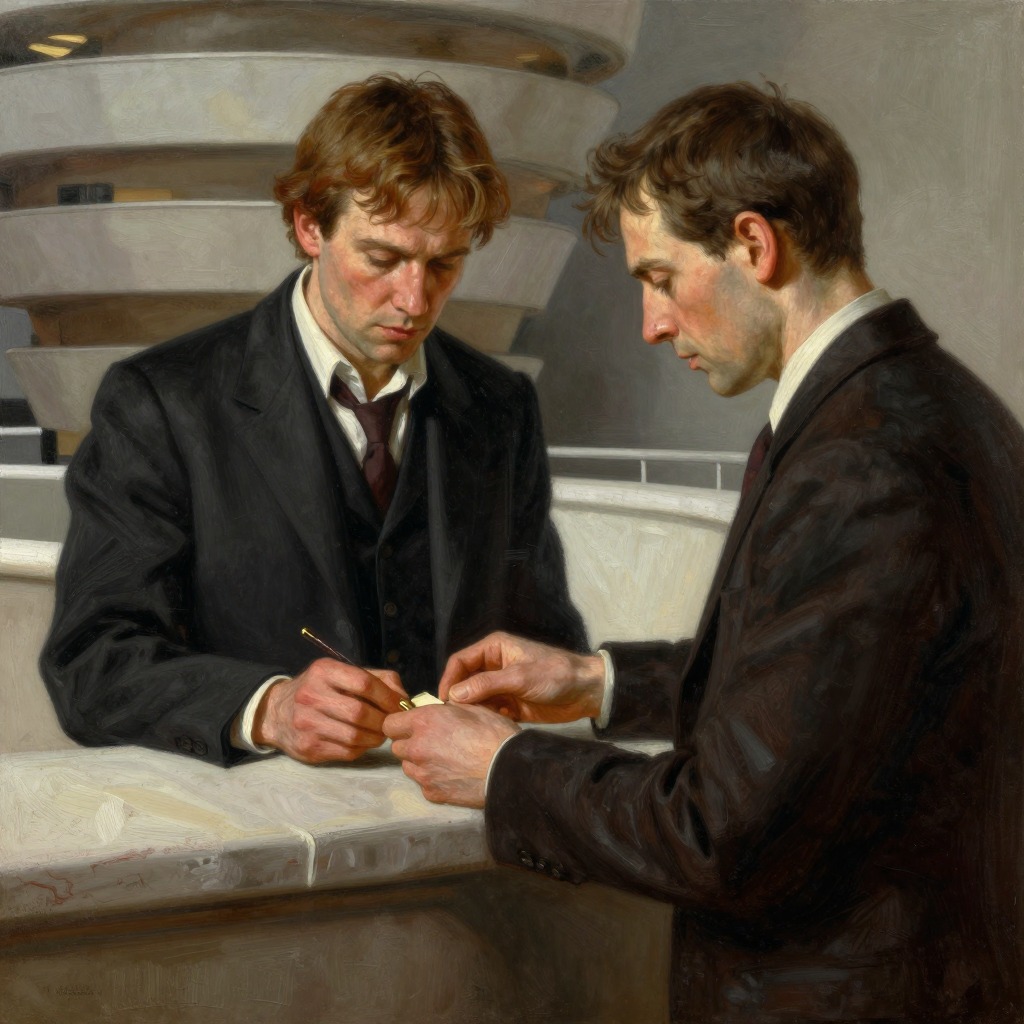
OriginBilbao, a city in northern Spain's Basque Country, is the primary setting for the novel's opening and the site of the assassination of futurist Edmond Kirsch. The city's transformation from an industrial center to a hub of avant-garde culture is embodied by the Guggenheim Museum Bilbao, a Frank Gehry-designed structure clad in titanium tiles that Langdon describes as looking "like something out of an alien hallucination—a swirling collage of warped metallic forms" . The museum's radical architecture, which Langdon notes "doesn't just break the rules, it ignores them completely," mirrors Kirsch's own iconoclastic persona and the disruptive nature of the discovery he plans to announce . The building's setting on the Nervión River, with its "infinity" lagoon and the Fog Sculpture by Fujiko Nakaya, creates an atmosphere of ethereal disorientation that primes the reader for the evening's shocking events (E00251–E00255).
The Guggenheim Museum as a Stage for Conflict
The Guggenheim Museum is not merely a backdrop but an active participant in the narrative. Its futuristic atrium, described as feeling "like a futuristic cathedral" , immediately establishes a tension between the sacred and the secular. The museum's high-tech features, such as the bone-conduction headsets that allow the AI Winston to guide guests, showcase Kirsch's technological prowess and his desire to control the visitor experience (E00344–E00351). The museum's collection of modern art, including Jenny Holzer's LED signboards about AIDS and Richard Serra's massive steel sculptures, provides a visual and thematic counterpoint to the religious and scientific debates that Kirsch's presentation will ignite . The presence of the Guardia Real, the king's royal guard, signals the high political stakes of the evening and foreshadows the involvement of the Spanish monarchy in the ensuing crisis . The museum's security, which Langdon initially believes is tight, is ultimately breached by Admiral Ávila, who uses a disguised weapon to murder Kirsch, turning the temple of modern art into a scene of violent crime (E01109–E01125).
The City as a Point of Departure
Following Kirsch's murder, Bilbao becomes the starting point for Langdon and Ambra's desperate flight. They escape the museum by navigating the city's river, the Nervión, in a water taxi arranged by Winston, moving from the gleaming museum to the industrial waterways that once defined the city's economy (E01760–E01766). Their route takes them past La Salve Bridge, a landmark whose name derives from sailors' prayers of gratitude for safe return, a detail that underscores the peril of their journey . From the river, they make their way to Bilbao Airport, where they board Kirsch's private jet, using a code—BIO-EC346—that Langdon deciphers as the airport code and the plane's tail number (E01776–E01782). The city thus serves as the point of crisis and the gateway to the novel's central quest, which unfolds in Barcelona. The contrast between Bilbao's modern, forward-looking architecture and the ancient, symbolic spaces of Barcelona (like the Sagrada Família) reinforces the novel's thematic journey from a secular, scientific present to a confrontation with history and faith.