Reina Sofía Museum
OriginThe Reina Sofía Museum (Museo Nacional Centro de Arte Reina Sofía) in Madrid is the national museum of 20th-century Spanish art. It is best known as the home of Pablo Picasso's monumental anti-war painting Guernica, a work that evokes the horrific bombing of a Basque town during the Spanish Civil War and stands as a vivid reminder of the brutal oppression endured under the fascistic dictatorship of General Francisco Franco. The museum's collection and its very existence as a state institution embody the cultural and political struggles of modern Spain, making it a charged setting for the novel's exploration of tradition versus change.
Ambra Vidal's First Encounter with Prince Julián
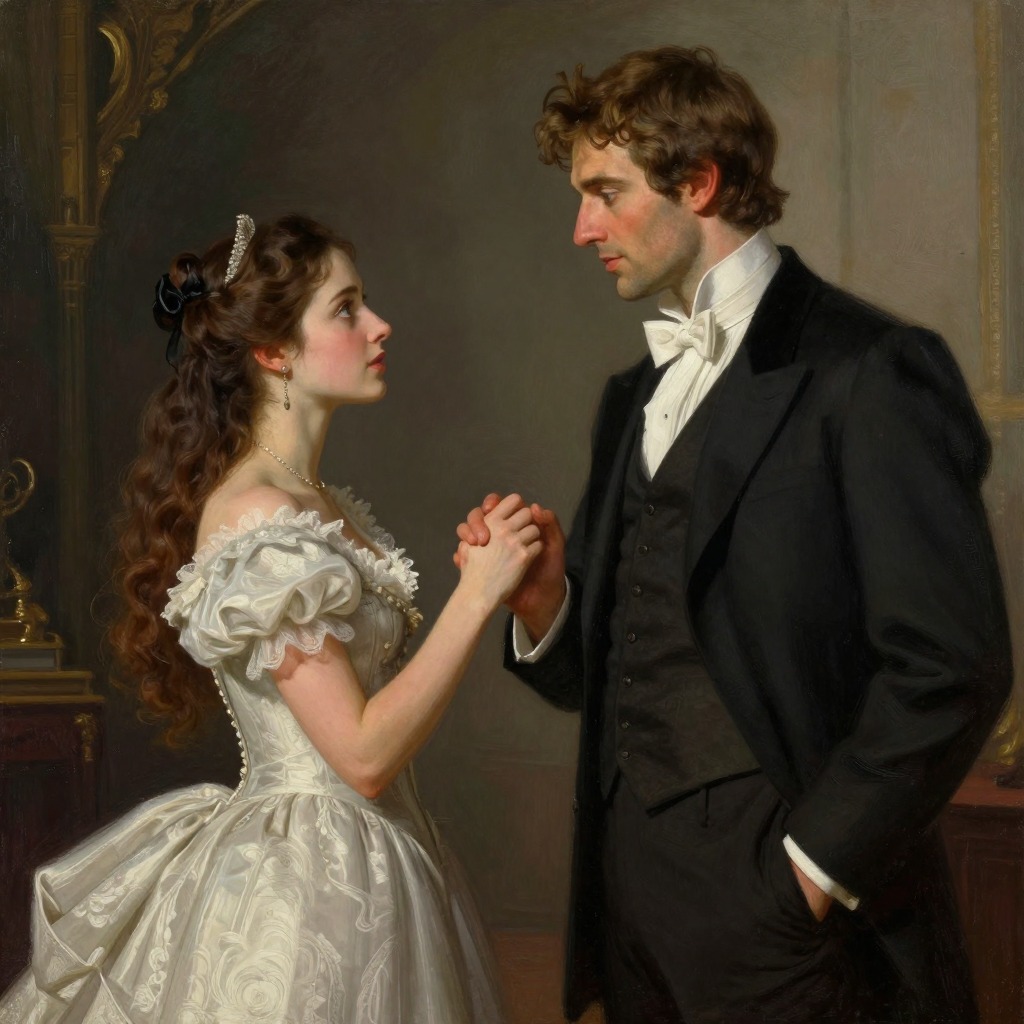
Four months before the novel's main events, Ambra Vidal attended a fund-raiser at the Reina Sofía Museum. Most guests had migrated to room 206.06 to view Guernica, but Ambra, finding the painting too painful a reminder of Spain's dark history, chose instead to slip alone into a quiet gallery to admire the work of Maruja Mallo, a female Surrealist from Galicia whose success in the 1930s had helped shatter the glass ceiling for female artists in Spain. While standing alone admiring Mallo's political satire La Verbena, Ambra was approached by a man who declared in Spanish, "It's almost as beautiful as you are." Initially annoyed by what she assumed was a clumsy pickup line, Ambra turned to dismiss the man and found herself face-to-face with Prince Julián, the future king of Spain, whom she recognized from a lifetime of seeing him on television and in magazines. The prince, who had been observing her, revealed that he knew her name, her age, her education, her position as director of the Guggenheim Museum Bilbao, and even her opinions on contemporary art. He presented her with a gold-embossed business card and invited her to a dinner party the following night, a bold and confident move that left Ambra feeling both flattered and intrigued.
The Museum as a Symbol of Spain's Cultural Crossroads
The Reina Sofía Museum's identity as a modern art institution housed in a former hospital, and its role as the custodian of Guernica, a work that condemns the violence of Franco's era, makes it a fitting location for the beginning of Ambra and Julián's relationship. The museum represents a Spain that is grappling with its past while moving toward a more progressive, secular future. Julián's choice to approach Ambra in this setting, rather than at a more traditional or conservative venue, subtly signals his own desire to break from the rigid, Catholic traditions of his father's court. The encounter also highlights Ambra's independence and her own complex relationship with Spain's history: she is a Basque woman who finds Guernica too painful to view, yet she is also a successful professional who is about to become the future queen. The museum thus becomes a symbolic stage where the personal and political dramas of the novel's central characters first intersect, foreshadowing the conflicts between love, duty, and the weight of history that will define their engagement.