Royal Palace of Madrid
OriginThe Royal Palace of Madrid, Europe's largest royal palace by floor area, is a sprawling neoclassical and Baroque complex of 3,418 rooms spanning almost a million and a half square feet. Built on the site of a ninth-century Moorish castle, its three-story facade of columns spans the entire five-hundred-foot width of the Plaza de la Armería. The interior houses a priceless collection of religious art, including masterpieces by Velázquez, Goya, and Rubens. For generations, it was the private residence of Spanish kings and queens, but in recent decades it has been used primarily for state functions, with the royal family residing at the more secluded Palacio de la Zarzuela outside the city. However, in the months before the novel's events, Crown Prince Julián moved into the palace at the behest of his handlers, who wanted him to "be more visible to the country" during the somber period prior to his eventual coronation.
The Palace as a Political and Religious Battleground
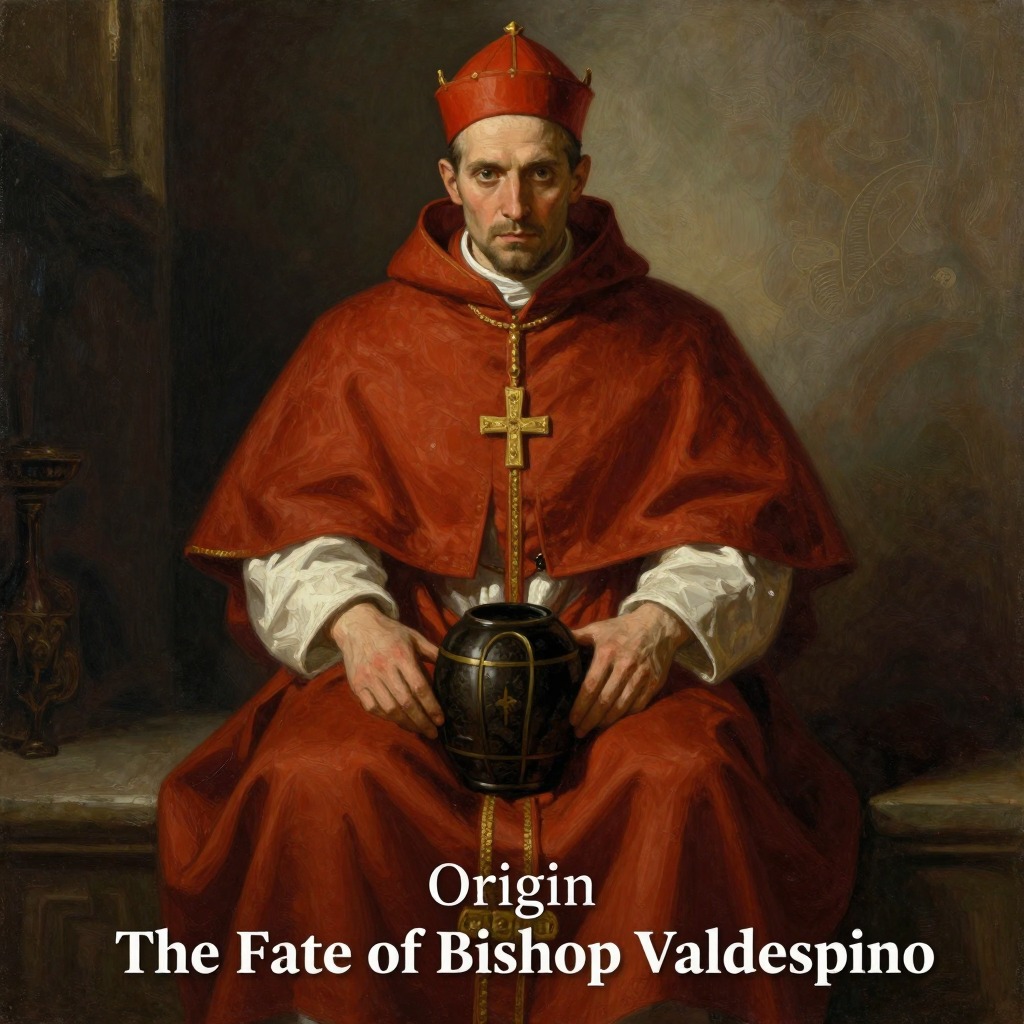
The palace is the epicenter of the power struggle that erupts after Kirsch's murder. Its physical proximity to Almudena Cathedral—Bishop Valdespino's seat—underscores the entanglement of church and state. The bishop, a longtime friend and spiritual counselor to the king, has an unusual amount of influence in the palace's daily affairs, a fact that deeply troubles Commander Diego Garza, the head of the Guardia Real. Garza believes that Valdespino's hard-line politics and religious zeal leave little room for the diplomacy needed to handle the crisis. The palace's basement houses the Guardia's Division of Electronic Security, a windowless warren of computer cubicles staffed by a young, tech-savvy team responsible for secure communications and electronic surveillance. It is here that PR coordinator Mónica Martín and security director Suresh Bhalla work to manage the fallout, tracking the prince's movements and uncovering evidence of a conspiracy.
The Night of the Crisis
On the night of Kirsch's assassination, the palace becomes a pressure cooker. Prince Julián, isolated in his apartment, refuses to take calls from his fiancée, Ambra Vidal, who is at the Guggenheim. Bishop Valdespino, having secretly met with Kirsch days earlier, materializes in the prince's darkened apartment to offer counsel, insisting that the prince must appear before the press with the bishop at his side as a symbol of his bond with the Church. Commander Garza, meanwhile, is arrested by his own Guardia agents on orders that appear to come from the prince himself, accused of framing Valdespino. The arrest is staged publicly in the Plaza de la Armería, with Mónica Martín reading a statement to the cameras. In a desperate move to control the narrative, the palace issues a false statement claiming that Ambra Vidal has been kidnapped by Robert Langdon, a ploy that puts both of them in grave danger.
The King's Final Act
The palace's authority is ultimately undermined by the king's own actions. From his hospital bed at Palacio de la Zarzuela, the ailing monarch orchestrates a final, secret meeting with his son and Valdespino at the Valley of the Fallen, bypassing the palace entirely. The king's letter, delivered by his security detail, redirects the prince away from the palace's control. This act of defiance from the dying king reveals that the true power and the deepest secrets of the monarchy reside not in the palace's grand halls, but in the personal bonds and hidden truths of its aging patriarch. The palace, for all its grandeur and security, becomes a stage for a drama it cannot control, its official narratives repeatedly contradicted by the actions of its own key figures.