Clemente Domínguez y Gómez
OriginClemente Domínguez y Gómez was the founder and first antipope of the Palmarian Church, a schismatic ultraconservative Catholic sect that broke from the Vatican in the 1970s. Claiming a direct vision from Jesus Christ, he declared himself Pope Gregory XVII and built a powerful, secretive organization that would, decades later, become entangled in the assassination of futurist Edmond Kirsch.
Origins and Rise to Power
In 1975, Clemente Domínguez y Gómez, a former insurance broker, claimed to have had a vision in which he was crowned pope by Jesus Christ Himself. Taking the papal name Gregory XVII, he broke from the Vatican and appointed his own cardinals, rejecting the liberalizing changes emanating from Rome. The Palmarian Church, as it became known, was founded after local residents claimed to have witnessed a series of mystical visions in a field near El Palmar de Troya, Spain. The Virgin Mary, according to lore, had appeared to them and warned that the Catholic Church was rife with the "heresy of modernism" and that the true faith needed to be protected. This conviction that the Vatican's pope was not the valid pontiff is known as sedevacantism—a belief that St. Peter's "seat" was literally "vacant." Despite being rejected by Rome, Clemente amassed thousands of followers and vast wealth, enabling him to construct a fortress-like church, expand his ministry internationally, and consecrate hundreds of Palmarian bishops worldwide.
Leadership and Controversies
Clemente's leadership was marked by extreme claims and practices. He lost both eyeballs in a car accident in 1976 and continued to preach for a decade with his eyes sewn shut. He was also said to have active stigmata on both palms that regularly bled when he had visions. The Palmarian Church canonized several ruthless leaders—including Francisco Franco and Adolf Hitler—as saints, and its members were forbidden from speaking to their own families, with several members dying on the compound from malnutrition or abuse. The church's prohibitions extended to reading books authored by non-Palmarians, attending family weddings or funerals unless their families were Palmarians, and attending pools, beaches, boxing matches, dance halls, or any location displaying a Christmas tree or image of Santa Claus. The Palmarians also believed the Antichrist was born in the year 2000.
Death and Legacy
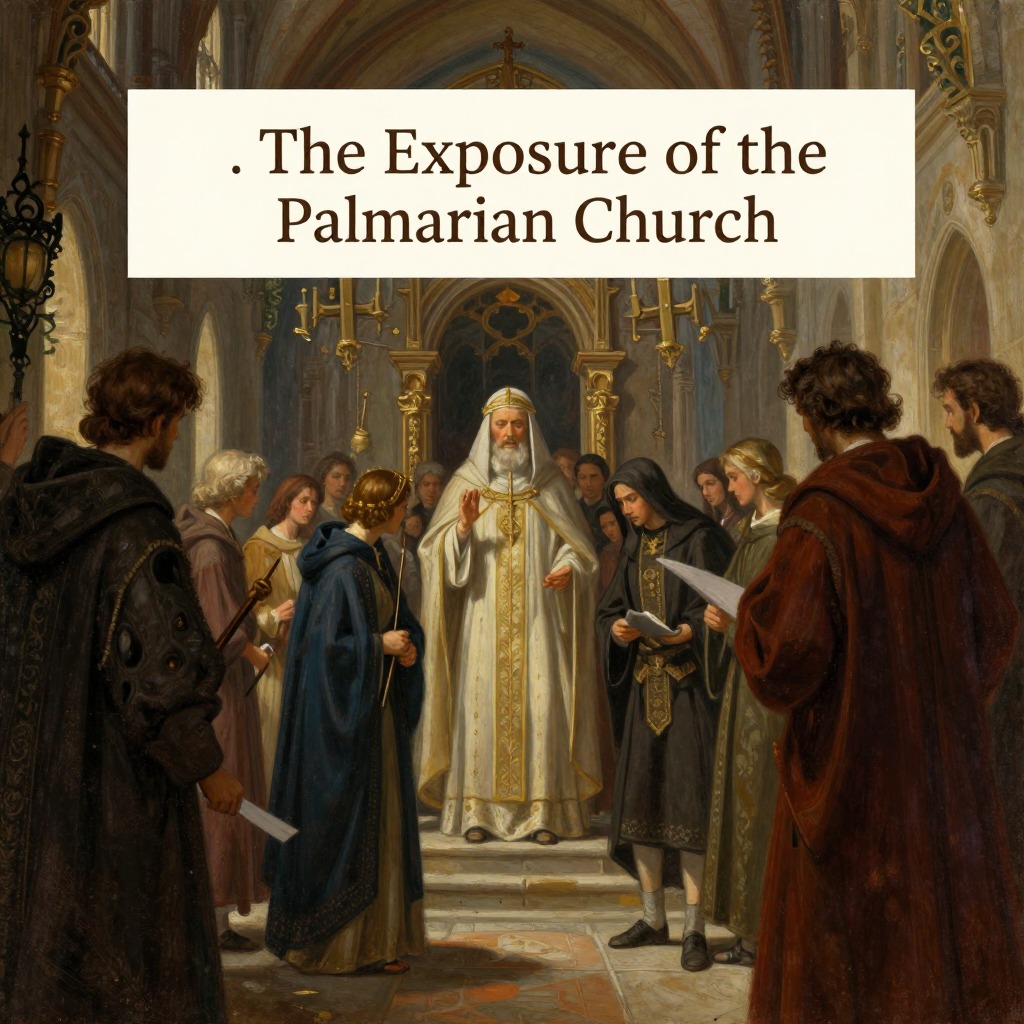
In 2005, when Pope Gregory XVII died while presiding over an Easter mass, his supporters hailed the timing of his death as a miraculous sign from above, confirming that this man was in fact connected directly to God. The Palmarian Church continued to function after his death, with a succession of antipopes. The church's recruitment houses existed in the USA, Canada, Germany, Austria, and Ireland. Decades after Clemente's death, the Palmarian Church became central to the conspiracy surrounding Edmond Kirsch's assassination. Admiral Luis Ávila, the assassin, was an active member of the church, and evidence surfaced that the church's leadership—through an individual known as the Regent—had orchestrated the killing. The scandal proved devastating: media sources unearthed a 2016 interview in which a former Palmarian pope confessed that his church was "a sham from the beginning" and was founded "as a tax-evasion scheme." Religious news pundits believed the scandal might be the deathblow for the controversial church, which Edmond Kirsch had always alleged was responsible for the death of his mother.