Father Joaquim Beña
OriginFather Joaquim Beña, the eighty-year-old presiding clergyman of Barcelona's Sagrada Família, is a jovial, round-faced priest whose progressive theology and personal trust in Edmond Kirsch make him a pivotal ally in the effort to release Kirsch's posthumous scientific announcement. As the keeper of the crypt where Kirsch's copy of The Complete Works of William Blake lies open to page 163, Beña bridges the gap between the Catholic establishment and the atheist futurist's final wishes, ultimately helping Langdon and Vidal escape the church and complete their mission.
Identity and Background
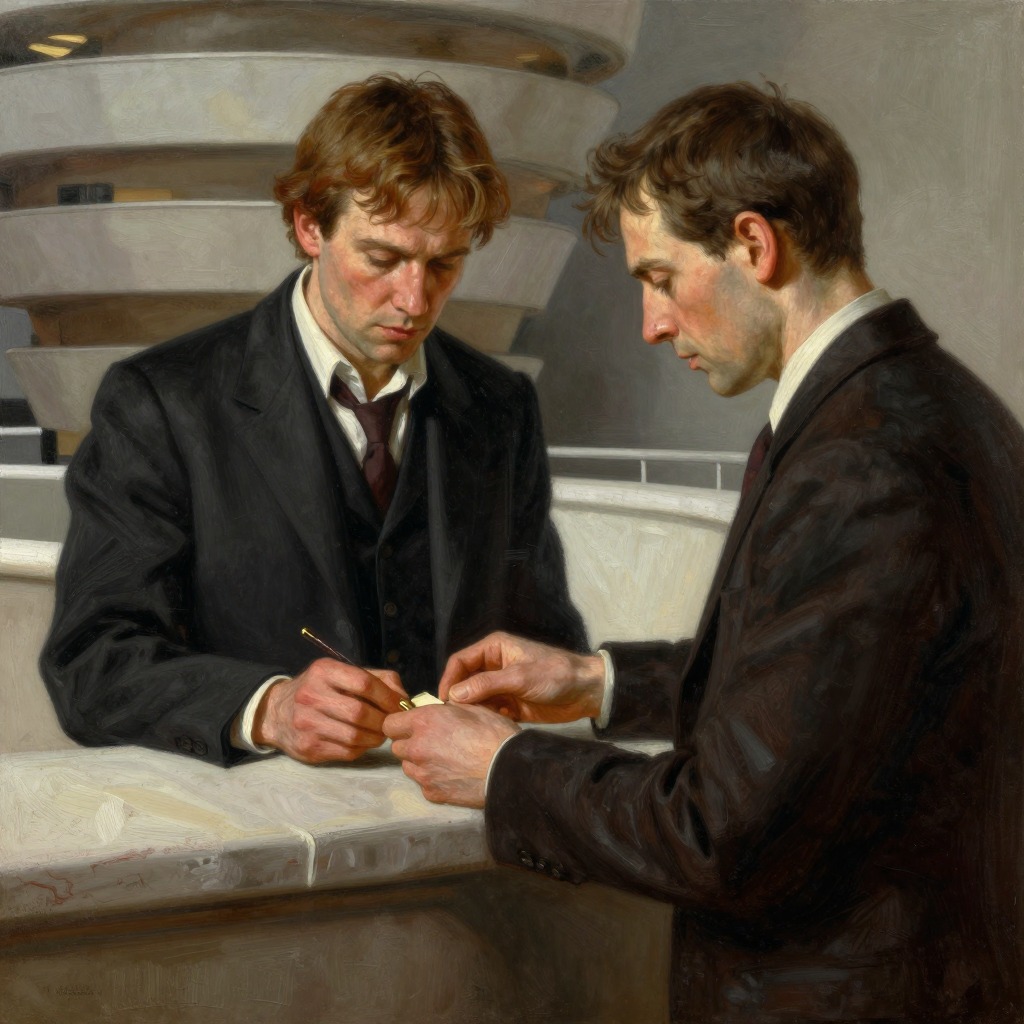
Beña is described as a jovial eighty-year-old with round glasses on a round face that is always smiling atop his tiny robe-draped body. His dream is to live long enough to see the completion of Sagrada Família, the colossal basilica that has been under construction for over a century. Despite his age and traditional role, Beña holds strikingly progressive views. He openly admits that he does not believe Adam and Eve literally existed, that evolution is a fact, and that Christians who declare otherwise make the faith look foolish. He came to God, he explains, through a deepening reverence for the physical universe, having loved physics as a child. This intellectual openness makes him receptive to Kirsch's unconventional request.
Relationship with Edmond Kirsch
Three months before the novel's events, Kirsch approached Beña with an offer to make a huge donation to Sagrada Família. The amount was unprecedented. In return, Kirsch made only one request: that the church display his copy of The Complete Works of William Blake in the crypt near Gaudí's tomb, always propped open to page 163. Beña initially suspected a publicity stunt or an attempt to gain influence over construction, but he sensed a weary desperation in Kirsch's sunken eyes and thin body, and wondered if the man was dying and trying to make amends with God. Beña reflected on Saint John, who dedicated his life to encouraging nonbelievers to experience Christ, and concluded that denying Kirsch this connection would be unchristian. He also could not justify rejecting such a large gift for the church. Beña accepted Kirsch's terms, and the men shook hands warmly.
Role in the Night's Events
When Langdon and Vidal arrive at Sagrada Família by helicopter, pursued by police and the assassin Admiral Ávila, Beña immediately recognizes them from the evening's broadcast. He calms the alarmed security guards, declaring the group his guests and ordering the guards to return to their posts. He then leads Langdon and Vidal into the crypt and shows them the Blake book. When Langdon asks him to go upstairs and summon the Guardia agents to call the helicopter, Beña complies. Moments later, he discovers the body of Agent Díaz, whose neck has been snapped, and screams for help. During the subsequent confrontation on the spiral staircase, Beña urges Langdon and Vidal to flee ahead of him, but Vidal refuses to abandon the old priest. After Ávila falls to his death, Beña climbs the stairs to check on Langdon, who has been injured. When Langdon reveals that he and Vidal are trying to release Kirsch's atheist discovery to the world, Beña places a hand on his shoulder and says that Kirsch is not the first atheist to proclaim that God is dead, nor will he be the last. He declares that there has never been an intellectual advancement that has not included God, and then heads downstairs to help them escape.
Thematic Significance
Beña embodies the possibility of reconciliation between science and faith. He tells Langdon that Christianity must stop rejecting scientific discoveries and become a spiritual partner of science, using its millennia of philosophy and soul-searching to help humanity build a moral framework for the coming technologies. He sees Sagrada Família as a church of the future, directly connected to nature. When Langdon explains that Blake's line "The dark religions are departed & sweet science reigns" actually means that sweet science will banish dark, dogmatic religions so that enlightened religions can flourish, Beña is visibly relieved. His character demonstrates that religious faith can adapt and coexist with scientific progress, offering a counterpoint to both Kirsch's militant atheism and Valdespino's conservative dogmatism.