Marco
OriginMarco is the physical therapist and Palmarian Church recruiter who transforms Admiral Luis Ávila from a suicidal, broken survivor of the Seville Cathedral bombing into a willing assassin for the ultraconservative sect. His role is the hinge on which the entire assassination plot turns: he identifies Ávila's vulnerability, exploits it through religious indoctrination, and delivers him to the Palmarian leadership as a weapon against Edmond Kirsch.
Identity and Background
Marco is a muscular young man with a buzz cut, an Andalusian accent, and a T-shirt bearing the face of Jesus. He was himself a survivor of the same terrorist attack that destroyed Ávila's family — the Easter morning bombing of the Cathedral of Seville — and lost a leg in the blast. He had been a semiprofessional fútbol player before the attack. Marco presents himself to Ávila as a fellow survivor who has found a new purpose: "helping victims of God's enemies." He claims to have met the pope personally many times and to be able to arrange an audience for Ávila.
Recruitment of Ávila
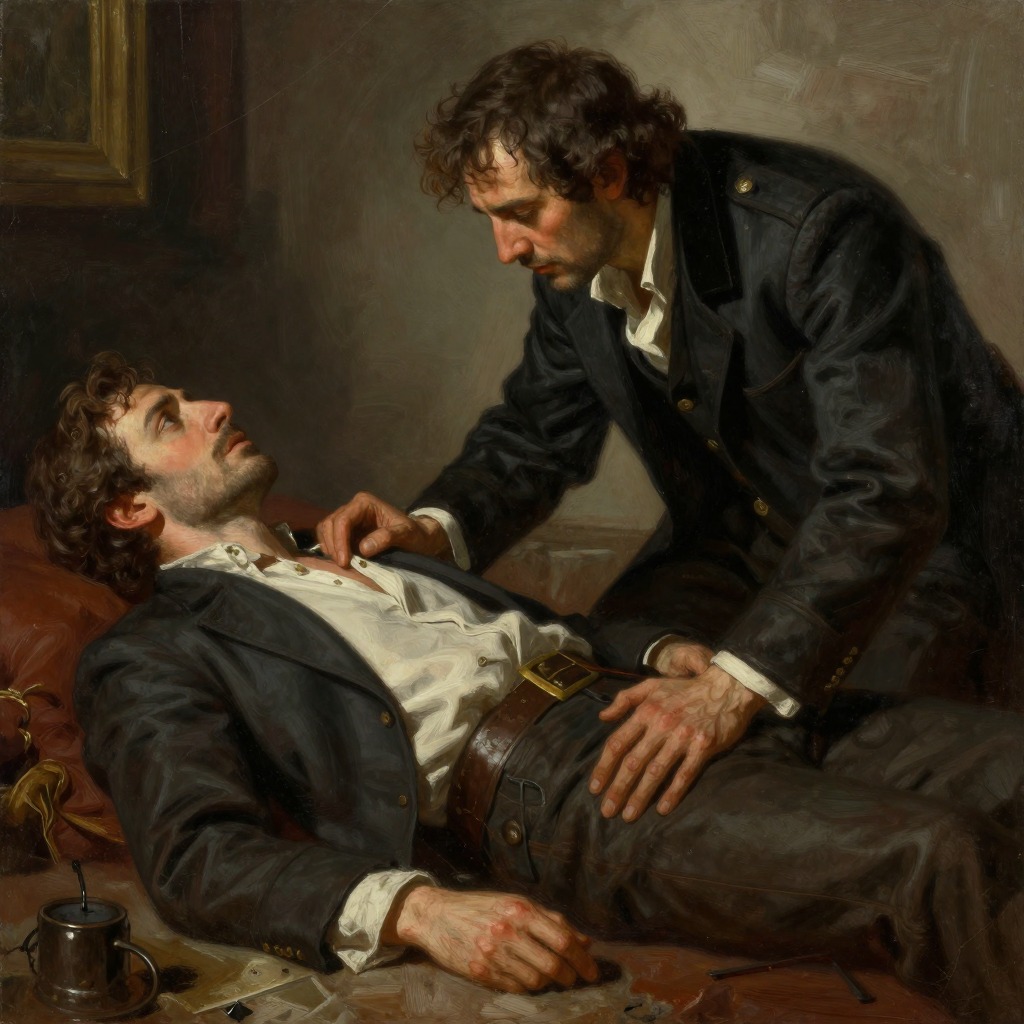
Marco first appears in Ávila's hospital room the morning after Ávila's failed suicide attempt, when the admiral lay broken and humiliated after shooting himself in the leg. Marco throws open the window shades, lets sunlight pour in, and immediately establishes a confrontational rapport: "You're a lousy shot. No wonder they forced you to retire." He tells Ávila he asked to be assigned to him because they share the experience of being in the cathedral during the attack. He then pulls up his sweats to reveal his prosthetic limb, preempting any sympathy: "I was playing semipro fútbol, so don't expect too much sympathy from me. I'm more of a God-helps-those-who-help-themselves kind of guy." Marco heaves Ávila into a wheelchair, rolls him to a small gym, and forces him through painful parallel-bar exercises, lying about how many repetitions are required. When Ávila says he no longer attends mass at the Seville cathedral out of rage, not fear, Marco laughs and says the nuns who told Ávila to forgive the attackers gave "terrible advice." He tells Ávila he is "still a Christian. More devout than ever" because he found his mission in helping victims of God's enemies.
The Palmarian Connection
Marco tricks Ávila into visiting the Palmarian Church by claiming he can arrange a meeting with the pope. He drives Ávila south from Seville on Highway N-IV, past the ghost town of El Torbiscal, to the massive, fortress-like cathedral of the Iglesia Católica Palmariana in the middle of nowhere. When Ávila realizes where they are and recoils — having heard rumors of brainwashing, cultlike intimidation, and mysterious deaths — Marco dismisses the allegations as a smear campaign by the Vatican. He explains that the Palmarians have "secret followers within the Catholic clergy" who are "quietly funneling money" to the church because they disapprove of liberal changes from Rome. Marco escorts Ávila inside, where the Palmarian pope Innocent XIV delivers a homily that explicitly rejects forgiveness as the only path to salvation, telling the congregation that "evil will swallow us whole if we do not fight force with force" and that Ávila's "righteous desire for vengeance" should be transformed into "a potent force for goodness in the world." After the service, Marco presents Ávila with a leather-bound Bible in which he has flagged passages about divine vengeance and the avenger who carries out God's wrath on wrongdoers. "Remember," Marco tells him, "when evil rears its head in the world, God works through each of us in a different way, to exert His will on earth. Forgiveness is not the only path to salvation."
Narrative Role and Significance
Marco functions as the human instrument that converts Ávila's personal trauma into religiously sanctioned violence. He is the bridge between the Palmarian Church's ideology and the operational capacity of a trained military officer. His own story — losing a leg in the same bombing, rejecting the counsel of forgiveness, and finding purpose in a sect that preaches holy war — mirrors and validates Ávila's psychological trajectory. Marco's claim that the Palmarian pope "saved his life" becomes the template for Ávila's own conversion narrative. The novel never reveals whether Marco himself knows the full scope of the assassination plot or is merely a lower-level recruiter, but his actions set in motion the chain of events that culminate in Kirsch's murder and the deaths of the two Guardia Real agents in Sagrada Família.