Other Hemisphere
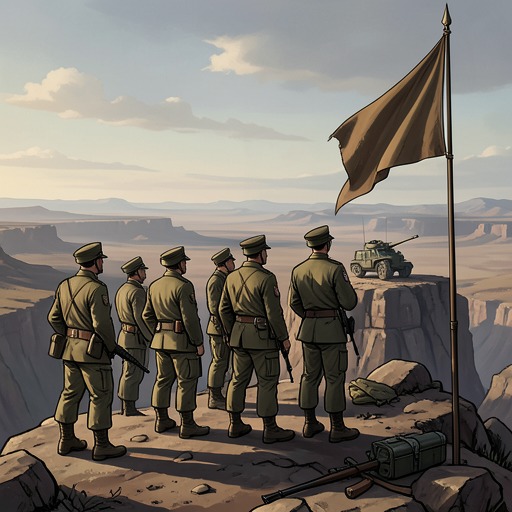
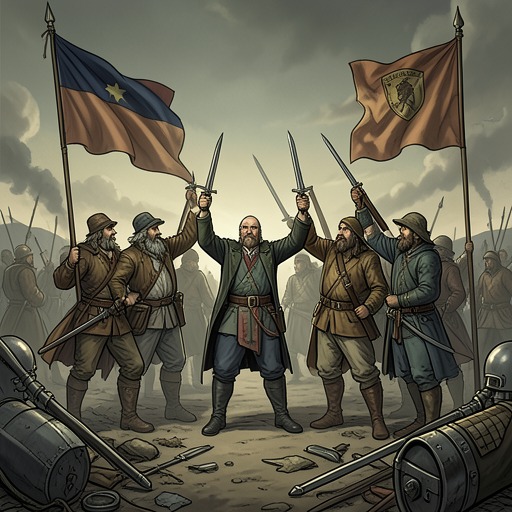
OzymandiasThe Other Hemisphere is the expedition’s unnamed rival on a divided Earth, a political presence felt through anticipation rather than direct appearance. Its possible return to space turns the study of dead civilizations into an arms race: alien history is valued not only as knowledge, but as a potential advantage over a terrestrial opponent.
Position in the Earthly Rivalry
The expedition travels under an American, not a genuinely global, identity. The narrator stresses that Earth’s unity remains a fantasy and that the Other Hemisphere has been quiescent for a century, while tensions on the divided planet are rising again. The fear is prospective: no one knows when the rival will resume space activity, but the expedition’s crew assumes it must find any militarily useful discoveries first.
That expectation reflects a larger contest already built into the mission. The United States Armed Forces’ General Staff provides 70 percent of the expedition’s budget and expects weapons and strategic materials in return. The military team searches for fissionable substances, alien weapons, and materials such as lithium or tritium for fusion; archaeological research is funded alongside this work in part to meet public resistance to purely military expeditions.
Influence on the Expedition
The Other Hemisphere never needs to appear for its rivalry to govern the expedition. The narrator describes the crew’s duty as finding military resources before the rival does, making the search on distant worlds an extension of Earth’s armaments race. The expedition’s archaeological half may be treated as secondary, yet its discoveries acquire immediate strategic importance whenever they can be claimed for national security.
This logic becomes explicit when Colonel Mattern declares the expedition over and takes Ozymandias for return to Earth. He argues that the ancient guide contains comprehensive information about the Thaiquens’ weapons, including a superweapon that explains the planet’s lifeless condition. Mattern presents possession of that knowledge as a means of making America impregnable. The rival is not named as the direct cause of this decision, but the expedition’s stated competition with the Other Hemisphere supplies the strategic frame in which the seizure makes sense.
Narrative and Political Significance
The Other Hemisphere functions as an offstage pressure that converts exploration into preparation for conflict. Its century of quiet does not produce security; instead, uncertainty about when it will act gives the military a reason to search, classify, and control discoveries in advance. The story’s irony lies in the expedition’s encounter with a civilization that endured for hundreds of thousands of years and nevertheless destroyed the life of its own world: its surviving knowledge is quickly recast as an asset in another civilization’s rivalry.
The organization remains indistinct in the available account: its internal structure, leadership, and actual intentions are not described. What is clear is the role assigned to it by the expedition’s American crew. As the anticipated adversary, it helps make military utility the measure of discovery and narrows the space for archaeology to pursue knowledge on its own terms.