Assassins’ Guild communications lockdown
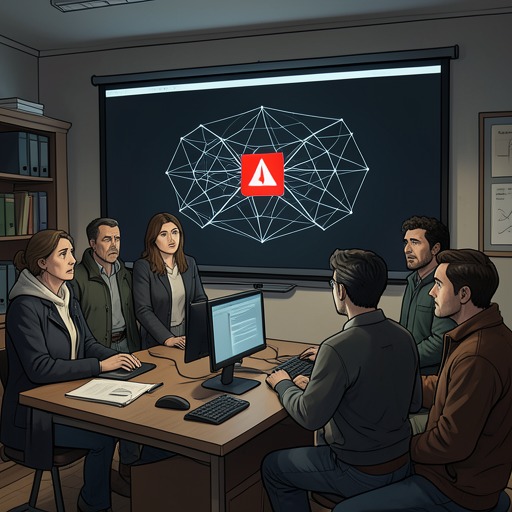
PeacemakerThe Assassins’ Guild communications lockdown was a deliberate restriction of the Guild’s network during a dangerous transition in leadership and a citywide public celebration. Rather than risk exposing its operations to the remnant it was hunting, the Guild Council chose technical changes that would admit only specifically cleared units. The measure protected sensitive activity, but left many Guild members—including those trying to manage enormous crowds—with limited or no communication.
The decision and its purpose
The new leadership faced several possible ways to handle a compromised communications environment. The Guild could continue using the existing system and risk exposing its operations to the remnant under pursuit; shut the system down altogether; keep it running while redefining its signals, at the cost of dangerous confusion; or alter the technology so that only selected users could access it. The Council chose the last option. Access would be denied to units until their records had been reviewed and they had been approved for the system.
This was not a simple interruption of service. It was a security policy that made authorization the condition of communication. Banichi explained that the purpose was to prevent the remnant from learning what the Guild was doing. The policy also reflected the Council’s effort to vet the organization as it restored its leadership: units could not be trusted with network access merely because they had previously used it.
The timing made the choice especially consequential. The Guild’s restrictions took effect as the scale of Cajeiri’s birthday celebration expanded into a national Festivity. The event, elevated in part as a response to Lord Ajuri’s assassination and the threat that it might overshadow Cajeiri’s fortunate ninth birthday, would draw crowds to the Bujavid and into the surrounding streets. The Guild’s operational secrecy and its public-security duties therefore collided at precisely the moment when coordination mattered most.
Selective access and unsettled authorization
The system was not closed to everyone. Banichi said that a small, defined group would be cleared from the beginning: the four operatives speaking in the discussion, the units assigned to Ilisidi, those assigned to Tabini, and those assigned to Lord Tatiseigi. Guild Headquarters and units it placed in and around the Bujavid were also included. This arrangement preserved communication among senior or strategically placed personnel while denying it to uncleared units.
Cajeiri’s bodyguard remained a particular uncertainty. Banichi and his colleagues had argued that the unit should be admitted, but the Council had not yet cleared it while it reviewed the relevant records. At the same time, the Council had not removed the bodyguard from Cajeiri’s premises. Banichi said that this continued presence rested on the recommendation of his group and Cenedi, and on the date the unit had been assigned. The distinction mattered: the guards remained physically responsible for the young heir without yet receiving access to the system.
Even for authorized users, implementation was imperfect. The group experienced small interruptions during the technical change. They had been assured that interruptions would cease by the following afternoon, but Banichi regarded that assurance as optimistic. Reliable Guild assets were already moving into position, yet the same security rules meant that those coordinating the response were not always told where the assets were going or what they were protecting. Secrecy preserved operational discretion while making the overall picture harder to assemble.
The lockdown under pressure
The Festivity exposed the cost of the restricted network. Tens of thousands of people crowded the esplanade and climbed partway up the Bujavid steps for the distribution of souvenir cards. Guards held positions outside and inside the building, while the Nine Doors were shut. The public nature of the occasion also brought lords, regional officials, and business managers with their own security details; in all but a few cases, those guards were Guild members. The presence of so many units could not simply be reduced, even while the Guild was reviewing its membership and communications.
Guild personnel had been sent into the streets to maintain order, but many were working without communication even with one another. The crowds and news service did not know that the network had been restricted. From their perspective, the gathering proceeded as a public celebration; from the Guild’s perspective, its street security was operating with an incomplete and uneven flow of information. In the Bujavid, only a few Guild members had much access, and information appeared to be reaching senior personnel more steadily than other units. The order in which bodyguard teams received access depended not on their employers’ rank but on the seniority and reputation of the guards themselves, with teams expected to be brought online progressively.
The arrangement could not eliminate the danger. The Shadow Guild had shown no hesitation about causing civilian casualties, and no one could guarantee the safety of the streets or the loyalty of every member and servant in the lower hall. The lockdown therefore produced a sharp security paradox: the Guild limited communication to contain infiltration, while the resulting isolation made it harder to coordinate protection against an attacker who might strike amid the crowd.
Consequences and significance
The communication restrictions also complicated the Guild’s ability to prepare for an event whose full purpose and arrangements were not yet known to it. Banichi wanted one of the group to return to Guild Headquarters before the crowds made vehicle movement impossible. Algini questioned whether the Headquarters doors had been restored, and observed that security there might have to be reduced so units could be sent into the streets, despite the lack of full communications resources. The effort to protect the network thus reached beyond access permissions: it affected movement, staffing, and the practical balance between guarding the institution and securing the public gathering.
For Bren Cameron, the Guild’s new rules quickly intruded on affairs he was supposed to leave alone. The lockdown made clear that political distance from Guild matters could not be maintained while the Guild’s choices shaped the security of the Bujavid and the Festivity. Later, as the ceremony filled the hall, the mismatch between the public spectacle and the private security situation became visible: the cameras and crowds gathered for Cajeiri’s formal recognition as Tabini’s heir, while many Guild units remained cut off from ordinary communication.
The lockdown’s significance lies in this double effect. It was a defensive measure against compromised information channels, and a test of whether a reorganizing Guild could preserve coordination while withholding access from much of its own force. The chosen few could communicate through the transition; others had to act under uncertainty, in streets and halls filled with civilians. The new system promised tighter control, but during the Festivity its immediate price was a security operation whose participants could not all share the same picture of the danger.