About three centuries before the main story
The First Railroad
[Atevi](entity:creature-recall-creature-atevi-82231713e60f) society had reached the Age of Steam and begun to build a railroad from [Shejidan](entity:location-recall-location-shejidan-45924e7d7570) toward the west. The undertaking drew clans and regional associations into agreements that warfare had repeatedly broken apart.
The railway’s success gave common purpose practical force: trade linked regions, and political leaders began to govern infrastructure rather than armies. It became the foundation for the wider association that would eventually be called the [Aishidi’tat](entity:organization-recall-organization-aishidi-tat-97f135399e7f).
About three centuries before the main story
The Foreign Star Appears
A strange bright object appeared in the sky and grew until observers could discern a pale, structured form. Number-counters argued over its omen, while astronomers struggled to explain it through the prevailing image of a clockwork sky.
The railway continued despite the anxiety surrounding the apparition. The object would eventually be understood as a human station in orbit, but for generations it remained a mysterious presence above the world.
Centuries before the main story
Humans Reach the World
Humans began descending from the [Foreign Star](entity:location-recall-location-foreign-star-3abe835611fc) in fragile capsules that looked like petal sails. They landed in scattered groups, mostly on [Mospheira](entity:location-recall-location-mospheira-17b9bb2c4f10) and among the Edi and Gan, while others reached the mainland or were lost at sea.
[Atevi](entity:creature-recall-creature-atevi-82231713e60f) initially met the newcomers with curiosity and assistance. The humans brought little material wealth, but their knowledge and unfamiliar customs began a contact that would reshape both societies.
After the first human landings
The Human Exodus
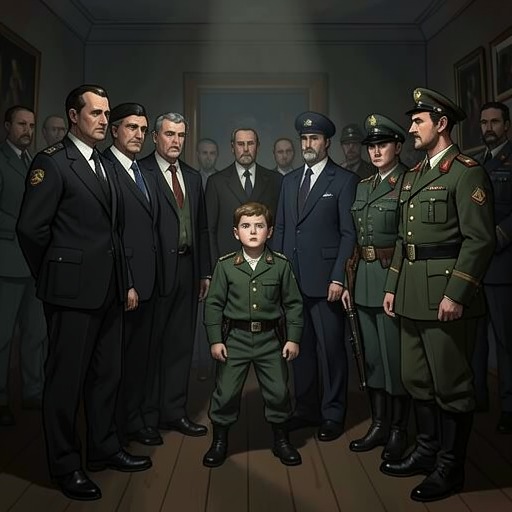
As more humans left the station and settled below, they built communities and introduced technologies that altered the landscape and economy. The last arrivals were different: armed station authorities and their bodyguards descended with weapons, while the station itself was abandoned to decay.
The armed newcomers pushed an already strained situation past its limit. [Atevi](entity:creature-recall-creature-atevi-82231713e60f) saw the weapons and the sudden arrival as a threat, and conflict followed where earlier contact had been cautious and largely peaceful.
After the armed station authorities descended
The War of the Landing
[Atevi](entity:creature-recall-creature-atevi-82231713e60f) associations mobilized against the armed humans, and the aiji in [Shejidan](entity:location-recall-location-shejidan-45924e7d7570) took command of the response. The strategy was to isolate the mainland forces and drive the human population toward [Mospheira](entity:location-recall-location-mospheira-17b9bb2c4f10), where most humans had already gathered.
The conflict ended with the mainland humans cut off from supplies and offered a choice between destruction and withdrawal. The agreement required disarmament and the surrender of advanced technology, while allowing the humans sanctuary on Mospheira.
At the end of the War of the Landing
The Treaty of the Landing
The [Treaty of the Landing](entity:event-recall-event-treaty-of-the-landing-c39557dba718) established the terms of human survival on [Mospheira](entity:location-recall-location-mospheira-17b9bb2c4f10). Humans surrendered their weapons and agreed to send a paidhi to the aiji’s court, where technology transfers and communication could be managed.
The pact created a durable but unequal peace. The humans retained their island home, while the mainland gained a formal channel for learning about human technology and negotiating with Mospheira.
In the generations after the War of the Landing
The Aishidi’tat Takes Shape
After the war, the aiji brought regional lords and guilds into a broader political arrangement. The legislature gave outlying regions a voice, while the guilds gained authority to recruit and assign members across clan boundaries.
The Assassins’ Guild accepted a special role as an impartial enforcer of law, with members barred from political office and its internal records protected from outside interference. These arrangements strengthened the aiji’s rule while also placing real power beyond the aiji’s direct control.
After the Aishidi’tat’s formation
The Marid and East Remain Distinct
The [Marid](entity:location-recall-location-marid-775e2120f448) retained its own guilds and resisted assignments from [Shejidan](entity:location-recall-location-shejidan-45924e7d7570), while its clans continued to settle many disputes through force. The [Eastern Association](entity:organization-recall-organization-eastern-associat-99b0404fcb31) likewise remained culturally separate, with its own ways of life and little of the western guild structure.
The East did, however, develop an affiliated Assassins’ Guild. Its members could serve through the wider Guild, but outsiders were not permitted to enter its territory, preserving a distinctive regional balance.
During the generations after the War of the Landing
Ilisidi Joins the West
[Ilisidi](entity:character-recall-character-ilisidi-41891309285d) brought the [Eastern Association](entity:organization-recall-organization-eastern-associat-99b0404fcb31) into the [Aishidi’tat](entity:organization-recall-organization-aishidi-tat-97f135399e7f) through her marriage to the aiji. She retained her own power and a substantial bodyguard, and her political influence continued even after she was widowed.
When her son [Valasi](entity:character-recall-character-valasi-d2ad9214f849) came of age, Ilisidi resisted surrendering authority but eventually accepted his election. She remained a force in [Shejidan](entity:location-recall-location-shejidan-45924e7d7570) and at [Malguri](entity:location-recall-location-malguri-c0136517ad33), often pursuing causes that the central government preferred to leave untouched.
Before Tabini’s accession
Valasi’s Rule and Death
[Valasi](entity:character-recall-character-valasi-d2ad9214f849) consolidated power through political alliances, contract marriages, and a working relationship with the paidhi. He helped contain disputes on the west coast and among neighboring clans, and he was remembered as a capable aiji.
His unexpected death came before his heir [Tabini](entity:character-recall-character-tabini-2ca5bfbfcbb8) had reached the age required for election. The resulting succession crisis returned [Ilisidi](entity:character-recall-character-ilisidi-41891309285d) to [Shejidan](entity:location-recall-location-shejidan-45924e7d7570) and reopened the question of who could hold authority over the [Aishidi’tat](entity:organization-recall-organization-aishidi-tat-97f135399e7f).
When Tabini reached the required age
Tabini Wins the Aijinate
[Tabini](entity:character-recall-character-tabini-2ca5bfbfcbb8) assembled a coalition of regional interests and won election as aiji, despite fears that [Ilisidi](entity:character-recall-character-ilisidi-41891309285d) might not relinquish power. The two appeared together publicly, easing the immediate threat of civil conflict.
Tabini then began consolidating authority and addressing the unresolved west coast and [Marid](entity:location-recall-location-marid-775e2120f448) questions. His choices would shape a new relationship with humans and draw Ilisidi and [Lord Tatiseigi](entity:character-recall-character-lord-tatiseigi-4becdedf3a84) into his political orbit.
After Tabini’s election
Tabini Marries Damiri
[Tabini](entity:character-recall-character-tabini-2ca5bfbfcbb8) chose [Damiri](entity:character-recall-character-damiri-b0363a79d3a1), [Lord Tatiseigi](entity:character-recall-character-lord-tatiseigi-4becdedf3a84)’s niece, as his wife despite advisers who considered the match politically unwise. The marriage helped reconcile the Atageini and [Ajuri](entity:organization-recall-organization-ajuri-578a979021ae) connections and brought Lord Tatiseigi closer to Tabini’s government.
The relationship was intended to be more than a political contract, but it remained under pressure from clan interests, disagreements, and Damiri’s difficult relationship with [Ilisidi](entity:character-recall-character-ilisidi-41891309285d). Those tensions would become central to the family’s later crises.
Several years before the main story
Bren Becomes Paidhi
[Bren Cameron](entity:character-recall-character-bren-cameron-d9794eab7c46) arrived from [Mospheira](entity:location-recall-location-mospheira-17b9bb2c4f10) as a young paidhi, replacing [Wilson-paidhi](entity:character-recall-character-wilson-paidhi-d3af01fcc000) as the human intermediary at [Tabini](entity:character-recall-character-tabini-2ca5bfbfcbb8)’s court. He entered a world whose language and customs he had studied but whose political dangers he could not yet fully read.
Tabini made [Bren](entity:character-recall-character-bren-ea3a1d5c8b21) part of his household and gradually entrusted him with work far beyond translation. Their relationship became a cornerstone of the alliance between the aiji and the human presence on the planet.
Early in Bren Cameron’s service
Bren Survives an Assassination Plot
An attempt was made on [Bren](entity:character-recall-character-bren-ea3a1d5c8b21)’s life, confirming that his appointment had made him a target in atevi politics. [Tabini](entity:character-recall-character-tabini-2ca5bfbfcbb8) had already taken precautions, including assigning bodyguards and teaching Bren the rudiments of using a firearm.
Tabini also sent Bren to meet [Ilisidi](entity:character-recall-character-ilisidi-41891309285d), knowing that the paidhi could draw her attention and reopen a relationship with his grandmother. The encounter helped shift Ilisidi from distant adversary to an engaged political ally.
After years without contact from the ship
Phoenix Returns
The starship [Phoenix](entity:object-recall-object-phoenix-fe9300d98106) arrived at the orbital station and found the human population it expected to meet had descended to the planet. The ship’s return introduced a new authority into the dispute between [Mospheira](entity:location-recall-location-mospheira-17b9bb2c4f10) and the mainland.
[Tabini](entity:character-recall-character-tabini-2ca5bfbfcbb8) questioned what the [Mospheiran government](entity:organization-recall-organization-mospheiran-gover-ff253bc13165) had told him and sought a direct atevi role in negotiations. The return made the planet’s industrial resources and the station’s future matters of urgent political importance.
After Phoenix returned
The Shuttle Agreement
Neither the ship’s pilots nor the planet’s pilots could operate the other side’s vehicles, and the abandoned station lacked the facilities to build spacecraft. The two human communities therefore needed atevi resources, while atevi needed the ship’s technical knowledge.
Negotiations produced a shuttle fleet and an agreement dividing the station between humans and atevi. [Geigi](entity:character-recall-character-geigi-5c0a1742368b) was appointed to oversee the atevi portion, establishing a lasting political presence in orbit.
Before Phoenix’s deep-space expedition
Reunion’s Crisis
[Phoenix](entity:object-recall-object-phoenix-fe9300d98106) disclosed that its crew had established [Reunion Station](entity:location-recall-location-reunion-station-1cf9d54f7ab0) and that a hostile species might attack its inhabitants. The revelation alarmed both [Mospheira](entity:location-recall-location-mospheira-17b9bb2c4f10) and the mainland, especially when Phoenix admitted that Reunion’s records contained the location of the atevi world.
The possibility that an attack on Reunion could bring danger to [Earth](entity:location-recall-location-earth-a6b883af9147) made the fate of its people impossible to treat as a distant human concern. [Tabini](entity:character-recall-character-tabini-2ca5bfbfcbb8) decided that the claims had to be investigated directly.
About three years before the main story
The Mission Into Space
[Tabini](entity:character-recall-character-tabini-2ca5bfbfcbb8) sent [Bren](entity:character-recall-character-bren-ea3a1d5c8b21), [Ilisidi](entity:character-recall-character-ilisidi-41891309285d), and [Cajeiri](entity:character-recall-character-cajeiri-53862b137a48) away from the planet aboard [Phoenix](entity:object-recall-object-phoenix-fe9300d98106) to investigate the danger and determine whether the ship’s account was true. The decision also placed key members of Tabini’s household beyond the reach of conspirators on the ground.
The mission exposed Cajeiri to human life and politics, while giving Bren and Ilisidi a chance to work directly with the ship-folk. Their absence left Tabini’s government vulnerable to a carefully prepared internal attack.
During the deep-space expedition
First Contact With the Kyo
[Phoenix](entity:object-recall-object-phoenix-fe9300d98106) reached Reunion and encountered the [Kyo](entity:creature-recall-creature-kyo-fe8229d77de5), who viewed the human station as an invasion and intended to destroy it. Neither side had a reliable practice for negotiating with an unfamiliar species.
[Bren](entity:character-recall-character-bren-ea3a1d5c8b21)’s diplomacy, [Ilisidi](entity:character-recall-character-ilisidi-41891309285d)’s authority, [Cajeiri](entity:character-recall-character-cajeiri-53862b137a48)’s connection with a young Kyo, and the ship crew’s cooperation helped create a channel for communication. The encounter made it possible to remove the Reunion population from danger rather than leave them to be destroyed.
At the end of the deep-space expedition
Reunion Is Evacuated
[Phoenix](entity:object-recall-object-phoenix-fe9300d98106) evacuated the Reunioners, dismantled the station’s library, and began the return journey to the atevi world. [Cajeiri](entity:character-recall-character-cajeiri-53862b137a48) came back with friendships and experience far beyond what [Tabini](entity:character-recall-character-tabini-2ca5bfbfcbb8) had originally expected him to gain.
The returning party carried thousands of displaced humans and new knowledge of the [Kyo](entity:creature-recall-creature-kyo-fe8229d77de5). Their arrival would coincide with the collapse of Tabini’s government and turn a successful rescue into a fight for political survival.
During Bren Cameron’s two-year absence
The Coup Strikes Tabini
A group inside the Assassins’ Guild arranged attacks on [Tabini](entity:character-recall-character-tabini-2ca5bfbfcbb8)’s residence and on his party at [Taiben](entity:location-recall-location-taiben-46e480154a5e), then installed [Murini](entity:character-recall-character-murini-e1586d8d459c) as aiji. Many senior Guild officers were misled by forged or false reports, while others recognized that the new regime was violating the Guild’s laws.
The coup was not the popular revolt its supporters claimed. It was the culmination of a long infiltration by a hidden network that sought to reverse the world’s growing cooperation with humans.
Immediately after the coup
Tabini Flees in Hiding
[Tabini](entity:character-recall-character-tabini-2ca5bfbfcbb8) and [Damiri](entity:character-recall-character-damiri-b0363a79d3a1) escaped the attack at [Taiben](entity:location-recall-location-taiben-46e480154a5e), but their original bodyguard was killed. Rather than expose [Lord Tatiseigi](entity:character-recall-character-lord-tatiseigi-4becdedf3a84) or make contact that could reveal their location, they crossed [Kadagidi territory](entity:location-recall-location-kadagidi-territory-a07711303d8d) and survived in hiding.
[Murini](entity:character-recall-character-murini-e1586d8d459c)’s government searched widely but failed to find them. Tabini’s survival left the coup incomplete and gave loyalists a possible center around which to rebuild the legitimate government.
During Tabini’s years in hiding
Geigi Organizes Resistance
On the station, [Geigi](entity:character-recall-character-geigi-5c0a1742368b) and allied humans worked to preserve a means of communicating with the mainland. With only one shuttle in atevi hands, he avoided risking a landing and instead built communications links and defensive relay installations.
The effort gave the legitimate side resources beyond [Murini](entity:character-recall-character-murini-e1586d8d459c)’s reach. It also kept open the possibility of bringing [Tabini](entity:character-recall-character-tabini-2ca5bfbfcbb8)’s allies home when [Phoenix](entity:object-recall-object-phoenix-fe9300d98106) returned.
A year before the main story
Tabini Is Restored
When [Phoenix](entity:object-recall-object-phoenix-fe9300d98106) returned, [Ilisidi](entity:character-recall-character-ilisidi-41891309285d) moved quickly to bring [Cajeiri](entity:character-recall-character-cajeiri-53862b137a48), [Bren](entity:character-recall-character-bren-ea3a1d5c8b21), and her forces back to the mainland. [Lord Tatiseigi](entity:character-recall-character-lord-tatiseigi-4becdedf3a84) sheltered them, and [Tabini](entity:character-recall-character-tabini-2ca5bfbfcbb8) and [Damiri](entity:character-recall-character-damiri-b0363a79d3a1) rejoined the returning party.
Public resentment of [Murini](entity:character-recall-character-murini-e1586d8d459c)’s rule turned into mass support for Tabini. Murini’s government collapsed, but restoring the aijinate did not repair the damage to the Guilds or reveal who had engineered the coup.
During the year after Tabini’s restoration
The Guild’s Hidden Fracture
The legitimate Assassins’ Guild continued to follow its procedures even as a splinter organization had used the Guild’s name to take power. Senior members who had fled or gone underground refused to return to a leadership they believed compromised.
[Tabini](entity:character-recall-character-tabini-2ca5bfbfcbb8)’s own bodyguard was denied the Guild support and clearance normally expected, leaving the aiji dependent on [Ilisidi](entity:character-recall-character-ilisidi-41891309285d)’s people for intelligence. The conflict over procedure and trust became a persistent danger to the government.
Uncovered gradually after Tabini’s return
The Shadow Guild’s Design
Investigators learned that [Shishogi](entity:character-recall-character-shishogi-eb2a0de5e26e), a senior clerk in Assignments, had shaped personnel appointments and information flows for decades. [Haikuti](entity:character-recall-character-haikuti-410298a3c661) supplied field command, while [Murini](entity:character-recall-character-murini-e1586d8d459c) became the visible ruler without understanding who had placed him there.
The discovery changed the meaning of the coup: it had been an institutional conspiracy, not simply a coalition of dissatisfied lords. Its reach into Guild records meant the fight could not be settled without recovering the documents that proved how the network worked.
In the year before the main story
The Western Alliance Shifts
After the Shadow Guild targeted [Machigi](entity:character-recall-character-machigi-50e62d3153d3), [Ilisidi](entity:character-recall-character-ilisidi-41891309285d) negotiated a trade agreement with him, opening a path toward a wider relationship with the [Taisigin Marid](entity:location-recall-location-taisigin-marid-24906114aa8a). At the same time, the legitimate Guild took the Dojisigi capital and forced many Shadow Guild operatives out.
These shifts weakened the conspirators but left pockets of resistance and unresolved political questions. The [Marid](entity:location-recall-location-marid-775e2120f448) agreement and the pending tribal peoples bill became important stakes in the events to come.
A few days before the train journey
Peace With the Taibeni
[Lord Tatiseigi](entity:character-recall-character-lord-tatiseigi-4becdedf3a84) and the Taibeni lord signed a formal peace after centuries of hostility. Taibeni forces then entered [Tatiseigi](entity:character-recall-character-tatiseigi-7c182210d9bf)’s estate at [Tirnamardi](entity:location-recall-location-tirnamardi-7d7f26400a5a), a change that would have astonished observers accustomed to the old feud.
The peace created a new alliance at the moment the northern clans were destabilizing. It also gave [Ilisidi](entity:character-recall-character-ilisidi-41891309285d) and Tatiseigi more room to act together against the [Kadagidi](entity:organization-recall-organization-kadagidi-431039c1cb05) and the Shadow Guild.
Shortly before the main story
Komaji Is Killed
[Komaji](entity:character-recall-character-komaji-f999c84d1908), [Damiri](entity:character-recall-character-damiri-b0363a79d3a1)’s father and the recently appointed lord of [Ajuri](entity:organization-recall-organization-ajuri-578a979021ae), was assassinated while traveling. The circumstances remained unclear, and his death left Ajuri without a settled successor while deepening Damiri’s grief and suspicion.
His journey may have been an attempt to reach [Lord Tatiseigi](entity:character-recall-character-lord-tatiseigi-4becdedf3a84) with information about threats inside Ajuri. The possibility that someone killed him to prevent that meeting connected the family tragedy to the larger conspiracy.
The night before the Asien’dalun clash
Dojisigi Units Are Disarmed
In the [Dojisigin Marid](entity:location-recall-location-dojisigin-marid-677d85dee545), Shadow Guild officers disarmed local Guild units, split them apart, and sent them into the countryside without equipment. Some of the units were then used to leave rural communities vulnerable while the conspirators held people hostage.
[Ilisidi](entity:character-recall-character-ilisidi-41891309285d)’s investigation uncovered the operation and gave her a lawful basis for moving against the northern network. The evidence also revealed that the crisis was being maintained through coercion, not merely through factional loyalty.
The night before the train journey
The Village Is Liberated
[Ilisidi](entity:character-recall-character-ilisidi-41891309285d)’s forces freed a Dojisigi village whose people had been threatened with death unless two Guild members carried out an illegal assassination. The two Assassins surrendered and asked for protection rather than attack [Lord Tatiseigi](entity:character-recall-character-lord-tatiseigi-4becdedf3a84).
Their account exposed a Shadow Guild operation and supplied evidence that the dowager could use. Ilisidi kept the two men in custody while warning [Lord Machigi](entity:character-recall-character-lord-machigi-64cd492bb85a) that their missing partners might become targets or be forced into another attack.
The day before the train journey
The Birthday Becomes a Festivity
[Tabini](entity:character-recall-character-tabini-2ca5bfbfcbb8) elevated [Cajeiri](entity:character-recall-character-cajeiri-53862b137a48)’s ninth-birthday celebration into a national Festivity, with public events, a museum exhibit, and a reception in the [Audience Hall](entity:location-recall-location-audience-hall-689675926a55). [Bren](entity:character-recall-character-bren-ea3a1d5c8b21) learned of the change only after the party had returned to the [Bujavid](entity:location-recall-location-bujavid-518fea2296e3).
The public celebration was meant to overwhelm the ill omen of [Komaji](entity:character-recall-character-komaji-f999c84d1908)’s assassination and affirm the aiji’s authority. It would also place Cajeiri and his human guests before a politically divided public at a dangerous moment.
The day before the train journey
The Plot at Tirnamardi
Two Dojisigi Assassins, coerced through threats to their relatives, were sent to kill [Lord Tatiseigi](entity:character-recall-character-lord-tatiseigi-4becdedf3a84) at [Tirnamardi](entity:location-recall-location-tirnamardi-7d7f26400a5a). They were discovered before they could carry out the attack and surrendered when they realized the dowager and [Cajeiri](entity:character-recall-character-cajeiri-53862b137a48) were present.
Their confession linked the assassination plot to the [Kadagidi](entity:organization-recall-organization-kadagidi-431039c1cb05) estate and its Shadow Guild patrons. The incident placed Cajeiri’s guests in danger and prompted [Bren](entity:character-recall-character-bren-ea3a1d5c8b21) and [Jase](entity:character-recall-character-jase-2e11542923de) to confront [Lord Aseida](entity:character-recall-character-lord-aseida-437e4499c1eb) directly.
The morning before the train journey
The Asien’dalun Shootout
[Bren](entity:character-recall-character-bren-ea3a1d5c8b21) and [Jase](entity:character-recall-character-jase-2e11542923de) went to [Asien’dalun](entity:location-recall-location-asien-dalun-dd8166524cfe) to ask [Lord Aseida](entity:character-recall-character-lord-aseida-437e4499c1eb) for an explanation and an apology. [Haikuti](entity:character-recall-character-haikuti-410298a3c661)’s guards opened fire instead; [Banichi](entity:character-recall-character-banichi-547d0eb3e2d1) was wounded, Jase’s bodyguards returned fire, and the exchange left the estate damaged and several attackers dead.
The defenders seized the house, prevented records from being destroyed, and arrested [Aseida](entity:character-recall-character-aseida-afb4d5837764). Taibeni forces took control of the estate afterward, while the surviving Dojisigi witnesses and the video record gave the aiji’s side a basis for proving the action was lawful.
Later that day
The Secret Train South
[Ilisidi](entity:character-recall-character-ilisidi-41891309285d) moved the birthday party back toward [Shejidan](entity:location-recall-location-shejidan-45924e7d7570) on an ordinary train, concealing the passengers behind the appearance of an empty service run. The party included [Cajeiri](entity:character-recall-character-cajeiri-53862b137a48), his three human guests, [Lord Tatiseigi](entity:character-recall-character-lord-tatiseigi-4becdedf3a84), [Jase](entity:character-recall-character-jase-2e11542923de), [Bren](entity:character-recall-character-bren-ea3a1d5c8b21), and several exhausted bodyguards.
The choice traded armor for speed and secrecy. With the Shadow Guild still active and the capital’s communications uncertain, reaching the [Bujavid](entity:location-recall-location-bujavid-518fea2296e3) quickly mattered more than traveling in the aiji’s conspicuous [Red Train](entity:object-recall-object-red-train-7a6227f0345d).
During the train journey
Cajeiri Reassures His Guests
[Cajeiri](entity:character-recall-character-cajeiri-53862b137a48) tried to explain the danger without revealing the adults’ secrets. His guests were frightened but reminded him that they had survived the destruction at Reunion and wanted to stay with him.
Their laughter returned as they recalled their old shipboard friendship. Cajeiri felt the bond renewed and understood that, despite their different worlds, they still belonged together.
During the train journey
Bren Recounts the Coup
Unable to sleep, [Bren](entity:character-recall-character-bren-ea3a1d5c8b21) reviewed [Geigi](entity:character-recall-character-geigi-5c0a1742368b)’s private memoir and the evidence gathered about the coup. He understood that a small group at the top of the Assassins’ Guild had manipulated appointments and reports, while most Guild members had been deceived or trapped by their own rules.
The immediate threat now centered on [Shishogi](entity:character-recall-character-shishogi-eb2a0de5e26e) and the records in Assignments. [Ilisidi](entity:character-recall-character-ilisidi-41891309285d) intended to strike before the conspirators could erase the evidence or move against the aiji again.
That afternoon
The Party Reaches the Bujavid
The train reached the [Bujavid](entity:location-recall-location-bujavid-518fea2296e3) without an attack, and the party used a secured lift to reach the upper residential floor. [Ilisidi](entity:character-recall-character-ilisidi-41891309285d) arranged for [Cajeiri](entity:character-recall-character-cajeiri-53862b137a48) and his guests to stay with [Lord Tatiseigi](entity:character-recall-character-lord-tatiseigi-4becdedf3a84), while [Bren](entity:character-recall-character-bren-ea3a1d5c8b21) took [Jase](entity:character-recall-character-jase-2e11542923de) into his own apartment.
The arrival ended the journey but not the emergency. Bren went at once to inform [Tabini](entity:character-recall-character-tabini-2ca5bfbfcbb8), who learned that [Aseida](entity:character-recall-character-aseida-afb4d5837764) was under arrest and the [Kadagidi](entity:organization-recall-organization-kadagidi-431039c1cb05) estate had been occupied by Taibeni forces.
That afternoon
Damiri Questions the Plot
[Damiri](entity:character-recall-character-damiri-b0363a79d3a1) arrived during [Bren](entity:character-recall-character-bren-ea3a1d5c8b21)’s briefing and asked whether [Ilisidi](entity:character-recall-character-ilisidi-41891309285d) or [Lord Tatiseigi](entity:character-recall-character-lord-tatiseigi-4becdedf3a84) had played a part in her father’s death. Bren assured her they had not, while carefully avoiding the deeper truth about the Guild conspiracy.
[Tabini](entity:character-recall-character-tabini-2ca5bfbfcbb8) ordered Bren to rest and keep the children safe, but the incident left Damiri suspicious and excluded from decisions concerning her own clan. Her anger would later turn toward the identity of the person who had manipulated [Ajuri](entity:organization-recall-organization-ajuri-578a979021ae) from within the Guild.
That evening
Bren Learns the Guild Plan
[Jago](entity:character-recall-character-jago-e24638098dea) explained that the aishid and [Ilisidi](entity:character-recall-character-ilisidi-41891309285d)’s people had made contact with the exiled senior Guild members. The returning officers believed the sitting Council had enabled [Shishogi](entity:character-recall-character-shishogi-eb2a0de5e26e)’s abuses, but they needed a lawful way to reach the records and win the membership’s confidence.
[Bren](entity:character-recall-character-bren-ea3a1d5c8b21) could enter [Guild Headquarters](entity:location-recall-location-guild-headquarters-db1101959f06) under the aiji’s authority, whereas a direct assault would risk innocent Guild members and the destruction of evidence. He agreed to carry [Tabini](entity:character-recall-character-tabini-2ca5bfbfcbb8)’s request before the Council, despite the danger to himself and his bodyguard.
That evening
Jase Takes the Safety Role
[Bren](entity:character-recall-character-bren-ea3a1d5c8b21) asked [Jase](entity:character-recall-character-jase-2e11542923de) to protect [Tabini](entity:character-recall-character-tabini-2ca5bfbfcbb8), [Ilisidi](entity:character-recall-character-ilisidi-41891309285d), [Lord Tatiseigi](entity:character-recall-character-lord-tatiseigi-4becdedf3a84), [Cajeiri](entity:character-recall-character-cajeiri-53862b137a48), and the human children while the Guild operation proceeded. If the [Bujavid](entity:location-recall-location-bujavid-518fea2296e3) came under attack, Jase was to move them toward the station and rely on [Geigi](entity:character-recall-character-geigi-5c0a1742368b) for support.
Jase accepted the responsibility and promised to keep the children safe. Bren also wrote contingency letters to Cajeiri, Tabini, Ilisidi, Geigi, [Toby](entity:character-recall-character-toby-dc8e3140da29), and his staff in case he did not return.
That evening
Cajeiri Reconciles the Gift
When [Lord Tatiseigi](entity:character-recall-character-lord-tatiseigi-4becdedf3a84)’s tailor offered fine clothes to [Cajeiri](entity:character-recall-character-cajeiri-53862b137a48)’s guests, [Gene](entity:character-recall-character-gene-fba74de6c2d4) worried that accepting them would be unfair when the children had little of their own. Cajeiri initially could not understand the objection, then remembered how carefully life on the ship had been rationed.
The children reaffirmed their friendship in the words they had used when they first met: they were still themselves, despite the different rules of the planet. Cajeiri accepted that giving them clothes was an act of hospitality, not a debt they had to repay.
That evening
Tabini and Ilisidi Join the Plan
[Tabini](entity:character-recall-character-tabini-2ca5bfbfcbb8) gave [Bren](entity:character-recall-character-bren-ea3a1d5c8b21) his seal ring and agreed to authorize a formal inquiry into the southern Guild operation, disguising the mission’s deeper purpose. [Ilisidi](entity:character-recall-character-ilisidi-41891309285d) arrived with her own sealed evidence and argued with Tabini over the burdens each had accepted during the crisis.
They eventually agreed that [Jase](entity:character-recall-character-jase-2e11542923de) and his bodyguards would protect the [Bujavid](entity:location-recall-location-bujavid-518fea2296e3) household, while Bren’s group went to the Guild. The cooperation left them with a narrow opportunity to restore the Guild without sacrificing the aiji’s authority.
That evening
The Red Train Sets Out
[Bren](entity:character-recall-character-bren-ea3a1d5c8b21) departed in the [Red Train](entity:object-recall-object-red-train-7a6227f0345d) with [Banichi](entity:character-recall-character-banichi-547d0eb3e2d1), [Jago](entity:character-recall-character-jago-e24638098dea), [Tano](entity:character-recall-character-tano-8d3372978072), and [Algini](entity:character-recall-character-algini-87db521133ab), while [Cajeiri](entity:character-recall-character-cajeiri-53862b137a48) and his guests went to dinner with [Tabini](entity:character-recall-character-tabini-2ca5bfbfcbb8)’s family. The train’s route was disguised as a freight pickup, then redirected onto the old city line toward the Assassins’ Guild.
The mission depended on exact timing, a clear track, and the seal ring. Bren had no firearm, because his presence had to represent the aiji’s lawful authority rather than an armed incursion.
That evening
Bren Enters Guild Headquarters
At the Guild’s doors, [Banichi](entity:character-recall-character-banichi-547d0eb3e2d1) presented [Bren](entity:character-recall-character-bren-ea3a1d5c8b21) as [Tabini](entity:character-recall-character-tabini-2ca5bfbfcbb8)’s representative, and the outer guards admitted them. At the inner checkpoint, however, the Council ordered Bren to wait in the public hall instead of receiving the aiji’s message.
Bren challenged the guards to distinguish loyalty to the Guild from obedience to a compromised leadership. As Banichi kept the inner door from closing, he revealed that the Missing and the Dead were returning to reclaim the institution.
That evening
The Bujavid Dinner Holds
At [Tabini](entity:character-recall-character-tabini-2ca5bfbfcbb8)’s dinner, the family and guests maintained a careful appearance while the Guild operation continued elsewhere. [Cajeiri](entity:character-recall-character-cajeiri-53862b137a48) sensed that his father and [Ilisidi](entity:character-recall-character-ilisidi-41891309285d) were waiting for news, but neither adults nor bodyguards explained what was happening.
When the Guild’s communications resumed, Tabini announced that the mission had succeeded and that [Bren](entity:character-recall-character-bren-ea3a1d5c8b21) was safe. The news eased the room, though the political reckoning had only begun.
Late that night
Banichi Returns Home
[Banichi](entity:character-recall-character-banichi-547d0eb3e2d1) survived surgery and returned to [Bren](entity:character-recall-character-bren-ea3a1d5c8b21)’s apartment under medical care. Bren, injured and exhausted, learned that [Shishogi](entity:character-recall-character-shishogi-eb2a0de5e26e) was dead and that the restored Guild had begun reviewing its members and records.
He ordered Banichi to follow the physician’s instructions, using [Tabini](entity:character-recall-character-tabini-2ca5bfbfcbb8)’s ring as authority when Banichi tried to dismiss his own condition. The operation had succeeded, but both men had been pushed close to their limits.
Late that night
Cajeiri Learns the Guild Changed
[Cajeiri](entity:character-recall-character-cajeiri-53862b137a48)’s young bodyguards told him that senior Guild officers had returned, the current leadership had fallen, and the Director of Assignments was dead. They warned that fugitives remained at large and that their own loyalty might be reviewed.
Cajeiri reassured his guests that the immediate danger had passed. He offered to make sure they would not be separated from him, while [Irene](entity:character-recall-character-irene-317f252d24ac) admitted that she was still frightened even though she had stayed composed through the crisis.
The morning after the Guild takeover
Bren Meets Topari
While still recovering from his head injury, [Bren](entity:character-recall-character-bren-ea3a1d5c8b21) received [Lord Topari](entity:character-recall-character-lord-topari-98518cba683f), who was preparing to challenge the arrest of [Lord Aseida](entity:character-recall-character-lord-aseida-437e4499c1eb). Bren showed him the recording of the [Asien’dalun](entity:location-recall-location-asien-dalun-dd8166524cfe) confrontation and explained that the [Kadagidi](entity:organization-recall-organization-kadagidi-431039c1cb05) guards had fired first.
Bren also warned Topari that the [Aseida](entity:character-recall-character-aseida-afb4d5837764) dispute could entangle the southern railway and the tribal peoples bill. Topari remained suspicious but agreed to consider what he had seen, leaving open the possibility of later talks about his district’s railway interests.
The day after the Guild takeover
Aseida’s Future Is Proposed
[Ilisidi](entity:character-recall-character-ilisidi-41891309285d) and [Lord Tatiseigi](entity:character-recall-character-lord-tatiseigi-4becdedf3a84) discussed a quiet resolution for [Aseida](entity:character-recall-character-aseida-afb4d5837764): retirement in a remote, supervised residence rather than an immediate public trial. [Tatiseigi](entity:character-recall-character-tatiseigi-7c182210d9bf) also suggested a respectable [Kadagidi](entity:organization-recall-organization-kadagidi-431039c1cb05) administrator as a possible successor to the lordship.
The proposal aimed to limit the political fallout while the Guild investigated the evidence. The question of [Ajuri](entity:organization-recall-organization-ajuri-578a979021ae)’s succession remained unresolved, and [Damiri](entity:character-recall-character-damiri-b0363a79d3a1)’s position within her own family was becoming increasingly precarious.
The day before Cajeiri’s birthday
The Heir Investiture Is Announced
[Tabini](entity:character-recall-character-tabini-2ca5bfbfcbb8) informed [Bren](entity:character-recall-character-bren-ea3a1d5c8b21) that he would formally invest [Cajeiri](entity:character-recall-character-cajeiri-53862b137a48) as heir during the national celebration. The choice of Cajeiri’s fortunate ninth year made the ceremony auspicious and established a public basis for succession before Tabini’s new daughter was born.
The investiture also clarified that [Ilisidi](entity:character-recall-character-ilisidi-41891309285d), rather than [Damiri](entity:character-recall-character-damiri-b0363a79d3a1), would be the likely regent if anything happened to Tabini while Cajeiri remained a minor. Bren recognized the political weight of the decision and the strain it could place on the marriage.
The day before Cajeiri’s birthday
The Guild Locks Down Communications
The restored Council chose to replace the compromised communications system rather than risk continued access by surviving Shadow Guild members. The change would temporarily leave many units unable to communicate, including [Cajeiri](entity:character-recall-character-cajeiri-53862b137a48)’s bodyguard, while trusted teams were cleared into the new network.
The decision improved security but complicated protection during the coming public celebration. With the city expected to fill with crowds, the Guild had to restore order while its own operational channels remained incomplete.
On the morning of his ninth birthday
Cajeiri Loses His Speech
[Cajeiri](entity:character-recall-character-cajeiri-53862b137a48) began his birthday with his friends, bodyguards, and [Boji](entity:character-recall-character-boji-f136993cda69), then received the speech his father had prepared for the evening. Boji seized the paper and damaged it during a wild chase through the guest room.
Cajeiri recovered the page and memorized what he could, but the episode left him uncertain about the formal address. He still looked forward to the celebration and the chance to spend the day with his human friends.
On the morning of his ninth birthday
Cajeiri Accepts His Mother’s Coat
[Tabini](entity:character-recall-character-tabini-2ca5bfbfcbb8) told [Cajeiri](entity:character-recall-character-cajeiri-53862b137a48) that [Damiri](entity:character-recall-character-damiri-b0363a79d3a1) had arranged a special red-and-black coat and was hurt that he had appeared in [Lord Tatiseigi](entity:character-recall-character-lord-tatiseigi-4becdedf3a84)’s black-and-gold gift. Cajeiri changed clothes to honor his mother, though he disliked giving up the coat he had chosen.
He thanked Damiri and promised that he would care for his sister. Their exchange showed how carefully the family was negotiating affection and political succession, even on a day ostensibly devoted to the child’s birthday.
The afternoon of Cajeiri’s birthday
The Museum Reception Begins
The family and their guests toured [Lord Tatiseigi](entity:character-recall-character-lord-tatiseigi-4becdedf3a84)’s porcelain collection, while [Cajeiri](entity:character-recall-character-cajeiri-53862b137a48) remained beside his parents and the human children explored under [Jase](entity:character-recall-character-jase-2e11542923de)’s supervision. The exhibits gave the visitors a glimpse of a world very different from the controlled environments of the station.
[Bren](entity:character-recall-character-bren-ea3a1d5c8b21) spent the reception answering questions about the children’s loyalty and human feelings. He defended their bond with Cajeiri as genuine, despite atevi doubts that humans could share anything like [man’chi](entity:concept-recall-concept-man-chi-004cb3289fa3).
During the museum reception
Topari Raises the Railway Issue
Topari approached [Bren](entity:character-recall-character-bren-ea3a1d5c8b21) to demand consultation over the southern railway and his district’s sovereignty. Bren did not begin negotiations, but he acknowledged that Topari’s concerns would have to be considered and redirected him toward a conversation with a more appropriate political intermediary.
The encounter showed that the crisis over [Aseida](entity:character-recall-character-aseida-afb4d5837764) could readily spill into railway policy. Bren’s earlier private warning had not settled the matter, but it helped prevent a public confrontation from escalating during the ceremony.
That evening
The Celebration Moves to the Hall
The guests moved from the museum into the [Audience Hall](entity:location-recall-location-audience-hall-689675926a55), where cameras, a larger crowd, and an incomplete Guild communications system made security uncertain. [Cajeiri](entity:character-recall-character-cajeiri-53862b137a48) stood with his family, separated from his friends and trying to remember his speech.
[Bren](entity:character-recall-character-bren-ea3a1d5c8b21) watched the boy struggle under the attention of powerful guests and worried about the burden being placed on him. [Tabini](entity:character-recall-character-tabini-2ca5bfbfcbb8)’s intended announcement would turn Cajeiri’s birthday into a public declaration of the future of the aijinate.
The evening of Cajeiri’s ninth birthday
Cajeiri Is Invested as Heir
[Tabini](entity:character-recall-character-tabini-2ca5bfbfcbb8) publicly named [Cajeiri](entity:character-recall-character-cajeiri-53862b137a48) his heir before the assembled guests, invoking the boy’s lineage and calling on the legislature and the aiji’s allies to support his future claim. The formal ceremony revived an old investiture custom and made the succession unmistakable.
Cajeiri forgot the prepared speech and spoke from memory, thanking his family, allies, tutors, and Guilds, then describing the knowledge he hoped to gain. His spontaneous address won the crowd’s approval, and the kabiuteri found it rich with auspicious language.
Immediately after the investiture
Cajeiri Signs the Cards
[Cajeiri](entity:character-recall-character-cajeiri-53862b137a48) sat beside [Tabini](entity:character-recall-character-tabini-2ca5bfbfcbb8) and signed ceremonial cards for the gathered guests, while the public received stamped and ribboned copies. His friends were among those given signed cards, turning the formal act into a personal keepsake of their visit.
The ceremony placed Cajeiri unmistakably in the role of a future ruler. He was proud of the recognition but still longed for the simpler freedom of riding and playing with his guests.
Later that evening
Damiri Demands the Truth
[Damiri](entity:character-recall-character-damiri-b0363a79d3a1) confronted [Bren](entity:character-recall-character-bren-ea3a1d5c8b21) and asked who had killed her father. Bren told her that [Shishogi](entity:character-recall-character-shishogi-eb2a0de5e26e) had likely ordered [Komaji](entity:character-recall-character-komaji-f999c84d1908)’s death and explained that her great-uncle had helped plan the coup, manipulate the Guild, and threaten [Tabini](entity:character-recall-character-tabini-2ca5bfbfcbb8)’s household.
The revelation shattered Damiri’s assumptions about her family and clarified why Tabini had kept her away from the [Ajuri](entity:organization-recall-organization-ajuri-578a979021ae) lordship. Bren urged her to learn from [Ilisidi](entity:character-recall-character-ilisidi-41891309285d) rather than reject her, warning that she might someday hold power herself.
Moments after Bren’s revelation
Damiri Goes Into Labor
As [Damiri](entity:character-recall-character-damiri-b0363a79d3a1) absorbed what [Bren](entity:character-recall-character-bren-ea3a1d5c8b21) had told her, she began labor. She insisted on walking to her own apartment and asked that [Tabini](entity:character-recall-character-tabini-2ca5bfbfcbb8) be summoned, while the bodyguards arranged a secure route through the service corridors.
The timing transformed a political confrontation into a family emergency. Bren and his aishid helped escort her, and staff and physicians were summoned as she reached her residence.
The night of Cajeiri’s birthday
Seimiro Is Born
[Damiri](entity:character-recall-character-damiri-b0363a79d3a1) gave birth to a daughter, [Seimiro](entity:character-recall-character-seimiro-c94153674212), in her apartment, with [Madam Saidin](entity:character-recall-character-madam-saidin-7ba510376f62) and other attendants helping before the physician arrived. [Tabini](entity:character-recall-character-tabini-2ca5bfbfcbb8) reached Damiri, while [Cajeiri](entity:character-recall-character-cajeiri-53862b137a48) was brought to meet his new sister.
Cajeiri touched the baby’s fist and carefully held her in his arms. He was startled by how small she was, but immediately began thinking of everything he could teach her and how he would protect her.
After midnight following the birthday celebration
The Children Share a Birthday Cake
[Cajeiri](entity:character-recall-character-cajeiri-53862b137a48) returned to [Lord Tatiseigi](entity:character-recall-character-lord-tatiseigi-4becdedf3a84)’s apartment, where his human friends had prepared a large layered cake and wrapped gifts. Their celebration offered a private, warm counterpoint to the public investiture and the tense political duties of the day.
When Cajeiri realized [Seimiro](entity:character-recall-character-seimiro-c94153674212) had been born on his birthday, he saw that their birthdays would always fall on the same date despite their different numerological fortunes. He decided that they could celebrate one another’s fortunate years together, turning the coincidence into a promise of sibling closeness.
After the Festivity and in the days following
Jase Protects the Children
[Ilisidi](entity:character-recall-character-ilisidi-41891309285d)’s message made clear that she expected [Jase](entity:character-recall-character-jase-2e11542923de) to protect [Cajeiri](entity:character-recall-character-cajeiri-53862b137a48)’s human guests and keep them from being sent to [Maudit](entity:location-recall-location-maudit-07efb5429267). Jase promised [Bren](entity:character-recall-character-bren-ea3a1d5c8b21) that he would take personal and official responsibility for them, and agreed not to alert the ship until the political situation was clearer.
The pledge connected the children’s future to the growing alliance between the ship captains and the atevi leadership. Their visit had become more than a birthday excursion: their place on the planet was now part of a larger political contest.