Yoko
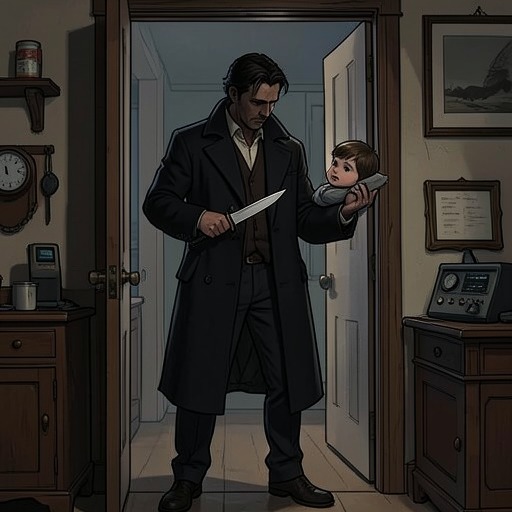
PiercingYoko is Kawashima Masayuki’s wife and the mother of their infant daughter, Rie. A skilled and energetic cooking teacher, she builds a popular teaching practice in the couple’s apartment and offers Kawashima a relationship in which he feels supported and, for a time, less governed by his old terror. Her significance is sharpened by the contrast between that shared domestic life and the fear he hides from her: during ten consecutive nights, he watches their sleeping baby with an ice pick in his pocket while Yoko remains asleep nearby.
Identity and Work
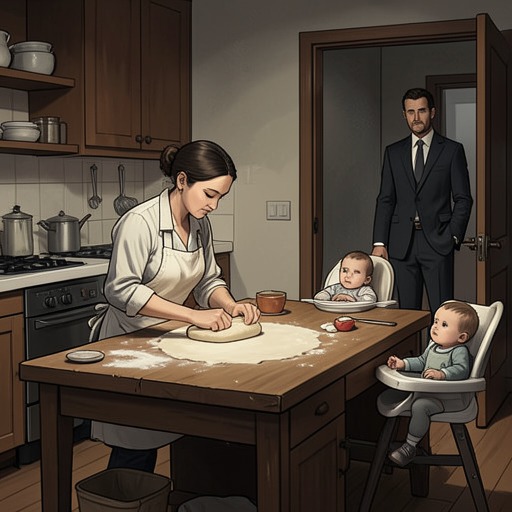
Yoko is twenty-nine, the same age as Kawashima, and is described as healthy and unfamiliar with insomnia. Before marrying, she worked for a major baked-goods manufacturer; afterward, she left her job and began teaching cooking from the couple’s one-bedroom apartment. Her classes in bread and pastries became remarkably popular. She taught almost every day, with only two fixed holidays a month, to a varied group that included housewives, middle-school girls, elderly widowers, and middle-aged men. Many of her students were women and readily helped with Rie, allowing Yoko to combine childcare with a demanding teaching schedule.
Her work reshapes the apartment as well as its daily rhythms. The living room becomes a workspace dominated by a large, unfinished-wood L-shaped table imported from Sweden, large enough for eight or ten students to knead dough at once. Kawashima gave it to her as a wedding present, spending the money in his bank account. The couple’s rooms are permeated by the buttery smell of her baking, which comes to represent happiness to him. That domestic atmosphere is not simply a backdrop: it gives concrete form to the life they have made together, even as Kawashima’s private distress begins to threaten it.
Meeting and Marriage
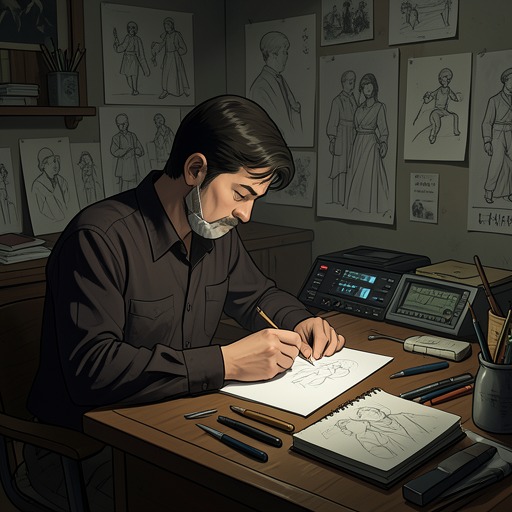
Yoko and Kawashima met six years before the events surrounding Rie, at an early-summer exhibition in an art gallery in Ginza. The exhibition featured sombre abstract works by the Russian-born French artist Nicolas de Staël. Although it was a Saturday afternoon, the two of them were the gallery’s only visitors. Yoko initiated their conversation by asking whether Kawashima was an artist; he was carrying a sketchbook. They moved in together not long afterward.
They married a year and eight months after meeting. Yoko told her parents that she and Kawashima shared values that made a wedding ceremony unnecessary, and they reluctantly accepted the decision. The account gives a more personal reason: she knew Kawashima had not forgiven his mother and younger brother and did not want a ceremony to put him in an uncomfortable position. Her choice shows a practical attentiveness to the strain surrounding his family history, even when the couple’s public explanation concealed that tenderness.
Support and Shared Life
Kawashima did not oppose Yoko’s decision to leave her job, and he supported her when she later said she wanted a child. His colleagues teased him about how cheerful he had become since marrying, joking that Yoko must be putting something in her bread. The narrative does not establish that he understood himself to have changed, but it does trace a substantial easing of his self-loathing after meeting her, especially after they decided to marry. He was not overwhelmed by his former panic even when Rie was born and he first held her.
Yoko also tried to understand how to support him during an earlier episode of night terror. About six months after they began living together, Kawashima awoke on a freezing winter night drenched in sweat, got out of bed, and left the apartment alone. When he returned about two hours later, he told her that he had experienced these episodes since childhood. He described waking in panic, sometimes screaming or running around the room, and afterward remembering only the terror and confusion. As an adult, he said, he no longer lost his sense of who he was, but he still chose to leave and walk until he could calm himself. Yoko asked why he had gone alone instead of letting her hold him. His response was that he had always thought it best to be by himself when he lost control. The exchange establishes both her wish to offer comfort and the limit he places on her access to his fear.
Motherhood and the Hidden Crisis
Yoko’s mother suggested the name Rie. By the time the child is four months old, Yoko is caring for her while maintaining her nearly full teaching schedule. Kawashima worries that the baby might inherit his insomnia, and the narration places him at the crib late at night, using a penlight to inspect her sleeping form. He has done this for ten nights in a row. Yoko is asleep in the bed behind him and must rise early for work; the scenes show her close to the danger without showing her aware of his nightly ritual.
This recurrence marks a rupture in the stability associated with Yoko. Kawashima’s old cycle of fear had seemed to be receding: he had not again been overwhelmed by the panic that once made closeness difficult, not even at Rie’s birth. Yet the ten nights of watching the child bring that fear back. The contrast is not that Yoko’s care has failed, but that the life they share cannot by itself reveal or contain what Kawashima keeps private. Her ordinary responsibilities continue while he confronts a crisis she is not shown witnessing.
Yoko’s Name in the Confrontation
Yoko is absent from the later confrontation between Kawashima and Sanada Chiaki, but her name makes her presence consequential. After taking two Halcion tablets, Kawashima becomes disoriented and calls for Yoko. Chiaki, who had been trying to interpret his mumbling, realizes that he is calling another woman’s name and reacts with anger. The scene turns Yoko from a remembered source of security into an unseen third presence in their encounter.
The following morning, Chiaki finds Kawashima’s wallet and a photograph of him with a woman wearing glasses and holding a newborn. She identifies the woman as Yoko. In the photograph, Yoko is smiling, while Kawashima’s expression is stern. The image confirms her place in his family life and gives Chiaki a visible counterpart to the name she heard. Yoko does not participate in the confrontation, and the evidence does not show her learning of it; her narrative role lies in the distance between the secure family life she represents to Kawashima and the private turmoil unfolding beyond her view.