Kawashima's convenience-store revelation
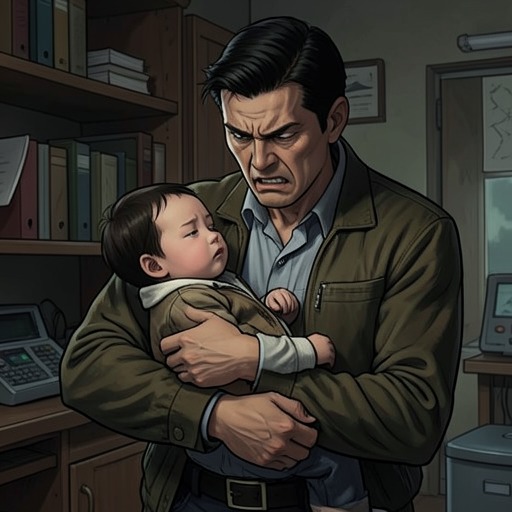
PiercingKawashima Masayuki’s convenience-store revelation is the psychological turning point at which his fear of stabbing his baby is recast, in his own mind, as something to overcome by harming someone else. A brief errand for diapers becomes a scene of dissociation: an apparent second self appears among the shelves and supplies the answer Kawashima will use to organize a murder plan. The episode does not resolve his fear; it converts that fear into a rationale for violence.
The Store and the Split Self
Kawashima reaches a convenience store after recalling an earlier assault on a woman with whom he had lived. At the entrance, he notices that his heartbeat has returned to normal. Inside, the warm air and the ordinary activity around the counter coincide with a familiar sense that he is no longer fully present in his own body, but has separated from it and is waiting nearby. The shift is not presented as a supernatural event: the vision that follows takes shape through Kawashima’s own experience of dissociation.
A clerk calls out to a young couple entering from the cold. After they move toward the magazines, Kawashima goes to the shopping baskets and then looks toward disposable diapers on a high shelf. He recalls Yoko saying that they never seemed to have enough. He decides to buy some, but the practical errand becomes bound up with his fear that he has separated from himself and is waiting among the packages.
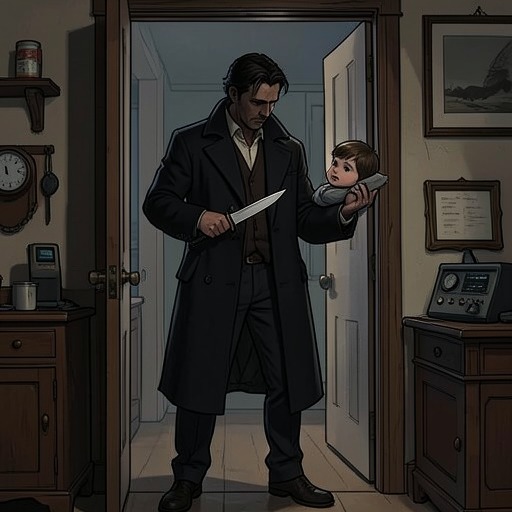
Kawashima then sees this other self a few paces ahead, holding a package of diapers. The figure points to the baby pictured on it and beckons him closer. The baby image makes the vision’s connection to his current fear unmistakable: the object he has come to buy for his family becomes the surface on which the other self stages a disturbing message. As Kawashima approaches, the figure pinches the package so that the baby’s face is distorted. The scene joins ordinary domestic responsibility to the threat Kawashima fears within himself, without establishing that the threat has actually been carried out.
The Explanation and Its Reversal
The other self recalls Kawashima’s puzzlement about having watched Basic Instinct calmly. It links that calm to his memory of stabbing his former lover: remembering the assault had settled his heartbeat and eased his anxiety about stabbing the baby. The explanation is consequential because it treats a past act of violence not as a warning or a source of remorse, but as a mechanism that can regulate present fear. Kawashima’s memories, rather than remaining behind him, become an argument for repeating violence.
The vision culminates in the statement, “There’s only one way to overcome the fear.” Kawashima cannot answer before the two selves merge. The voice continues within him and makes the implication explicit: he must stab someone else with an ice pick. He stands in a stupor, experiencing the conclusion as a revelation. The moment is therefore both an apparent end to his immediate uncertainty and a moral reversal: what had been fear of harming his child becomes a proposed reason to harm another person. Nothing in the episode makes the proposal necessary; it is the conclusion produced by Kawashima’s distorted reasoning.
From Revelation to Plan
After the store episode, Kawashima describes his thoughts about violence as producing a kind of creative calm. He contrasts the man considering a killing with the man who had smiled at Yoko that morning, recognizing a gap between these states without being able to explain it. This contrast shows how the revelation can coexist with the appearance of ordinary family life: the calm he finds in planning does not mean that the underlying danger has passed.
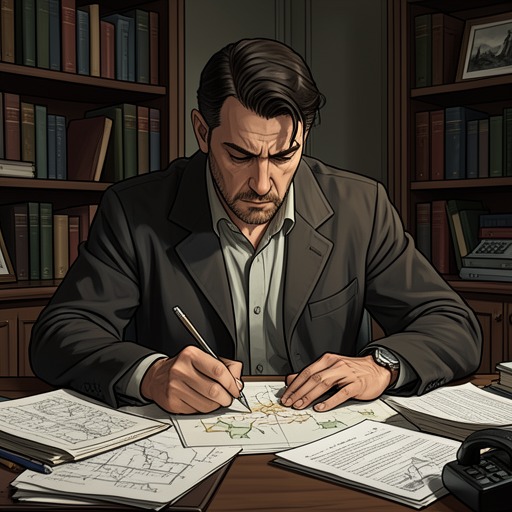
He takes an article, sex-industry publications, and a notebook from his briefcase and begins setting out a plan. He decides that his intended victim should be a prostitute, and weighs how to choose someone whose disappearance would attract less attention. He rejects an outdoor location in favor of a hotel room, reasoning that he needs control over the setting and the opportunity to restrain the intended victim. His notes turn the revelation’s broad command into practical decisions about the target, location, concealment, and avoidance of identification. The planning is presented as deliberate, not as an action compelled by the vision.
He also researches hotel procedures and ways of misleading investigators. He tests a reservation at the Akasaka Prince Hotel, considers which West Shinjuku hotels might attract less attention, and writes that poor service could mean fewer eyes on a guest. These details reveal the widening distance between the revelation’s seemingly sudden certainty and the sustained calculation that follows it: the vision supplies his violent premise, while Kawashima himself develops the means and precautions.
The Intended Encounter
Kawashima ultimately checks into the Keio Plaza Hotel, choosing a busy afternoon when the lobby is crowded with wedding guests and conference attendees. He arrives by hotel bus from Shinjuku Station and carries an overnight bag containing an ice pick, a knife, and a change of clothes. His preparations reflect the assumptions formed during his planning: he expects crowds and inattentive staff to reduce scrutiny, and believes that his disguise and arrangements will limit the chance of recognition.
That expectation meets an unpredictable human encounter. As Kawashima heads back toward his room, he sees Sanada Chiaki stagger into the corridor from another room, naked and visibly distressed. He has already been considering the risks of being seen with the objects in his bag, and the appearance of another person in the corridor changes the immediate situation. The convenience-store revelation thus leads into a plan whose careful arrangements cannot control everything that happens around him. Its significance lies not in a successful resolution of fear, but in the sequence it initiates: dissociation and memory become a violent conclusion, the conclusion becomes a written scheme, and the scheme encounters circumstances Kawashima did not anticipate.