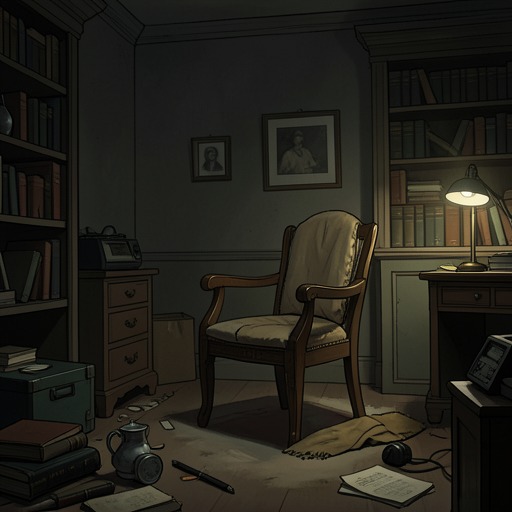
Piranesi's diary
PiranesiPiranesi’s journals are both practical records of life in the House and the physical archive through which their writer gradually discovers that his present identity has been shaped by missing memories. Numbered, relabelled, torn, hidden, and recovered, the notebooks do more than preserve what Piranesi knows: their own material history exposes what he cannot remember and makes the act of reading a route back to his former life.
Purpose and arrangement
Piranesi writes in notebooks to cultivate precision and carefulness, and to preserve what he knows for the Sixteenth Person, an imagined future reader whom he addresses directly. He wonders whether this reader is a traveller who crossed the House’s broken floors and derelict stairs, or someone who will inhabit its halls after his death. The journals thus function at once as private records and as a communication across an uncertain future, written by someone who cannot know who will find them or when.
The notebooks are kept in a brown leather messenger bag, hidden in a hollow behind the Statue of an Angel caught on a Rose Bush in the north-eastern corner of the Second Northern Hall. Piranesi stores his watch there as well, wearing it on Tuesdays and Fridays when he meets the Other at ten o’clock; on other days he avoids carrying it for fear that seawater will damage its mechanism. The concealed cache gives the written record a fixed, practical location in a world where water and time are difficult to manage, even as that location later becomes part of Piranesi’s puzzle over who could have altered the books.
The archive has distinct working parts. A Table of Tides records the times and volumes of high and low water and calculates future tides; a Catalogue of Statues organizes the House’s sculpted inhabitants; the remaining notebooks hold Piranesi’s journal, including thoughts, memories, and accounts of his days. By the time he describes the collection, the journal has filled nine notebooks and the tenth is in use. The series is numbered, and most volumes are labelled with dates or with the names Piranesi gives to periods of his life. The ordering promises a continuous record, but its labels prove to be anything but stable.
An archive with a broken chronology
The first two notebooks are labelled December 2011 to June 2012 and June 2012 to November 2012. The third was originally labelled November 2012, but that date has been crossed out and replaced by a long period-name: from the Thirtieth Day in the Twelfth Month in the Year of Weeping and Wailing to the Fourth Day of the Seventh Month in the Year Piranesi discovered the Coral Halls. Both the second and third notebooks have gaps where pages were violently removed. Piranesi knows the losses are there, wonders who caused them, and cannot reach a conclusion.
The chronology becomes stranger when Piranesi finds index entries for material that appears not to exist. An entry for Stanley Ovenden points to Journal 21, while references elsewhere invoke Journals 11, 17, 18, and 20. The writing is recognizably his, yet differs from his current hand: the ink is thinner and more fluid, the nib broader, and the letters rounder and fatter, as if written by a younger version of himself. The apparent contradiction is not resolved by discovering a missing cache of books. Piranesi checks the messenger bag and finds only the nine journals he already knows.
Instead, close inspection of the covers reveals that the first three journals were once numbered 21, 22, and 23. Someone scratched away the initial numeral 2, changing them into volumes 1, 2, and 3; because the white gel ink was difficult to remove, the ghost of the original number remains visible. The new numbering has made an older archive appear to be the beginning of a different sequence. Piranesi tests the discovery against the index: if his present Journal 1 was once Journal 21, it should contain the entry on Stanley Ovenden. On page 154, it does. The biography identifies Ovenden as a student of Laurence Arne-Sayles, and the recovered entry records his study of mathematics at the University of Birmingham, his attendance at Arne-Sayles’s lecture, and his subsequent anthropology doctorate at the University of Manchester under Arne-Sayles’s supervision.
This evidence also changes the significance of the entries’ references to other people and incidents. The index entry for Ovenden directs Piranesi to an account titled The disappearance of Maurizio Giussani, and the recovered material places Ovenden among the favoured students who accompanied Arne-Sayles to the Casale del Pino in 1987, alongside Bannerman, Hughes, Ketterley, and D’Agostino. The notebooks therefore preserve a history extending beyond the life Piranesi currently remembers. Their former numbers and cross-references connect his House-bound present to an earlier world, but that history must be pieced together from an archive whose sequence has been deliberately obscured.
Pages lost, fragments recovered
The journals’ gaps are not merely a defect in their record; they become a central problem of evidence. Piranesi knows that pages were removed from the second and third notebooks, but initially cannot explain the missing material. Later, his discovery that the old Journals 22 and 23 contained consecutive entries about Ketterley sharpens the question. The last ten pages of Journal 22 and the first thirty-two pages of Journal 23 are gone, leaving torn edges in the spines. The absent pages matter because they gathered information about Ketterley in one continuous run, and their loss prevents Piranesi from reading the account in its original form.
Piranesi considers whether the Prophet or the Sixteenth Person could have removed the pages. He reasons that the Prophet detests Ketterley, while the Sixteenth Person’s hostility to Reason might be connected to hostility toward Writing. Yet those suspicions falter: the Sixteenth Person has used writing to leave him a long message, and Piranesi cannot see how either person could locate a bag hidden behind one statue among millions. The question turns inward. He has no memory of tearing out the pages, but already knows that he has done things without remembering them, including writing the mysterious entries. He can no longer treat the gap between what the journals say and what he recalls as proof that someone else acted.
A material clue links the absent pages to a separate collection of scraps. In the Eighty-Eighth Western Hall, gulls have woven pieces of paper into their nests. Piranesi returns equipped with food, blankets, a small saucepan, and rags, then spends many hours carefully freeing the paper. Dry seaweed nests come apart easily; in others, droppings have cemented the scraps in place. He heats water over a fire made from old seaweed and applies it with a rag, balancing the need to soften the droppings against the risk of dissolving the paper. By the evening of the second day, he has recovered seventy-nine scraps from thirty-five nests and checks that no more remain.
The recovered material does not immediately restore a readable whole. Back in his own halls, Piranesi spends an hour assembling it and recovers perhaps half a page and several smaller sections. Later, after seeing that the missing Ketterley entries had occupied the torn pages of the old Journals 22 and 23, he retrieves these scraps and spreads them out for examination. One corner bears the page number 231, identifying it as a leaf from Journal 22. That small numeral turns conjecture into a physical connection: pages missing from the journal have survived elsewhere in the House, transported into gull nests rather than simply destroyed.
The pieces yield approximately thirty entries covering the period Piranesi had called 15 November to 20 December 2012. The longest is titled The events of 15 November 2012. Recovery remains partial and laborious, but it changes the archive’s status: what had looked like a broken chronology can be reassembled from displaced evidence. The reading process becomes an investigation in which numbering, handwriting, page edges, and even the scraps’ location help establish what happened.
Reading against forgetting
The journals also expose a limit that no act of careful recording can by itself overcome. The Other tells Piranesi that this is not the first time he has said he wants to stop searching for knowledge, and that they have already had the same exchange. Piranesi rejects the claim, astonished; the Other explains that the labyrinth makes people forget and can unpick an entire personality. The revelation recasts the notebooks’ gaps and anomalies as part of a larger struggle between recorded continuity and lived memory. The journals may preserve events that Piranesi cannot consciously recall, but he does not automatically understand what those records mean.
His encounter with the index makes that problem immediate. When the Prophet speaks Stanley Ovenden’s name, it feels wholly unfamiliar, although the name is already recorded in Piranesi’s own archive. The discrepancy is visible before it is comprehensible: Piranesi can see the index entry, yet finds the contradiction so strange that he struggles to form coherent thoughts about it. The journals are therefore not simply a reliable substitute for memory. They present facts that the current self cannot place, and their reader must learn to recognize that the failure lies in the relationship between record and recollection, not necessarily in the recorded words.
The recovered Ketterley pages bring that conflict to its most painful conclusion. After reading the fragments, Piranesi is physically shaken and vomits on the pavement; even the cup of water in his hand will not stay steady. He recognizes that his earlier trust in the Other was founded on forgetting: the Other has never been his friend, and is his enemy. He had known this once as Matthew Rose Sorensen, but when he forgot that identity, he forgot the knowledge along with it. The journal fragments restore the relationship that memory loss had erased and establish the stakes of the archive’s survival. They do not merely fill a gap in Piranesi’s biography; they let him name the danger he faces in the present.
Narrative significance
The journals are at once a system of observation and an unstable body of evidence. Their tide tables and catalogues impose order on recurring surroundings, while the numbered volumes record personal time; but the scratched-out numerals, altered labels, unfamiliar handwriting, removed pages, and recovered scraps reveal that the archive has itself undergone a history of intervention and loss. Each physical trace prompts a question that memory cannot answer alone. The reader encounters the evidence alongside Piranesi, often seeing its force before he can make sense of it.
Addressed to the Sixteenth Person, the notebooks begin as a gift of knowledge to an unknown future reader. As the story progresses, that outward-facing purpose gains an urgent inward counterpart: Piranesi must read the past version of himself in order to understand the present. Writing’s precision can preserve details, but it cannot guarantee stable identity when the House has disrupted memory. The decisive insight arrives only when material evidence and recognition meet: the missing pages restore the history that Piranesi had lost, and the archive turns from a record of his life into the means by which he can see who has been concealing it.