the first day of the fifth month in the Year the Albatross Came to the South-Western Halls
The Joining of Three Tides
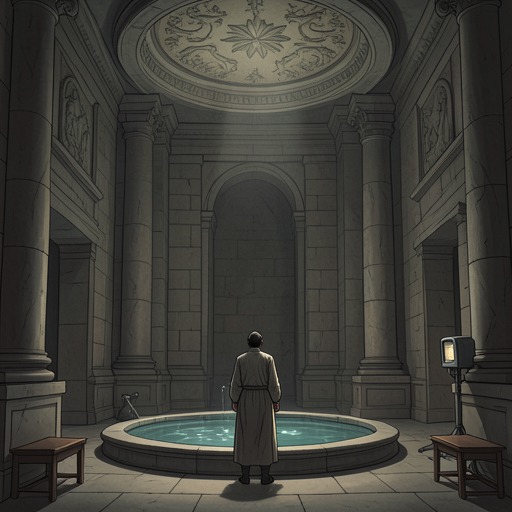
In the Ninth Vestibule, [Piranesi](entity:character-recall-character-piranesi-06fdb2e218c7) witnesses three tides converge, their different waters surging up the staircases and flooding the chamber. A towering wave nearly plucks him from the wall, but he clings to a statue and survives; afterward, he finds a marble finger left in his hand by the retreating waters.
The encounter introduces the House as both sublime and dangerous, and establishes Piranesi’s faith in its order and kindness. The fragment is a small, lasting token of the House’s capacity to surprise him.
the seventh day of the fifth month in the Year the Albatross Came to the South-Western Halls
A World Without an Edge
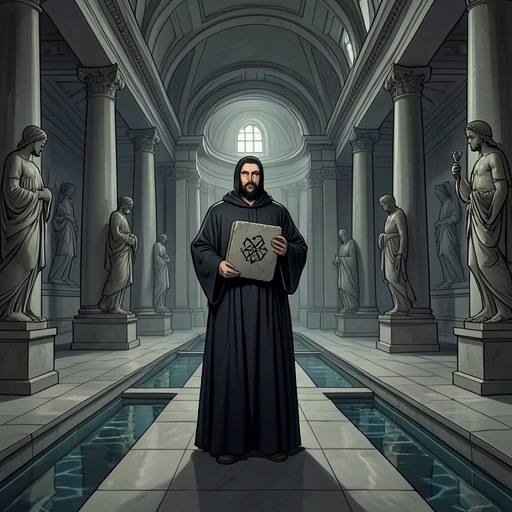
[Piranesi](entity:character-recall-character-piranesi-06fdb2e218c7) describes the seemingly endless Halls, their statues, courtyards, clouds, tides, and birds. He has travelled far in every direction but has never found an edge to the World, and he is compiling a catalogue so that its wonders will be recorded.
He believes the House’s three levels sustain life: the [Lower Halls](entity:location-recall-location-lower-halls-5341308fd39d) provide food, the [Upper Halls](entity:location-recall-location-upper-halls-1ad9340391a1) rainwater, and the [Middle Halls](entity:location-recall-location-middle-halls-e2121e72842f) shelter people and birds. From across a courtyard he spots [The Other](entity:character-recall-character-the-other-c18e94f992a0), unaware that he is being watched.
the tenth day of the fifth month in the Year the Albatross Came to the South-Western Halls
The Fifteen Inhabitants
[Piranesi](entity:character-recall-character-piranesi-06fdb2e218c7) counts the people whose remains he has found and concludes that only he and [The Other](entity:character-recall-character-the-other-c18e94f992a0) are alive. He describes the [Biscuit-Box Man](entity:character-recall-character-biscuit-box-man-6f7a78d842f7), the Concealed Person, the [People of the Alcove](entity:character-recall-character-people-of-the-alcov-faac564c2774), and the Folded-Up Child, whose bones he tends with offerings and conversation.
He imagines that the House intended the child to be his wife, and wonders who will witness the House after he dies. He names the imagined reader of his journals the Sixteenth Person, a traveller or future inhabitant who might one day find them.
the seventeenth day of the fifth month in the Year the Albatross Came to the South-Western Halls
The Journals and the Calendar
[Piranesi](entity:character-recall-character-piranesi-06fdb2e218c7) explains that his journals preserve observations for the Sixteenth Person and that he uses an index to retrieve entries. The volumes contain gaps and evidence of two competing systems for naming years: ordinary numbered years and names drawn from memorable events.
He decides to abandon the numbered system in favour of years named for what happened within them. The choice reflects his devotion to careful record-keeping, even as the gaps in his own records hint at a past he cannot yet understand.
the eighteenth day of the fifth month in the Year the Albatross Came to the South-Western Halls
The Statues He Loves
[Piranesi](entity:character-recall-character-piranesi-06fdb2e218c7) names the statues that most move him, including the Faun, the Gorilla, and the Horned Giants. He interprets them as embodiments of qualities such as peace, endurance, and resistance to fate, and wonders whether choosing favourites is unfair to a House that loves all its creations equally.
The Faun’s finger pressed to its lips has always seemed to Piranesi a warning, though he cannot say what danger it foresees. The statues provide him with a language for understanding the world and, later, for interpreting the people in his life.
the nineteenth day of the fifth month in the Year the Albatross Came to the South-Western Halls
The Unfamiliar Leaf
[Piranesi](entity:character-recall-character-piranesi-06fdb2e218c7) recalls finding a bright yellow leaf floating on a gentle tide. Its surface repelled water, suggesting it belonged to something that lived in air rather than the sea vegetation he knows.
The leaf leaves open the possibility that the House contains unfamiliar forms of life and that Piranesi’s knowledge, however extensive, remains incomplete.
the twenty-ninth day of the fifth month in the Year the Albatross Came to the South-Western Halls
The Batter-Sea Test
At their meeting in the [Second South-Western Hall](entity:location-recall-location-second-south-western-84a15f547d1d), [The Other](entity:character-recall-character-the-other-c18e94f992a0) tests [Piranesi](entity:character-recall-character-piranesi-06fdb2e218c7)’s claim to remember every place by asking whether he remembers “Batter-Sea.” Piranesi treats it as a nonsense word and carefully explains why it cannot name any place in his World.
The Other says the answer confirms his test, but Piranesi then experiences fragments of an unexplained vision: a black scribble, a flash of red, strange writing, and a metallic taste. The episode plants the first clear clue that words from another life can stir inside him.
the middle of winter before the Year the Albatross Came to the South-Western Halls
Winter and the Wind
Winter makes survival difficult: [Piranesi](entity:character-recall-character-piranesi-06fdb2e218c7) rationed his fuel, while [The Other](entity:character-recall-character-the-other-c18e94f992a0) cancelled their meetings because of the cold. A southern wind drives snow into the Halls and makes the statues sing through their cracks, delighting Piranesi even as it makes his daily work harder.
At low tide he gathers wet seaweed in an emptied Lower Hall. In a moment of exhaustion, the coming albatross first appears to him as a brilliant white cross in the distance.
the middle of winter before the Year the Albatross Came to the South-Western Halls
The Albatross Arrives
A vast albatross glides through a doorway and nearly collides with [Piranesi](entity:character-recall-character-piranesi-06fdb2e218c7), who welcomes it with outstretched arms. Once grounded, the bird seems less heavenly and more awkwardly mortal, and Piranesi greets it as a new inhabitant of the Halls.
The following day a second albatross joins it. Piranesi recognises their courtship and their need for nesting material, then gives them dry seaweed, feathers, and an old jumper despite the cost to his own winter fuel.
shortly after the albatrosses arrive
The Albatross Chick
The albatrosses build a nest in the [Forty-Third Vestibule](entity:location-recall-location-forty-third-vestibul-d2e982f24ef2), lay an egg, and raise a chick. [Piranesi](entity:character-recall-character-piranesi-06fdb2e218c7) watches their careful devotion and names the year for their arrival in the South-Western Halls.
Their presence enlarges his sense of the world: he has helped bring new life into it, and the House’s inhabitants now include a family whose needs he can meet through generosity rather than obligation.
the thirty-first day of the fifth month in the Year the Albatross Came to the South-Western Halls
Birds Gather in the Cloud
After the ceilings of two North-Eastern Halls collapsed, clouds begin drifting down into the [Middle Halls](entity:location-recall-location-middle-halls-e2121e72842f), changing the weather and making the region cold and grey. [Piranesi](entity:character-recall-character-piranesi-06fdb2e218c7) wakes to find a cloud inside his sleeping hall and statues reduced to pale outlines in mist.
He finds the birds gathered silently in the Sixth Western Hall, perched across statues and columns. Their unusual stillness suggests that they, too, feel the changed atmosphere.
the eighth day of the sixth month in the Year the Albatross Came to the South-Western Halls
The Drowned Halls
[Piranesi](entity:character-recall-character-piranesi-06fdb2e218c7) describes a region of derelict Halls where collapsed masonry has shut out the tides. Rainwater has gathered there into dark freshwater lakes, while giant statues loom above water lilies and broken architecture.
The [Drowned Halls](entity:location-recall-location-drowned-halls-860abbc72141) are difficult to reach, but their calm waters provide fish. The region becomes one of Piranesi’s important sources of food and a place where danger and beauty coexist in stillness.
before the tenth day of the sixth month in the Year the Albatross Came to the South-Western Halls
The Fall Through the Clouds
Once, hungry and weakened, [Piranesi](entity:character-recall-character-piranesi-06fdb2e218c7) ventures through an unfamiliar cloud-filled Upper Hall to reach the [Drowned Halls](entity:location-recall-location-drowned-halls-860abbc72141). A concealed break in the floor opens beneath him, and he falls into the void, saved only when he lands in the slippery hands of a statue.
He spends a freezing night clinging to the figure until wind clears the cloud and reveals the deep drop to the waters below. The experience teaches him that the House’s beauty offers no guarantee of safety, and that his survival depends on close attention to its dangers.
the eleventh day of the sixth month in the Year the Albatross Came to the South-Western Halls
The Flock’s Warning
[Piranesi](entity:character-recall-character-piranesi-06fdb2e218c7) reflects on the birds’ behaviour and wonders whether wisdom can belong to a flock rather than to individual birds. On an earlier occasion, birds’ movements led him to catch extra fish just before a storm drove fish from their usual halls.
A new gathering appears to convey a sequence of images: an angel and ship, a book and clouds, then a child and mice. Piranesi interprets these as a message from afar, obscure writing, and innocence eroded, though he cannot yet know what the images mean.
the fifteenth day of the sixth month in the Year the Albatross Came to the South-Western Halls
The Ritual of Addy Domarus
[The Other](entity:character-recall-character-the-other-c18e94f992a0) rehearses a ritual intended to summon the [Great and Secret Knowledge](entity:concept-recall-concept-great-and-secret-know-3169149858d6). He says he will invoke Addy Domarus, an ancient king, and asks [Piranesi](entity:character-recall-character-piranesi-06fdb2e218c7) to assist by remaining quiet and imagining the powers the Knowledge might grant.
When Piranesi asks whether Addy Domarus is among the dead he tends, The Other reacts with irritation and denies any connection to those bones. The exchange exposes a gap between their understandings of the dead and hints that The Other’s ritual knowledge comes from a world Piranesi does not know.
the fifteenth day of the sixth month in the Year the Albatross Came to the South-Western Halls
A Temple in the West
[The Other](entity:character-recall-character-the-other-c18e94f992a0) complains that the House is lifeless and repetitive. [Piranesi](entity:character-recall-character-piranesi-06fdb2e218c7) argues inwardly that its tides, birds, sea life, and unique statues make it profoundly alive, then suggests that a bright star might serve as the focus of the ritual.
He tells The Other about a distinctive, windowless hall with a single door. The Other immediately wants to use it for the ritual and asks Piranesi to determine which stars can be seen from its entrance.
the sixteenth day of the sixth month in the Year the Albatross Came to the South-Western Halls
Shoes for the Journey
[The Other](entity:character-recall-character-the-other-c18e94f992a0) leaves [Piranesi](entity:character-recall-character-piranesi-06fdb2e218c7) a pair of canvas shoes in a cardboard box. Piranesi is delighted that they fit and spends the day running and dancing, grateful both for their comfort and for what he sees as proof of friendship.
The gift makes the journey to the distant hall possible, while also showing how dependent Piranesi has become on the objects The Other occasionally supplies.
the eighteenth day of the sixth month in the Year the Albatross Came to the South-Western Halls
The Names of the Dead
[Piranesi](entity:character-recall-character-piranesi-06fdb2e218c7) visits the dead with food, water, and lilies, whispering the name Addy Domarus at each resting place. None accepts the name; instead, he senses a faint rejection from every set of bones.
The failure to connect the ritual’s ancient figure to his own dead deepens the mystery surrounding [The Other](entity:character-recall-character-the-other-c18e94f992a0)’s knowledge and leaves Piranesi’s acts of care distinct from The Other’s search for power.
the nineteenth day of the sixth month in the Year the Albatross Came to the South-Western Halls
The Journey West
[Piranesi](entity:character-recall-character-piranesi-06fdb2e218c7) sets out for the [One-Hundred-and-Ninety-Second Western Hall](entity:location-recall-location-one-hundred-and-nine-576463ae602e), passing a staircase buried in mussels and a wall bright with golden light. He crosses dangerous rubble in the Seventy-Eighth Vestibule and is attacked by nesting gulls in the [Eighty-Eighth Western Hall](entity:location-recall-location-eighty-eighth-wester-5b59e6a6c846).
At the destination, the hall’s single doorway opens onto absolute darkness. Piranesi hesitates, remembering the terrifying cloud-filled hall where he nearly fell, but decides that his obligation to [The Other](entity:character-recall-character-the-other-c18e94f992a0) requires him to stay through the night.
the night of the nineteenth into the twentieth day of the sixth month in the Year the Albatross Came to the South-Western Halls
The Hall of Moonlit Crowds
[Piranesi](entity:character-recall-character-piranesi-06fdb2e218c7) sleeps inside the dark hall and wakes to a full moon framed in its only doorway. The moon reveals statues unlike the isolated figures elsewhere: a crowd pressed together, families and strangers sharing the view, with a young man holding a banner in the foreground.
For a moment, Piranesi imagines what it would mean to live among thousands of people. He records the stars visible from the doorway, but the human multitude in stone leaves the deeper impression.
the twentieth day of the sixth month in the Year the Albatross Came to the South-Western Halls
The Knowledge Loses Its Hold
On the walk home, [Piranesi](entity:character-recall-character-piranesi-06fdb2e218c7) realises that the [Great and Secret Knowledge](entity:concept-recall-concept-great-and-secret-know-3169149858d6) may exist or may not, but no longer matters to him. The moonlit crowd has shown him that the House is not a puzzle whose value depends on what can be extracted from it.
He concludes that the House is valuable in itself and questions why he would want powers such as controlling other minds. The revelation frees him to imagine a different kind of inquiry, grounded in curiosity rather than possession.
the twentieth day of the sixth month in the Year the Albatross Came to the South-Western Halls
The Torn Pages
In the [Eighty-Eighth Western Hall](entity:location-recall-location-eighty-eighth-wester-5b59e6a6c846), [Piranesi](entity:character-recall-character-piranesi-06fdb2e218c7) finds fragments of pages among the gull nests. He can make out words such as “minotaur,” “slave,” and “kill him,” then gathers dozens more scraps from the floor and nests without disturbing the birds’ eggs.
He postpones further collection until the nesting season ends. The fragments suggest that someone lived in these Halls in anger and fear, but Piranesi assumes their writer must have been one of the dead he already knows.
the twenty-second day of the sixth month in the Year the Albatross Came to the South-Western Halls
The Other Rejects the Revelation
[Piranesi](entity:character-recall-character-piranesi-06fdb2e218c7) brings [The Other](entity:character-recall-character-the-other-c18e94f992a0) his star observations and tries to explain that the House has revealed the futility of searching for the [Great and Secret Knowledge](entity:concept-recall-concept-great-and-secret-know-3169149858d6). The Other is absorbed in planning a ritual at the distant hall and reacts as if Piranesi has raised a familiar objection.
He claims that they have had this conversation before, perhaps three times, and that the labyrinth makes Piranesi forget whole discussions and lose track of time. Piranesi is shaken, but his trust in The Other’s honesty prevents him from immediately rejecting the claim.
the twenty-fourth day of the sixth month in the Year the Albatross Came to the South-Western Halls
A Letter in Chalk
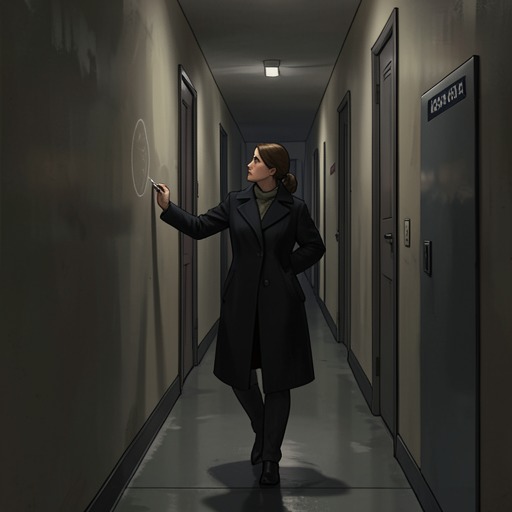
[Piranesi](entity:character-recall-character-piranesi-06fdb2e218c7) writes [The Other](entity:character-recall-character-the-other-c18e94f992a0) a message on the pavement, saying that although he no longer believes in the research, he will continue gathering data so The Other’s work does not suffer. He wants to preserve their friendship even when their purpose has diverged.
The letter shows how strongly Piranesi’s loyalty shapes his choices, and how little he understands the imbalance in their relationship.
the twenty-sixth day of the sixth month in the Year the Albatross Came to the South-Western Halls
The Warning About 16
[The Other](entity:character-recall-character-the-other-c18e94f992a0) abruptly asks whether [Piranesi](entity:character-recall-character-piranesi-06fdb2e218c7) has encountered anyone else in the labyrinth. When Piranesi speculates about a Sixteenth Person, The Other says he has met this person and describes them as an enemy who threatens their peaceful existence and reason.
He insists that Piranesi should hide rather than speak if the stranger appears. Piranesi is troubled by the warning but is also excited by the possibility of meeting someone with knowledge of distant regions.
the twentieth day of the seventh month in the Year the Albatross Came to the South-Western Halls
The Prophet Appears
[Piranesi](entity:character-recall-character-piranesi-06fdb2e218c7) unexpectedly encounters an old man in a shaft of light in the [First North-Eastern Hall](entity:location-recall-location-first-north-eastern-cf0540ac7879). The stranger says he is only passing through and identifies [The Other](entity:character-recall-character-the-other-c18e94f992a0) as Valentine Ketterley, a former student of his named [Laurence Arne-Sayles](entity:character-recall-character-laurence-arne-sayle-5e671c683d72).
The old man describes his own theories: that forgotten powers flowed out of one world and formed another, and that the labyrinth is a distributary world created by ideas from elsewhere. He says the [Great and Secret Knowledge](entity:concept-recall-concept-great-and-secret-know-3169149858d6) is not hidden there, and reveals that [16](entity:character-recall-character-16-c69e35c27db6) is searching for Piranesi, not for Ketterley.
the twentieth day of the seventh month in the Year the Albatross Came to the South-Western Halls
A Threat Against Ketterley
The Prophet tells [Piranesi](entity:character-recall-character-piranesi-06fdb2e218c7) that he intends to give [16](entity:character-recall-character-16-c69e35c27db6) directions to the labyrinth, partly to harm Ketterley. He warns that Ketterley will become more dangerous as 16 draws closer, and even suggests that Piranesi might kill Ketterley to prevent danger.
Piranesi takes the old man’s account as prophecy and records its contradictions, including the stranger’s claim to have once received a letter from Piranesi. The encounter leaves him with knowledge he cannot safely share with [The Other](entity:character-recall-character-the-other-c18e94f992a0).
the twenty-fourth day of the seventh month in the Year the Albatross Came to the South-Western Halls
The Other Threatens to Kill Piranesi
[The Other](entity:character-recall-character-the-other-c18e94f992a0) tells [Piranesi](entity:character-recall-character-piranesi-06fdb2e218c7) that if [16](entity:character-recall-character-16-c69e35c27db6) drives him mad, he may attack The Other, and that in such a case The Other believes killing him would be necessary. Piranesi is shocked, though he accepts the explanation that this would protect them both.
Piranesi nearly tells The Other about the Prophet but instead offers a harmless account of seeing an octopus. He later realises how close he came to revealing that he had broken the instruction to avoid strangers.
the first day of the eighth month in the Year the Albatross Came to the South-Western Halls
Preparing to Hide
[Piranesi](entity:character-recall-character-piranesi-06fdb2e218c7) practises hiding in statue niches, confident that his faded clothes blend into the marble. He removes the bright ornaments from his hair because they rattle and make him conspicuous.
The careful preparation reflects how fully he has accepted [The Other](entity:character-recall-character-the-other-c18e94f992a0)’s warning. He hides the ornaments in the box that once held his shoes, intending to restore them after [16](entity:character-recall-character-16-c69e35c27db6) has returned to her distant halls.
the eighth day of the eighth month in the Year the Albatross Came to the South-Western Halls
The Journals Contradict Him
While indexing his notes, [Piranesi](entity:character-recall-character-piranesi-06fdb2e218c7) finds references to journals numbered 11, 17, 18, 20, and 21, including entries about [Stanley Ovenden](entity:character-recall-character-stanley-ovenden-5e413ed3dd65) and places that mean nothing to him. He discovers that his first three journals were originally numbered 21, 22, and 23, with their initial digits scratched away.
The old entries are unmistakably in his own but younger handwriting. When he reads about universities, cities, and [the disappearance of Maurizio Giussani](entity:event-recall-event-8c71e76fea47), the words provoke flashes of alien images and panic. He concludes that he must once have been mentally ill, not yet understanding that the entries describe his life outside the House.
the eighth day of the eighth month in the Year the Albatross Came to the South-Western Halls
The Faun’s Comfort
Overwhelmed by the journals, [Piranesi](entity:character-recall-character-piranesi-06fdb2e218c7) walks away from them and finds the Faun statue he loves most. Its finger at its lips seems no longer to warn him but to comfort him, and he clings to the figure and weeps for his lost sanity.
The statue gives him a way to endure what he cannot understand. He resolves to study the records cautiously and to care for himself, while still believing that the House has caused his memory loss for a purpose.
the twentieth day of the eighth month in the Year the Albatross Came to the South-Western Halls
Sylvia D’Agostino’s Life
[Piranesi](entity:character-recall-character-piranesi-06fdb2e218c7) reads the journal entry about [Sylvia D’Agostino](entity:character-recall-character-sylvia-d-agostino-f92a931e7817). She was a gifted mathematician and poet who became deeply devoted to [Laurence Arne-Sayles](entity:character-recall-character-laurence-arne-sayle-5e671c683d72), abandoned her academic prospects, and cut off her parents after he instructed her to quarrel with them.
She made films, including The Castle, whose images of vast halls, statues, and flooding resemble Piranesi’s world. She disappeared in 1990 after resisting Arne-Sayles’s demand that she leave her job, suggesting that his control over his followers had disastrous consequences.
the twentieth day of the eighth month in the Year the Albatross Came to the South-Western Halls
James Ritter’s Imprisonment
[Piranesi](entity:character-recall-character-piranesi-06fdb2e218c7) reads that [James Ritter](entity:character-recall-character-james-ritter-dfe610260a32) was found imprisoned behind a false wall in [Laurence Arne-Sayles](entity:character-recall-character-laurence-arne-sayle-5e671c683d72)’s house, malnourished and incoherent. Ritter later described a flooded house with statues and minotaurs, insisting that he had inhabited it for months before his rescue.
The account matches the Halls Piranesi knows, including the space beneath the [First Vestibule](entity:location-recall-location-first-vestibule-e0f0eb435caf)’s staircase where he found discarded food wrappers. The revelation makes the fragments from the gull nests newly significant and links the labyrinth to a missing person’s real suffering.
the twenty-first day of the eighth month in the Year the Albatross Came to the South-Western Halls
The Missing Pages
[Piranesi](entity:character-recall-character-piranesi-06fdb2e218c7) recognises that his old entries contain genuine information despite their strange vocabulary. The names in them may correspond to the dead he tends, and he concludes that the House has taught him unfamiliar ideas through its statues and images.
He also finds that key pages about Valentine Ketterley are missing from the altered journals. A recovered scrap bears a page number from one of those volumes, connecting the missing account to the paper fragments he found in the [Eighty-Eighth Western Hall](entity:location-recall-location-eighty-eighth-wester-5b59e6a6c846).
the first day of the seventh month in the Year the Albatross Came to the South-Western Halls
The Prophet’s Letter
[Piranesi](entity:character-recall-character-piranesi-06fdb2e218c7) visits the [First Vestibule](entity:location-recall-location-first-vestibule-e0f0eb435caf) and follows a cold draught and the smell of rain, metal, and petrol toward a shadowed gap between the minotaurs. He hears ordinary voices from beyond it and sees lights that flicker and vanish.
A crumpled note signed by Laurence asks someone to give directions to a statue of a fox teaching young creatures. Piranesi writes the route and a compassionate message to whoever finds it, whether alive or dead, then leaves the note by a minotaur statue.
the first day of the ninth month in the Year the Albatross Came to the South-Western Halls
The Fragments Recovered
[Piranesi](entity:character-recall-character-piranesi-06fdb2e218c7) returns to the [Eighty-Eighth Western Hall](entity:location-recall-location-eighty-eighth-wester-5b59e6a6c846) after the gulls have left their nests. Over two days he carefully softens the birds’ droppings and retrieves seventy-nine scraps of paper from thirty-five nests.
Some fragments describe a prisoner who depends on his captor for food and dreams of killing him with a piece of marble. Others record the writer’s fear of losing his mind. Piranesi assumes the writing belongs to one of his dead, unaware that it is his own earlier account of captivity.
the thirteenth day of the ninth month in the Year the Albatross Came to the South-Western Halls
16 Leaves a Written Message
In the [Sixth North-Western Hall](entity:location-recall-location-sixth-north-western-e4f9722e715a), [Piranesi](entity:character-recall-character-piranesi-06fdb2e218c7) finds yellow chalk route marks and white directions written by an unknown visitor. He follows the carefully repeated instructions back toward the [First Vestibule](entity:location-recall-location-first-vestibule-e0f0eb435caf) and admires their precision.
Believing the writing to be [16](entity:character-recall-character-16-c69e35c27db6)’s attempt to make him mad, Piranesi answers with a defiant message in blue chalk. He says he knows every hiding place and orders the stranger to leave, though he has not yet spoken with her.
the fourteenth day of the ninth month in the Year the Albatross Came to the South-Western Halls
The Other Conceals 16’s Sex
[Piranesi](entity:character-recall-character-piranesi-06fdb2e218c7) asks [The Other](entity:character-recall-character-the-other-c18e94f992a0) whether written messages can cause madness and is told that [16](entity:character-recall-character-16-c69e35c27db6)’s words are dangerous in any form. The Other says he has obtained a gun and expects the conflict to end soon.
Piranesi later challenges The Other for allowing him to assume 16 was male. The Other admits he kept quiet because he feared Piranesi would be more interested in a woman and might fall in love with her. Piranesi is disturbed by the manipulation and begins to see that The Other’s warnings are not neutral.
the nineteenth day of the ninth month in the Year the Albatross Came to the South-Western Halls
The Search for Laurence Arne-Sayles
[Piranesi](entity:character-recall-character-piranesi-06fdb2e218c7) studies the entries about [Laurence Arne-Sayles](entity:character-recall-character-laurence-arne-sayle-5e671c683d72) and finds an account of his theories about ancient people communicating with a responsive world. Arne-Sayles believed forgotten powers had left the world and created other places, with doors between them.
The records describe his interest in a bog-body head called [Marepool III](entity:object-recall-object-marepool-iii-0d3c01163d35) and his belief that its former owner possessed the knowledge he sought. Piranesi recognises that Arne-Sayles’s ideas match the Prophet’s account and that [The Other](entity:character-recall-character-the-other-c18e94f992a0)’s ritual invocation of Addy Domarus came from this same intellectual history.
Christmas Day 1976
The Museum Break-In
After the museum refuses [Laurence Arne-Sayles](entity:character-recall-character-laurence-arne-sayle-5e671c683d72) permission to borrow [Marepool III](entity:object-recall-object-marepool-iii-0d3c01163d35)’s head, his followers demonstrate under the slogan “[Free the Head](entity:expression-recall-expression-free-the-head-ddca0352a772).” Days later, intruders break into the [Manchester Museum](entity:organization-recall-organization-manchester-museu-639ebc8db158), camp inside, and perform a candlelit ritual around the display cabinet.
Nothing is reported stolen, but the head has been handled and the scene bears signs of magical practice. Years afterward, Tony Myers says he saw Arne-Sayles perform a ritual with two other men, including possibly Valentine Ketterley, and claims the preserved lips moved.
before 1979
Arne-Sayles Enters the Labyrinth
In his account of finding the way to another world, Arne-Sayles returns in memory to the garden of his childhood home in Lyme Regis. Concentrating on his childhood sense of an unfettered world, he says he sees doors appear and steps through one into a vast chamber of marble, minotaur statues, and sea-like thunder.
The account describes the [First Vestibule](entity:location-recall-location-first-vestibule-e0f0eb435caf) and resembles the world [Piranesi](entity:character-recall-character-piranesi-06fdb2e218c7) inhabits. Arne-Sayles’s story offers a method based on returning to a pre-rational state of wonder, though his later conduct makes clear that his discoveries did not make him trustworthy.
the twenty-first day of the ninth month in the Year the Albatross Came to the South-Western Halls
A Flood Is Foretold
[Piranesi](entity:character-recall-character-piranesi-06fdb2e218c7) checks his tide tables and discovers a convergence of four tides due in six days. He warns [The Other](entity:character-recall-character-the-other-c18e94f992a0) that the resulting flood may inundate dozens of Halls and says he will seek safety in the south.
When Piranesi worries that [16](entity:character-recall-character-16-c69e35c27db6) may drown, The Other dismisses the concern and says her fate is not his responsibility. Piranesi gives no explanation for his concern, but decides that he must warn her himself.
the twenty-first day of the ninth month in the Year the Albatross Came to the South-Western Halls
The Pebble Message
[Piranesi](entity:character-recall-character-piranesi-06fdb2e218c7) goes to the [Sixth North-Western Hall](entity:location-recall-location-sixth-north-western-e4f9722e715a) to warn [16](entity:character-recall-character-16-c69e35c27db6) of the coming flood, then detours to collect his water bowls. In the [Twenty-Fourth Vestibule](entity:location-recall-location-twenty-fourth-vestib-885692f7df42), he finds that someone has rearranged white marble pebbles into a message: “[Are you Matthew Rose Sorensen](entity:expression-recall-expression-are-you-matthew-ro-14d58a43db33)?”
The name unlocks a vision of a rain-soaked city crowded with people, but it slips away before Piranesi can grasp it. He steadies himself by claiming the identity of the House’s beloved child, then searches his index and discovers that Matthew Rose Sorensen is the name attached to his old journals.
the twenty-first day of the ninth month in the Year the Albatross Came to the South-Western Halls
Matthew’s Journals
[Piranesi](entity:character-recall-character-piranesi-06fdb2e218c7) reads the indexed entries on Matthew Rose Sorensen and finds an academic who wrote about transgressive thought and [Laurence Arne-Sayles](entity:character-recall-character-laurence-arne-sayle-5e671c683d72). The name means little to him, but he realises the old journals may contain evidence that connects Matthew to the Other.
He finds that the missing pages about Ketterley have been torn from the volumes. Among the scraps recovered from the gull nests, he discovers a page number from one of those missing sections and begins reassembling the account.
15 November 2012
The Meeting in Battersea
In the recovered journal, Matthew Rose Sorensen visits Valentine Ketterley at Ketterley’s house in Battersea to discuss Arne-Sayles. Ketterley speaks of Arne-Sayles’s intellectual force and manipulation, then unexpectedly proposes that they perform the ritual to open a path to the labyrinth.
Matthew agrees, thinking the exercise will help him understand Ketterley and Arne-Sayles. Ketterley places Matthew’s notebooks in his bag, lights a candle, and chants Addy Domarus’s name; the account makes clear that the ritual is not a harmless demonstration but the means by which Ketterley brings Matthew into the House.
15 November 2012
Matthew Is Betrayed
During the ceremony, Matthew noticed the familiar wax spot on the candle and realized that Caterly had performed the ritual many times before. Then, the sound of London disappeared, the air became cold and damp, and Matthew opened his eyes to find himself in the first antechamber
the twenty-first day of the ninth month in the Year the Albatross Came to the South-Western Halls
Piranesi Remembers
The recovered account restores the truth: the other was not [Piranesi](entity:character-recall-character-piranesi-06fdb2e218c7)'s friend, but a captor who brought Matthew into the house for his own purposes. Piranesi understood that the other called himself by a borrowed name, tested his memory with "Battersea Sea," and returned to the
the twenty-second day of the ninth month in the Year the Albatross Came to the South-Western Halls
Piranesi Recognises 16 as an Ally
[Piranesi](entity:character-recall-character-piranesi-06fdb2e218c7) reconsidered the fragments left by the sixteenth person and understood that she was describing the victim of Kateley, not boasting about her own experience. He realized that she came to find Matthew to rescue him from Kateley; the so-called enemies were actually his friends
the twenty-sixth day of the ninth month in the Year the Albatross Came to the South-Western Halls
The Dead Moved to Safety
Before the flood came, [Piranesi](entity:character-recall-character-piranesi-06fdb2e218c7) moved the skeleton of the man in the cookie box, the people in the niche, and the curled-up child to a higher hall. This work took several days, and he had to climb the tall stairs repeatedly. He also protected his diary and personal belongings
the twenty-seventh day of the ninth month in the Year the Albatross Came to the South-Western Halls
16 Enters the House
When the four-wave tide began to rise, [Piranesi](entity:character-recall-character-piranesi-06fdb2e218c7) searched the route marked for the first hall and the sixteenth person, hoping to find her before she met someone else. He saw someone else coming in a life jacket, ready with a inflatable boat, and said Raphael was coming, and they
the twenty-seventh day of the ninth month in the Year the Albatross Came to the South-Western Halls
Sarah Raphael Arrives
A woman cried out Kateley's name, saying she was looking for Matthew Rose Sorenson. The others grabbed [Piranesi](entity:character-recall-character-piranesi-06fdb2e218c7), trying to use him as a decoy; Piranesi broke free and warned her that the flood was coming, and that Kateley was armed. This woman
the twenty-seventh day of the ninth month in the Year the Albatross Came to the South-Western Halls
The Great Flood
When the four tidal waves met, he took back the gun and fired at [Piranesi](entity:character-recall-character-piranesi-06fdb2e218c7) and [Sarah Raphael](entity:character-recall-character-sarah-raphael-276a39a22a93). Marble fragments scraped Piranesi, and the two took cover behind a giant statue of a horned man. The hall was then flooded by the surging waters. The inflatable boat was swept
the twenty-seventh day of the ninth month in the Year the Albatross Came to the South-Western Halls
The Sixteenth Person Revealed
After the flood, the woman identified herself as Sarah Rafael and called [Piranesi](entity:character-recall-character-piranesi-06fdb2e218c7) by the name Matthew Rose Solonsen. She explained that she was a police officer, having been searching for this missing man for many years; his family and friends had been waiting for news of him for years without ever
the twenty-eighth day of the ninth month in the Year the Albatross Came to the South-Western Halls
Piranesi Cares for Ketterley
[Piranesi](entity:character-recall-character-piranesi-06fdb2e218c7) found Kateley's broken body in the stairwell of the eighth hall. He laid the body flat, supported the damaged head, and promised that the tide and birds would clear the bones, then place them beside other dead. He did not find the gun, but found the inflatable
the evening of the twenty-eighth day of the ninth month in the Year the Albatross Came to the South-Western Halls
Raphael Explains the Search
Raphael returned with a device that could emit light, explaining that Angarad Scott's concern about Matthew's disappearance made the police notice his relationship with Arnold-Sayles. Raphael said that Arnold-Sayles admitted that Matthew had tried to enter another world, though he initially said this as a prov
the evening of the twenty-eighth day of the ninth month in the Year the Albatross Came to the South-Western Halls
The House Is Not a Mere Copy
Raphael explained that the house presented the ideas and things of the outside world; there, rivers and mountains existed in tangible form. [Piranesi](entity:character-recall-character-piranesi-06fdb2e218c7) opposed calling the statues inferior copies, because the statues were perfect and eternal, far surpassing the objects they represented. Raphael accepted his correction and described the outside
the twenty-ninth day of the ninth month in the Year the Albatross Came to the South-Western Halls
Piranesi Shows Raphael the House
[Piranesi](entity:character-recall-character-piranesi-06fdb2e218c7) took Raphael to the house and chose the coral hall, showing her the strange statues and landscapes within. He also took her to see the people in the niches; Raphael thought they might be victims of the Arn-Sayles. This suspicion cast a shadow over the peaceful meaning that
the thirtieth day of the ninth month in the Year the Albatross Came to the South-Western Halls
The Decision to Leave
[Piranesi](entity:character-recall-character-piranesi-06fdb2e218c7) thought, if he left, would the house become empty. Raphael was a true friend, unlike others; but she would eventually return to her own world, leaving Piranesi once again alone in the hall
the first day of the tenth month in the Year the Albatross Came to the South-Western Halls
Piranesi Leaves the House
[Piranesi](entity:character-recall-character-piranesi-06fdb2e218c7) reattached the jewelry to his hair and organized his journal. He and Raphael arrived at the first antechamber, beside the passage hidden into the shadows between the two [Minotaurs](entity:creature-recall-creature-e9d2ad47b9a0); the path led outside the house. He last glanced at the endless hall, then grasped Raphael
late November 2018
Matthew Returns to the Outside
after returning to the outside world, the returning man told the police and his family that he had lived in a house with many rooms, and although the sea surged over it, it always left him alone. his family regarded this account as a narrative after his mental breakdown; at the same time, pir
after Matthew’s return in late November 2018
James Ritter Returns to the Labyrinth
Matthew visits [James Ritter](entity:character-recall-character-james-ritter-dfe610260a32), now living in a flat in [Manchester](entity:location-recall-location-5a39eb2580bf), and offers to take him back to the labyrinth. Ritter recognises the [First Vestibule](entity:location-recall-location-first-vestibule-e0f0eb435caf) and cries with happiness before returning to the place beneath the great staircase where he once slept.
Ritter wants to stay, but Matthew refuses because Ritter never learned to feed himself and would not survive alone there. He promises to bring him back when he can, transforming the labyrinth from a prison into a place that can also offer solace.
28 November 2018
Ketterley’s Bones
Matthew records that Ketterley’s body is being washed by the tides in a lower hall, secured in mesh so that fish and birds can clean the remains without scattering the small bones. He expects to gather the whitened bones months later and place them beside the [Biscuit-Box Man](entity:character-recall-character-biscuit-box-man-6f7a78d842f7).
In death, Ketterley will join the people whose lives he manipulated or took. Matthew’s plan to care for his remains continues [Piranesi](entity:character-recall-character-piranesi-06fdb2e218c7)’s practice of tending the dead, even toward the man who betrayed him.
29 November 2018
Statues of the Living
Matthew continues to interpret people through statues remembered from the House. Ketterley appears as a man who destroyed what he hoped to understand; Arne-Sayles as a grotesque figure delighted by his own scandalousness.
Raphael appears differently to [Piranesi](entity:character-recall-character-piranesi-06fdb2e218c7) and Matthew: one sees a nurturing queen, the other a solitary figure carrying a lantern into darkness. Matthew recognises her courage and loves her, while worrying that her attraction to solitude may draw her too far into the labyrinth.
30 November 2018
Home in Memory
When the outside world becomes overwhelming, Matthew retraces the House’s routes in his mind, naming vestibules, halls, doors, and statues. The labyrinth remains a refuge he can enter inwardly even when he cannot physically return.
In a dream, the Gorilla statue steps down from its plinth, and Matthew embraces it as he would a long-missed home. On waking, he recognises the difference between longing for the House and living in the world he has returned to.
1 December 2018
The City Beneath the Snow
Walking through a city under a dim winter sky, Matthew hears the muffled traffic as tides beating against marble walls. In a park, he recognises passers-by as figures represented in the House’s statues, including an old man depicted as a king and two children with a flute.
He nearly calls out to the old man but hesitates, and the figure disappears into the crowd. The moment shows how the House’s images remain alive in Matthew’s perception, even as he learns to inhabit the ordinary world again.