Piranesi’s Amnesia
PiranesiPiranesi’s amnesia is the rupture between the identity he lives as in the House and the memories of Matthew Rose Sorensen, whose history he cannot initially recognize as his own. It leaves him unable to remember that the Other is his enemy, or to understand the old journal entries as records written by Matthew in a different world. Recognition does not simply recover a lost past: it reveals how the House’s effects and the Other’s deliberate concealment have shaped what Piranesi can know about himself.
The Break Between Names and Memory
Piranesi realizes that he had once known the Other was his enemy—or, more precisely, Matthew Rose Sorensen had known it. When he forgot Matthew, he forgot that knowledge too. The discovery changes the meaning of his relationship with the Other: what Piranesi had experienced as friendship was compatible with a hostility and deception that belonged to the forgotten history of Matthew.
The name Piranesi has helped preserve this separation. The Other calls him Piranesi rather than Matthew Rose Sorensen, avoiding the name that might connect him to his former life. The Other also tests him with words such as Battersea, watching to see whether they awaken a memory. Piranesi had dismissed the word as nonsense; after his recognition, he understands that it meant something to Matthew. A seemingly meaningless word thus becomes evidence that memory has not been erased uniformly: its significance survives even while Piranesi cannot access it.
The House and the Unequal Memory of the Two Men
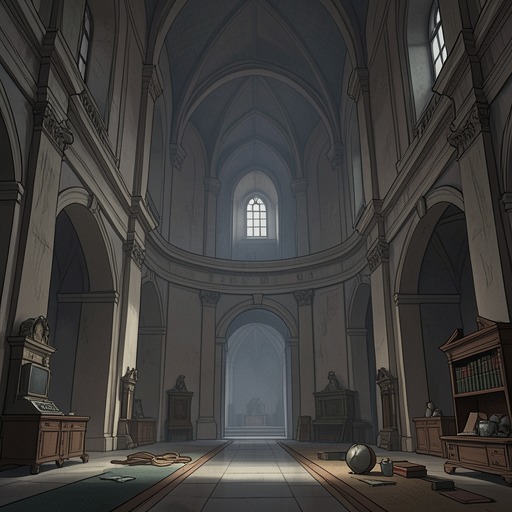
Piranesi works out why the Other remembers what he does not. The Other does not stay in the House: after meetings that never last longer than an hour, he leaves for the Other World. Piranesi connects this pattern to the Prophet’s warning that lingering in the House can bring amnesia and total mental collapse. The difference between the men’s memories is therefore tied to their unequal exposure to the place: Piranesi remains inside it, while the Other repeatedly returns outside.
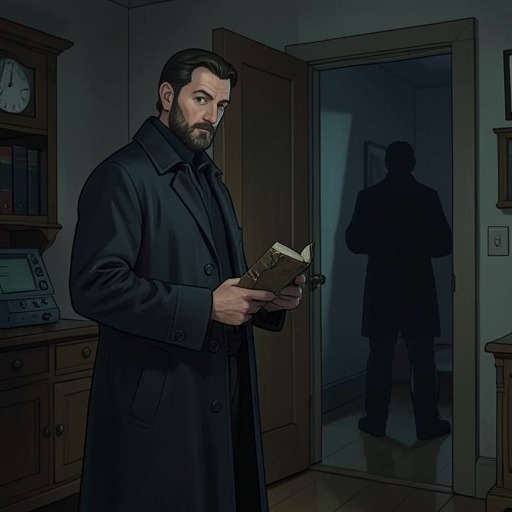
That explanation recasts the Other’s controlled visits. Their short duration is not merely a feature of their meetings; it is part of how the Other avoids the consequences of staying and retains an advantage over Piranesi. Piranesi sees that the Other feared he might remember, and that using his adopted name and testing him with unfamiliar words served to keep the forgotten identity at a distance. The House’s influence makes forgetting possible, but the Other’s conduct takes advantage of that vulnerability.
The Journals and the Fear of Madness
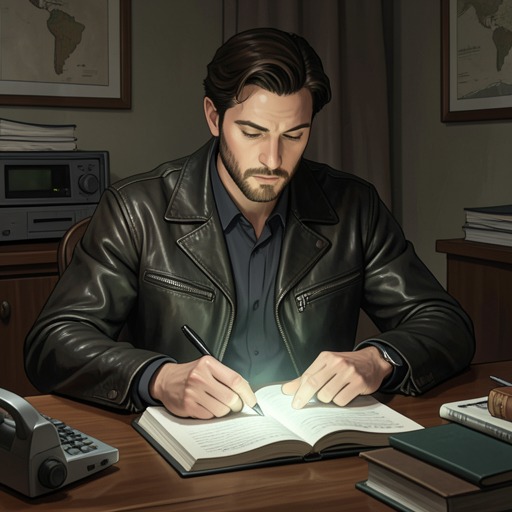
Recovery also changes how Piranesi reads the journal entries about Giussani, Ovenden, D’Agostino, and James Ritter. He had believed that he must have been mad to write them. He now concludes that Matthew wrote them in a different world, under different rules, circumstances, and conditions, and that neither Matthew nor Piranesi had been mad. The apparent evidence of mental collapse becomes evidence of a divided history instead: the entries belong to a life and world that Piranesi could not yet identify as his own.
The change also overturns the Other’s account of the danger surrounding him. Piranesi recognizes that it was the Other, not 16, who wanted him to believe he was going mad; the Other had lied in claiming that 16 was trying to drive him insane. Amnesia had made the false explanation credible because Piranesi lacked the memories with which to test it. Once those memories begin to return, the same journal entries and warnings support a different account of who had manipulated him.
Remembering as Deliberate Work
Recognition brings relief and panic together. Piranesi fears that he might forget again, become the Other’s friend once more, and resume taking measurements, photographs, and data for him without understanding the deception. He presses his head between his hands, as if he could physically keep the memories from escaping. The bodily gesture makes the danger immediate: remembering is not yet a secure possession, and understanding the past does not guarantee that it will remain available.
He responds by planning to learn from 16 and collect marble pebbles from the vestibules to form enormous written warnings. He intends to spell out that the Other is not his friend and tricked Matthew into entering the world for his own advantage, filling hall after hall if necessary. The scheme turns memory into a material practice: rather than trusting recollection alone, Piranesi would make the truth visible in the House itself.
Two Worlds, One Recovered History
In conversation with Raphael, Piranesi describes Matthew as shocked and frightened when he first arrived; Matthew then fell asleep, and Piranesi was born. He explains that he later found journal entries that frightened him, mistook them for proof of his own madness, and eventually understood that Matthew had written them about a different world. This account connects the amnesia to the emergence of Piranesi as a lived identity without reducing either name to a simple disguise.
The distinction between worlds clarifies why the entries were so difficult to interpret. Piranesi explains that words such as Manchester and police station have no meaning in the Other World because those things do not exist there. River and mountain, by contrast, have meaning because the Statues depict them; he supposes that those things exist in the Older World. His recovered history therefore does more than restore a name: it gives him a way to understand how memories and descriptions can belong to different worlds, and why the records left by Matthew once seemed to make no sense.