The Other’s condition for killing Piranesi
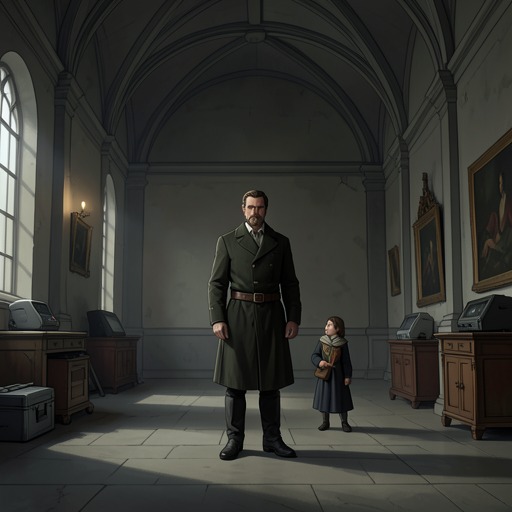
PiranesiThe Other’s condition for killing Piranesi is a threat framed as a safeguard: if he decides that Piranesi has listened to 16 and become mentally unsound, he says he will kill him rather than risk being attacked or allow Piranesi to continue in what he calls a degraded state. Piranesi later measures this decision against his own unwillingness to kill the Other, making the proposed act a revealing test of their unequal ideas of care, trust, and responsibility.
The threat and its stated grounds
The Other introduces the possibility of killing Piranesi after insisting that Piranesi forgets and repeats things, and that they had already discussed the matter a week earlier. Piranesi privately doubts that his own memory is the problem, but keeps that suspicion to himself. The Other then describes a chain of danger: if Piranesi has listened to 16 and been influenced by what he calls madness, he may attack the Other, perhaps because 16 would manipulate him into doing so.
The threat is made conditional on the Other’s own assessment of Piranesi’s state. He does not describe a specific test for determining whether Piranesi is mad; instead, he treats the possibility of having listened to 16 as a source of risk and humiliation. The Other argues that Piranesi would be in a degraded condition and would not want to go on living that way. Piranesi responds with surprise and says he does not think he would want that, accepting the hypothetical premise without having been told that death is the Other’s proposed solution.
Refusal to wait for recovery
Piranesi asks whether time and help might allow him to recover. The Other answers that recovery is unlikely and that, in any case, he cannot take the chance. He then declares that, under those circumstances, killing Piranesi would be best for both of them. Piranesi finds this unexpected; after a brief silence, the conversation ends without any indication that the condition has been tested or carried out.
The exchange gives the Other’s reasoning an ostensibly protective shape, but its conclusion leaves little room for uncertainty, help, or Piranesi’s own judgment about his future. The proposed killing is presented both as a way to prevent danger to the Other and as a response to the indignity the Other imagines for Piranesi. When Piranesi raises recovery as an alternative, the Other does not explore it: uncertainty itself is enough, in his view, to justify the irreversible decision.
Piranesi’s concealed breach of trust
In a later diary entry, Piranesi recalls that he nearly told the Other about the Prophet. He recognizes that the Other would have asked why he spoke to an unknown person despite promising not to, and whether he had considered that the person might be 16. Piranesi admits that he did suspect the Prophet might be 16 when he spoke to him, and calls his own breach of the promise inexcusable. He is relieved that he did not disclose it, reasoning that the Other might otherwise have regarded him as untrustworthy and might have been even more inclined to kill him.
This reflection gives the condition an immediate personal stake beyond the Other’s hypothetical warning. Piranesi has already acted against the Other’s instruction, and believes disclosure could be interpreted as evidence against his reliability. The reader knows that Piranesi withheld the encounter, while the Other’s threat makes that silence appear protective as well as fearful. The diary does not say that the Other learns about the Prophet at this point.
An ethical contrast between the two men
Piranesi imagines reversing their positions: if the Other’s sanity were threatened by 16, Piranesi says, he would not resort to killing him so quickly and does not think he would ever want to kill him. He says he would try other measures first, including finding a cure. This contrast is not simply a disagreement about the likelihood of recovery. Piranesi treats the possibility of helping the Other as a responsibility worth pursuing; the Other treats the possibility of danger as a reason not to take a chance.
Piranesi describes the idea of killing the Other as abhorrent, yet softens his criticism by calling the Other inflexible rather than saying outright that this is a fault. That qualification preserves the complexity of their bond even as Piranesi recognizes the disparity between their responses. The threat therefore reveals an asymmetry in their relationship: the Other sets a lethal condition on Piranesi’s mental state, while Piranesi’s imagined response to the same danger is continued care. The evidence establishes the threat and Piranesi’s judgment of it, not that the Other ultimately acts on it.