Necromancy
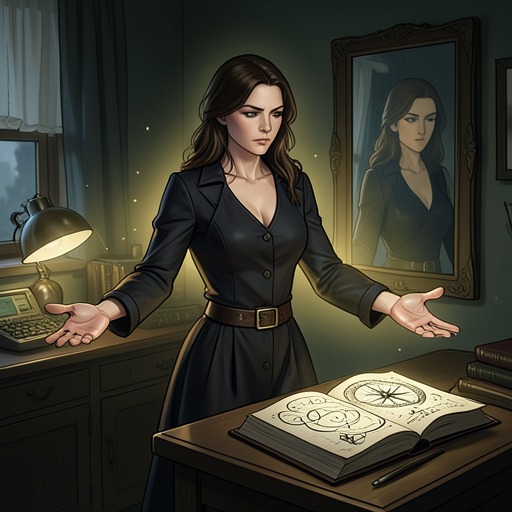
PleasureNecromancy is both a feared magical practice and a label imposed on human magic-users by Nightwalkers and other peoples who consider them mortal enemies. The story gives that fear a material basis—necromancers can wield dangerous power and their corrupted souls carry a foul odor—but refuses to equate all magic with evil. Through Valera’s past and Sagan’s response to it, necromancy emerges as a destructive corruption that can be resisted, not an inevitable condition of anyone born with magic.
Meaning and Reputation
To Nightwalkers, the word itself signals a curse and a danger. Demons, Vampires, and other breeds kill human magic-users with what the narration describes as punitive unanimity. This collective violence rests on experience: necromancers have captured members of other peoples and used their power against them. The fear is not merely abstract prejudice, but a response to a history in which magic has enabled cruelty and made its practitioners formidable opponents.
The corruption is also perceptible to Nightwalkers. Sagan can smell the black magic staining a necromancer’s soul, an odor like gasoline and fetid garbage that is detectable even at a distance and nearly unbearable. The sensory detail makes moral damage seem physically legible to his people, while the dangerous power accompanying it reinforces their conviction that necromancers threaten their lives. Yet the story later makes clear that this recognizable stain does not define every human magic-user.
Corruption and the Use of Magic
Valera had once mistaken necromancers for people like herself. Before she understood the difference, she was relieved to find others who shared her abilities. That identification ended when she witnessed them capture Demons and maliciously stake Vampires without proof of wrongdoing, apparently for the pleasure of watching them suffer. The violence showed her that her associates’ claims of righteousness concealed a willingness to inflict pain for its own sake.
The novel presents evil magic as addictive: one taste can corrupt a person, and further use draws them deeper into the practice. Sagan compares its pull to cocaine or methamphetamines. In Valera’s account, however, the decisive test is the intent governing a spell. Healing and protection can be good; using a stasis spell to escape punishment for a crime, or healing a serial killer so that he can continue killing, makes the magic foul. Even a spell with a beneficial form can contribute to corruption if it is used without moral discretion. Repeated harmful choices darken the practitioner until the person they once were is lost.
This moral framework does not make magic harmless. The capacity to injure remains real, and good intentions do not erase the need for judgment. Rather, it shifts attention from the mere possession of power to the purposes for which it is exercised and the habits those purposes create. Necromancy names a descent into corrupt use, not a universal verdict on magical ability.
Valera’s Escape and Sagan’s Recognition
Valera fled the necromancers after recognizing what they did to their captives. She had been involved with them for four months, yet it took five years for her to feel cleansed of the magic with which she had unintentionally soiled her soul. She remained afraid that a mistake could harm another person—or herself—and avoided using her power. After she had used magic against someone for the first time in nine years, she expected the blackness of corruption to return. It did not: the deaths that followed were understood as unfortunate collateral damage after evil invaded the place she had tried to keep safe, rather than as evil she had chosen to put into the world.
Valera’s account also explains why she could leave when others did not. Penchant had told her she was a Natural-Born Witch: her power was innate, unlike necromancy, which could be acquired. A Witch could nevertheless become a necromancer without careful guidance. Valera’s grandmother had recognized the family gift and guided her before Valera fell in with necromancers. The distinction therefore depends not only on origin but also on instruction and conduct; birth gives Valera power, while guidance helps her resist its corrupting misuse.
Sagan initially understands magic through his people’s enmity toward necromancers. He recognizes that Valera once belonged among them, but the clean scent he associates with lilies and sunflowers tells him she is no longer tainted. Her memories show him that she left because she could not accept the cruelty she had witnessed. He also realizes that she used the part of herself she still feared to protect herself, her home, and him. What he encounters is not an exception that erases the danger of magic, but a person who broke away from the addictive pull and retained her moral resolve.
Danger, Relationship, and Political Consequences
The difference between Valera and the necromancers does not remove the danger her power poses to Sagan’s people. When she calls on magic, some spells produce brilliant blue light that can hurt a Nightwalker as other light does; Valera clarifies that the effect accompanies certain spells, usually aggressive ones, rather than every use of her power. The distinction makes the threat specific without making it imaginary. Sagan’s recognition of her goodness exists alongside his awareness that her abilities could injure him, intentionally or otherwise.
That knowledge changes the terms of Sagan’s relationship with Valera. He has already defended their bond against Magnus’s description of it as sinful, and when he reveals that Valera is human and possesses magic, Magnus is shocked by the implications. His concern is not limited to Sagan’s personal attachment: Valera could be studied by Nightwalkers, and evidence of a good magic-user might be necessary to persuade others that such a person exists. Magnus also reasons that Valera would not remain secluded if she could help other Natural-Born Witches or offer hope for the repentance and reclamation of corrupted necromancers.
Magnus consequently imagines a public role for Valera beyond her relationship with Sagan. She might become a teacher, and the pair could travel through the Nightwalker courts to present what she represents. He urges Sagan to resign from the priesthood, seek forgiveness for breaking its rules, and return to Valera free of those obligations; he also intends to involve the Chancellors and other Cultures in the proposed offer. The possibility of Valera’s testimony turns a private relationship into a potential challenge to a settled communal belief.
The Concept’s Narrative Significance
Necromancy organizes the conflict between collective fear and individual moral evidence. Valera has reason to fear discovery: she knows what Nightwalkers believe about human magic-users, and Sagan understands that she expects him to hurt her when he learns the truth. His recognition of her difference does not instantly dissolve that history; it makes the category itself unstable. The person before him shares a capacity associated with the enemy but rejects the enemy’s cruelty and the corruption that follows it.
The resulting distinction has consequences beyond Valera. If magic can be used well, then the Nightwalkers’ customary response to magic-users may have condemned people without distinguishing their conduct. If corruption can be escaped, then the fate of necromancers need not be treated as irreversible. Valera’s experience does not prove that all practitioners can be reclaimed, but it gives Sagan and Magnus grounds to imagine repentance, instruction, and a wider alliance. Necromancy remains genuinely dangerous in the novel; what changes is the assumption that danger alone settles a person’s moral identity.