Priestly Handmaiden Tradition
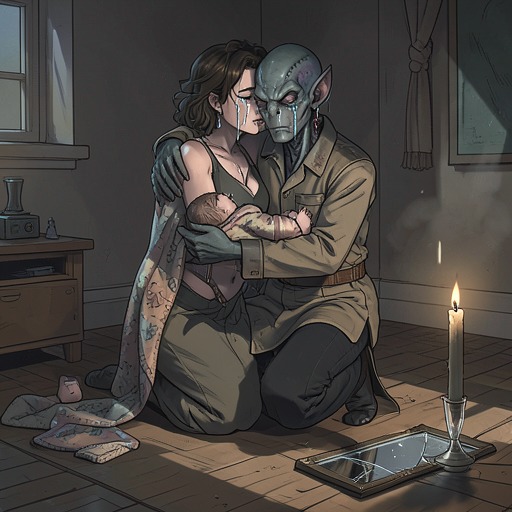
PleasureThe Priestly Handmaiden Tradition is the religious practice that permits a Sanctuary priest to share sexual intimacy with an appointed handmaiden, while making that bond part of a demanding life of service to the priest, the gods, and Sanctuary. It is more than a rule about sexual conduct: it defines an authorized form of companionship and devotion. Sagan’s attraction to Valera exposes the limits of that framework, because she is human and a magic-user, yet he comes to regard their bond not as a transgression requiring repentance but as a possible expression of fate and free will.
Religious Purpose and Demands
For Sagan, a handmaiden is not simply a woman chosen to satisfy a priest’s desires. The position calls for exceptional devotion and deep inner power, and it entails a long lifetime of service to one man, the gods Drenna and M’gnone, and Sanctuary itself. In Sagan’s understanding, these qualities are essential to the calling; they cannot be replaced by the mere existence of a relationship.
The tradition also defines the boundary of permissible intimacy. Sagan understands his priestly life as celibate except for the sexual relationship permitted with an appointed handmaiden. After his former handmaiden, Sariel, was killed during the Shadowdweller civil war almost twenty years earlier, he did not seek another. His solitude therefore reflected both the loss of that relationship and his decision not to resume the role’s intimate arrangement with someone new.
Custom, Authority, and Sagan’s Solitude
Sagan’s refusal to take another handmaiden disturbed other priests, who treated his withdrawal from the tradition as nearly an insult. Yet none confronted him directly: he was among Sanctuary’s most powerful priests, and his standing made open pressure difficult. The head priest, Magnus, did not press the matter either. Sagan took Magnus’s lack of objection as sufficient reason to disregard the other priests’ disapproval.
His decision was not presented as a rejection of women. After encountering Valera, Sagan recognizes that he is attracted to her, despite having felt no comparable interest in women of his own kind for years. Since Sariel’s death, he had directed his energy toward becoming a better hunter and fighter as well as a better priest. The tradition’s claim on him thus existed alongside a chosen discipline of solitude: he had not merely lacked a companion but had declined to replace the one he lost.
Valera and the Question of Eligibility
Sagan’s attraction to Valera collides with both custom and the tradition’s own account of who can serve. He believes a mortal human woman cannot possess the devotion and inner power required for a handmaiden’s lifelong calling. Although there is no direct law forbidding Shadowdwellers from fraternizing with humans, such relationships are seriously frowned upon. Sagan initially tries to dismiss his attraction on those grounds, treating it as something that must be brought to an end rather than pursued.
Later, when Magnus asks about the relationship, Sagan refuses the premise that intimacy outside the authorized bond must be a sin. He interprets Valera’s presence at the moment she was needed to help save his life as fate meeting free will: he chose to accept what he saw as a meaningful opportunity. His account does not erase the tradition’s rules; it challenges the assumption that those rules can determine the moral meaning of his relationship. His insistence is unusually forceful for a man Magnus has known as placid and peaceful outside the hunt. He even warns Magnus not to call the relationship a sin again.
Magnus first reads the situation through the tradition’s established remedy, regretting that he allowed Sagan to go without a handmaiden and urging him to repent before he can receive penance and forgiveness. But Sagan’s conviction leads Magnus to reconsider. He proposes that Valera might be meant to become Sagan’s handmaiden, if her power makes that possible. When Sagan identifies her power as magic, Magnus’s response reveals the deeper obstacle: Valera is not only human and mortal but also a magic-user, whom he regards as an evil creature. The question of eligibility therefore becomes a collision between the tradition’s demand for a suitable calling and Sanctuary’s prejudice toward the person Sagan loves.
Contrast and Significance
Sagan and Magnus’s situations clarify that the handmaiden bond is shaped by more than a priest’s choice. Magnus has fallen in love with Daenaira, his handmaiden, and that relationship has made him more relaxed and approachable than the austere figure Sagan had known. Magnus regards their union as blessed: Daenaira is a Shadowdweller and immortal, and any child she might bear would be fully bred. Her status fits the religious and communal expectations that make Sagan’s relationship with Valera so contentious.
The contrast does not make the two relationships equivalent. Rather, it shows why Magnus can understand Sagan’s emotional commitment while still struggling with its implications. His own experience has taught him that love alone does not make someone worthy of a relationship, and that Daenaira helped him become what she needed—and what he needed to be. He can therefore recognize the seriousness of Sagan’s choice, including the possibility that Sagan may lose his priestly place by refusing repentance, even as Valera’s humanity and magic challenge the tradition’s accepted boundaries.
The tradition consequently functions both as a structure of religious service and as a test of institutional judgment. It gives sanctioned intimacy a language of devotion and vocation, but its assumptions also leave little room for a bond that crosses species, mortality, and attitudes toward magic. Sagan’s refusal to call his love sinful makes the dispute personal; Magnus’s reconsideration makes it doctrinal. The conflict turns on whether the tradition’s purpose is fulfilled by strict eligibility or by the devotion and meaning Sagan believes fate has placed before him.