Roy
QueenieRoy is Queenie Jenkins’s stepfather and Sylvie’s abusive partner, a man whose violence reaches both of them in different ways. The book shows his abuse not as a single outburst but as a pattern of intimidation, humiliation, and control: at home, he isolates Queenie from Sylvie; later, he attacks Sylvie at the dinner table; and the account of his conduct continues to shadow the family through a court case. His household could look orderly and even comfortable, but its tidiness conceals the fear on which his authority depends.
Identity and Household
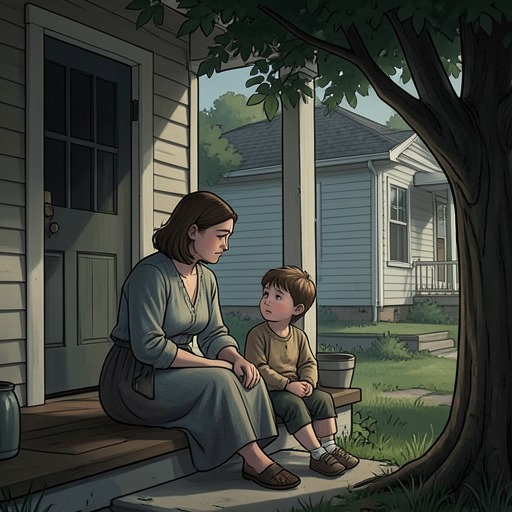
In Queenie’s childhood, Roy controlled the home in which she lived with Sylvie. Queenie recalls a clean house with a garden and a stepfather who could cook well. Those details complicate the outward picture without diminishing what happened inside it: she says that Roy either screamed at her or ignored her. The contrast between domestic competence and emotional cruelty exposes how an apparently well-kept home could still be an unsafe place for a child.
Roy’s demands extended to the home itself. After several years, he made Sylvie sell their small house, took the money, and bought another property. Queenie remembers that the new house, with its garden, had to be kept spotless. In her account, the move is not simply a change of address: it belongs to a history in which Roy shaped the family’s living conditions while making Queenie feel that she did not belong in the home he wanted.
Control of Queenie and Separation from Sylvie
When Queenie stopped speaking to Roy in the hope that he would stop criticizing her voice, the hostility did not end. She recounts that he broke her possessions, falsely told Sylvie that she had spoken rudely or stolen from her, and made her sleep in the car. The sequence shows a child trying silence as a form of self-protection, only to find that Roy could continue to punish her through other means. Over time, Sylvie spoke to Queenie only about getting up for school and going to bed; Roy and Sylvie spoke to each other, leaving mother and daughter increasingly cut off.
The separation became concrete when Roy arranged for a flat for Queenie and Sylvie after he wanted them out. They were meant to live there together, but Sylvie returned to Roy, and the flat became Queenie’s alone. Queenie was eleven. In therapy, Janet identifies the arrangement as illegal and says that Queenie had been placed in a dangerous, vulnerable situation. Queenie resists that framing at first: she says she was fine, and that living away from Roy was better than remaining in a home where she felt hated and believed he had turned Sylvie against her. Her minimization sits beside the stark facts of her isolation, making the cost of Roy’s control plain without requiring Queenie to name it as harm at the time.
Violence Against Sylvie and Its Aftermath
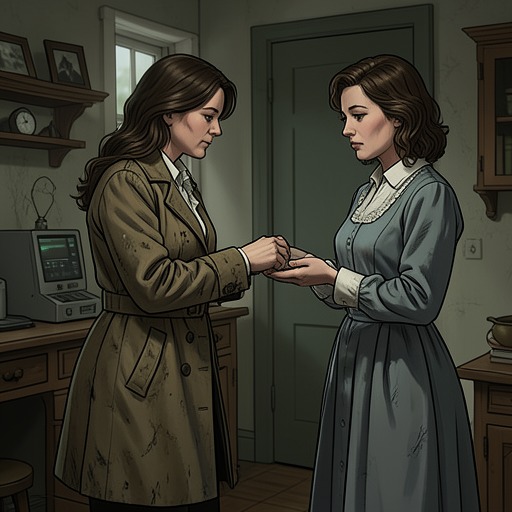
Roy’s abuse of Sylvie also appears in Queenie’s childhood memories. Queenie recalls that Roy cheated on her mother and disappeared for weekends. Sylvie knew about the affairs but initially said nothing, reluctant to disturb the relationship. When she eventually challenged him, she came back to the flat with a black eye and a split lip. Queenie remembers looking down at her own hand, her nails having pierced her palm. The physical marks on Sylvie and Queenie’s involuntary gesture place the violence inside the mother-and-daughter relationship: Roy’s actions hurt Sylvie directly and leave Queenie frightened and distressed as a witness.
Years later, Sylvie describes another assault while speaking with Maggie about the court case. She says Roy slammed her face into the steering wheel while she was driving, causing a crash, and then told the judge that she had crashed because she was drinking. The account makes the case a continuing ordeal rather than a settled memory. Sylvie says that seeing Roy makes her feel sick; Maggie connects her substantial weight loss to the strain of two and a half years of having to go through the proceedings and offers to attend the hearings with her. The passage records Sylvie’s account and the burden of facing Roy in court, without reporting the case’s outcome.
The Dinner Table and the Family’s Fear
Roy’s power is also exercised through the family’s weekly dinners. Queenie recalls sitting at the table with her stomach churning because she could not eat in his presence, while he insisted on meals that gave him extended opportunities to belittle either her or Sylvie. On one evening, he predicts that Queenie will amount to nothing, laughs, and throws down his fork. Queenie looks to her mother for a response, but Sylvie looks at her hands. The scene makes the dinner table a stage for Roy’s humiliation of Queenie and for the silence that leaves her feeling unprotected.
When neither Sylvie nor Queenie eats, Roy grabs Queenie’s plate and throws it in front of Sylvie, ordering her to eat. Sylvie tries to defuse the moment by saying Queenie might eat later. Roy then grabs Sylvie by the back of the head and pushes her face into the food. She lifts her head with food in her eyes and reaches for a napkin with shaking hands. Roy turns the assault into another accusation against Queenie, blaming her for ruining dinner. The reversal is central to his cruelty: he initiates the violence, then assigns responsibility to the child watching it.
Continuing Consequences
Sylvie later tells Maggie that she had stayed with Roy because, after Queenie’s father left, she feared being alone and believed nobody would want her again. She says that Roy had seemed like a god before she understood him as a manipulator, and laments that she abandoned Queenie. Maggie intervenes when Queenie is within earshot, insisting that she should not be drawn into the adults’ conversation. Queenie, hearing the admission, refuses to feel sorry for Sylvie and leaves to check her phone. The moment registers the damage Roy’s abuse has done to the bond between mother and daughter, while also showing that Queenie’s anger remains part of her response to being left alone as a child.
Roy’s presence persists in Queenie’s bodily reactions even when he is not in the immediate scene. At a party, another person’s disdainful look makes her shiver as she remembers the way Roy used to look at her. In therapy, she connects her inability to feel secure in love with fear of rejection and with the way Black women are treated as objects of sexual attention rather than partners deserving care. That account does not make Roy the sole cause of every later difficulty, but it places his childhood abuse within the history Queenie is trying to understand. Roy’s significance lies in the way his control reaches beyond the incidents themselves: it isolates a child, injures Sylvie, strains their relationship, and remains present in Queenie’s memories of safety, intimacy, and being wanted.