Diana
QueenieDiana, Queenie Jenkins’s younger cousin and Maggie’s daughter, is a quick-witted teenager whose bluntness can sound like cheek but often carries close attention to the people around her. Her encounters with Queenie combine teasing, practical care, and flashes of insight: she can challenge an adult’s expectations, recognize a panic attack, and give Queenie company when she might otherwise be alone. Her importance lies less in a single dramatic intervention than in this recurring, quietly changing presence within the family.
Identity and Family Position
Diana first appears in a family setting where the usual roles are already being unsettled. Queenie goes to Maggie’s house to babysit her, although Queenie has told Maggie that Diana is mature enough to look after her instead. Queenie agrees because Maggie wants to go on her first date since her divorce and needs someone to keep Diana company. The arrangement is affectionate but comic: Queenie is the designated adult, yet she admits to being a little afraid of the teenager she is meant to supervise.
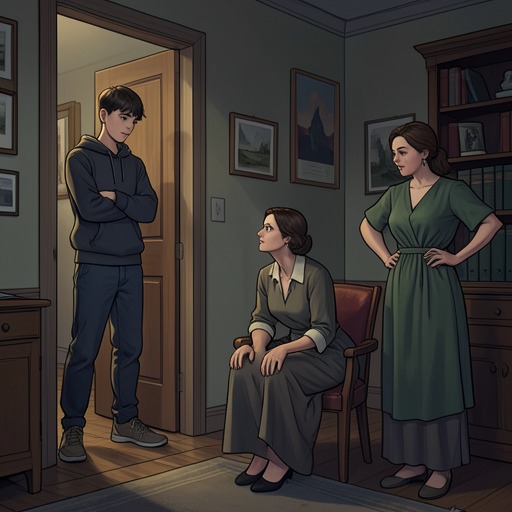
When Queenie arrives, Maggie is reprimanding Diana for paying too much attention to her phone and not enough to school. Maggie says teachers have also complained that Diana sits looking at makeup content. Diana answers that she is learning: she watches tutorials and has already practiced by doing Maggie’s makeup for the date. The exchange reveals both the difference between Maggie’s idea of useful learning and Diana’s own interests and her confidence in defending them. Maggie looks polished after the makeover, but the heavy foundation and false eyelashes leave her looking unlike herself to Queenie. Diana’s interest in makeup is thus presented through a family disagreement, not as a passing detail detached from her relationship with her mother.
The evening also shows Diana’s capacity to meet Queenie without much ceremony. When Queenie asks their grandmother whether she and Diana can stay there, the answer is an emphatic refusal. The two leave and take the bus. Queenie asks whether Diana is hungry; Diana lists a meal from Morley’s, sweets, and four Crunchies, making clear that she is already full. Later, after falling asleep with a book over her face, Diana wakes and whispers that she needs a headscarf to sleep properly. Queenie fetches a spare from her bedside table, and Diana ties it in the dark. The small request makes their closeness tangible: even while Queenie is nominally responsible for her, Diana is comfortable asking for what she needs.
A Practical, Unsentimental Presence
Diana’s contact with Queenie is not limited to visits at Maggie’s. During a church service, as choir children pass singing and swinging incense, she messages Queenie that the incense is going to give her an asthma attack. The brief exchange gives their relationship a familiar, immediate texture: Diana turns to Queenie with a complaint from where she is, and Queenie receives it as part of their ongoing communication.
More consequentially, Diana is present when Maggie comes to Queenie’s flat during a severe panic attack. Queenie has staggered downstairs for water, is struggling to breathe, and eventually begins hyperventilating. When the doorbell rings, Diana rushes past Queenie into the flat, with Maggie close behind. Diana notices the smell and dampness of the place, an observation Maggie also makes, before correctly identifying Queenie’s episode as a panic attack. When Maggie challenges her authority to diagnose it, Diana explains that a girl at her school had felt similarly before classes and had needed lessons in a separate room. Her certainty comes not from professional expertise but from recognizing a pattern she has encountered in another young person. The episode gives her everyday knowledge real weight: she names what is happening while the adults are still trying to understand it.
Birthday Care and Generational Difference
On Queenie’s twenty-sixth birthday, Diana chooses to remain with her rather than go to Thorpe Park with friends who have half-price tickets. She says she would have felt bad leaving Queenie at home with their grandparents. That choice answers Queenie’s tendency to dismiss her own birthday: when Queenie says she does not much like birthdays, Diana insists that they are worth celebrating and describes her own fifteenth birthday, when her friends pooled money for a table in the VIP area at a Clapham rave.
Diana’s account opens a generational contrast without turning it into a simple lesson. Queenie points out that she has never had a birthday like that, despite being much older. Diana wonders whether more enjoyable experiences might help Queenie think less about bad things, then immediately apologizes in case she has been insensitive. Her suggestion is youthful and incomplete, but the hesitation matters: Diana recognizes that her attempt to help could land badly and tries to repair the moment rather than insist that she is right.
After Queenie bathes and gets dressed in a calf-length floral dress that belonged to their grandmother, Diana announces that they are going out and tells Queenie to change first. Queenie defends the dress as vintage and presents herself for Diana’s inspection. The exchange makes care active rather than solemn. Diana does not simply offer sympathy; she proposes an outing and challenges Queenie’s outfit, while Queenie answers with humor and a claim to her own taste. The scene preserves their difference in age and outlook while placing them on the same side of the effort to make the birthday into something more than another day at home.
Family Recognition and Narrative Role
Months after Queenie has come to stay with her grandparents, Diana appears beside her while she blows dust from boxes of belongings that have been untouched for months. Just before this, their grandfather has told Queenie that he had feared she would end up like her mother, but that she had not given in. Diana follows that vulnerable family disclosure with an awkward but direct assurance that the family is proud of Queenie, and clarifies that Maggie meant it too. Her words give Maggie’s care a second voice and prevent the grandfather’s emotional admission from remaining an isolated exchange between him and Queenie.
Across these scenes, Diana is irreverent without being indifferent. Her phone use and makeup tutorials become points of friction with Maggie; her appetite, headscarf, and complaints about incense reveal the ordinary texture of her life; and her decision to accompany Queenie on a birthday, her recognition of a panic attack, and her reassurance among the dusty boxes show her attentiveness in action. She is not positioned as a substitute for the adults who support Queenie, but she offers a distinct kind of companionship: direct, youthful, sometimes tactless, and capable of noticing when Queenie needs someone to stay. That combination makes Diana a small but meaningful link between Queenie’s distress and the family’s everyday affection.