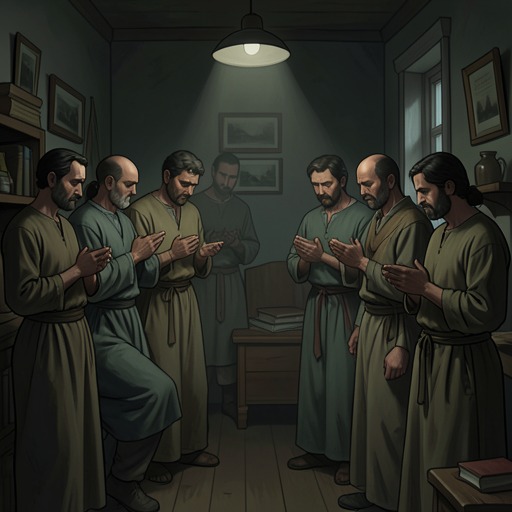
Opening, after the Armenian campaign
Vinicius Returns to Rome
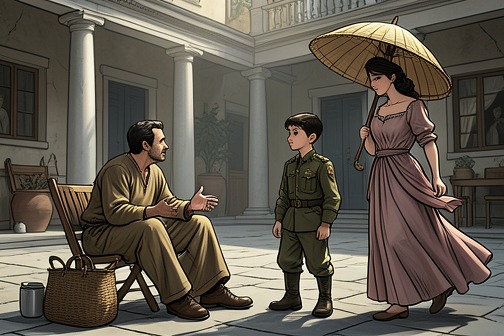
[Petronius](entity:character-recall-character-petronius-1af3c2c27fac) wakes near midday after [Nero](entity:character-recall-character-nero-399546edf8a1)’s feast, worn down by failing health, and receives his nephew [Marcus Vinicius](entity:character-recall-character-marcus-vinicius-d5147d21ac36), newly returned from service in Asia. Their easy conversation sketches a [Rome](entity:location-recall-location-rome-3ec0a741c1f4) ruled by fear, spectacle, and fashion, while Petronius’s cultivated detachment contrasts with [Vinicius](entity:character-recall-character-vinicius-fc2b0c16811e)’s soldierly directness.
Vinicius asks for help winning [Lygia](entity:character-recall-character-lygia-ea46764dd52c), whom he encountered while recovering at the house of [Aulus Plautius](entity:character-recall-character-aulus-plautius-2830d64310d2). He describes her as a king’s daughter raised by Aulus and [Pomponia Graecina](entity:character-recall-character-pomponia-graecina-ee0a08a9e30d), and confesses that his desire has displaced every other pleasure.
During Vinicius’s first visit to Petronius
The Lygian Hostage’s History
[Vinicius](entity:character-recall-character-vinicius-fc2b0c16811e) explains that [Lygia](entity:character-recall-character-lygia-ea46764dd52c) became a Roman hostage during the wars involving Vannius and the [Lygians](entity:organization-recall-organization-lygians-3e13801ab7a0). After her mother died, Roman officials placed her with [Pomponia Graecina](entity:character-recall-character-pomponia-graecina-ee0a08a9e30d), and she grew up in the Plautius household as their beloved adopted child.
[Petronius](entity:character-recall-character-petronius-1af3c2c27fac) agrees to speak with Aulus, believing that the request can be handled through influence and appearances. Vinicius, however, wants Lygia for himself and does not yet understand the moral world that governs her.
At the house of Aulus Plautius, before Lygia’s seizure
Vinicius Declares His Love
[Petronius](entity:character-recall-character-petronius-1af3c2c27fac) visits the Plautius home with [Vinicius](entity:character-recall-character-vinicius-fc2b0c16811e), where he finds a household whose quiet affection and restraint unsettle his assumptions about Roman life. He meets [Lygia](entity:character-recall-character-lygia-ea46764dd52c) and is struck by her beauty and intelligence; she answers his Homeric greeting with a line from the same poem.
Later, Vinicius speaks privately to Lygia about love and happiness. She listens with growing emotion, but Aulus interrupts before Vinicius can press his suit. The encounter deepens Vinicius’s attachment while leaving Lygia’s feelings unresolved.
A few days after the visit to the Plautius household
Petronius Secures Nero’s Order
[Petronius](entity:character-recall-character-petronius-1af3c2c27fac) persuades [Nero](entity:character-recall-character-nero-399546edf8a1) to remove [Lygia](entity:character-recall-character-lygia-ea46764dd52c) from the Plautius home and assign her to [Vinicius](entity:character-recall-character-vinicius-fc2b0c16811e), presenting the hostage as an insignificant beauty so that Nero will not desire her himself. Nero issues the order under the pretext that a royal hostage belongs in imperial custody.
A centurion arrives to take Lygia. Aulus and Pomponia understand that the imperial command conceals a threat to her virtue, but they cannot openly resist without endangering their household. Lygia leaves in grief, accompanied by [Ursus](entity:character-recall-character-ursus-ac9f458d8b7a) and trusted servants.
The day Lygia is taken to the palace
Aulus Seeks Help
Aulus tries to reach [Nero](entity:character-recall-character-nero-399546edf8a1), but is refused an audience. [Seneca](entity:character-recall-character-seneca-a27cd4219caf) warns him that pleading openly could make Nero more determined to keep [Lygia](entity:character-recall-character-lygia-ea46764dd52c), and Aulus learns that [Petronius](entity:character-recall-character-petronius-1af3c2c27fac) engineered the transfer.
[Vinicius](entity:character-recall-character-vinicius-fc2b0c16811e) initially reacts with fury when Aulus tells him what has happened, then visits Petronius and discovers the arrangement was meant to deliver Lygia to him safely. He writes to Aulus that Nero’s will must be obeyed, extinguishing the family’s hope that Lygia will return.
The first day in Nero’s palace
Lygia Meets Acte
[Acte](entity:character-recall-character-acte-de52fb196089), [Nero](entity:character-recall-character-nero-399546edf8a1)’s former beloved and a discreet presence in the palace, is entrusted with [Lygia](entity:character-recall-character-lygia-ea46764dd52c)’s care. She urges the girl not to defy Nero openly, explaining that the emperor’s power can make resistance fatal and advising her to seek help through [Petronius](entity:character-recall-character-petronius-1af3c2c27fac) or [Vinicius](entity:character-recall-character-vinicius-fc2b0c16811e).
Lygia agrees to attend the palace feast, partly from necessity and partly from a desire to see Vinicius again. Acte dresses her for the occasion, unaware that the gathering will expose Lygia to the danger she fears.
That evening, at the imperial palace
Nero’s Feast
At [Nero](entity:character-recall-character-nero-399546edf8a1)’s lavish feast, [Lygia](entity:character-recall-character-lygia-ea46764dd52c) sees the court’s beauty and cruelty together. Nero sings, Poppæa appears, and the company passes from performance into drunken revelry. [Vinicius](entity:character-recall-character-vinicius-fc2b0c16811e), intoxicated and driven by desire, tells Lygia that Nero has given her to him and tries to force her into his arms.
[Ursus](entity:character-recall-character-ursus-ac9f458d8b7a) intervenes, lifts Lygia from the banquet, and carries her away with [Acte](entity:character-recall-character-acte-de52fb196089). The rescue reveals the gulf between Vinicius’s possessive desire and Lygia’s Christian refusal to be treated as property.
Dawn after Nero’s feast
Lygia Chooses Flight
[Lygia](entity:character-recall-character-lygia-ea46764dd52c) wants to return to the Plautius household, but [Acte](entity:character-recall-character-acte-de52fb196089) warns that fleeing there would expose Aulus and Pomponia to [Nero](entity:character-recall-character-nero-399546edf8a1)’s revenge. Lygia instead resolves to escape [Rome](entity:location-recall-location-rome-3ec0a741c1f4) with [Ursus](entity:character-recall-character-ursus-ac9f458d8b7a) and hide among the [Christians](entity:character-recall-character-35c9935a1a6e), accepting poverty and uncertainty rather than becoming [Vinicius](entity:character-recall-character-vinicius-fc2b0c16811e)’s concubine.
Ursus seeks guidance from Christian leaders and prepares to rescue her during the transfer to Vinicius’s house. Lygia’s decision is an early act of faith: she protects others from danger even though she longs for her former home.
That evening, while Lygia is being transferred
The Escort Is Attacked
A crowd of [Christians](entity:character-recall-character-35c9935a1a6e) ambushes the procession carrying [Lygia](entity:character-recall-character-lygia-ea46764dd52c) through [Rome](entity:location-recall-location-rome-3ec0a741c1f4). In the darkness, [Ursus](entity:character-recall-character-ursus-ac9f458d8b7a) carries her away, while [Vinicius](entity:character-recall-character-vinicius-fc2b0c16811e)’s freedman Atacinus is killed and the other servants scatter.
Vinicius returns home to find Lygia gone. In rage he kills his old slave Gulo and has other servants flogged, then searches the city without success. His violence exposes the old habits that he will later have to confront.
The first days of Vinicius’s search
Chilo Finds the Fish Sign
[Petronius](entity:character-recall-character-petronius-1af3c2c27fac) arranges a search while [Vinicius](entity:character-recall-character-vinicius-fc2b0c16811e) roams [Rome](entity:location-recall-location-rome-3ec0a741c1f4) in disguise. He hires [Chilo Chilonides](entity:character-recall-character-chilo-chilonides-e89d925c12ab), a self-serving Greek who claims expertise in gathering information, to locate [Lygia](entity:character-recall-character-lygia-ea46764dd52c) among the city’s hidden Christian community.
[Chilo](entity:character-recall-character-chilo-e5b67a08cba4) learns that the fish Lygia once drew in the sand is a Christian sign. He uses the discovery to enter the community, pretending to share its faith, and sees the search as an opportunity to extract money from Vinicius.
During Chilo’s infiltration of the Christians
Chilo Betrays Glaucus
[Chilo](entity:character-recall-character-chilo-e5b67a08cba4) recognizes [Glaucus](entity:character-recall-character-glaucus-ab16e244fc0d), a physician he had once betrayed to robbers, and fears exposure. To remove the danger, he tells [Ursus](entity:character-recall-character-ursus-ac9f458d8b7a) that Glaucus is a traitor who will betray the [Christians](entity:character-recall-character-35c9935a1a6e) to [Nero](entity:character-recall-character-nero-399546edf8a1), manipulating Ursus’s protective anger into a plan to kill him.
Chilo’s deception reveals both his ruthlessness and the vulnerability of a community that trusts those who profess its faith. The plot is interrupted when [Vinicius](entity:character-recall-character-vinicius-fc2b0c16811e) and [Croton](entity:character-recall-character-croton-16230b4f92f1) later attack the Christians’ refuge.
A night during the search for Lygia
Peter Preaches at Ostrianum
[Chilo](entity:character-recall-character-chilo-e5b67a08cba4) leads [Vinicius](entity:character-recall-character-vinicius-fc2b0c16811e) and the gladiator [Croton](entity:character-recall-character-croton-16230b4f92f1) to a Christian gathering at the [Ostrianum cemetery](entity:location-recall-location-1245b688fda3), where [Peter](entity:character-recall-character-3fda7cb5b60e) recounts [Christ](entity:character-recall-character-a47e5a93a77b)’s life, death, and resurrection. Vinicius hears a teaching that demands love for enemies and offers eternal life, and he recognizes that it is profoundly different from Roman philosophy and power.
In the crowd he sees [Lygia](entity:character-recall-character-lygia-ea46764dd52c) listening to Peter. Rather than accept the limits imposed by her faith, Vinicius follows her home with Croton, determined to seize her. His dawning understanding has not yet overcome his possessiveness.
Before dawn after the Ostrianum gathering
Vinicius Attacks the Refuge
[Vinicius](entity:character-recall-character-vinicius-fc2b0c16811e) and [Croton](entity:character-recall-character-croton-16230b4f92f1) enter the crowded [Trans-Tiber](entity:location-recall-location-trans-tiber-281f61edbaf5) lodging where [Lygia](entity:character-recall-character-lygia-ea46764dd52c) is hidden. Croton grapples with [Ursus](entity:character-recall-character-ursus-ac9f458d8b7a) while Vinicius rushes into the house and carries Lygia toward the door.
Lygia cries out for Ursus not to kill. Ursus crushes Croton and knocks Vinicius unconscious, but does not kill him. The [Christians](entity:character-recall-character-35c9935a1a6e) tend Vinicius’s wounds, and Lygia’s compassion begins the transformation that force could never achieve.
The day after Vinicius’s failed abduction
The Christians Forgive Chilo
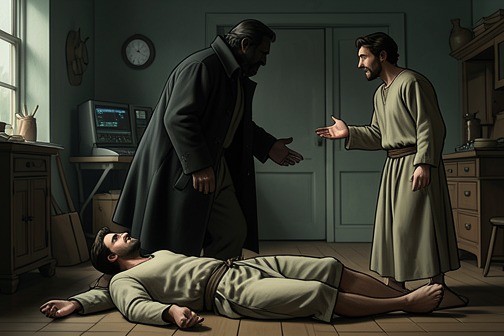
While recovering in the Christian house, [Vinicius](entity:character-recall-character-vinicius-fc2b0c16811e) hears [Crispus](entity:character-recall-character-crispus-654061e68b4c) explain that the [Christians](entity:character-recall-character-35c9935a1a6e) will leave to protect [Lygia](entity:character-recall-character-lygia-ea46764dd52c) from further pursuit. Vinicius asks them to stay and promises not to use force, while Lygia insists that they nurse him until he is well.
[Chilo](entity:character-recall-character-chilo-e5b67a08cba4) arrives and is recognized by [Glaucus](entity:character-recall-character-glaucus-ab16e244fc0d) as the man who betrayed him. [Ursus](entity:character-recall-character-ursus-ac9f458d8b7a) nearly kills him, but [Peter](entity:character-recall-character-3fda7cb5b60e) cites [Christ](entity:character-recall-character-a47e5a93a77b)’s command to forgive a repentant offender, and Glaucus forgives Chilo. Vinicius witnesses a form of mercy that his Roman moral world cannot explain.
During Vinicius’s recovery in the Trans-Tiber
Lygia Nurses Vinicius
[Lygia](entity:character-recall-character-lygia-ea46764dd52c) and the [Christians](entity:character-recall-character-35c9935a1a6e) care for [Vinicius](entity:character-recall-character-vinicius-fc2b0c16811e), and his dependence on them unsettles his assumptions about slaves, foreigners, and social rank. He learns more about Lygia’s faith and understands that her refusal to return to Aulus is meant to protect her family from [Nero](entity:character-recall-character-nero-399546edf8a1).
Vinicius promises to stop pursuing her by force, but Lygia leaves the house because she fears her growing love will draw her away from [Christ](entity:character-recall-character-a47e5a93a77b). Her departure makes plain that their conflict is no longer simply captivity versus freedom; it is a struggle between two ways of life.
Soon after Lygia leaves Miriam’s house
Peter Blesses Their Love
[Crispus](entity:character-recall-character-crispus-654061e68b4c) condemns [Lygia](entity:character-recall-character-lygia-ea46764dd52c)’s love for [Vinicius](entity:character-recall-character-vinicius-fc2b0c16811e) as a betrayal of [Christ](entity:character-recall-character-a47e5a93a77b), but [Peter](entity:character-recall-character-3fda7cb5b60e) comforts her, recalling that Christ blessed marriage and forgave his own failures. He tells her to avoid temptation while Vinicius remains outside the faith, but assures her that her love is not sinful.
Vinicius comes to the [Christians](entity:character-recall-character-35c9935a1a6e) openly, admits that he could seize Lygia but will not, and asks to marry her. Peter asks Lygia whether she still loves him; she says that she does, and Peter blesses their love in the Lord.
Before Nero’s next departure from Rome
Vinicius Leaves for Antium
[Nero](entity:character-recall-character-nero-399546edf8a1) orders [Vinicius](entity:character-recall-character-vinicius-fc2b0c16811e) to accompany the court to [Antium](entity:location-recall-location-antium-261fa0c192fc). Before leaving, Vinicius visits [Lygia](entity:character-recall-character-lygia-ea46764dd52c) and promises that [Paul](entity:character-recall-character-f92b76549a45) will teach him the faith; Lygia urges him to listen and pray.
At the same time, [Petronius](entity:character-recall-character-petronius-1af3c2c27fac) warns Vinicius that Poppæa’s interest in him may be dangerous. Vinicius’s feelings have changed, but he remains vulnerable to the court’s power and has not yet been baptized.
July, while Vinicius is at Antium
The Great Fire Begins
A messenger announces that [Rome](entity:location-recall-location-rome-3ec0a741c1f4) is burning. [Nero](entity:character-recall-character-nero-399546edf8a1) reacts with delight at the prospect of seeing a real conflagration, while [Vinicius](entity:character-recall-character-vinicius-fc2b0c16811e) rides at once toward the city, terrified for [Lygia](entity:character-recall-character-lygia-ea46764dd52c) and the [Christians](entity:character-recall-character-35c9935a1a6e).
He fears that the fire may have been ordered by Nero and that violence, rebellion, and flames may engulf the [Trans-Tiber](entity:location-recall-location-trans-tiber-281f61edbaf5). His frantic journey turns the political catastrophe into a personal test of faith and love.
The first day of the Great Fire
Vinicius Searches the Burning City
[Vinicius](entity:character-recall-character-vinicius-fc2b0c16811e) reaches the outskirts of [Rome](entity:location-recall-location-rome-3ec0a741c1f4) and finds the city consumed by smoke, flame, and panic. He learns that the fire began near the [Circus Maximus](entity:location-recall-location-5af24328fa56) and that people are reporting deliberate arson and violence; the [Carinae](entity:location-recall-location-4e5cf35b83c8) and the Vicus Patricius are burning.
He forces his way toward the [Trans-Tiber](entity:location-recall-location-trans-tiber-281f61edbaf5), where [Lygia](entity:character-recall-character-lygia-ea46764dd52c) lives, and risks his life amid the fleeing crowds. At [Linus](entity:character-recall-character-linus-d4e8b153babf)’s house he finds no one, but takes Lygia’s garment and discovers a cross at the household shrine, which sustains his hope that she escaped.
The night of the first day of the fire
Peter Rescues Vinicius
Exhausted, [Vinicius](entity:character-recall-character-vinicius-fc2b0c16811e) collapses near [Christians](entity:character-recall-character-35c9935a1a6e) who are demolishing houses to stop the flames from reaching the [Via Portuensis](entity:location-recall-location-1e4035623c5b). They give him water and carry him to safety, answering his gratitude by praising [Christ](entity:character-recall-character-a47e5a93a77b).
[Chilo](entity:character-recall-character-chilo-e5b67a08cba4) tells him that [Lygia](entity:character-recall-character-lygia-ea46764dd52c), [Linus](entity:character-recall-character-linus-d4e8b153babf), and [Peter](entity:character-recall-character-3fda7cb5b60e) are at Ostrianum. Vinicius joins Peter in a quarry gathering, where the Apostle steadies frightened Christians with a message of mercy rather than imminent judgment and leads Vinicius toward Lygia.
During the first night of the fire
Vinicius Finds Lygia Again
[Peter](entity:character-recall-character-3fda7cb5b60e) leads [Vinicius](entity:character-recall-character-vinicius-fc2b0c16811e) to a quarryman’s shelter, where [Lygia](entity:character-recall-character-lygia-ea46764dd52c), [Ursus](entity:character-recall-character-ursus-ac9f458d8b7a), and [Linus](entity:character-recall-character-linus-d4e8b153babf) have taken refuge. Vinicius embraces Lygia and urges the group to escape to [Sicily](entity:location-recall-location-sicily-8d99f798a76e), offering his estate as shelter.
When the quarryman reports fighting and attacks nearby, Vinicius chooses to remain with the [Christians](entity:character-recall-character-35c9935a1a6e) rather than abandon them for his own safety. Peter baptizes him in the hut, and Vinicius begins to understand that following [Christ](entity:character-recall-character-a47e5a93a77b) requires love expressed through solidarity and sacrifice.
During the first night of the Great Fire
Nero Sings over Rome
[Nero](entity:character-recall-character-nero-399546edf8a1) reaches the burning city and sings his poem about Troy from an aqueduct, treating [Rome](entity:location-recall-location-rome-3ec0a741c1f4)’s destruction as material for artistic glory. The spectacle horrifies the crowd, which increasingly believes that Nero ordered the fire.
[Petronius](entity:character-recall-character-petronius-1af3c2c27fac) rides into the hostile multitude and promises food, shelter, and games in Nero’s name, temporarily preventing a riot. His intervention underscores how the regime maintains power through spectacle and material appeasement rather than justice.
The following days
The Fire’s Aftermath
The fire destroys most of [Rome](entity:location-recall-location-rome-3ec0a741c1f4), displacing vast numbers of residents and collapsing public order. [Tigellinus](entity:character-recall-character-tigellinus-6717547ebe66) orders houses demolished to halt the flames, and the authorities distribute food and open gardens, but hunger, disease, looting, and resentment persist.
[Nero](entity:character-recall-character-nero-399546edf8a1) and his advisers fear that the people will revolt. Tigellinus proposes blaming the [Christians](entity:character-recall-character-35c9935a1a6e), whose refusal to worship Roman gods makes them convenient scapegoats for a disaster the regime cannot explain away.
After the fire, before the persecution begins
Chilo Accuses the Christians
[Tigellinus](entity:character-recall-character-tigellinus-6717547ebe66) presents [Chilo](entity:character-recall-character-chilo-e5b67a08cba4) to [Nero](entity:character-recall-character-nero-399546edf8a1) and Poppæa as a witness against the [Christians](entity:character-recall-character-35c9935a1a6e). Chilo invents accusations of murder, poisoning, and hatred of humanity, and names [Lygia](entity:character-recall-character-lygia-ea46764dd52c) and the leaders of the Christian community.
Chilo’s betrayal is driven by resentment against [Vinicius](entity:character-recall-character-vinicius-fc2b0c16811e), who had punished him, and by the promise of favor from Nero’s court. [Petronius](entity:character-recall-character-petronius-1af3c2c27fac) tries to dissuade Nero from blaming the Christians, but his appeal to truth and artistic integrity loses against political expediency.
Shortly after the Great Fire
The Persecution Begins
[Nero](entity:character-recall-character-nero-399546edf8a1) declares the [Christians](entity:character-recall-character-35c9935a1a6e) responsible for the fire and orders their arrest. The populace joins the hunt, and Christians are dragged from homes, hiding places, and cemeteries while the prisons fill.
[Vinicius](entity:character-recall-character-vinicius-fc2b0c16811e) and [Petronius](entity:character-recall-character-petronius-1af3c2c27fac) try to secure [Lygia](entity:character-recall-character-lygia-ea46764dd52c)’s release, but the court refuses. Vinicius learns that Poppæa’s hostility and Nero’s political calculation both endanger her, while the Christians meet in secret and prepare to face martyrdom.
Early in the persecution
Lygia Is Imprisoned
Praetorians seize [Lygia](entity:character-recall-character-lygia-ea46764dd52c) and take her to the [Mamertine prison](entity:location-recall-location-83e124e71acd). [Vinicius](entity:character-recall-character-vinicius-fc2b0c16811e) bribes guards to protect her from abuse and hopes to arrange her escape, while [Ursus](entity:character-recall-character-ursus-ac9f458d8b7a) remains near her and [Linus](entity:character-recall-character-linus-d4e8b153babf) is tortured.
The prison becomes a place of sickness and death. Vinicius’s attempts to reach Lygia are blocked, and his desperation deepens as the promised games approach.
During the early persecution
Rufius Is Murdered
Poppæa appeals to the Vestals for help after her son Rufius is badly injured, while [Petronius](entity:character-recall-character-petronius-1af3c2c27fac) urges her to seek [Lygia](entity:character-recall-character-lygia-ea46764dd52c)’s release as a way of appeasing the [Christians](entity:character-recall-character-35c9935a1a6e)’ God. Before Poppæa can act, [Nero](entity:character-recall-character-nero-399546edf8a1)’s agents murder the child and dispose of his body.
Poppæa returns to find the child dead and collapses in grief. The murder deepens the palace’s cruelty and removes a possible route by which her influence might have saved Lygia.
As the first games approach
Vinicius and Petronius Plan a Rescue
[Vinicius](entity:character-recall-character-vinicius-fc2b0c16811e) and [Petronius](entity:character-recall-character-petronius-1af3c2c27fac) arrange to have [Lygia](entity:character-recall-character-lygia-ea46764dd52c) carried out of prison in a coffin, bribing guards and corpse-bearers. A Christian named [Nazarius](entity:character-recall-character-nazarius-0bb7f87e3937) is to coordinate the escape, while a manager from Vinicius’s estate prepares a litter and trusted attendants.
The plan fails when officials transfer Lygia and [Ursus](entity:character-recall-character-ursus-ac9f458d8b7a) to the more closely guarded [Esquiline prison](entity:location-recall-location-135660c30f4c) before midnight. Vinicius returns to Petronius shattered, while Petronius recognizes that ordinary influence and bribery may no longer reach her.
The opening days of Nero’s games
The Christians Die in the Arena
[Nero](entity:character-recall-character-nero-399546edf8a1)’s amphitheatre fills with spectators eager to see [Christians](entity:character-recall-character-35c9935a1a6e) punished. Some are sewn into animal skins and killed by dogs and lions; others die in staged mythological spectacles or are crucified.
[Peter](entity:character-recall-character-3fda7cb5b60e) blesses the victims from among the spectators, while [Vinicius](entity:character-recall-character-vinicius-fc2b0c16811e) watches in terror, unsure whether [Lygia](entity:character-recall-character-lygia-ea46764dd52c) is among them. The martyrs’ calm and willingness to die begin to trouble even some Romans, including [Chilo](entity:character-recall-character-chilo-e5b67a08cba4), whose conscience awakens as he witnesses the bloodshed.
During the spectacles in Nero’s gardens
Chilo Confesses and Is Martyred
[Chilo](entity:character-recall-character-chilo-e5b67a08cba4) sees [Glaucus](entity:character-recall-character-glaucus-ab16e244fc0d) burning on a pillar and confesses publicly that the [Christians](entity:character-recall-character-35c9935a1a6e) are innocent and that [Nero](entity:character-recall-character-nero-399546edf8a1) is the real incendiary. Glaucus forgives him before dying, and Chilo’s betrayal collapses into repentance.
[Paul of Tarsus](entity:character-recall-character-paul-of-tarsus-35ecbc1773b4) finds Chilo and offers him forgiveness and baptism. [Tigellinus](entity:character-recall-character-tigellinus-6717547ebe66) tortures him and tears out his tongue, but Chilo refuses to retract his testimony; he is later crucified and dies after asking [Christ](entity:character-recall-character-a47e5a93a77b)’s forgiveness.
The final evening spectacle
Ursus Saves Lygia
[Nero](entity:character-recall-character-nero-399546edf8a1) arranged the death of Livia as a performance, sending Urso into the arena to face a European bison, with Livia being pressed against its horns. Urso prayed and then rushed toward the bull, killing it with his bare hands, saving Livia. The crowd was moved by
The night after the arena rescue
Lygia Recovers
[Vinicius](entity:character-recall-character-vinicius-fc2b0c16811e) and Urusus carried the unconscious Lijia to [Petronius](entity:character-recall-character-petronius-1af3c2c27fac)'s home. The doctor confirmed that she would recover from the disease and the physical and mental exhaustion caused by the ordeal. When she awoke, she initially thought she had reached heaven, but Vinicius told her
During the renewed search for Peter
Peter Sees Christ on the Appian Way
After [Nero](entity:character-recall-character-nero-399546edf8a1) ordered the arrest of [Peter](entity:character-recall-character-3fda7cb5b60e) and [Paul](entity:character-recall-character-f92b76549a45), Vincent and [Ursus](entity:character-recall-character-ursus-ac9f458d8b7a) went to warn the apostles. Peter's followers advised him to flee [Rome](entity:location-recall-location-rome-3ec0a741c1f4), fearing that if he were arrested, the scattered group of believers would suffer a heavy blow. At dawn, Peter saw [Christ](entity:character-recall-character-a47e5a93a77b) walking along the Via Appia
After Peter returns to Rome
Peter and Paul Are Martyred
[Peter](entity:character-recall-character-3fda7cb5b60e) continued to preach and baptize, then was arrested and taken to the Vatican to be punished. He calmly and solemnly walked through the crowd of believers, all the way to [Rome](entity:location-recall-location-rome-3ec0a741c1f4), blessing the city, and firmly believing that the city would ultimately belong to [Christ](entity:character-recall-character-a47e5a93a77b). [Paul](entity:character-recall-character-f92b76549a45) was taken to another place
After the deaths of Peter and Paul
The Pisonian Conspiracy
As [Nero](entity:character-recall-character-nero-399546edf8a1)'s rule became increasingly bloody, the conspiracy led by Piso came to the surface. The court executed the conspirators and those suspected of sympathizing with them, including [Seneca](entity:character-recall-character-seneca-a27cd4219caf), [Lucan](entity:character-recall-character-lucan-e5904f1869dd), and Flavius Scaevinus; fear spread throughout [Rome](entity:location-recall-location-rome-3ec0a741c1f4). The persecution showed that the
During Nero’s preparations to return from Greece
Petronius and Eunice Choose Death
[Petronius](entity:character-recall-character-petronius-1af3c2c27fac) received an invitation from Venustius to go to [Sicily](entity:location-recall-location-sicily-8d99f798a76e) and live with a Christian family, but he refused. He believed he could not give up his luxurious life, and could not accept the new faith. He admitted that [Nero](entity:character-recall-character-nero-399546edf8a1) was about to sentence him to death, and thus chose
The following year, during the revolt of Vindex and Galba
Nero Falls and Dies
The revolt led by Vindex and Galba ended the rule of [Nero](entity:character-recall-character-nero-399546edf8a1). As the news of the rebellion spread, Nero remained immersed in his theatrical fantasies, refusing to face the reality that he had completely lost the support of the people. He and the freed slaves fled [Rome](entity:location-recall-location-rome-3ec0a741c1f4), learned that the Senate had
In the aftermath, at the novel’s conclusion
The Christian Community Endures
[Vinicius](entity:character-recall-character-vinicius-fc2b0c16811e) and Lijia lived in [Sicily](entity:location-recall-location-sicily-8d99f798a76e), sharing a peaceful family life with Christian servants and remembering the sufferings they had endured. Their shared life embodied a transformation that no Roman power could prevent: love, mutual care, and faith replaced greed and fear. The story concludes by contrasting [Nero](entity:character-recall-character-nero-399546edf8a1)