Children's situation caused by parental abandonment
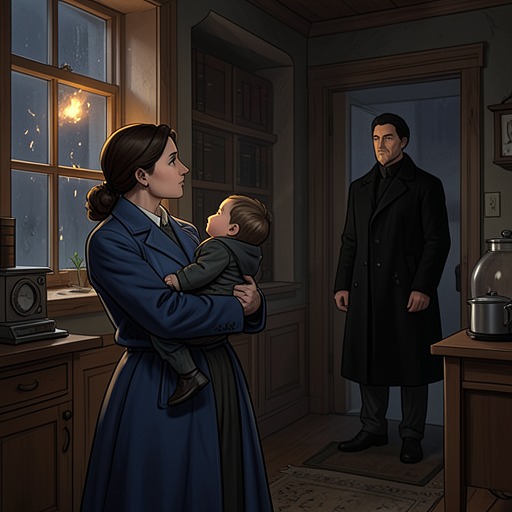
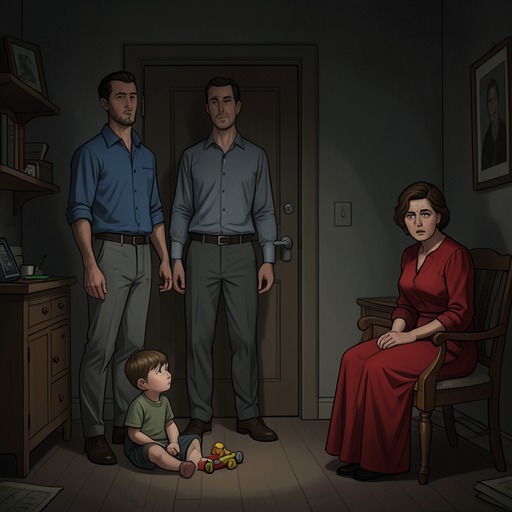
REParental abandonment is a recurring condition in which children are deprived of reliable care, explanation, and protection, then left to manage the consequences themselves. Its clearest form appears in Lisa Moore’s treatment of her four sons, whom she leaves without notice before returning amid financial suspicion and renewed family conflict. The condition also shapes Tabitha Moore’s response: because adults have failed to protect vulnerable children, she assumes an adult-like responsibility for recognizing danger, confronting neglect, and seeking outside intervention. Through these intertwined cases, the narrative makes abandonment a structure of emotional absence rather than merely a moment of departure.
Definition and Family Setting
Parental abandonment in the Moore household is defined by Lisa Moore’s disappearance from her sons’ lives. She leaves without notice, contact information, or a plan for their care, and Tabitha Moore later insists that such conduct cannot be excused simply because Lisa is related to the family. The absence is therefore both practical and moral: the boys lose daily maternal attention, while the adults around them are left to explain, contain, and repair the damage.
Grandma Laurie becomes the principal substitute caregiver, but the arrangement is presented as insufficient rather than triumphant. She recognizes that the four boys need a mother figure and that she and Tabitha Moore can provide only so much. Her judgment of Lisa is shaped by repeated memories of neglect: Lisa preferred watching television to spending time with her children, paid little attention to them, and reacted to a child’s injury with annoyance instead of concern. The boys’ dependence on their grandmother is thus a consequence of abandonment, not evidence that the family has solved it.
Lisa Moore’s Departure and Return
Lisa’s return does not erase the earlier abandonment. When she appears again, the boys rush toward her with tears and affection, making visible how strongly they still need the mother who left them. Tabitha Moore sees that longing as evidence of the depth of the wound: at their age, a mother is supposed to be central to their entire world, yet Lisa has missed months of their growth and does not appear to appreciate what she has lost.
The return also produces a crisis of trust. Tabitha Moore suspects that Lisa has come back for money rather than for family, especially because she believes Lisa is using heroin and guarding her purse closely. The suspicion is not treated as detached investigation; it grows out of Tabitha’s memory of abandonment and her conviction that Lisa has already demonstrated that the children’s needs come after her own. Lisa’s presence therefore becomes another form of instability. The mother is physically present, but the children cannot rely on her motives or conduct.
Lisa’s treatment of the boys confirms the danger of confusing reunion with repair. During the Thanksgiving gathering, she orders Aiden Moore to eat ham that he had politely refused, threatens all four boys with the loss of dessert, and frames obedience as a test of respect. Later, she strikes her eight-year-old son across the face while demanding attention during an angry speech about authority and the family’s supposed softness toward her children. Abandonment thus returns as active mistreatment: the children are not only left, but also exposed to a mother whose reappearance brings intimidation and physical violence.
Children Forced into Adult Roles
The boys’ behavior shows how abandonment creates an urgent hunger for care. They crowd around Tabitha Moore while she plays Nintendo 64, competing to teach her the controls and celebrate her successes. Their enthusiasm is affectionate, but it also reveals how readily they attach themselves to any available older figure who will listen and participate. Tabitha begins thinking about Christmas presents for all four boys, imagining the lasting value of giving them shared memories through games even though the family cannot easily afford four new Game Boy Color systems.
Tabitha’s position is especially complicated because she is thirteen, yet she repeatedly acts from knowledge and responsibility that the adults around her do not recognize. She declares that she is a young woman and asks Alan Moore to teach her budgeting, meal planning, and time and money management. Later, when the school board discusses her withdrawal, she speaks in precise administrative terms about documenting absences and obtaining accreditation for homeschooling. These scenes show a child asserting competence while still being denied full authority over her own safety.
That mismatch becomes most dangerous during the conflict over Lisa. Tabitha knows that accusations of heroin use may be dismissed as the claims of an emotional teenager, so she seeks concrete evidence: a syringe, lighter, blackened spoon, thermos, and a puncture mark on Lisa’s arm. After Lisa strikes her son, Tabitha decides that observation is no longer enough. She gives the suspected drug evidence to Karen Williams and explains that she needs Lisa kept away from the family and from her children. The abandoned child becomes a witness, investigator, and protector because the surrounding adults have failed to establish a dependable protective boundary.
Echoes in the Taylor Family
The same structure appears in Ashlee Taylor’s household, though it is combined with direct abuse and institutional neglect. Ashlee and Tabitha Moore were abused by the older Taylor girls when they were children, while Ashlee’s mother failed to provide a safe environment. When an attorney, social worker, school-board representative, and police officer arrive at the Taylor home, the adults’ explanations about Ashlee’s truancy cannot conceal that something is wrong. A social worker asks to see Ashlee privately and checks her bruises, offering the possibility that someone outside the family may finally recognize what has been happening.
Ashlee’s reaction combines pride, embarrassment, hope, and terror. That mixture captures the emotional logic of abandonment: a child may fear exposure while desperately needing exposure to occur. The prospect of intervention is exciting precisely because ordinary family care has failed. In this parallel storyline, abandonment is not limited to physical desertion. It also includes the failure to notice, believe, or stop violence while a child remains trapped inside the household.
Consequences and Separation
Tabitha’s confrontation with her parents shows how abandonment reshapes the meaning of home. When she announces that she will stay elsewhere for a while, Alan Moore orders her back to her room and insists that the family will discuss the matter later. His response treats parental authority as sufficient protection even though Tabitha believes the household is enabling Lisa. When he tells her that she will understand these matters when she is grown, her visible emotional collapse exposes the cruelty of making adulthood a condition for being believed.
Sandra MacIntire recognizes the seriousness of that collapse and offers Tabitha a choice: the MacIntires can return her to her parents, or Karen Williams and Sandra MacIntire can make other arrangements. Tabitha chooses to leave and asks permission to stay with the MacIntires for as long as necessary. Sandra then gives that permission, while Alan protests. The departure reverses the usual direction of abandonment. Tabitha is not silently discarded; she actively separates herself from an unsafe family system and moves toward a chosen household willing to protect her.
The condition also has a temporal and psychological dimension. Tabitha remembers events from another life, yet important knowledge slips away from her: she fails to anticipate Danny Moore’s arrest and cannot initially remember the childhood friend she abandoned. Her distress shows that returning to the past does not provide perfect control. The burden of earlier failure keeps resurfacing belatedly, forcing her to confront what she did not prevent before. Parental abandonment is therefore linked to the broader narrative of memory, guilt, and second chances: knowledge can create responsibility, but it cannot guarantee that every endangered child will be recognized in time.
Narrative Significance
The narrative treats abandonment as a redistribution of childhood. Lisa Moore leaves her sons, Grandma Laurie assumes care, and Tabitha Moore becomes emotionally and practically involved in protecting them. The adults’ insistence that family loyalty requires forgiveness is challenged by Tabitha’s refusal to treat blood or marriage as a free pass. For her, family must include responsibility; otherwise the word becomes an excuse for continued harm.
This framework also complicates the boundary between protection and control. Adults repeatedly invoke Tabitha’s age to limit her authority, while she demonstrates that she can identify danger, articulate institutional procedures, and make a reasoned decision about where to live. Conversely, Ashlee Taylor’s intervention shows that outside protection can be necessary even when it is frightening and humiliating. Children require safety, but safety must also recognize their testimony and developing capacity to participate in decisions affecting them.
Parental abandonment finally becomes a test of what a family is willing to do when affection conflicts with accountability. Lisa’s sons still love and miss her, but their longing does not make her conduct harmless. Tabitha’s anger is extreme because she sees the difference between sentimental reunion and actual repair. The MacIntire family’s offer of shelter provides the story’s alternative: care is not proven by biological connection or declarations of authority, but by attention, protection, and the willingness to act when a child says that home is no longer safe.