Ben
RebeccaBen is a mentally disabled man who lives with his family near the home farm on the Manderley estate. He is known to the household as a harmless, simple creature who spends his days pottering about the beaches and the woods, digging for shells, collecting winkles, and muttering to himself. The narrator first encounters him on the shingle of the cove beyond the breakwater, where he is scraping in the shingle and smiling with toothless gums. He speaks in a halting, repetitive manner, often failing to understand direct questions and answering with the same phrase — "No shell here" — as though his mind can hold only one idea at a time. His narrow, watery blue eyes and his sly, idiot's smile give him an unsettling appearance, but the narrator is told by both Maxim de Winter and Frank Crawley that he is quite harmless and would not hurt a fly.
Life and Behaviour
Ben lives in a state of perpetual fear, especially of being sent to the asylum. When the narrator finds him hiding in the boat-store of the cottage on the beach, he is trembling, clutching a fishing line he has taken, and pleads with her not to have him put away. "I done nothing," he repeats, "I never told no one. I don't want to be put to the asylum." A tear rolls down his dirty face. The narrator reassures him, and he responds with a childlike gratitude, offering her a shell he has chosen from a little heap hidden under a flat stone. "That's yourn," he says, and then adds, with a sudden, startling perceptiveness, "You've got angel's eyes." This moment of clarity — the ability to distinguish between the narrator and the other woman — is the first hint that Ben sees more than he lets on.
Key Actions and Knowledge
Ben's most significant function in the story is as a witness. He tells the narrator, in his fragmented way, that he has seen the other woman — "Tall and dark she was. She gave you the feeling of a snake" — coming to the cottage at night. He describes how she threatened him: "If I catch you looking at me through the windows here I'll have you put to the asylum." This confession reveals that Rebecca knew Ben was a potential witness to her clandestine meetings with Jack Favell and that she used the threat of the asylum to silence him. More critically, Ben was present on the night Rebecca died. When the narrator asks him about the stranded ship, he says, "She'll break up bit by bit... she'll not sink like a stone like the little 'un," and then, jerking his thumb toward the sea, adds, "The fishes have eaten her up, haven't they?" He knows that the boat was deliberately sunk and that the body inside is Rebecca's.
Relationships and Conflict
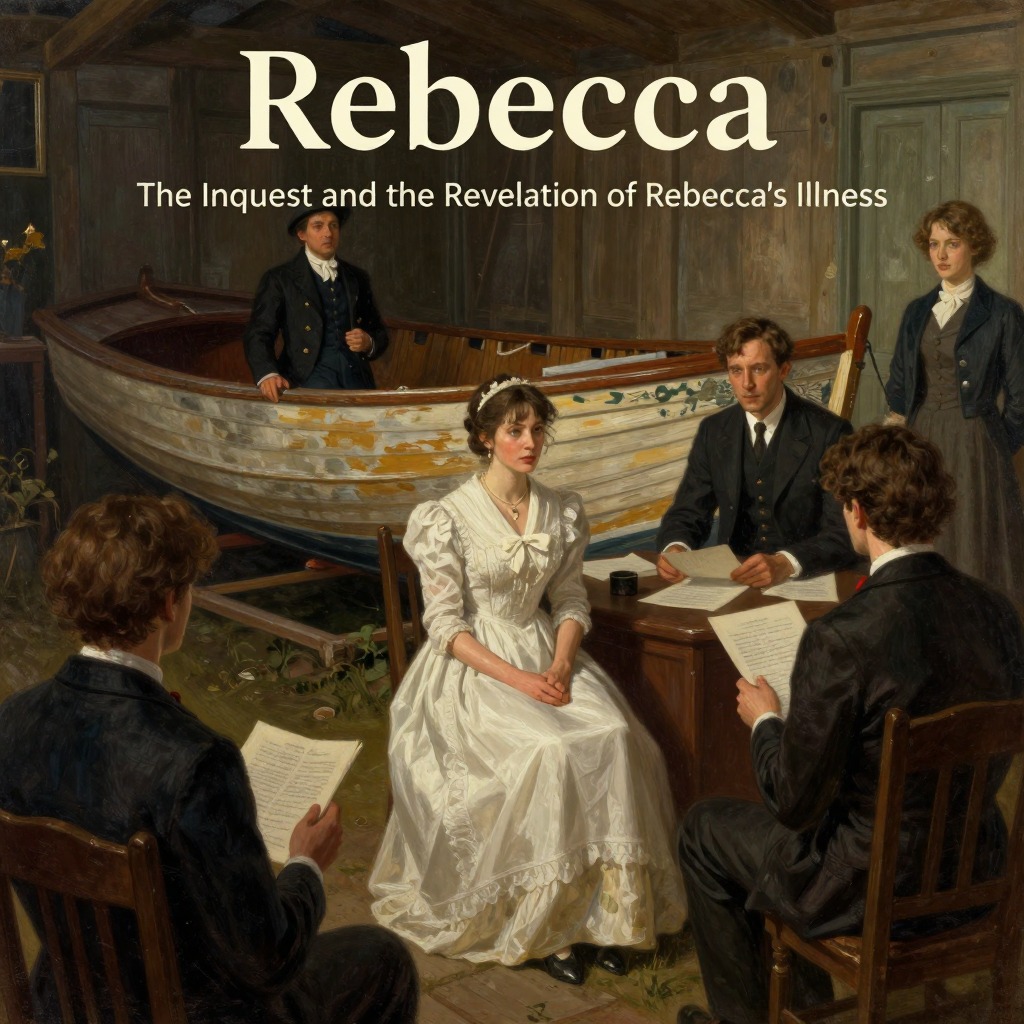
Ben's relationship with the second Mrs de Winter is one of trust and gratitude. She treats him kindly, does not threaten him, and allows him to keep the fishing line. In return, he gives her the shell and offers her winkles. His relationship with Rebecca is the opposite: he fears her as a predator. His relationship with Maxim is more ambiguous; he obeys Maxim's rules about the cottage but does not seem to fear him. When Jack Favell tries to use Ben as a witness against Maxim, bringing him before Colonel Julyan and the others in the library, Ben's terror returns. He refuses to recognise Favell, repeating "I never seen 'un" and clinging to Frank Crawley's arm, asking if the man has come to take him to the asylum. Favell's bullying only makes Ben more stubborn, and his testimony — or lack of it — destroys Favell's case.
Change and Ending
Ben does not undergo any personal transformation; he remains the same frightened, simple creature throughout. His final appearance in the novel is when Robert takes him back to the kitchen for some cold meat, a reward for his silence. His function is complete: he has been the one person who could have confirmed Favell's accusation, but his fear and his loyalty to the narrator — who has been kind to him — keep him silent. He disappears from the story after that, his fate unknown, but his role as the hidden witness who saw everything and said nothing is fulfilled.
Narrative Role and Evaluation
Ben is a classic example of the "holy fool" or "wise idiot" figure in Gothic and mystery fiction. His mental disability makes him an unreliable witness in the eyes of the law, but his simple, direct perceptions are often more accurate than those of the sane characters around him. He sees through Rebecca's charm to the "snake" beneath, and he knows the truth about her death. His terror of the asylum is a powerful commentary on how society treats those who are different, and his silence — bought by kindness rather than by threats — is a moral victory for the second Mrs de Winter. Ben is a flat character in Forster's terms, built around a single idea of fearful simplicity, but that simplicity makes him a crucial piece of the novel's moral and plot machinery.