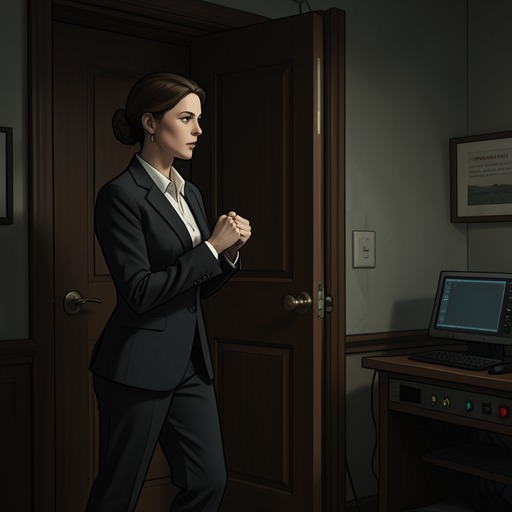
“Power is all an illusion.”
Retribution“Power is all an illusion” is C.J. Townsend’s conclusion after a nervous breakdown and two years of intensive therapy. The phrase gives stark form to a realization born from the night that destroyed her sense of safety: she had lost control of her life, then spent years confronting the possibility that she had never truly had control to begin with.
Meaning and Context
The sentence rejects the promise that recovery can restore complete command over what happens. C.J.’s insight is not presented as a theory reached at a distance; it follows a period of psychological collapse and sustained treatment, and is tied to her memory of a night when control disappeared in an instant. The compact declaration makes that painful recognition sound absolute, while the surrounding reflection grounds it in the unpredictable turns of ordinary life.
C.J. describes life as a matter of chance, contrasting people struck by a bus while returning from a funeral with people who win the lottery twice. The examples make misfortune and good luck feel radically uneven and difficult to govern. Yet the image of avoiding a dark street introduces a smaller, practical form of agency: chance cannot be mastered, but exposure to danger can sometimes be reduced. The passage therefore places resignation beside caution rather than resolving the contradiction between them.
Narrative Role
The phrase condenses the conflict between C.J.’s effort to move forward and the lasting effects of what happened to her. Its absolute wording gives voice to the loss of control; the passage’s concrete example of avoiding a dark street suggests that some choices still matter, even when they cannot guarantee safety. In this way, the expression is both a statement of disillusionment and a measure of the limited, hard-earned agency C.J. can still claim.