Cupid task force
RetributionThe Cupid task force is the multi-agency investigative body created to find the killer known as Cupid, and its development mirrors the case’s shift from a trail of disappearances with few leads to an expansive, high-pressure prosecution. Based at the Florida Department of Law Enforcement’s Miami Regional Operations Center, it assembled investigators from several police agencies, built a shared record of the victims and crime scenes, and pursued the evidence needed to connect a suspected killer to individual crimes. Its work was also shaped by a central difficulty: the investigation had to turn patterns and circumstantial links into proof that could withstand trial.
Formation and Headquarters
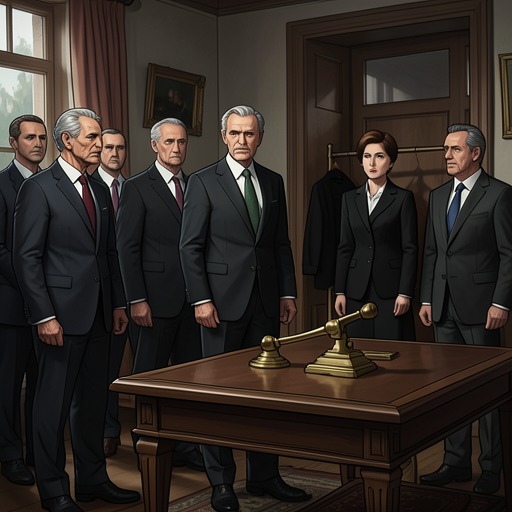
At the governor’s request, the Florida Department of Law Enforcement initially provided a conference room at its Miami Regional Operations Center for the task force’s headquarters. The department supplemented the space with a criminal analyst, a copy machine, a fax machine, and a part-time secretary. Investigators from the Miami Beach Police Department, the City of Miami Police Department, the Miami-Dade Police Department, and the North Miami Police Department were among the agencies represented. As the investigation grew, the task force had twelve officers and detectives assigned full-time from five agencies.
The room’s working environment changed as the case accumulated. A corkboard was first installed to organize the investigation; after eight months, when six women were missing, three bodies had been found, and there were no leads, the Florida Department of Law Enforcement also assigned Special Agent Dominick Falconetti. One of his first steps was to obtain a larger board. The walls and work surfaces became an investigative archive: police reports, leads, interviews, and records were stored in boxes, while material about the victims included financial documents, diaries, date books, letters, photographs, and emails. The former display of law-enforcement awards gave way to the victim photographs known as The Wall.
Scope and Investigative Methods
The task force was built around a series of crimes whose locations and timing made the investigation difficult. Over eighteen months, eleven women had disappeared from South Beach nightlife; nine bodies had been recovered in locations across Miami-Dade County. The scenes were scattered, and the killer’s apparent willingness to leave bodies for discovery did not make him easier to identify. The crime signature included the removal of each victim’s heart, while investigators found little physical evidence that could readily identify the perpetrator.
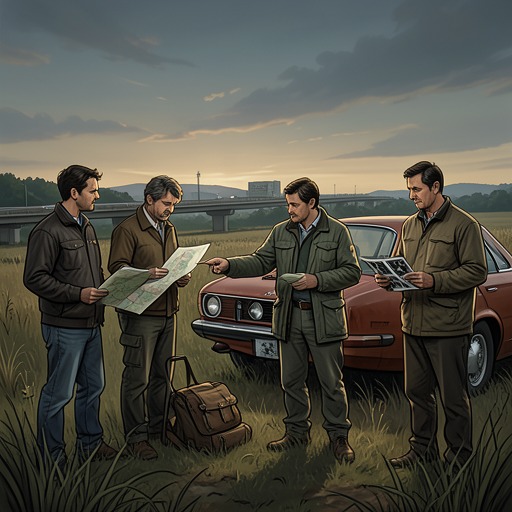
Forensic teams searched scenes and surrounding areas for traces such as prints, DNA, tire tracks, footprints, clothing, or weapons. At one remote former military complex near the Everglades, the Florida Department of Law Enforcement’s Key West forensic team and the Miami-Dade Police Department Crime Scene Unit searched for two days without finding useful traces. The task force’s experience at earlier scenes gave Dominick reason to expect that another lengthy examination might also yield little. The absence of evidence sharpened the need to combine forensic findings with interviews, timelines, and comparisons among crimes rather than treat any single similarity as proof of identity.
The investigation also depended on repeated interviews and checks against suspects’ known routines. After Anna Prado’s body was found, Dominick went back to people already interviewed, including current and former employers, coworkers, neighbors, and girlfriends. He believed that witnesses might recall additional details after having time to absorb events and reconsider what had seemed unusual. He and Manny Alvarez also revisited the nightclubs where victims had last been seen, showing staff a color lineup. Several recognized William Rupert Bantling as a frequent customer, often well dressed and accompanied by a different young woman, but none placed him with a victim on the relevant night. The leads mattered, but their limits mattered too.
Evidence, Analysis, and Prosecution
The task force’s case-building joined investigative and prosecutorial work. C.J. Townsend had spent the preceding year assisting the investigation at the State Attorney’s Office’s direction. She visited scenes, attended autopsies, reviewed warrants and police and laboratory reports, spoke with the medical examiner, and took witness statements. When Bantling was arrested, the assignment to prosecute him brought the investigation into a highly public courtroom as well as the task force’s offices.
The team amassed a large record: by a Sunday night during the investigation, almost seventy interviews had been completed since Tuesday, three search warrants had been executed, and 174 boxes of evidence had been seized from Bantling’s house and cars. The volume did not remove the need for careful proof. At a case-strategy meeting on October 16, Dominick reported that fishing line associated with the Morgan Weber case matched line found in Bantling’s shed, but Manny immediately noted how widely such line might have been sold. The comparison offered a lead, not a unique identification.
The Anna Prado case supplied stronger direct links. Investigators had Anna’s body in the trunk of Bantling’s car, her blood identified in the shed, and a suspected murder weapon recovered there. Townsend argued that the evidence could support proceeding on Prado’s murder, while the absence of comparable physical evidence in the other cases made the broader prosecution more uncertain. Because Bantling sought a speedy trial, she wanted the Prado case prepared without risking its deadlines. A conviction could then allow the prosecution to seek admission of the conviction and facts of that murder in the other cases under the Williams Rule. She also pressed investigators to find the victims’ hearts, which she regarded as potential trophies that could physically connect Bantling to additional victims.
The task force’s analytical reach extended beyond one crime scene, though the broader connections did not all originate as formal task-force findings. Townsend’s examination of records uncovered reports of earlier masked assaults in cities where Bantling had lived, and information from the International Criminal Police Organization described similar reported assaults in South America and the Philippines. Those findings widened the suspected scope of Bantling’s crimes, but the reported matches still required confirmation by local authorities. The distinction between a recurring pattern and independently verified evidence remained essential to building a case.
Pressure, Jurisdiction, and Significance
The investigation operated under intense public and political scrutiny. The news of Bantling’s arrest triggered a media rush, and Townsend had already faced criticism of the case’s slow progress. The disparity between many victims and an indictment on only one murder also became an argument for transferring control. At a meeting with state officials, the Miami special agent in charge of the Federal Bureau of Investigation offered to assume the criminal investigation, with the federal laboratory reexamining evidence collected by the Cupid task force. The U.S. Attorney’s Office proposed prosecuting all the murders rather than only the case then moving forward in state court. These proposals made jurisdiction an immediate contest as well as a question of legal strategy.
The task force’s work remained vulnerable to the tension between the scale of the suspected crimes and the proof available for each one. Dominick’s interpretation of the killer’s deliberately arranged scenes was that they were meant to be seen, while the lack of recoverable traces reflected how carefully the crimes had been controlled. That remained an investigative theory, not a substitute for evidence. The organization’s achievement was its method of accumulating separate lines of inquiry—scene analysis, victim records, witness accounts, suspect timelines, and laboratory results—while testing how far each could safely carry the case.
As a narrative institution, the Cupid task force gives the investigation both a physical center and a collective memory. The expanding corkboard, The Wall, and the boxes of private records make visible the attempt to restore connections across crimes that had seemed isolated. They also show the cost of that effort: the victims’ intimate lives became public investigative material, while their families waited for progress. The task force’s changing size and methods express the case’s widening demands, but its recurring problem remains unresolved by scale alone: patterns can direct investigators toward a suspect, yet each charge still depends on evidence that can be established in court.