New York City Police Department
RetributionThe New York City Police Department enters the story through C.J. Townsend’s effort to recover the record of an unsolved 1988 assault. Years after the crime, she discovers that the department’s surviving files can help her reconstruct what happened, even as the people who once handled the case have disappeared from its daily life. Its role is therefore both practical and limited: the department preserves a route back to the case, but the record does not undo the absence of an arrest or the long interval in which the case remained unresolved.
Units and Case Path
The department’s presence is revealed when C.J., now working in Florida, telephones Queens County to locate Detective Amy Harrison, whom she remembers from the investigation. She identifies Harrison as a Sex Crimes detective and explains that Harrison worked out of Bayside, in the One-One-One precinct. The call moves through the department by way of its current personnel rather than through a direct line to the investigator C.J. remembers: she is first directed to Special Victims, where Detective Sullivan answers.
The exchange makes the passage of time tangible. Sullivan cannot find Harrison in the current unit. A voice in the background recalls that Harrison retired from the department several years earlier and may have joined the Michigan State Police. When C.J. asks after Harrison’s former partner, Detective Benny Sears, she learns that he died years before, after suffering a heart attack on the Fifty-ninth Street Bridge during rush hour. The investigators associated with the original case are no longer available to explain it from memory.
The Unresolved Assault File
C.J. tells the department that the case concerns an unsolved sexual assault from 1988 and that, as far as she knows, there was no arrest. Sullivan consequently directs her to the NYPD Cold Case Squad. The referral establishes a route for an old case within the department: when the original investigative connection is lost and no arrest has been made, the case can be taken to the unit responsible for cold cases.
The file itself has not vanished. C.J. has kept police reports, hospital records, and laboratory reports, and she searches the papers for a case number during the call. Later, reading the surviving reports, she encounters an ex-neighbor’s statement blaming her for the assault. His claims reduce her clothes and behavior to an excuse for the crime, and revisiting them renews feelings of guilt and shame that she has struggled to overcome. The document is evidence of what was said during the investigation, but its preservation also carries the burden of having the accusation recorded and encountered again.
Protection, Attention, and Distance
In the immediate aftermath of the assault, a police guard remains outside C.J.’s hospital room for two days. Detective Sears tells her that the guard has been removed because she is no longer considered to be in imminent danger. The police continue to say that they are actively pursuing the perpetrator and following possible leads; Detective Harrison initially visits C.J. in hospital each day.
That contact then changes. By Monday, Harrison has stopped making daily visits and instead calls once a day to check on C.J. C.J. suspects the calls will eventually stop as the investigation is displaced by newer cases. The narrative distinguishes the department’s stated pursuit of leads from the diminishing personal contact C.J. experiences: protection is provided for a time, but the guard’s reassignment and the shift from visits to calls leave her feeling that her case is losing attention. The evidence does not establish what investigative steps followed, only the form of contact C.J. observed and her expectation that it would fade.
The Department’s Continuing Presence
Years later, C.J.’s effort to locate the old detectives leads her back into the department’s records and procedures. The call does not restore the original investigators: Harrison is gone, Sears is dead, and the case remains without an arrest. Instead, it redirects C.J. toward the NYPD Cold Case Squad and confirms how much of the investigation now survives as paperwork rather than personal recollection.
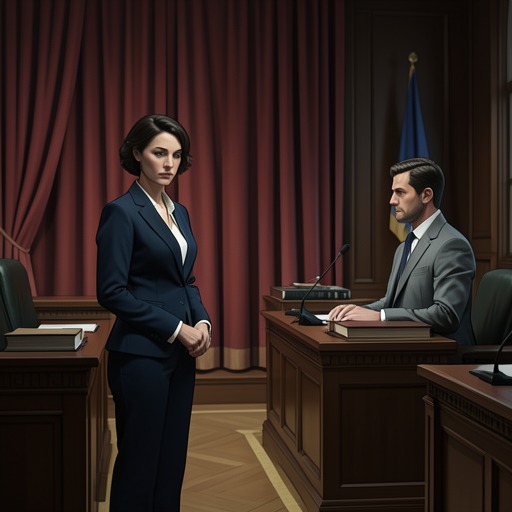
The department’s later significance extends beyond retrieval of the file. C.J.’s past becomes entangled with the prosecution of William Rupert Bantling when he claims that he was the man who assaulted her. In court, she discloses that she was raped while a law student in New York and says that her attacker was never caught. She tells the judge that Bantling is not that attacker and that she had already advised his attorney of this. This disclosure brings the old unresolved case into public view, but it does not change its outcome: the New York assault remains unprosecuted in the events described. Across the hospital, the telephone search, the preserved file, and the courtroom, the New York City Police Department is associated with both the possibility of institutional follow-up and the limits imposed by elapsed time, personnel turnover, and the absence of an arrest.