William Bantling’s Jaguar XJ8
RetributionWilliam Bantling’s Jaguar XJ8 is more than the setting for an encounter with police: it is the object around which the discovery of Anna Prado’s body, the identification of the suspected Cupid killer, and a consequential dispute over the legality of the search converge. Its speed and visible defects bring it to Officer Victor Chavez’s attention; its trunk conceals the body; and details observed on and around the vehicle become part of competing explanations for the stop. The car therefore carries both the investigation’s decisive physical discovery and the legal vulnerability of the evidence that follows from it.
Identity and Setting
The vehicle is described as a late-model black Jaguar XJ8, with license plate TTR-L57. On the evening of September 19, 2000, Officer Victor Chavez first saw it in South Beach, then followed it west along the MacArthur Causeway. The account presented by C.J. Townsend places it in a marked patrol officer’s line of sight on Washington and Sixth before Chavez pursued it by way of Sixth Street, Collins, and Fifth Street. The car’s route matters: the encounter began as a traffic stop and continued onto the causeway, where the trunk was eventually opened and the discovery drew a widening response.
The Stop and Its Competing Accounts
Chavez’s initial account is brief: he was in his car, saw the black Jaguar speeding past at perhaps thirty-five or forty miles per hour, and pulled it over. The more detailed account C.J. recites supplies additional grounds. In a posted twenty-five-mile-per-hour zone, the Jaguar was estimated to be traveling faster than thirty-five miles per hour. Chavez then followed it for about two miles, noticed a broken taillight, and observed an illegal lane change without a signal before activating his lights and siren.
After the stop, Chavez asked William Rupert Bantling for his license and registration. He questioned Bantling about his hurry and destination; Bantling said he was heading to the airport to catch a plane, but did not answer a further question about where he was going. Chavez saw one bag in the back seat and asked whether there was luggage in the trunk. Bantling did not answer that question either. When asked for permission to look in the trunk, he refused. Chavez said he then returned to his car to write a speeding ticket and a ticket for the broken taillight. The difference between this sequence and the later account of what prompted a search becomes important: the car’s traffic violations are presented as grounds for stopping it, while the trunk search requires a separate explanation.
From Vehicle to Crime Scene
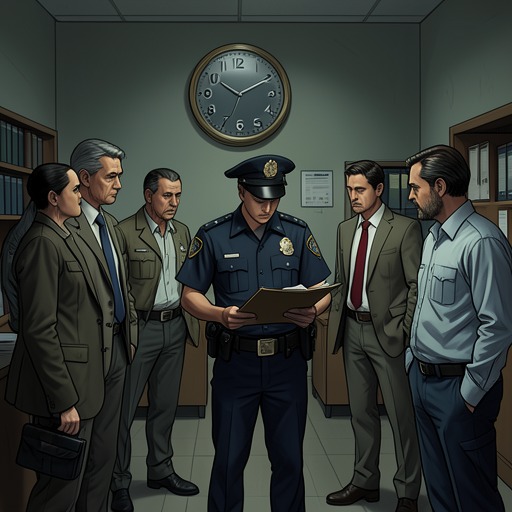
On his way back to the patrol car, Chavez said, he passed the trunk and detected a rotten smell, like that of a dead body. He asked for consent to search again; Bantling refused and said he had to go. Chavez told him he was not going anywhere and called for canine units. Florida Highway Patrol officers arrived, along with an officer from Miami Beach Police Department and the dog Butch. According to Chavez, the dog went wild at the trunk, after which the officers opened it.
Inside was a dead woman with her chest cut open. Chavez said that he knew they had caught Cupid, ordered Bantling out of the car, and waited with the other officers for about six minutes on the causeway as the scene drew a large response. The car’s trunk thus changes the meaning of the encounter in an instant: what began as a traffic stop becomes the discovery of a homicide victim and the arrest of the man later identified as Bantling. The vehicle is not merely where the discovery happens; it is the physical container that makes the hidden body accessible to the investigation.
Evidence and Legal Consequences
The accounts also attach other suspicious details to the Jaguar. In the fuller version C.J. presents, Chavez reported that Bantling appeared nervous and jittery when handing over his documents, that he noticed a substance on the bumper that looked like blood, and that he thought he detected marijuana in the vehicle. Bantling refused consent to search. These are reported observations and suspicions, not established findings in the account; their importance lies in how they are offered to explain the decision to investigate the car beyond the initial traffic stop.
That explanation is consequential because C.J. recognizes a problem with the stop and search. The legal principle discussed in connection with the case is that evidence obtained through an illegal search may be suppressed, along with evidence derived from it, as fruit of the poisonous tree. A vehicle can be stopped for a traffic violation witnessed by an officer, but the legality of what follows depends on the circumstances supporting the search. Here, the initial speeding account, the additional traffic violations, the suspected blood-like substance, the reported odor, the refusal of consent, and the dog’s reaction form a chain whose details matter to the prosecution.
The Jaguar consequently occupies two roles that pull against each other. It is the indispensable site of a discovery that points investigators toward Bantling, yet the circumstances of reaching its trunk make the resulting evidence vulnerable to legal challenge. After C.J. rereads the arrest form and recalls what Manny Alvarez told her following the warrants call, the vehicle’s significance is no longer only what it contains. It also represents the question of whether the discovery can be used in court.