Rumpelstiltskin’s firstborn-child bargain
RumplestiltskinRumpelstiltskin’s firstborn-child bargain is the tale’s sharpest escalation of exchange: after the miller’s daughter has paid for magical labor with her necklace and ring, the dwarf demands not another possession but the first child she may have as queen. She accepts under pressure to meet the king’s final spinning demand, and the agreement later becomes a claim she must defeat by discovering the dwarf’s name.
Background: From Boast to Impossible Task
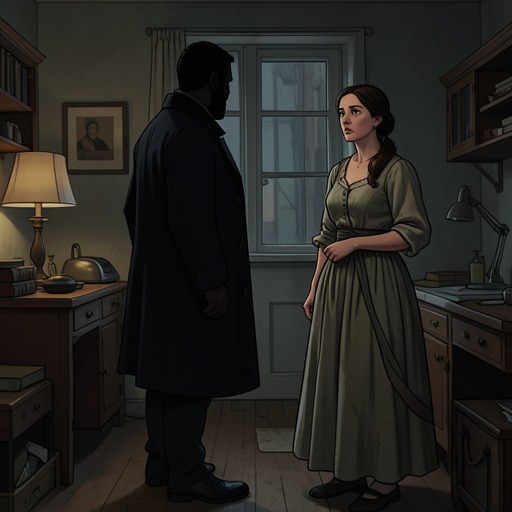
The bargain grows out of the miller’s boast that his beautiful, clever daughter can spin gold from straw. The king, whose appetite for money is stirred by the claim, summons her and confines her in a palace chamber with straw and a spinning wheel. He orders her to finish before morning, threatening her life if she fails. The daughter denies that her father’s boast is true, but the locked room leaves her without a way to satisfy the demand on her own.
A strange little man offers to do the work in return for payment. For the first spinning, the daughter gives him her necklace; when the king responds to the gold by imposing a fresh task, she gives him her ring. Each success satisfies the immediate demand but feeds the king’s desire for more. His third assignment is a yet larger heap, to be spun in one night, with queenship promised as the reward. This sequence makes the firstborn bargain the culmination of a widening exchange: the king raises the scale of production, while the helper raises the price of his assistance.
Terms and Acceptance
By the third task, the daughter has nothing left to offer. The dwarf proposes that she promise him the first little child she may have when she is queen. She thinks that this may never happen, but, seeing no other way to complete the work, agrees to do what he asks. The bargain is therefore made under immediate pressure and against a future possibility she cannot yet treat as real; the story presents her agreement as a desperate means of escape from the king’s demand, not as a freely chosen gift detached from circumstance.
The promise also changes the character of the earlier payments. A necklace and a ring are possessions she can surrender in the moment; the child is a future relationship and obligation. The dwarf’s labor still answers the king’s demand for gold, but its eventual price reaches beyond the daughter’s property to the family she may one day have. No formal system of law or enforcement is described. Instead, the narrative gives the promise force through the dwarf’s later return and the queen’s recognition that she has pledged what she most wants to keep.
Fulfilment and Claim
The dwarf spins the final heap into gold, and the king finds the result the next morning. Because he has promised that she will become queen if the work is done, he keeps his word and marries the miller’s daughter. She becomes queen, and the condition named in the bargain is fulfilled when she gives birth to her first child.
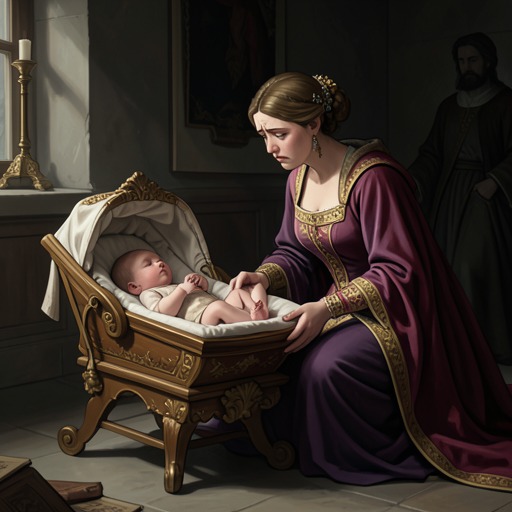
At the child’s birth, the queen is glad and forgets both the dwarf and what she said. The agreement has not vanished; it has simply fallen out of her attention until the dwarf comes into her room while she is sitting and playing with the baby, reminding her of the promise. The contrast between the child as the source of her joy and as the object of the dwarf’s claim makes the bargain’s cost newly immediate: what had seemed a remote price for a night’s work now threatens a living bond.
Reprieve and the Power to Name
The queen grieves and offers the dwarf all the wealth of the kingdom if he will release her from the agreement. He refuses at first, so wealth cannot simply buy back the promised child. Eventually her tears soften him, and he gives her three days to tell him his name; if she succeeds, she may keep the child. This condition changes the terms of the conflict. The original promise is not erased, but the dwarf makes its claim conditional on the queen’s failure to identify him.
The queen spends the night recalling unusual names and sends messengers throughout the land to find more. Across the next two days, she tries ordinary names and then comic ones, but the dwarf rejects every guess. On the third day, a messenger reports seeing a little hut among the trees of the forest, with a fire outside and a dwarf dancing on one leg and singing that he will make a feast and that Rumpelstiltskin is his name. The private song supplies the knowledge the queen needs to meet the condition.
When the dwarf returns, the queen stages the guessing before her court, with the nurse beside her holding the baby as if the child were ready to be handed over. After rejecting several guesses, she names him Rumpelstiltskin. He cries that someone must have told her, stamps his right foot so deeply into the floor that he has to pull it out with both hands, and leaves. The nurse laughs, the baby crows, and the court jeers at him. The child remains with the queen, and the dwarf’s claim ends not through payment but through the naming test he himself imposed.
Narrative Significance
The bargain binds together the tale’s two measures of value. The king treats straw as potential wealth and demands ever more gold; the dwarf turns his labor into a series of prices that move from jewelry to a future child. The queen’s change of status does not free her from the agreement made while she was still the miller’s daughter: becoming queen makes the promised child possible, and the arrival of that child brings the deferred cost due.
The resolution gives information a different power from wealth. The queen’s offer of the kingdom cannot release her, but learning and speaking the dwarf’s name satisfies the escape condition. The bargain thus drives the plot beyond the spinning trials: its delayed claim turns an apparent reward into a new danger, and the naming challenge converts the queen’s search for the child’s safety into the means by which the dwarf loses his hold.