Three-day name-guessing condition
RumplestiltskinThe Three-day name-guessing condition is the reprieve offered to the queen after Rumpelstiltskin comes to claim the child promised in exchange for spinning straw into gold. Its three-day limit converts an earlier bargain made under desperation into a test with a possible escape: the queen must discover the dwarf’s name, and speak it to him, or surrender her baby. The rule shifts the conflict from magical labor and material payment to knowledge, time, and the power of naming.
The Bargain and the Reprieve
The condition grows out of the queen’s earlier trials. When the king first confines the miller’s daughter in a chamber and demands that she spin straw into gold before morning, she has no means to do so. Rumpelstiltskin performs the task in return for her necklace; when the king imposes a second task, she gives him her ring. For the third and largest heap, she has nothing left to offer, and promises instead the first child she will have as queen. The promise is made because she sees no other way to complete the task, while the prospect of a child seems distant and uncertain.
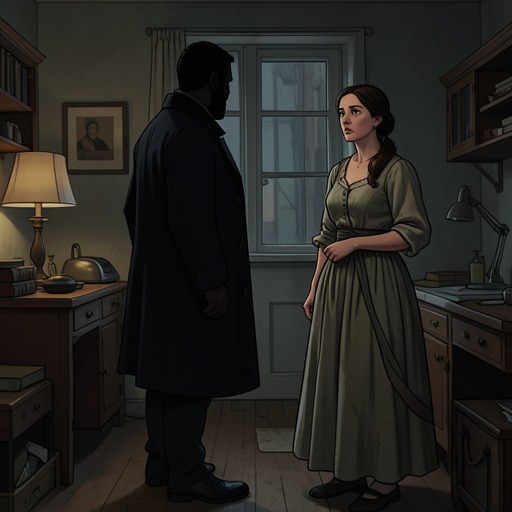
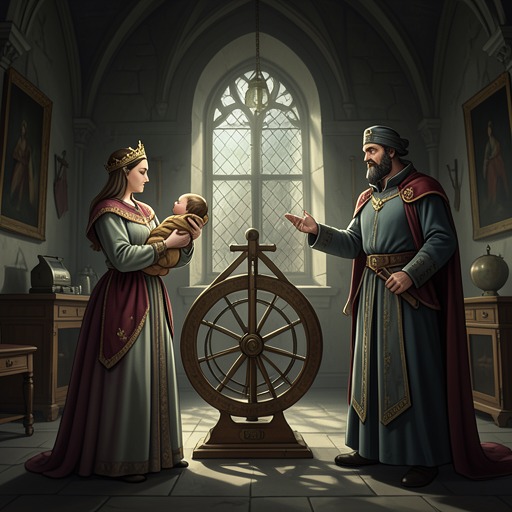
The bargain’s consequences arrive after the miller’s daughter marries the king and becomes queen. At the birth of her first child, she is glad and has forgotten what she promised. Rumpelstiltskin enters her room while she is playing with the baby and reminds her of the agreement. Her earlier exchanges of necklace and ring had transferred possessions; this claim reaches into her family, and the queen’s grief makes clear how sharply the stakes have changed.
She offers him all the wealth of the kingdom if he will release the child, but the offer initially fails to move him. At last her tears soften him, and he grants three days’ grace. The reprieve does not cancel the bargain outright. Instead, it sets a condition: if she can tell him his name within that time, she may keep the child. The child’s fate is thus made dependent not on another payment, but on whether the queen can obtain and use the right piece of knowledge before the deadline.
The Three-Day Search
The queen spends the night turning over every odd name she has heard and sends messengers throughout the land to seek more. On the first day, she tests familiar names she can recall, including Timothy, Ichabod, Benjamin, and Jeremiah. Rumpelstiltskin rejects each one with the same answer, so the growing list does not itself weaken his claim. The scene establishes the practical terms of the challenge: guessing is permitted, but the queen must find the particular name that belongs to him.
On the second day, she tries comic names she has heard, such as Bandy-Legs, Hunchback, and Crook-Shanks. These guesses also fail. The progression from remembered names to comical ones shows the queen exhausting what she can produce herself; the deadline gives each round of failure weight, because the offer of grace lasts only three days and the promised child remains at risk.
The decisive information comes from a returning messenger on the third day. The messenger reports having travelled for two days without hearing another name, then describes climbing a high hill among the trees of the forest. There, near a little hut and a fire, the messenger saw a dwarf dancing on one leg and singing that Rumpelstiltskin was his name. The clue is not the product of the queen’s guesses: it arrives from the wider search she ordered, in a specific report of what the messenger witnessed. A name that had defeated her repeated attempts is now available to her before the grace expires.
Naming and the Outcome
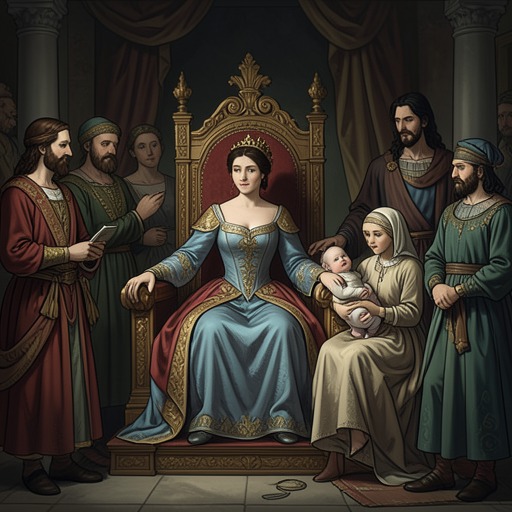
When Rumpelstiltskin returns, the queen sits on her throne and calls her court to witness the encounter. The nurse stands beside her holding the baby, apparently ready for the child to be given up. The arrangement makes the stakes visible: the queen has not secured safety simply by learning the name; she must still confront the claimant and answer his question correctly.
Rumpelstiltskin chuckles at the thought of taking the child home to his hut in the woods and asks the queen for his name. She first offers John, then Tom, then Jemmy, receiving a refusal after each. Only then does she slyly say Rumpelstiltskin. He cries that some witch must have told her, stamps his right foot so deeply into the floor that he must grasp it with both hands to pull it free, and makes his way off. The queen keeps her child; the nurse laughs, the baby crowes, and the court jeers at the defeated claimant.
Function and Significance
The condition reverses the imbalance established by the king’s impossible demands and the dwarf’s magical advantage. In the spinning trials, the miller’s daughter can meet the king’s demands only through Rumpelstiltskin’s work, and each success leaves her with less to bargain away. After the child is born, the queen’s search and the messenger’s report provide a different route to rescue: the solution depends on gathering information, not repeating the magic that created the original debt.
The rule also defines the bargain’s unusual limit. Rumpelstiltskin does not release the child in return for wealth, despite the queen’s offer of the kingdom’s riches; he grants a fixed interval and makes release depend on the discovery of his name. The tale therefore binds the danger of the child’s promised transfer to a timed contest that the queen can win through knowledge. Once she names him, the claim collapses, and the ending turns on the contrast between the baby he expects to take and the public laughter with which he is sent away.