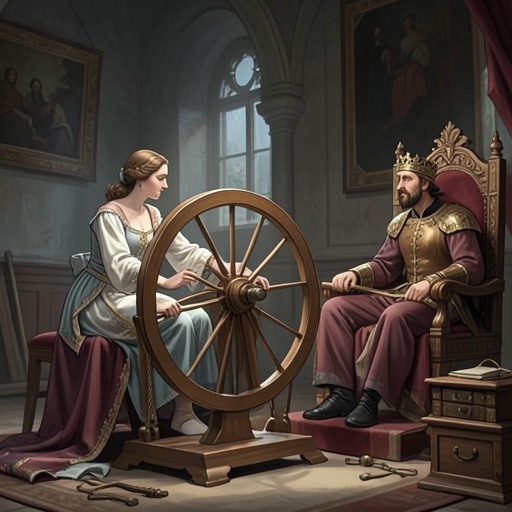
Straw-spinning magic
RumplestiltskinStraw-spinning magic is the power to turn straw into gold, first claimed for the miller’s daughter by her boastful father and then performed by a mysterious little man at a spinning wheel. Its glittering results attract the king, who converts wonder into escalating demands; for the daughter, each successful transformation brings temporary reprieve but also a steeper price, culminating in a promise of her first child. The magic therefore makes gold, but its human consequences are governed by bargaining, royal power, and the later discovery of the helper’s name.
The Boast and the First Transformation
The magic enters the tale not as the daughter’s own ability but as her father’s claim. The miller is proud of his clever, beautiful daughter and tells the king that she can spin gold out of straw. The statement gives the king a reason to summon her, but it does not make it true: when confronted with the demand, she says that her father’s words were only a silly boast and that she cannot perform the feat. The gap between reputation and ability places her in danger before the supernatural helper appears.
The king takes her to a chamber in his palace, where a great heap of straw and a spinning wheel await. He orders her to turn all the straw into gold before morning, under threat to her life, then locks the door and leaves her alone. The wheel is thus presented first as an instrument of coercion: the king supplies the material and deadline, while the daughter has neither the claimed skill nor an apparent way to refuse.
A little man enters after she begins to weep and offers to do the work in exchange for her necklace. She agrees, and he sits at the wheel, singing the recurring “Round about, round about” song as he works. By morning, the straw has become gold. The scene establishes the magic’s operating pattern: the helper performs the transformation, but only after the daughter pledges a possession, and the king receives the resulting treasure.
Repetition and Escalating Demands
The first transformation does not satisfy the king. Astonished and pleased by the gold, he grows still greedier and confines the daughter again, this time with a fresh task. When the little man returns, she gives him the ring on her finger in exchange for another night’s work. He again sings at the wheel, and the second heap is finished long before morning. The repetition confirms that the marvel is not a single lucky outcome, while the payment shifts from necklace to ring: each success consumes another personal possession belonging to the daughter.
The king’s response turns repetition into escalation. Delighted by the glittering treasure but still unsatisfied, he takes her to a yet larger heap. He declares that if she spins it that night, she shall become his queen. The gold now serves not only as wealth but as the condition attached to a change in status. Yet the promise comes from the king, who controls the task and its reward, while the daughter remains dependent on the helper to meet a demand she cannot fulfill herself.
On this third occasion she has nothing left to offer. The little man names a different price: the first child she may have when she is queen. She agrees because she sees no other way to get the task done, while thinking that such a child may never exist. The change from jewelry to a future child marks the most consequential turn in the exchange. The magic still produces the gold in time, but the payment has moved beyond property that can be handed over immediately to a claim on a future family relationship.
Gold, Power, and the Cost of Exchange
The king’s demands define the magic’s public value. He hears the miller’s boast, imposes life-threatening work, and takes the resulting gold; each successful transformation increases his appetite rather than bringing the tests to an end. The tale makes the conversion materially clear—he sees heaps of gold and is pleased—while showing that the benefit and the labor are distributed unevenly. The daughter faces the locked room and the stakes; the little man supplies the skill; the king captures the treasure and sets the next demand.
The transactions also alter the daughter’s circumstances in sequence. The necklace and ring are surrendered to secure immediate help, and the last bargain is made under pressure after the king has again required a larger quantity by morning. Her marriage to the king follows the completed third task: finding all the gold he wants, he keeps his word and makes her queen. The bargain over the child is therefore attached to the very success that raises her from the miller’s household to royal status. Gold opens that path, but the promise made to produce it continues to bind her after the spinning has ended.
When her first child is born, the queen is glad and forgets the agreement. The little man later enters her room while she is sitting with the baby and reminds her of it. She offers him all the wealth of the kingdom to release her, but he refuses. This contrast clarifies the limit of wealth as payment: the kingdom’s riches, accumulated through the magic’s earlier products, cannot simply undo a promise whose stakes are now the child. Only her tears soften him enough to grant three days in which she may guess his name and keep the baby.
The Song, the Name, and the Magic’s Ending
The spinning song accompanies the work each time the little man turns straw into gold, giving the successive tasks a repeated verbal pattern. Yet the tale’s decisive information about him arrives not at the wheel but through a messenger’s report. After traveling for two days without hearing another name, the messenger describes reaching a high hill among the forest trees, where a hut stands with a fire burning outside. There the messenger sees a dwarf dancing on one leg and singing about making a feast. The report supplies the queen with the name-guessing clue that the earlier exchanges did not reveal.
The queen tests names across the three-day allowance. She begins with familiar names, then tries comic ones, and the little man rejects them all. When the messenger returns with the scene at the hut and its song, the queen has a specific name to try. She arranges for her court to witness the encounter, sits on her throne, and has the nurse stand beside her holding the baby as though it is ready to be surrendered. The setup makes the final test a public reversal of the earlier locked-room scenes: the queen, previously isolated under the king’s orders, now controls the occasion and has the court around her.
After rejecting several guesses, she names him Rumpelstiltskin. He cries out that a witch must have told her, then drives his right foot so deeply into the floor in rage that he has to seize it with both hands to pull it free. He makes his escape; the nurse laughs, the baby crows, and the court jeers at him. The child is kept, and the helper who repeatedly made the king’s wealth is driven off by the disclosure of his name. The magic’s most lasting consequence is thus not the gold itself but the chain of exchanges and danger it sets in motion—and the naming that finally breaks the claim on the queen’s child.