The bargain for the queen’s firstborn child
RumplestiltskinThe bargain for the queen’s firstborn child is the tale’s decisive escalation: after the miller’s daughter has twice paid for magical spinning with personal possessions, she promises her future child in exchange for completing a third impossible task. The agreement survives her transformation into a queen and the birth of her baby, until a three-day reprieve makes the little man’s name the condition for keeping the child.
Background: Boast and Coercion
The bargain grows out of the miller’s boast that his beautiful, shrewd daughter can spin straw into gold. The King, whose appetite for money is stirred by the claim, summons her and locks her in a palace chamber with a spinning wheel and a heap of straw. He demands that she finish by morning, under threat to her life. Her father’s boast has placed her in danger, while the King controls the task and its consequences.
A little man offers to do the work in exchange for the daughter’s necklace. When the King finds the straw transformed into gold, he does not release her: his pleasure gives way to further greed, and he confines her again with a fresh task. The next time, the little man spins the straw for her in return for the ring on her finger. These transactions establish a pattern in which her predicament produces the labor and treasure that benefit the King, while the helper sets the price of his intervention.
The Third Task and the Promise
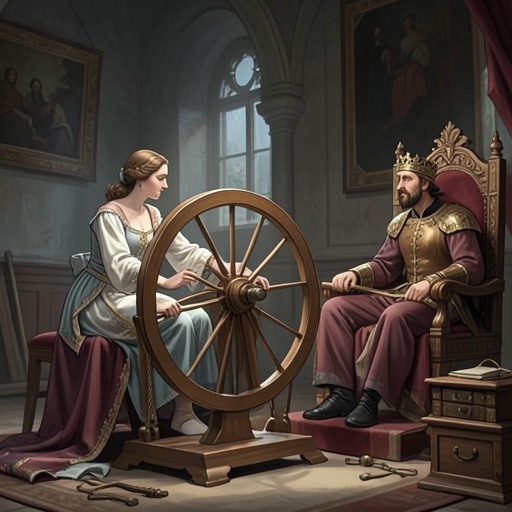
For the third test, the King takes the daughter to a yet larger heap and declares that she must spin it that night; if she succeeds, she will become his queen. Alone with the straw, she tells the little man she has nothing left to give. He proposes a different payment: she must give him the first little child she has when she is queen. She thinks this may never happen, but, seeing no other way to complete the task, agrees.
The wheel turns to the little man’s familiar song, and once again the straw becomes gold. By morning the King has everything he wants and must keep his word: he marries the miller’s daughter, who becomes queen. The result binds two very different promises to the same transformation. The King’s reward for successful labor is marriage and rank; the little man’s price is deferred, a future child rather than another object she can hand over at once.
The Claim Comes Due
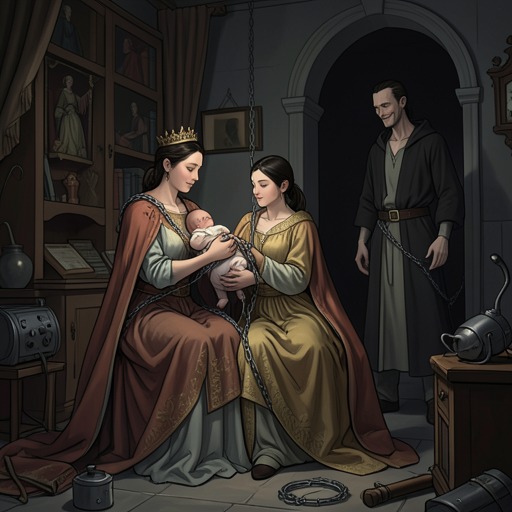
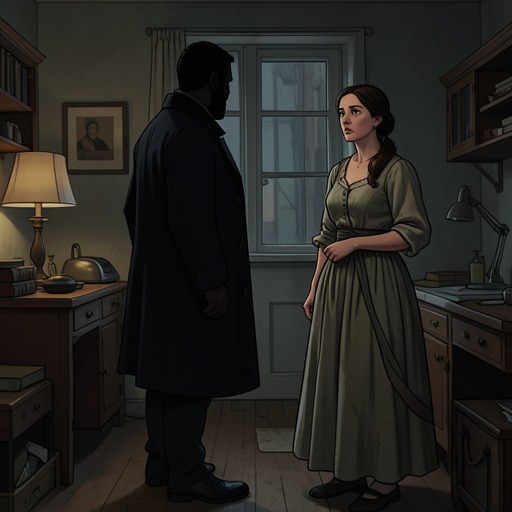
When the queen gives birth to her first child, she is glad and forgets both the little man and her promise. The agreement returns when he enters her room while she is sitting with the baby and reminds her of it. Her new position has not erased the obligation as he understands it, and the object of the bargain is now present: the child she had once thought might never exist.
Grieving over the threatened loss, the queen offers him all the wealth of the kingdom if he will let her go. He refuses at first. At last her tears soften him, and he grants her three days to discover his name, promising that she may keep the child if she succeeds. His concession changes the terms of the crisis: the child is no longer unconditionally beyond her reach, but the queen must find information she does not yet possess before the deadline expires.
From Possessions to a Child
The sequence moves from the necklace and ring to a promise involving the queen’s first child. The early payments surrender things she owns; the third bargain reaches into a future family bond. The stakes also shift from the King’s demand for gold to the little man’s claim, while the queen’s plea offers the wealth of the kingdom in place of the child. The tale presents each exchange through the characters’ immediate circumstances rather than through any formal legal procedure: she consents because she sees no other way to complete the task, and later seeks release when the promise threatens her baby.
The bargain also links the daughter’s rise in status to continuing vulnerability. The King’s promise makes her queen, but that change cannot prevent the little man from returning to claim what she agreed to give. The three-day condition opens a way out through knowledge of his name, shifting the contest from production and payment to recognition. The promise’s force, and the queen’s chance to escape it, thus organize the tale’s transition from magical work to the threat against her child.