Satanist Sect
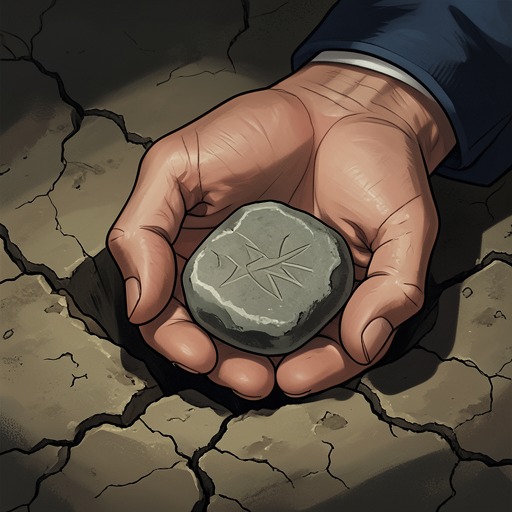
SatanThe Satanist Sect is depicted as a covert organization whose influence rests on secrecy, claims of spiritual authority, and connections to wealthy and politically powerful circles. Its most consequential link to the novel’s wider plot is the cameo: the Sect treats the stone as a source of dangerous power, while its members’ attempts to control it draw in Aurelio, Rodrigo Lerbier, and John Robbart. The organization’s reach is formidable in the story, but neither its secrecy nor its claims of sacred purpose prevent escape, exposure, or the eventual theft of the object it guards.
Identity and Beliefs
The Sect appears within a wider, concealed world of ritual groups and influential participants rather than as a publicly defined institution with a transparent structure. Rodrigo Lerbier’s account associates its adherents with ceremonies dedicated to Satan and Lucifer. According to Rodrigo, Aurelio later described being involved in rites that included animal cruelty, human sacrifice, and the abuse of children. These allegations are presented through accounts of Aurelio’s experiences and Rodrigo’s retelling; the organization’s secretive character means the novel offers no ordinary public record or membership list against which to check them.
The Sect’s reported doctrine turns conventional religious morality upside down. Aurelio overhears a masked participant explain an esoteric teaching in which Lucifer is identified with good and truth, while Adonaï is cast as their opposite. Rodrigo presents this reversal as a guarded secret that offers followers a promise of power, wealth, and freedom, with hardship and subordination assigned to those outside the circle. The appeal is therefore not only ritual: it also supplies a justification for rule by an initiated elite and recasts moral transgression as privileged knowledge.
Aurelio’s Recruitment and Escape
Aurelio first becomes entangled with the Sect through a newly founded Masonic lodge in Cuba. Its founders, whom he understands to have protection within the Castro government, press him to join and offer the possibility of leaving Cuba and travelling abroad. They reassure him that Yoruba religious service and Freemasonry can coexist. The lodge is closely connected, he is told, to the Gran Loggia cubana en exil in Miami.
The initiation demanded of Aurelio is to steal the cameo and deliver it to the lodge’s masters. They frame the assignment as a necessary act of protection: the stone, they claim, has been bewitched by malevolent forces and could harm society and the world unless the collective spiritual power of the Masons neutralizes or redirects it. By presenting the theft as a mission for humanity’s salvation, the lodge converts a criminal act into an apparent religious obligation. Aurelio accepts, and the resulting theft ties the Sect’s occult network to the novel’s central history of the cameo.
After crossing into the United States through this Masonic channel, Aurelio is gradually drawn into a group whose practices differ sharply from the Santería in which he had served. Rodrigo says that Aurelio moved into Palo Mayombe, a tradition in the novel associated with the invocation of the dead and forces of nature, and that his growing standing came to depend on rituals involving human blood. Satan becomes, in Aurelio’s account, more than a spiritual master: he assumes the place of a father figure absent from Aurelio’s life. Yet fear and inward doubt persist. The organization’s hold is shown as both ideological and psychological, sustained by its promise of power and by Aurelio’s sense that an invisible force prevents him from resisting.
A turning point comes when Aurelio hears the Sect’s teaching about Lucifer and realizes, Rodrigo says, that he has understood and accepted it for years. He invokes Jésus-Christ and resolves to escape. Using deception, he gets out of the Sect’s facilities near Miami and flees rather than return. He keeps away from the main roads, reaches Key West, and finds an abandoned boat. Recreational sailors later tow him toward the boundary between the United States and Cuba; he eventually reaches a deserted shore near Varadero, exhausted but alive. His return makes the Sect’s control powerful but not absolute, and his account becomes the means by which its practices and recruitment methods reach Rodrigo and, through him, Loïc and Laurence.
Hidden Network and the Cameo
The novel associates the Sect with more than isolated ceremonies. Rodrigo recounts Aurelio’s description of gatherings attended by entertainment figures and members of financial and political elites, many concealed by masks or hoods. He also describes an influential businessman who hosted private gatherings on a Caribbean island and whose guests moved in the same circles as the Sect. The point of these connections is not a complete organizational chart—the narrative supplies none—but the contrast between public respectability and concealed participation. The Sect’s world is portrayed as crossing borders and social classes while protecting the identities of those involved.
The cameo gives this hidden network a concrete object around which competing claims gather. The Cuban lodge presents its theft as an effort to contain the stone’s evil influence; Rodrigo, by contrast, regards it as a concentration of harmful forces that ought to be quarantined. His interpretation shows how different religious frameworks can assign sharply different meanings to the same object. The Sect’s account of the cameo’s danger may serve its purposes, but the narrative also depicts other characters as taking the stone’s alleged supernatural influence seriously.
Infiltration and Loss of Control
Years later, the Sect’s possession of the cameo becomes the target of a covert recovery operation. Jeff, who knows where the stone is displayed and has connections to the group, cannot simply take it himself. He fears the Sect’s concealed leader, portrayed as an influential figure within American Freemasonry and government, and must act indirectly. His own access to powerful networks is presented as uncertain and self-serving: although he believes his connections to the FBI and Central Intelligence Agency can help him, accusations and legal pressures make the operation increasingly risky.
Jeff recruits John Robbart, who is offered a way into the Sect under an assumed identity. Robbart and a contact called Brendan are to remain masked and use pseudonyms, preserving mutual anonymity. The plan stalls when Jeff discovers that the cameo has moved from Miami, and the search for its new location delays the operation for months and then years. Eventually, in April 2019, Robbart uses concealed electronic surveillance to check that a building is empty, disables its alarm, and enters. With Jeff and Maggie keeping watch nearby, he takes the genuine cameo and leaves the counterfeit supplied by Charles de Castelmont.
The theft reverses the Sect’s earlier use of secrecy and substitution: a hidden object is removed from a guarded space, and a fake is left behind to conceal the loss. Jeff later delivers the genuine stone to Charles de Castelmont at the Ritz. The operation does not expose the Sect’s membership or dismantle its network, but it demonstrates that the organization’s control over the cameo can be penetrated through disguise, patience, and access to competing power structures.
Narrative Role
The Satanist Sect links the novel’s religious and political strands to its recurring conflict over the cameo. It offers Aurelio a passage out of Cuba by turning theft into initiation, then draws him into a system that he later understands as spiritually destructive. His escape creates a testimony that unsettles Rodrigo’s confidence in his own religious life, while the Sect’s possession of the stone gives Jeff and Robbart a reason to infiltrate its territory.
The organization also makes secrecy a form of power: masks protect participants, hidden affiliations connect distant institutions, and competing explanations of the cameo help justify its control. Yet the Sect’s reach is repeatedly shown through individual encounters rather than a fully mapped hierarchy. Its authority depends on what its members claim, what they conceal, and what others fear they can do. Aurelio’s departure and Robbart’s substitution of the counterfeit leave the Sect’s larger status unresolved, while marking two clear limits to its power: a follower can refuse its account of salvation, and an object it guards can be taken from it.