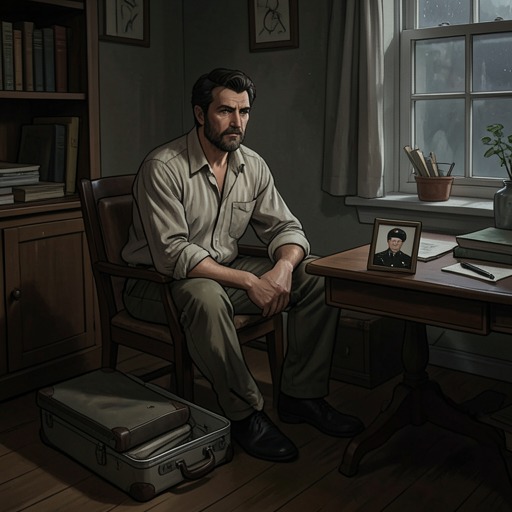
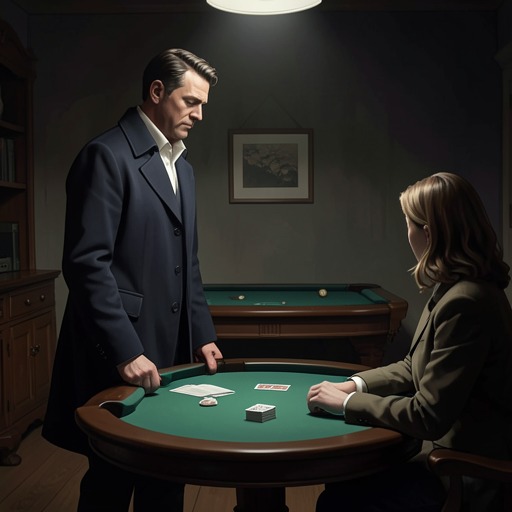
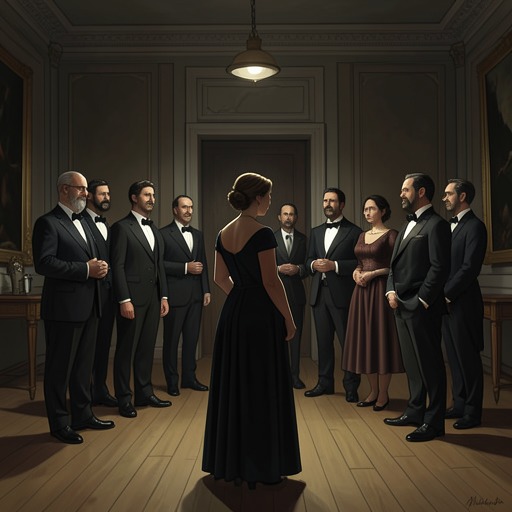
Event 1
Mato Rujo raid and massacre
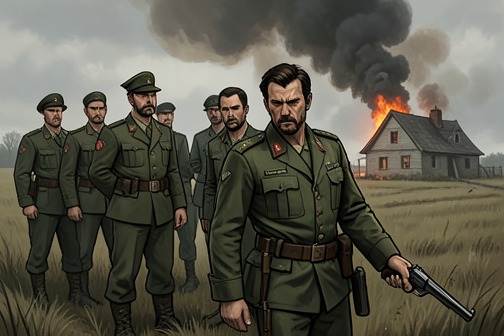
The [Mato Rujo raid and massacre](entity:event-recall-event-mato-rujo-raid-and-mass-46e715160041) is the violent destruction of [Manuel Roca](entity:character-recall-character-manuel-roca-d6d0e9aa018f)’s household by [Salinas](entity:character-recall-character-salinas-6693ccdfc90e), [el Gurre](entity:character-recall-character-el-gurre-6ebf5c72db83), and their men. Its decisive horror is not only the killing of Roca and his son: the raid also leaves [Nina](entity:character-recall-character-nina-507986764de1) alive beneath the farmhouse, unseen by the attackers and abandoned to the fire. The escape of the perpetrators, the concealment of what happened, and the later decision to eliminate Nina show how the violence of war persists when public life declares the conflict over.
## Background and Stakes
The assault unfolds as the men insist that the war has ended, while Salinas rejects that conclusion: for him and Roca, it has not. Roca warns that they will all be arrested and spend their lives in prison, but Salinas treats the threatened killing as a favor to others. He says Roca will disappear, that his friends have abandoned him, and that no one will ever know what happened. The threat of private execution and deliberate concealment is present before the shooting begins: the attackers are not simply pursuing a military objective but preparing to erase the crime and its victim.
## The Shootings and the Hidden Child
Salinas’s threat becomes immediate when he presses his pistol to Manuel Roca’s knee and fires. The wound drops Roca to the floor, where he curls up, screaming; Salinas stands over him, still shouting that he will kill him. El Gurre moves forward, while the boy watches silently from the doorway. Then a child appears across the room with a rifle aimed at the attackers. Nina, listening from below, recognizes the voice as her brother’s and imagines telling him later that it was beautiful: in that instant, its clear, unmistakably childish sound stands against the men’s violence.
Asked who Roca is to him, the boy answers that he is his father, then fires a single shot that goes nowhere. El Gurre responds instinctively with a machine-gun burst, lifting the boy from the ground and hurling him against the wall. Salinas falls beside Roca; the two men meet each other’s eyes as Roca cries out. Salinas backs away, shaking, and stares at the child’s broken body, the rifle flung into a corner. The boy’s small, orderly white teeth remain visible in his open mouth. The killing leaves Salinas trembling and unable to steady his hands or legs, but his horror does not stop the attack.
At Salinas’s order, El Gurre puts the machine-gun barrel into Roca’s throat. Roca continues to scream against the hot metal; El Gurre fires a short burst, the last of his war. Below the floor, Nina hears the silence that follows and folds herself tighter, hands between her legs and knees drawn toward her head. She believes her father will come for her and take her to dinner, and that the family will soon forget the night. The child’s hope is set against what the reader knows: her father has been killed, and the violence above her has not ended.
## Discovery, Abandonment, and the Burning Farmhouse
Earlier, Manuel Roca had covered the entrance to the concealed hatch with baskets and told Nina to stay hidden. The attackers’ search reaches the room above her: as El Gurre beats the walls with his machine gun, [Tito](entity:character-recall-character-tito-4b2dc05ff814) notices disturbed dust and discovers the carefully cut hatch beneath baskets of partly rotten fruit. He opens it to find Nina curled on her side, hands hidden between her thighs and eyes open. For a moment he points his pistol at her and calls for Salinas, but no one answers from beyond the curtain. The beating continues elsewhere in the house; Tito lowers the hatch, replaces the baskets, and leaves without telling the others that Nina is there.
Outside, the men walk into the dark in silence. Salinas leans on Tito, while El Gurre goes back toward the farmhouse and then runs to catch up. Tito sees the building behind them torn open by flames, black smoke rising into the night. He had meant to tell Salinas that a child remained inside, but the silence and his exhaustion have kept the words from him. Now he freezes at the sight of the fire and turns on El Gurre, demanding to know what he has done. Nina’s survival is therefore also an abandonment: the hatch has hidden her from the killers, but leaving her beneath a burning house converts concealment into a new danger.
## Aftermath, Impunity, and the Event’s Later Meaning
The farmhouse massacre outlives the night as a problem of accountability. Years later, a participant recounts that suspicion gathered around Nina because she might know something about Salinas’s death. The country had moved on from the war with startling speed, he says, while those who had not escaped it remained a world apart; within that unreconciled world, Nina came to be treated as a danger. The decision was made to eliminate her, and the [Count of Torrelavid](entity:character-recall-character-e1c2de208017) was charged with doing so. Thus the child who survived the attack became, in its aftermath, a target of a further conspiracy—not because the narrative establishes that she had acted against anyone, but because the former combatants feared what she might know.
The account also links the massacre to the absence of a credible public remedy. The Count had spent the war playing both sides, working for the opposing forces while remaining one of the group’s own. He confronted [Ricardo Uribe](entity:character-recall-character-ricardo-uribe-fa951f65c05b) with a choice between spending his life in prison for Salinas’s murder and disappearing while leaving Nina behind. Uribe, described as a coward, fled and left the child to the Count; he died about ten years later in a remote village beyond the border, still claiming in a written statement that he had done nothing and that God would pursue his enemies to hell. The episode makes the law present chiefly as a threat wielded in private, not as a process that secures a hearing or establishes responsibility: fear and exile replace trial, while the people who know the story continue to carry it.
Nina’s own later recollection exposes another break in the chain of knowledge. She says she knows everything about that night yet remembers almost none of it: trapped below the floor, unable to see, she heard events that seemed so absurd they felt like a dream, and the fire erased what little remained. Her fuller account came from what others later told her, but she cannot know whether they lied. She describes the sequence she has been given—entry into the house, her father being shot, Salinas shooting him, and El Gurre killing him with a short burst from the machine gun—and says that El Gurre liked to tell it. The massacre is therefore both a witnessed catastrophe and a story assembled after the fact, with Nina’s sensory absence and the perpetrators’ versions separating remembered knowledge from direct memory.
When Nina confronts Tito, the issue is no longer only the accuracy of that account. She points to his worn overcoat, the neat way he puts his glasses into their gray case, the clean windows of his kiosk, and his careful look both ways before crossing the street. Such ordinary habits make him appear normal, yet he had stood there at twenty while her brother was killed and had done nothing. Tito answers that they were soldiers. His brief explanation does not resolve her challenge; it sharpens the contradiction between everyday respectability and participation in wartime violence. The raid’s legacy is not contained in the burned farmhouse or in the deaths there. It survives in concealment, conflicting recollection, impunity, and Nina’s demand that an apparently ordinary survivor explain how an atrocity could happen.
Event 2
Nina Rescued from the Burned Farmhouse Ruins
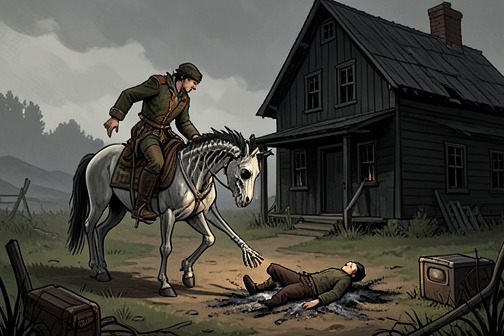
[Nina Rescued from the Burned Farmhouse Ruins](entity:event-recall-event-66b8fed289d3) is the moment [Nina](entity:character-recall-character-nina-507986764de1) is found alive three days after the [Mato Rujo raid and massacre](entity:event-recall-event-mato-rujo-raid-and-mass-46e715160041). An unnamed rider discovers her beside the blackened farmstead, offers his hand, and takes her away on his exhausted horse. The rescue turns a scene of destruction into the beginning of Nina’s survival, while the later account of her fate shows that being saved did not free her from danger: she was passed into a life of concealment shaped by the guilt and fear left by the war.
## Arrival at the Burned Farmstead
Three days after the fire, a ragged man rides to the farmstead on an old horse described as little more than skin and bone. The animal’s eyes are diseased, and flies circle the yellow fluid running down its muzzle. His arrival brings no restoration to the scene: the walls stand blackened and useless amid the remains of the blaze, while the great oak that had shaded the house has also burned. The ruin is made to seem like the remnant of a life that has been violently erased.
The rider circles the farm at a walking pace, then approaches the well without dismounting. He lowers the bucket and hears it strike the water. When he draws it up, the water is blackish. He stirs it with a tin spoon, but the darkness remains; he drinks, looks again, and spits into the bucket before leaving it on the well’s edge. The gesture is plain, but its meaning is not explained. The water cannot be made clean by stirring, and the rescue will likewise take place in circumstances that remain marked by the fire.
## Finding and Taking Nina
Only after reaching the well does the man look toward the farm and see Nina seated on the ground, leaning against what remains of a wall. She watches him with fixed eyes in a face darkened by smoke. Her red skirt stands out against the charred surroundings; scratches, or perhaps wounds, cover her. The account does not identify the rider or explain how he came to the farm. It stays close instead to the visible encounter: a child surviving among the ruins and a stranger studying her face and hair before acting.
Nina gives no sign that she has anything to say. The rider offers his hand; she rises, takes it, and allows him to lift her onto the horse behind him. The horse shifts its legs and tosses its head twice. The man makes an unusual sound with his mouth, and the animal calms. Nothing in the scene turns the rescue into a declaration or a promise. Its decisive action is physical and immediate: a hand extended, a child accepting it, and a body carried away from the burned house.
As the rider moves off at a walk beneath a fierce sun, Nina lets her head fall forward and rests her forehead against his dirty back. She falls asleep there. This final gesture marks the change the encounter has achieved: after the stillness of the ruins and the silent scrutiny between child and stranger, Nina can at last sleep while someone else carries her. The passage gives no account of where they are going, and does not name the man; its ending is departure, not an assurance of safety.
## The Rescue and Nina’s Later Fate
A later account places Nina’s survival within a continuing struggle over the consequences of [Salinas](entity:character-recall-character-salinas-6693ccdfc90e)’s death. The speaker says that people who had not emerged from the war feared that the child might know something and decided she should be eliminated. The [Count of Torrelavid](entity:character-recall-character-e1c2de208017) was assigned to do it. This retrospective explanation makes clear why rescue alone could not settle Nina’s fate: the danger around her persisted after the fire, now taking the form of a decision made by people determined to protect themselves.
[Ricardo Uribe](entity:character-recall-character-ricardo-uribe-fa951f65c05b), whom the speaker describes as having played both sides during the war, was offered a choice: face prison over Salinas’s murder or disappear and leave Nina behind. Afraid despite the speaker’s belief that a court could not have convicted him, Ricardo Uribe left Nina with the Count of Torrelavid and went away. The account says he died about ten years later in a remote town beyond the border, leaving a statement that he had done nothing and that God would pursue his enemies. His departure explains a further transfer in Nina’s life, but the evidence does not identify him as the rider who found her at the ruins.
The Count of Torrelavid, expected to make Nina disappear, instead kept her hidden in his house. Though others made clear that they wanted her killed, he did nothing to harm her. He eventually announced that they need not worry about the child and married her. Nina grew up, bore him three children, and was rarely seen outside; people called her Donna Sol, the name the Count had given her. They also said she had never spoken, not since Ricardo Uribe’s time. The rescue is therefore the first known passage from immediate peril into continued, enclosed survival: it preserves Nina’s life, while the later history shows how fear and secrecy continued to define it.
Event 3
Uribe Bets Nina in a Poker Game
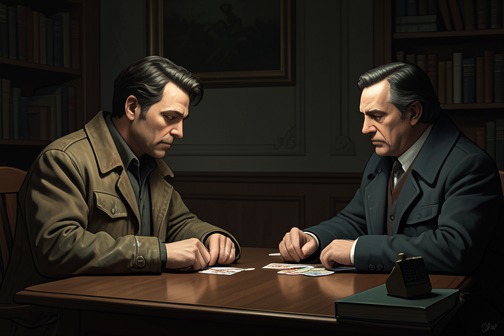
[Uribe Bets Nina in a Poker Game](entity:event-recall-event-bfe3570e3fdd) is the wager through which [Ricardo Uribe](entity:character-recall-character-ricardo-uribe-fa951f65c05b) surrendered his daughter to [Count of Torrelavid](entity:character-recall-character-e1c2de208017) in exchange for Belsito. A game that begins with money and a farm escalates into a claim over a child: [Nina](entity:character-recall-character-nina-507986764de1) is made the stake without any indication that she can consent. The exchange determines her immediate fate, and its consequences return later in the account of Uribe’s disappearance and death.
## The Game and Its Stakes
The wager takes place on a winter evening, months after the events involving [Manuel Roca](entity:character-recall-character-manuel-roca-d6d0e9aa018f). Uribe has left home for the Riviera, a tavern where he gambles every Friday. He plays late into the night and holds four jacks, facing a pot larger than the amount of money he sees in a year. The other players have put in some money and withdrawn, leaving the contest between him and the Count, who keeps raising. Uribe trusts his hand and continues; as the stakes mount, the game reaches the point at which, in Nina’s telling, the players lose their sense of reality.
The Count first puts his Belsito farm on the table. The room falls still. Nina later explains what makes that property worth so much: an avenue of orange trees climbs to the crest of a hill, where the house looks out over the ocean. Belsito is not an abstract sum of money but a beautiful estate, made vivid by its approach and its view. Against that offered prize, the Count names what Uribe has that could match it: his little girl.
## From Property to Person
Uribe initially says that he has nothing to wager that is worth Belsito, and lays down his cards. The Count answers by suggesting that Uribe could wager his pharmacy instead, then laughs; some of the people gathered around join him. Uribe smiles, one hand still resting on his cards, as if bidding them farewell. The exchange turns abruptly when the Count becomes serious, leans across the table, and proposes Belsito against Nina. He lays down his five cards, face down, directly in front of Uribe.
Uribe does not touch them. He stares at the cards, says something too quietly for anyone to report later, and then pushes his own hand across the table toward the Count. The account gives no explanation of his whispered words or of what, if anything, he understands about the Count’s hand. What it does establish is his action: he transfers the cards and accepts the wager, while Nina’s future is decided in her absence. The formal shape of a game of chance makes the exchange look like a contest between men, but the thing placed at risk is a child, not a possession capable of making its own bargain.
## Nina’s Fate
The Count takes Nina to himself that very night. In her account, he does not marry her immediately: he waits sixteen months, until she turns fourteen, and then marries her. She says that she gives him three children. These later facts reveal the wager’s consequence beyond the night at the tavern. It is not merely a threat made to unsettle Uribe or a symbolic stake in an extravagant game; the Count’s claim over Nina becomes her marriage and shapes the family she has afterward.
The interval and Nina’s age make the cost of the wager concrete. Uribe’s decision takes effect immediately in the Count’s possession of her, while the marriage follows after a period of waiting. Nina recounts the arrangement in the plain terms of what happened, not as a choice she made at the table. The game has allocated her between men before she is old enough to be married, and the account supplies no evidence that her wishes entered the bargain.
## Later Consequences
The story of the wager is set beside the history of [Salinas](entity:character-recall-character-salinas-6693ccdfc90e)’s death and Uribe’s later flight. Two years after the affair involving Roca, Salinas is found dead in bed; the stated explanation is a heart problem, but a rumor later alleges that his doctor, Astarte, poisoned him slowly over several months. An investigation produces no resolution. Astarte had made money during the war from Botran, a treatment for fevers and infections that he devised with the help of a pharmacist: Ricardo Uribe.
After the war, Uribe faces police trouble. His name appears on a list of suppliers to the hospital of the Hyena, and someone claims to have seen him working there, although others describe him as a good man. He answers questions, is released, and moves to an isolated town in the south, where he buys a pharmacy and lives with Nina, whom he presents as his daughter Dulce, saying that her mother died years earlier. The account identifies this as how he hides Nina, the surviving daughter of Manuel Roca. Later, the narrator says that the Count, who had worked as a double agent during the war, confronts Uribe with a choice: face life in prison for Salinas’s murder or disappear and leave the girl behind. Uribe leaves Nina with the Count, departs, and dies about ten years later in a remote village beyond the border. This later history does not establish that Uribe was guilty of Salinas’s death; it shows how the wager belongs to a larger web of concealment, fear, and coercion in which Nina is repeatedly transferred between men who control her fate.
Event 4
Nina Marries the Count of Torrelavid
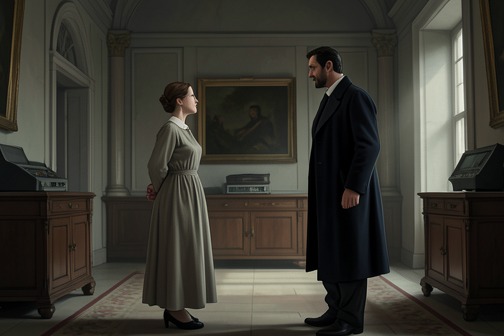
[Nina Marries the Count of Torrelavid](entity:event-recall-event-7780f4de4682) turns a wager over land into a bargain over a child’s life. [Ricardo Uribe](entity:character-recall-character-ricardo-uribe-fa951f65c05b) gives [Nina](entity:character-recall-character-nina-507986764de1) to the [Count of Torrelavid](entity:character-recall-character-e1c2de208017) after the Count offers Belsito in exchange; the marriage that follows both preserves Nina and binds her future to the man who had been assigned to make her disappear.
## Background and Stakes
The marriage follows the death of [Salinas](entity:character-recall-character-salinas-6693ccdfc90e), found dead in bed two years after the events surrounding [Manuel Roca](entity:character-recall-character-manuel-roca-d6d0e9aa018f). The official explanation was a heart condition, but a rumor accused his doctor, Astarte, of poisoning him gradually over several months. An investigation produced no proof. The account links Uribe to the affair indirectly: during the war he had helped Astarte develop Botran, a medicine for fevers and infections, and after the war Uribe faced police scrutiny over alleged work for the Iena’s hospital.
Uribe then left for a hidden town in the south, bought a pharmacy, and lived with a young daughter whom he called Dulce, claiming her mother had died years earlier. The community later identified this child as Nina, Manuel Roca’s surviving daughter. As suspicion grew that she knew something about Salinas’s death, a group of people who felt the war had never truly ended decided that she should be eliminated. They assigned the task to the Count, who had played both sides during the war.
## The Wager
The Count first saw Nina only once before the night of the wager: she was crossing a town square while he sat at a café. He asked who the girl was. Later, at the card table, Uribe said he had nothing worth risking against Belsito. The Count suggested that Uribe could wager his pharmacy, laughed, and then turned the stakes toward the child, offering Belsito for Uribe’s daughter.
The Count set five face-down cards on the table. Uribe stared at them without touching them, murmured something no one later could identify, and finally slid his own cards toward the Count. The scene makes the exchange’s imbalance stark: Belsito is a beautiful estate, with an avenue of orange trees climbing a hill and the ocean visible from the house, while the other stake is Nina herself. Her wishes are not part of the bargain. The narration gives no indication that the cards’ outcome changes the terms: Uribe hands her over, and the Count takes her that same night.
## From Intended Killing to Marriage
The Count’s assignment was to make Nina disappear, and the people who sent him expected him to kill her. Instead, he kept her in his house and continued to conceal her. They made clear that she was supposed to die, but he did nothing to her; eventually he told them they need not worry about the child. His actions reverse the purpose of the arrangement without undoing its coercion: Nina is spared, but Uribe has relinquished her and the Count controls where she lives.
The Count waited sixteen months before marrying her, doing so when she turned fourteen. Nina recounts that he brought her to him on the night Uribe surrendered her and that the marriage came later. She says she gave the Count three children. For months, people in the region talked about the marriage; afterward, attention faded. Nina remained largely unseen in public and was known as Donna Sol, the name the Count had given her.
## Consequences and Significance
The marriage is both a reprieve from the planned murder and a continuation of Nina’s treatment as an object of exchange. Uribe’s choice is described as a response to pressure: the Count offered him a choice between disappearing with the child or facing prison for Salinas’s murder. The storyteller considers Uribe a coward and says no court could have convicted him, but Uribe was afraid, left Nina with the Count, and went away. He died about ten years later in a remote village beyond the border, leaving a statement that he had done nothing and that God would pursue his enemies to hell.
Nina’s public silence deepens the unsettling aftermath. No one in the area had heard her speak since Uribe’s time; people speculated that it was an illness or simply her nature, and feared her without knowing why. The marriage thus closes one immediate danger without restoring Nina’s agency or ordinary place in the community. Its apparent domestic outcome—three children and a life within the Count’s household—rests on the earlier wager, the threat of murder, and her removal from the world that knew her as Uribe’s daughter.
Event 5
Salinas's Death
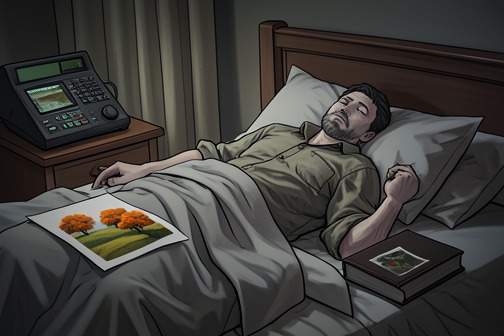
[Salinas](entity:character-recall-character-salinas-6693ccdfc90e)’s death, discovered in his bed two years after [Manuel Roca](entity:character-recall-character-manuel-roca-d6d0e9aa018f)’s story, became more than an unexplained loss: conflicting accounts of its cause reopened the buried suspicions of the war. Though officially attributed to a heart problem, the death was rumored to be a slow poisoning, and the belief that [Nina](entity:character-recall-character-nina-507986764de1) might know something about the past helped turn suspicion into a decision to eliminate her.
## Background and Discovery
One morning, Salinas was found dead in his bed. The explanation given was that something had happened to his heart. His death came two years after the events surrounding Manuel Roca, but its timing and the circumstances quickly made the official account only one version of the story.
A rumor spread that Salinas’s doctor, Astarte, had poisoned him little by little, every day for months. The alleged method was a drawn-out, agonizing one. Authorities investigated, but the inquiry produced no conclusive result: the suspicion persisted without being established as fact.
## A Wartime Connection
Astarte had made money during the war with Botran, a preparation used to treat fevers and infections. He had devised it with the help of a pharmacist, [Ricardo Uribe](entity:character-recall-character-ricardo-uribe-fa951f65c05b), who was then working in the capital. The account connects Uribe to the medicine and its wartime origins; it does not establish that either man was responsible for Salinas’s death.
After the war, Uribe encountered trouble with the police. His name appeared on a supplier list for the hospital of the Hyena, and someone later claimed to have seen him working there. Others described him as a good man. Uribe appeared for questioning and explained himself; once released, he left with his belongings for a secluded town in the south, bought a pharmacy, and resumed his trade.
## Suspicion and Its Consequences
The death did not sit well with the former wartime circle. When Uribe became implicated in the matter, the coincidence struck people as strange, and they gradually came to believe that Nina, the surviving daughter of Manuel Roca, knew something. Their reasoning joined the disputed death to an older fear: the child might have seen or heard something during the events at the farm.
A man later recalled that Nina’s rumored survival made it impossible for him and the others to put the past behind them. He had kept silent for years, first from fear and then because he thought the war had been buried and people wanted to look forward. News that Roca’s daughter was alive revived the question of what she remembered; Salinas’s death intensified it. The man wondered whether Nina could remember his face, and the group ultimately decided she was a danger and should be eliminated.
## The Death as a Turning Point
The accusation against Uribe became leverage. The [Count of Torrelavid](entity:character-recall-character-e1c2de208017), described as having played both sides during the war, went to him and presented a choice: risk spending his life in prison for Salinas’s murder, or disappear and leave Nina behind. The account does not resolve whether Uribe had any part in the death; it shows how the unresolved accusation could be used against him.
Uribe was frightened and left Nina with the count before going away. About a decade later, he died in a remote village beyond the border. In the account of Salinas’s death, uncertainty is itself consequential: the investigation settles nothing, yet the rumor and the suspicions it nourishes help propel Nina from concealment into danger.
Event 6
Nina's Escape from the Santander Sanatorium
[Nina's Escape from the Santander Sanatorium](entity:event-recall-event-d6a86cd7cd4f) is the turning point at which a court-ordered confinement gave way to an unresolved disappearance. A man recounting [Nina](entity:character-recall-character-nina-507986764de1)'s history says she escaped a couple of years after being taken from Belsito and placed in a sanatorium in Santander. No destination or confirmed account of what happened to her afterward is given; the search eventually stopped, and many people assumed she had died.
## Confinement and the custody dispute
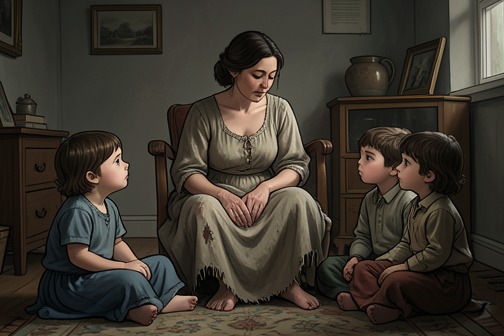
Nina's confinement followed the death of the [Count of Torrelavid](entity:character-recall-character-e1c2de208017) in a car accident, about a decade after he had taken her in. She was left with three children at Belsito. The Count's relatives objected to her being alone with the boys, called her mad, and brought the matter to court. The judge sided with them, and Nina was removed from Belsito and entrusted to doctors in Santander.
The account adds that Nina's sons apparently testified against her. That detail sharpens the personal cost of the ruling: her removal was not only a decision by the Count's relatives and a judge, but also came with testimony attributed to her own children. The narrator presents this as part of the history leading to her confinement, without explaining what the boys said or how their testimony affected the judgment.
## Escape and disappearance
A couple of years after Nina was placed in the sanatorium, she escaped and vanished. The account offers no description of how she got out, who helped her, or where she went. Its emphasis is on the abrupt transition from a known institution, where others had placed her, to a life beyond the reach of the people searching for her.
Rumors supplied competing explanations but no resolution. Some said Nina's friends had arranged her flight and were keeping her hidden. Others who had known her rejected that story, insisting that she had no friends. The search continued for a time, then was abandoned; many concluded she was dead. Neither the alleged help nor the presumed death is confirmed, leaving the escape itself as the last definite turn in the account.
## Earlier history and the logic of disappearance
The story of Nina's removal from Santander sits within a longer history of people deciding that she was dangerous. After [Salinas](entity:character-recall-character-salinas-6693ccdfc90e)'s death, a group came to believe that the child knew something and decided she should be eliminated; they assigned the task to the Count of Torrelavid. The Count, who had played both sides during the war, confronted [Ricardo Uribe](entity:character-recall-character-ricardo-uribe-fa951f65c05b) with a choice between prison for Salinas's murder and disappearing while leaving the child behind. Uribe left Nina with the Count and fled. His later death in a remote village beyond the border did not settle what had happened to her.
In that history, disappearance is repeatedly treated as a way to evade public reckoning: Uribe was pressed to vanish, and Nina was first targeted for elimination and later lost to rumor after her escape. The account does not establish that these earlier events caused her flight from the sanatorium. It does, however, place the escape in a world where hiding, abandonment, and the absence of reliable testimony have already shaped her life.
## Retelling and uncertainty
Nina's escape reaches the reader through a man's retrospective account in conversation, not through a narrated escape scene. He distinguishes the bare sequence—confinement, flight, disappearance—from what people merely said about it. The friends who supposedly helped her remain a rumor, while the claim that she had no friends is attributed to people who knew her. His account preserves the uncertainty rather than resolving it: after the search ended, others treated her as dead, but no death is established.
Event 7
el Gurre's Death
[el Gurre](entity:character-recall-character-el-gurre-6ebf5c72db83)’s death is recounted not as a solved killing but as the beginning of an uneasy wait. Four years after the speaker had heard that [Nina](entity:character-recall-character-nina-507986764de1) escaped from a clinic and might be dead, el Gurre was found shot in the back outside his stable. A woman’s name in his pocket—written in el Gurre’s own hand—made the death seem connected to her, while the speaker’s memory of closing a trapdoor tied him personally to what he expected would follow.
## Discovery at the Stable
The speaker places the death four years after he was told about Nina, the clinic, and her escape. At the time he was still working in a factory in the north. Others had told him that she was probably at the bottom of a river or down some slope, where a vagrant might eventually find her. He remembers accepting the news without forming a conclusion, though he wondered what people meant when they said she had gone mad. That earlier uncertainty supplies the emotional setting for his account of el Gurre: the possibility that Nina had vanished permanently had once seemed plausible, but it did not settle what had happened or what might yet happen.
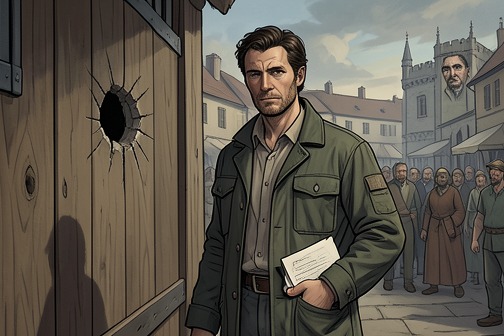
The report of el Gurre’s death comes after a long pause in the present conversation. The speaker says that el Gurre died; after another silence, he describes how he was found, face down in manure in front of his stable, with a bullet in his back. The location and position make the discovery starkly physical, but the account gives no shooter, motive, or circumstances of the shooting. It does not establish whether the name subsequently found on the body explains the death. The story preserves that gap rather than converting suspicion into a solution.
## The Name in the Pocket
A note in el Gurre’s pocket bears a woman’s name. The speaker looks toward the woman listening to him and identifies the name as hers, then traces a slight mark in the air as he says it: Donna Sol. He lets his hand fall back onto the table. He stresses that the handwriting was el Gurre’s own, making the note more than a name reported by someone else: el Gurre himself had written it.
That small piece of paper becomes the account’s hinge. The bullet establishes that el Gurre is dead; the handwritten name links his death, in the speaker’s telling, to the woman before him. But the evidence remains limited to the note and the speaker’s interpretation of it. He does not explain why el Gurre wrote the name, when he wrote it, or what relation it bears to the shooting. The uncertainty is part of the scene’s force: the name offers a connection without supplying a complete account of what occurred.
## A Death Told Through Silence
The event reaches the reader as a recollection spoken across a table, not as a witnessed scene at the stable. Before naming the death, the speaker pauses for a long time; after describing the discovery, he falls silent again. He appears suddenly to find the telling difficult. His look toward the woman, the gesture that accompanies Donna Sol, and the hand returning to the table give the disclosure a present-tense audience and consequence. The memory is not detached background: he is telling it to the person he believes the name concerns.
Behind them, three musicians begin a kind of waltz, playing softly and bending the tempo. The subdued music does not clarify the circumstances of the death; instead, it accompanies a story whose crucial links remain unresolved. A name is spoken, a hand makes a small gesture, and then the music continues while the account turns from the dead man to the speaker’s own future. The scene’s movement is therefore less from mystery to answer than from report to expectation.
## The Wait That Follows
The speaker says that from the day of el Gurre’s death he began waiting for the woman. He believes nothing can stop her and that she will eventually arrive. His expectation is specific: he does not imagine that she will shoot him in the back or send a stranger who does not know him. He expects her to come herself, look him in the face, and speak to him first. These are his beliefs, not a confirmed account of what she will do; the narrative ends this recollection with anticipation rather than showing her arrival.
He explains why he thinks he cannot escape that encounter. That evening, he had opened the trapdoor and then closed it. He expects the woman to remember his action. The detail turns his wait into more than generalized fear of revenge: he understands himself as someone implicated in a particular act and imagines that she will confront him directly about it. In his account, el Gurre’s death does not end the danger associated with Nina’s disappearance. It marks the point when the speaker begins to regard the past as an approaching face-to-face reckoning.
Event 8
Nina Reunites with Pedro Cantos
[Nina Reunites with Pedro Cantos](entity:event-recall-event-b1d8c8dbe867) brings a survivor face to face with one of the men bound to the killing that ended her childhood. In a quiet cafe, Pedro identifies himself as the only surviving member of the three who killed her father; [Nina](entity:character-recall-character-nina-507986764de1) answers with the stories she has carried, the violence they describe, and her refusal to let their past remain abstract. The encounter does not end in a trial or a clearly stated act of revenge. Instead, it closes on Nina’s deliberate return to Pedro’s side, where recognition and unresolved trauma meet in a gesture of intimate stillness.
## The Meeting in the Cafe
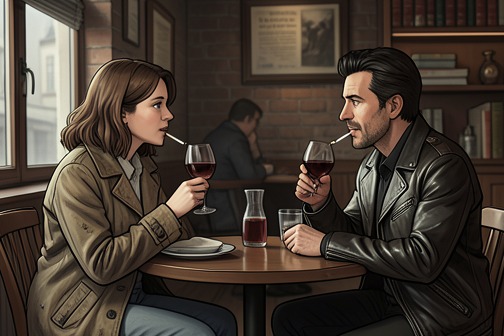
Pedro guides Nina to a cafe where they can sit undisturbed. They take a corner table, order two glasses of wine, and smoke after Nina asks the waiter for cigarettes. Their conversation begins with ordinary subjects, including lottery winners who, Pedro observes, tend to tell a child their secret first. Nina speaks about stories with morals and stories without them. The casual talk establishes a temporary social ease, but Pedro then says he knows who she is and why she has come.
Nina waits without answering. Pedro tells her that, years earlier, she saw three men kill her father in cold blood, and that he is the only one of the three still alive. He understands that she has come to find him, and acknowledges that she has now done so. The pause that follows is not a reconciliation: he has made the facts between them explicit, but neither has yet said what the meeting will require.
## Names and the Wartime Past
Nina explains that her name as a child was Nina, but that everything ended on the day of the violence; no one called her by that name afterward. She adds that she liked it. The simple statement gives the reunion a personal measure beyond the question of punishment: the person Pedro faces is also the child whose name and former life were cut off by what happened.
As their account turns toward the past, Nina challenges the stories through which wartime events have reached her. She recounts Uribe’s poker game with the [Count of Torrelavid](entity:character-recall-character-e1c2de208017): Uribe slowly turned over the count’s cards, then left politely, while nobody in the room dared to laugh or comment. Nina asks why that version should be considered less false than the story Pedro has told her. Her question unsettles any easy distinction between testimony and rumor; the past reaches the present through accounts whose truth she cannot simply take for granted.
Nina says that her own memory of that night is fragmentary. As a child hidden below, she could not see and heard events that seemed so absurd they felt like a dream; the fire erased what little remained. What she knows has also come from what others later told her. She recounts the killing as she has learned it: Pedro shot her father, [Salinas](entity:character-recall-character-salinas-6693ccdfc90e) shot him as well, and [el Gurre](entity:character-recall-character-el-gurre-6ebf5c72db83) pushed a machine-gun barrel into his throat and fired a short burst. Nina says that el Gurre liked to tell the story. She condemns the men’s violence, then presses Pedro to explain how an apparently ordinary person could witness the death of her brother, a child with a rifle, and do nothing. Pedro’s answer is that they were soldiers. It explains the identity under which he places himself, but does not undo the accusation or answer its moral force.
## Pedro’s Confession and Expectation
Pedro’s account connects the killing and Nina’s survival to the climate of postwar impunity. He recalls that people came to believe Nina knew something and therefore regarded her as a danger. In a country moving on from the war, he says, there remained people for whom the war had not ended; they decided that the child should be eliminated and assigned the task to the Count of Torrelavid. The count, a wartime double agent who worked for the opposing side while remaining one of their own, confronted Uribe with a choice: face imprisonment for Salinas’s murder or disappear and leave Nina to him. Uribe, though Pedro says he might have evaded conviction, was afraid. He abandoned the girl and left; roughly a decade later he died in a remote village beyond the border, having left a written insistence that he had done nothing and that God would pursue his enemies.
Pedro’s own role is smaller in action but decisive in Nina’s memory: he says he opened the trapdoor that evening and closed it again. After seeing the name Donna Sol in writing that he recognized as the count’s hand, he began waiting for Nina. He believed she would come herself, look him in the face, and speak before making her final move. He did not expect a hired stranger or a shot from behind. His long anticipation turns the meeting into the consequence of an act he has never forgotten, though it does not establish what Nina intends to do to him.
## The Ending and Its Ambiguity
The account gives Nina a life beyond the childhood rupture: she married well and now has a cafe in the city center. These outward facts do not settle what the past means to her. At the close of their meeting, Pedro takes her hand; she returns the pressure. He turns onto his side and gives her space, imagining that she needs solitude in which to decide her last move. He has been crying, and worries that he will be found naked and watched, but does not tell her. As sleep approaches, he finally gives her his name: Pedro Cantos. Nina repeats it slowly.
Nina remembers the cafe waiter, the taxi with cellophane-covered seats, and Pedro crying with his hands buried in his coat pockets. She also recalls him touching her without daring to breathe. Then she moves toward him and curls behind him, drawing up her knees and arranging her legs and joined hands in the posture of the child she once was. She sees herself as an old child and smiles. The scene makes the return bodily rather than explanatory: the surviving child comes back to the person she associates with the night she was broken and saved. The narrative links that return to an enduring pull toward the place of trauma and toward the person who once rescued her from it, while leaving the force of that attachment unresolved. Nina rests her forehead against Pedro’s back, closes her eyes, and falls asleep. The ending offers neither public justice nor a clear verdict on forgiveness; it ends in closeness, memory, and a temporary absence of bloodshed.