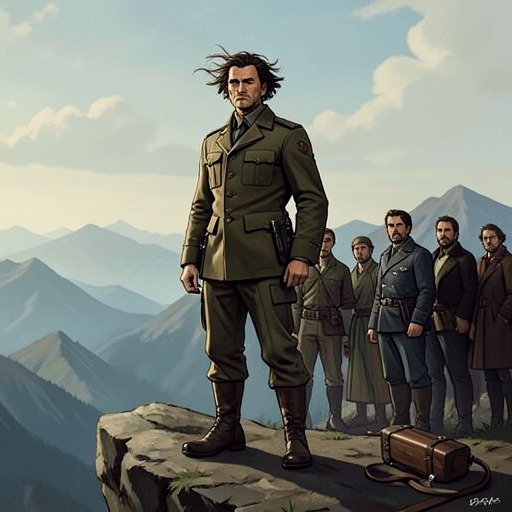
Khader’s first killing sparks a blood feud
ShantaramKhader’s first killing sparks a blood feud: at fifteen, Khader Khan intervenes to stop a man beating his child, then faces retaliation that draws both families into years of violence and ends with Khader Khan leaving home. Recounted to Lin, the episode traces how an intervention he describes as arising from no real cause becomes the beginning of a conflict that reshapes his family and future.
The First Killing and Its Immediate Reversal
Khader Khan says he had returned to Kandahar after being taught by Mackenzie Esquire in Quetta. The day after Mackenzie Esquire left, Khader Khan was in the bazaar outside his uncle’s warehouse when he saw a man beating his own child. He recognized that intervening might bring trouble, but could not bear to watch the beating continue. His sense of authority as the son of a village leader and nephew of a prosperous merchant led him to command the man to stop. An argument followed, then a fight; Khader Khan killed the man in self-defence, using the dagger the man had tried to use against him. He was fifteen, and the killing was his first.
The killing took place in the bazaar’s main street, before many witnesses. Khader Khan’s influential uncle spoke to the authorities and arranged for him to return to Kandahar. But the dead man’s family rejected the uncle’s offer of blood money and sent two men after Khader Khan. Warned by his uncle, Khader Khan struck first and killed both men with his father’s old long rifle. The attempt to resolve the first death through his uncle’s influence had therefore failed to settle the dispute; retaliation turned the initial encounter into a conflict between families.
The Feud and Khader Khan’s Departure
The killings became a blood feud that neither family could contain. Khader Khan described its pattern as a succession of retaliations: first one death on his side and two on the other, then two on his side and one on the other. His father repeatedly tried to find a way to end the conflict, but each new loss drew more men into it. Khader Khan understood himself as its cause and tried to leave home; his father would not allow him to go, and Khader Khan felt unable to defy him. The feud continued for years, costing him his two brothers and both of his father’s brothers.
The turning point came after Khader Khan’s father was badly wounded in an attack and could no longer stop him. Khader Khan told his family to spread the rumor that he had been killed, then left the family home. The feud ended some time later, and peace returned between the two families, but his departure did not restore his place among them. He had sworn an oath to his mother never to return, so he remained dead to his family even after the violence had subsided.
In recounting the episode to Lin, Khader Khan presents the first killing not as an isolated act but as the beginning of a conflict whose consequences outlasted its immediate danger. The intervention that began in a bazaar ended in years of reciprocal loss; leaving home helped bring the feud to a close, yet required Khader Khan to sever his own family ties. His account connects personal responsibility, family obligation, and the cost of stopping a cycle of retaliation.
The Recollection and Its Setting
Khader Khan’s account reaches Lin through pauses as much as through explanation. After learning that Khader Khan had killed a man at fifteen, Lin dwells on the significance of this being his first killing. Khader Khan then falls silent before describing how the violence spread from the bazaar encounter into a feud that consumed members of both families. The pauses keep the account from sounding like a detached explanation: its causes are recounted by someone who lived through the losses and still bears their consequences.
The setting places that remembered conflict beside the armed world of the present. As Khader Khan pauses, Lin hears conversation and laughter from nearby rooms and the distant sound of music; from Khaled Ansari’s room comes the unmistakable sound of an AK-74 rifle being cocked and dry-fired after cleaning. The juxtaposition does not equate the earlier feud with the present conflict, but it makes violence an audible part of the scene in which Khader Khan speaks. Later, Lin notices how unusual this openness is for him: Khader Khan has spoken at length about the Koran, the Prophet Mohammed, and the rational basis of his moral philosophy, but this personal history is different. Lin avoids interrupting, aware that a careless question might end the disclosure. The telling thus reveals not only the origin of the feud but also the rarity, for Khader Khan, of exposing the private history behind his public authority.
Violence and Moral Authority
The episode complicates the authority Khader Khan carries into later conversations with Lin. His first intervention begins in refusal to accept a child’s beating, but he acts through the command of a young man conscious of his family’s standing; the resulting fight makes that authority inseparable from violence. Later, his uncle’s influence can secure his return to Kandahar but cannot secure peace, and Khader Khan’s own preemptive response to the threat against him deepens the cycle. The recollection therefore sets moral intention against consequence: an act meant to stop cruelty becomes the first link in a feud, while ending that feud requires Khader Khan to surrender his place in his family. His account gives the principles he discusses with Lin a personal history marked not by abstract certainty, but by the lasting costs of action.