Brighton Evening Courier
ShrineThe Brighton Evening Courier is the local newspaper through which Gerry Fenn’s account of Alice Pagett’s recovery reaches a wider public. More than a background workplace, the paper supplies the routines and pressures that shape his reporting: deadlines, modest assignments, an impatient news editor, and the reporter’s hope of escaping local journalism. Its coverage makes the events at St. Joseph’s Church legible as news, but the differing reactions to its articles also expose how a report can frame an occurrence without settling what it means.
The local newsroom and its routines
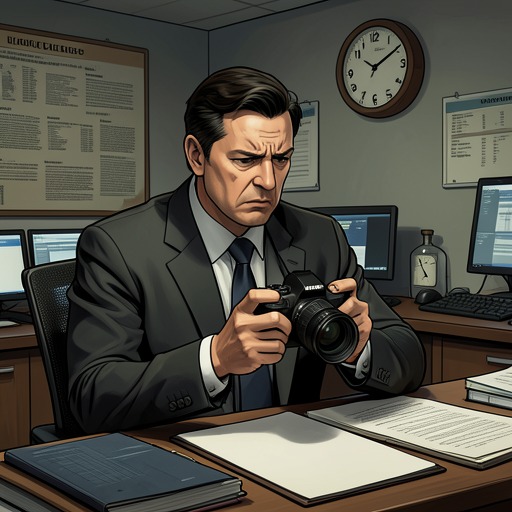
The Brighton Evening Courier is a seaside-town paper whose ambitions exceed its resources. Fenn has worked there for more than five years and imagines his next step as a major national newspaper, but his immediate work is routine local reporting. After a public meeting about connecting remote houses to the main drainage system produces little news, he exaggerates its drama when speaking to the night news editor. The editor challenges the thin yield of Fenn’s shift and sends him to check several ordinary stories: people impersonating collectors, protests at a cinema, and residents waiting for electricity at a trailer camp. Fenn completes the rounds, then looks for a pub where he can drink after closing time. The gap between his imagined career-making scoop and such assignments establishes the Courier as both his livelihood and a source of frustration.
The newsroom is presented as a crowded working environment, with thirteen sub-editors and poorly maintained typewriters amid the noise of the day’s production. Fenn types quickly, makes carbon copies, and carries his finished story to the news editor rather than waiting for it to be noticed. The daily rhythm culminates in the evening edition being put to bed at 3:45 p.m. This production detail places his prose within a collective, deadline-driven process: a story must compete for attention and become usable copy before the edition closes. The paper’s editorial machinery is not abstract. Its news editor assigns work, judges whether a story merits attention, and stands between a reporter’s ambitions and publication.
Fenn’s reporting and the Banfield story
Fenn’s first account of Alice’s nighttime encounter shows how the Courier’s story-making process can heighten an event. Before presenting the piece, he privately relishes its dramatic construction: a pale apparition running before his van, a chase through a graveyard, and a small girl in a white nightgown beside a tree. He calls attention to the atmosphere he has built and the revelation that the girl had been deaf and mute. His enthusiasm exposes the mixture of observation and narrative shaping in his report. The Courier’s article is presented as an eyewitness account, but Fenn’s own account of composing it makes clear that the experience has also been arranged for effect.
The paper gives the story a forceful headline announcing a miraculous cure in Banfield and a subheading asking whether Alice Pagett had seen a vision of Our Lady. Those formulations place the recovery and the possible apparition together, inviting readers to consider a religious explanation while stopping short of establishing one. The article compares Alice’s experience with reported cures at Lourdes. Rodney Tucker studies it closely; the comparison gives him an idea that pierces his earlier gloom and leads him to reach for the telephone. Thus the Courier’s reporting does not merely describe a local event: its choice of analogy helps another character recognize the possibility of a pilgrimage attraction.
The article also reaches Father Hagan, who reads it after returning from the Sussex Hospital, where Alice is undergoing tests. He accepts that she can now hear and speak, but finds the report’s detached, sensational presentation inadequate to the emotional and spiritual questions raised by her recovery. The medical account, as he understands it, is that Alice’s earlier condition had no identified physical cause and was considered psychosomatic; the change in her hearing and speech is therefore not, by itself, proof of divine intervention. The Courier’s story places the cure in public view, while Hagan’s response distinguishes the observable change from the unresolved question of its cause.
Public reach and competing interpretations
As the Banfield events attract broader attention, the local paper’s role sits within a larger contest over explanation. Bishop Caines says that the Church cannot yet proclaim the cures miraculous and describes a medical investigation that will examine individual cases before any judgment. Monsignor Delgard explains that the medical inquiry is concerned with whether a cure is inexplicable under current science, whereas the religious judgment belongs to the bishop and his advisers. These distinctions show why news language matters: a headline or report may make the word miracle familiar to readers, but it cannot substitute for the Church’s stated procedures or decide what the evidence means.
The newspaper’s influence also becomes visible through hostile readings of its coverage. A later article by a local Sussex reporter challenges the account of events at Banfield, rejecting the claim that Father Hagan was killed by a bomb planted by an anti-religious group and describing the events as a witch’s curse. A bishop, in turn, denounces the reporter as a sensation-monger seeking financial advantage. The dispute does not resolve the competing claims; it makes the press itself part of the conflict, with one report accused of discrediting the child and another criticized for sensationalism. The Courier’s local perspective and its reporters’ choices therefore carry consequences beyond the newsroom, influencing how readers, church authorities, and interested observers approach the same events.
Narrative significance
The Brighton Evening Courier connects small-town routine to a story that quickly escapes local scale. Its ordinary assignments establish the professional setting from which Fenn approaches the unusual, while his desire for a major scoop helps explain the vivid emphasis of his first account. The paper’s headlines and comparisons transform reported experiences into public questions, yet the reactions of Tucker, Father Hagan, church officials, and later critics show that circulation is not the same as consensus. The Courier makes the Banfield events visible; the uncertainty over whether they are medical anomalies, miracles, or something else remains unresolved.