Banfield Parish Council
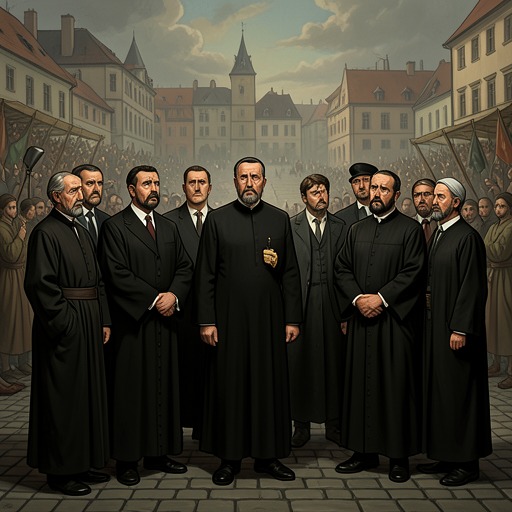
ShrineBanfield Parish Council is the local political institution that George Southworth seeks to involve in converting Banfield’s reported cures into a lasting economic and tourism opportunity. The council matters as a potential source of public legitimacy, coordination, and financial support, but the plans described remain proposals: Southworth speaks of winning the council’s interest and putting forward a special fund, while no approval or completed council action is shown.
Local Standing and Political Access
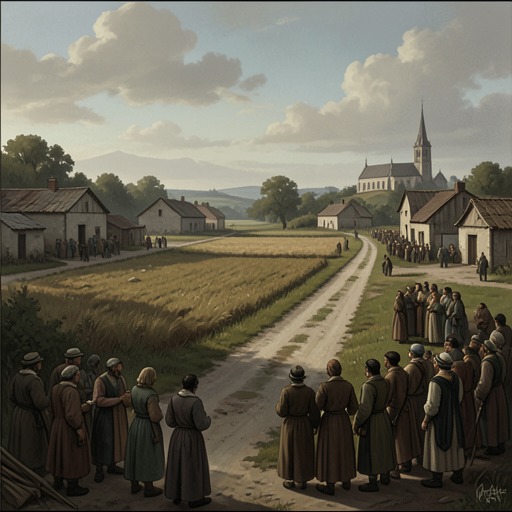
Banfield Parish Council belongs to the village’s established local order, where belonging and influence are closely tied to family history. Rodney Tucker, who had moved to Banfield from Croydon eleven years earlier, knows the important local men through shared meals and golf, yet still considers himself an outsider. In his view, acceptance requires not only being born and raised in the area but having a father and grandfather born there as well. That exclusion has a practical consequence for him: he would like to be elected to the council, which he sees as a route toward shaping decisions about local land.
Tucker’s political ambition is linked directly to his business interests. As the owner of Banfield’s only supermarket, he sees undeveloped land as an opportunity for building and investment, and imagines that council members who supported particular development plots could be valuable to people in the building trade. His private calculation makes the council more than a symbol of village identity: it is a possible point of access to decisions with economic consequences. The account does not establish that Tucker holds a council seat; rather, it presents his wish to gain one and his interest in the council’s influence.
Southworth’s Development Proposal
George Southworth approaches Gerry Fenn as chairman of Banfield Parish Council after reading Fenn’s report about events at St. Joseph’s Church. Southworth says that he had initially given the story little attention, assuming it was exaggerated or misinformed. After Rodney Tucker called him and he read Fenn’s account, however, he reconsidered its possible scale. His change of view sets the council’s prospective involvement within a wider attempt to make the reported event matter to Banfield’s future.
Southworth describes the village as having little to offer visitors in itself. His hotel is busy in summer, but guests mainly use it as a base for trips around the Sussex countryside or to Brighton and other south-coast resorts; he sees little benefit reaching Banfield. He says that he would invest more if the return seemed reasonable and believes Tucker shares that caution. The council’s possible role therefore arises at the junction of a claimed religious event and a local desire for durable commercial growth, rather than from a demonstrated council policy already in operation.
The development ambition is not limited to attracting visitors. Southworth speaks of available land and imagines the village expanding outward into a town. Fenn recognizes that such expansion could also enrich Southworth and his associates. The council’s involvement is thus presented with competing meanings: it might coordinate a response to an event regarded as religiously significant, but it could also help advance the private interests of local businessmen. The narrative does not resolve that tension by showing a vote or an adopted development plan.
The Miracle and the Proposed Council Role
Southworth and Tucker want Fenn to continue reporting on what Southworth expects will become known as the Banfield Miracle. Southworth reasons that the story might sustain interest in the village and describes a possible religious renewal alongside its economic promise. He presents the event as potentially divine and suggests that Banfield might be given a chance to recover both its prospects and its inhabitants’ beliefs. His language makes the council scheme appear, at least in his account, compatible with religious purpose, while Fenn remains aware that the businessmen could profit from revitalization.
The two men differ over how to secure attention. Tucker urges a more immediate approach to major newspapers, while Southworth argues for sustained coverage through the local paper. He believes sensational national publicity might bring only short-lived interest, whereas repeated local reporting could maintain awareness and support trade over time. Fenn is the intended intermediary: the businessmen want him to keep the story in circulation, and Southworth explicitly connects that publicity to the emerging name of the miracle. The council has not yet been shown directing this campaign; Southworth is trying to enlist it as part of a scheme whose public profile depends on journalism.
Southworth also proposes a concrete financial mechanism. He says that, as a council member, he will propose a special fund to cover expenses associated with developing the project. The suggested uses include initial promotional material, personal expenses incurred by council members, and miscellaneous costs. Fenn questions whether he himself would be included among those miscellaneous expenses, exposing the practical and potentially self-interested character of the proposal. The evidence establishes the proposal and its stated purposes, not the fund’s creation, its amount, or a council decision to pay any expense.
Limits of the Council’s Role
Southworth’s immediate objective is to make Banfield Parish Council interested in the scheme; if it is not, he and his associates can only hope that another event will occur. That conditional formulation is important. The council is a prospective institutional partner, not an established organizer of the reported cures or an authority that has already declared them miraculous. The supernatural claim, the press campaign, and the local development plan remain distinct matters, even as Southworth tries to join them.
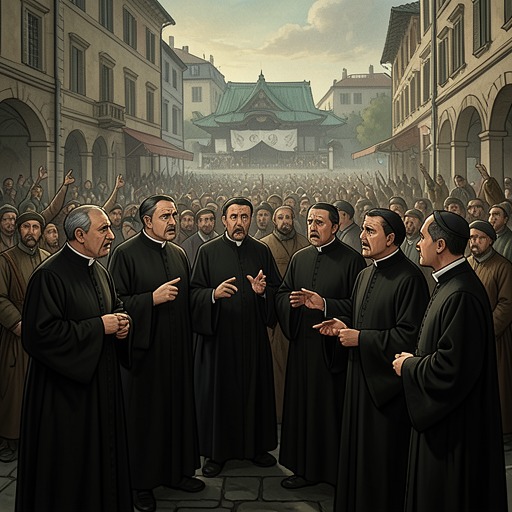
The distinction becomes especially clear when the Church’s response develops. Bishop Caines says publicly that the Church has reached agreement to purchase the field beside St. Joseph’s Church and that documents are expected to be signed shortly. He also describes a medical bureau and an International Medical Committee that will examine the alleged cures. These are ecclesiastical property and investigative actions, not actions attributed to Banfield Parish Council. The church’s acquisition of the land therefore should not be mistaken for the council’s approval of Southworth’s broader development ambitions.
The council’s narrative significance lies in this incomplete passage from event to institution. Southworth seeks to turn a reported religious phenomenon into a project requiring sustained publicity, local cooperation, and proposed public support; Tucker sees development and investment opportunities in the same prospect. Yet the council’s consent remains uncertain, and its eventual actions are not supplied here. It stands at the point where private hopes for Banfield’s growth seek public form, without the text establishing that those hopes have become official policy.