International Medical Committee
ShrineThe International Medical Committee is the independent medical body that reviews alleged cures at Lourdes and is assigned a central role in examining the recoveries associated with St. Joseph’s Church in Banfield. Its remit is deliberately narrower than deciding whether a miracle has occurred: it assesses medical evidence and recommends whether a cure is inexplicable under current science, while the Church’s spiritual authorities retain the decision about divine intervention. In the novel, this division of responsibility makes the committee both a safeguard against premature claims and a boundary between clinical findings and religious interpretation.
Role and Institutional Boundaries
The committee enters the Banfield story as the next stage in a two-part process. A specially formed medical bureau is to examine the six alleged cures, and its findings will be passed to the International Medical Committee. The committee can recommend that a recovery be recognized as miraculous, but it cannot make that declaration itself. Bishop Caines, as the bishop of the diocese where the cures occurred, reserves the final decision, informed by his advisers and an assessment of the cures’ spiritual aspects.
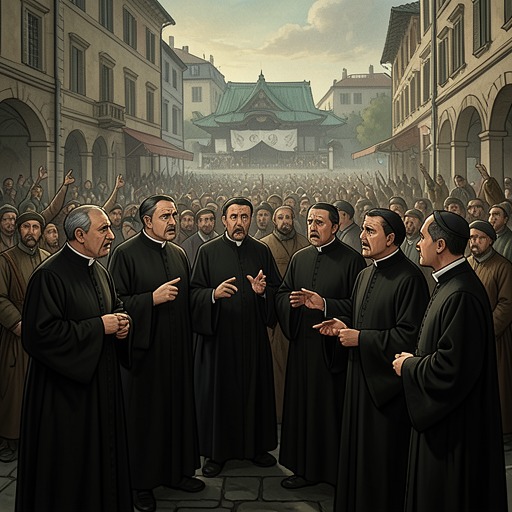
Monsignor Delgard clarifies the distinction at a press conference: the medical bodies are concerned with whether a cure is medically inexplicable, not whether it carries religious or mystical meaning. A phenomenon that current science cannot explain might become understandable in later years; accordingly, unexplained does not automatically mean miraculous. The committee’s jurisdiction is evidentiary rather than theological, and the novel presents that limit as an explicit rule rather than a distinction left to implication.
Examination and Criteria
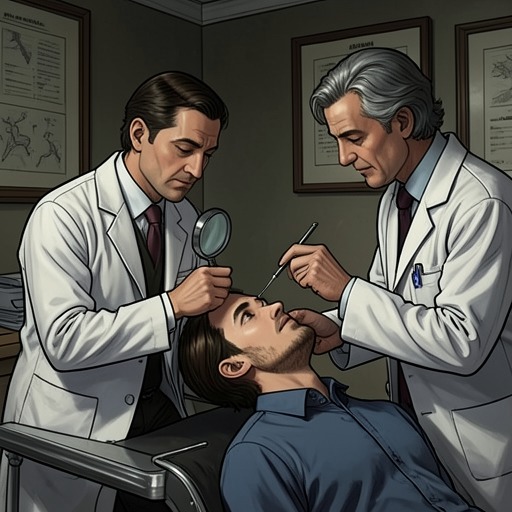
The proposed inquiry is organized around individual cases rather than a general verdict on Alice Pagett or the Banfield events. The medical bureau is to include at least twelve medical practitioners and to operate as an independent body, although its director and several members will be employed by the Church; other members are to come from medical and scientific research units. It will review each patient’s medical records, consult the person’s general practitioner and hospital, conduct its own thorough examination, and maintain a dossier. The findings will then go to the International Medical Committee for its recommendation.
The criteria described by Monsignor Delgard focus on the character and documentation of each recovery. The cure must be sudden, unexpected, complete, and lasting, with an interval of roughly three or four years allowed before it can be confirmed as lasting. Investigators must establish how serious the original illness was, whether it arose from a specific disease, and whether it was objectively demonstrated through tests, X-rays, or biopsies. They must also determine whether prior medical treatment contributed to the recovery, even in part. A condition attributable to a mental disorder would rule out acceptance as a miraculous cure under the stated criteria.
Alice’s case illustrates why those standards matter. Earlier specialists had found no physical abnormality in her ears or throat and considered her deafness and muteness psychological in origin. Later medical findings likewise showed no physical change in the relevant organs, reinforcing the view that the condition had been psychosomatic. Her restored hearing and speech were real, but that fact alone did not establish a medically inexplicable cure; the proposed criteria made the underlying nature of the illness decisive to the assessment.
Banfield and Lourdes
The committee’s connection to Banfield is modeled on its work at Lourdes, where the same international body examines alleged cures. Bishop Caines states that the Banfield findings will be submitted to the committee that reviews Lourdes cases. The comparison offers a precedent for medical scrutiny while also emphasizing the difference between a reported recovery and a cure formally recognized by the Church.
The novel stresses the restraint associated with that precedent. Caines reports that the Lourdes medical bureau dismisses nearly all claimed cures as nonmiraculous, and that only about sixty cures had been officially recognized there since 1858. Earlier discussion of Lourdes likewise distinguishes thousands of recorded recoveries from the much smaller number proclaimed miraculous after stringent investigation. The committee’s function therefore places a demanding evidentiary process between public excitement and official recognition.
Public Claims and Narrative Significance
The committee’s procedures unfold amid intense publicity. Newspaper coverage has already called Alice a miracle cure, and crowds gather at St. Joseph’s hoping to witness further wonders. Against that momentum, the announced investigation insists on case records, medical examinations, independent expertise, and time. The committee does not endorse the headline’s conclusion; its recommendation must follow scrutiny of each recovery.
Its caution also shapes what remains unsettled. In discussing the children’s behavior around Alice, accounts invoke hysteria and crowd influence, while some investigators of an earlier mass collapse disputed that explanation and considered possible organic poisoning; traces of malathion had been found in the soil, though they were judged insufficient to account for the outcome. These competing explanations are not findings of the International Medical Committee, but they show why observation, causal explanation, and religious interpretation cannot simply be collapsed into one judgment. The committee embodies that separation: it can assess what medicine can establish, while the question of miracle remains with the Church’s designated authorities.