Govinda
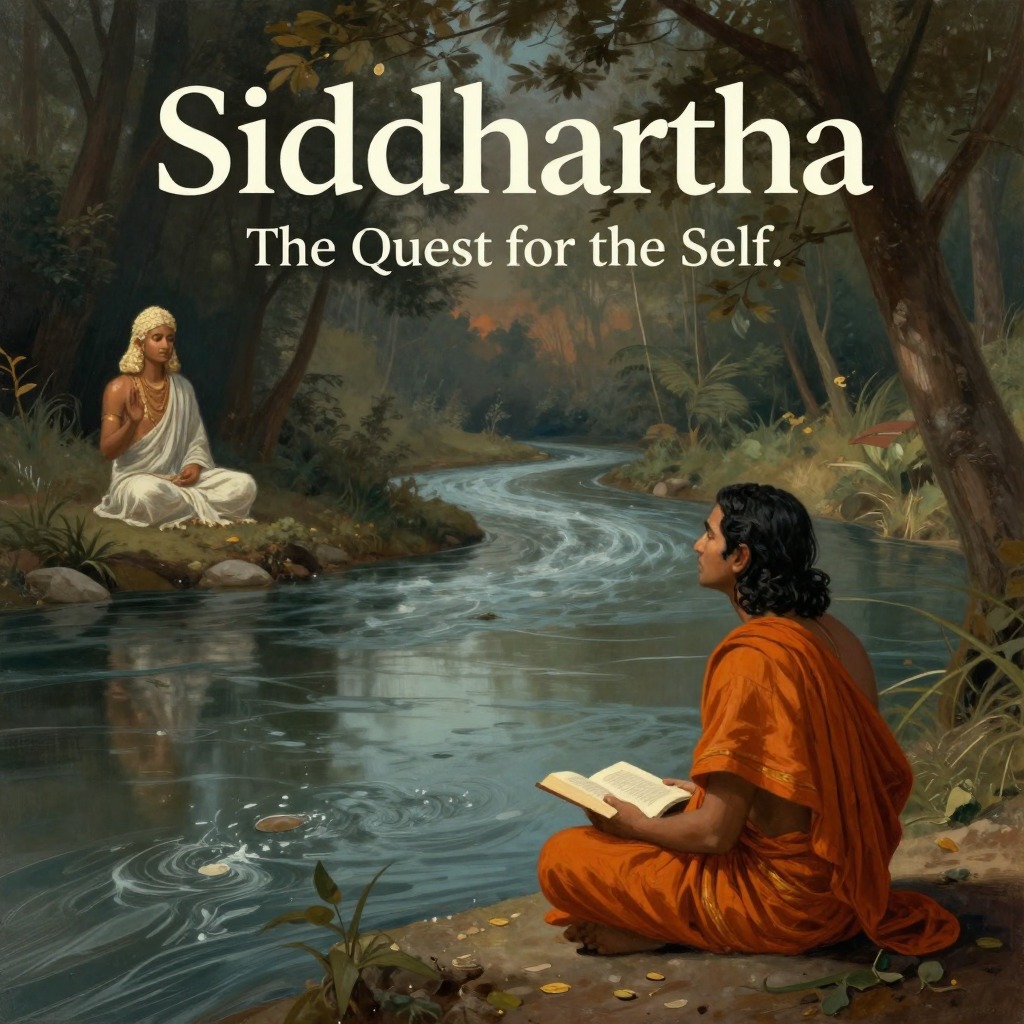
SiddharthaGovinda, the son of a Brahman, is introduced as Siddhartha's closest friend and most ardent admirer. From their earliest days in the shade of the Sal-wood forest and the fig tree, Govinda loved everything about Siddhartha: his eye, his sweet voice, his walk, the perfect decency of his movements, and above all his transcendent, fiery thoughts and ardent will. Govinda knew that Siddhartha would not become a common Brahman, and he himself wanted nothing more than to follow him—as a friend, a companion, a servant, a spear-carrier, a shadow. When Siddhartha decided to leave home and join the Samanas, Govinda turned pale like a dry banana-skin, realizing that his own fate was beginning to sprout with his friend's, and he joined the pilgrim without hesitation.
Life as a Samana and the Search for Enlightenment
For three years, Govinda lived beside Siddhartha among the ascetics, walking the same paths and undertaking the same efforts. They rarely spoke except when service or exercises required, and occasionally they went through villages to beg for food. When Siddhartha began to voice his doubts—that their exercises were merely a short numbing of the senses, no different from a drunkard's escape—Govinda was troubled. He insisted that they were moving up a spiral, not going in circles, and that Siddhartha would one day be a great Samana, a holy man. But Siddhartha's growing conviction that there was nothing to be learned, that knowledge had no worse enemy than the desire to know it, stirred fear in Govinda's heart. He recited a verse from an Upanishad about the blissfulness of meditating on Atman, but Siddhartha remained silent, thinking the words through to their end.
Meeting Gotama and the Parting of Ways
When the myth of Gotama the Buddha reached the Samanas, Govinda was the one who first proposed they go to hear him. He had met a Brahman from Magadha who had seen the Buddha with his own eyes, and the thought made his chest ache with longing. Siddhartha agreed, and they traveled to the grove of Jetavana in Savathi. There, Govinda was deeply moved by the Buddha's teaching on suffering, its origin, and the way to its cessation. When the Buddha ended his speech, Govinda stepped forward and took refuge in the teachings, asking to be accepted into the community of disciples. He then urged Siddhartha to do the same, but Siddhartha refused, saying he wished Govinda well on his path. Realizing that his friend had left him, Govinda started to weep. The next morning, he embraced his childhood friend one last time and left with the novices, dressed in the yellow robe.
Later Encounters and the Persistence of Seeking
Years later, after Siddhartha had lived as a rich merchant and then as a ferryman, Govinda encountered him again by the river. Govinda, now an old monk, had been on a pilgrimage and found Siddhartha sleeping dangerously by the water. He sat to guard him, but fell asleep himself. When Siddhartha woke, Govinda did not recognize him at first, noting only that he wore a rich man's garments and perfumed hair. When Siddhartha revealed his identity, Govinda was astonished and joyful, but also puzzled by his friend's transformation. Siddhartha explained that he had lost his riches and was now a pilgrim without a goal. Govinda, still searching, asked if Siddhartha had a teaching or a faith to help him live. Siddhartha replied that wisdom cannot be passed on, that the opposite of every truth is just as true, and that time is not real. He spoke of loving the world as it is, not comparing it to some imagined perfection. Govinda listened silently, thinking to himself that Siddhartha's teachings sounded foolish compared to the pure, clear teachings of the exalted Gotama, yet he could not deny that in Siddhartha's gaze, his hands, his smile, there shone a purity and holiness he had seen in no one since the Buddha's death.
The Final Teaching and Govinda's Vision
In their final meeting, Govinda confessed that he had not found peace and asked Siddhartha for one more word to carry on his dark path. Siddhartha said nothing, but asked Govinda to bend down and kiss his forehead. As Govinda obeyed, a miraculous vision overtook him. He no longer saw Siddhartha's face but a flowing river of faces—a fish, a newborn child, a murderer, a criminal being executed, lovers in ecstasy, corpses, animals, gods—all transforming into one another, all covered by a thin, transparent mask that was Siddhartha's smiling face. This smile was precisely the same as the quiet, delicate, thousand-fold smile of Gotama the Buddha. Govinda stood bent over Siddhartha, feeling as if he had been wounded by a divine arrow, the injury tasting sweet. Tears he knew nothing of ran down his old face, and he bowed deeply, touching the ground before the motionless ferryman whose smile reminded him of everything he had ever loved and held holy in his life.