Siddhartha (the son)
SiddharthaSiddhartha (the son) is the child of Siddhartha and Kamala, born after his father's abrupt departure from the city. His arrival at the river ferry as a grieving, pampered eleven-year-old forces Siddhartha to experience a love so consuming and painful that it completes his transformation from a detached seeker into a fully engaged, suffering, and ultimately wise human being. The boy is the catalyst for Siddhartha's final wound, the one that blossoms into the knowledge of oneness.
Identity and Background
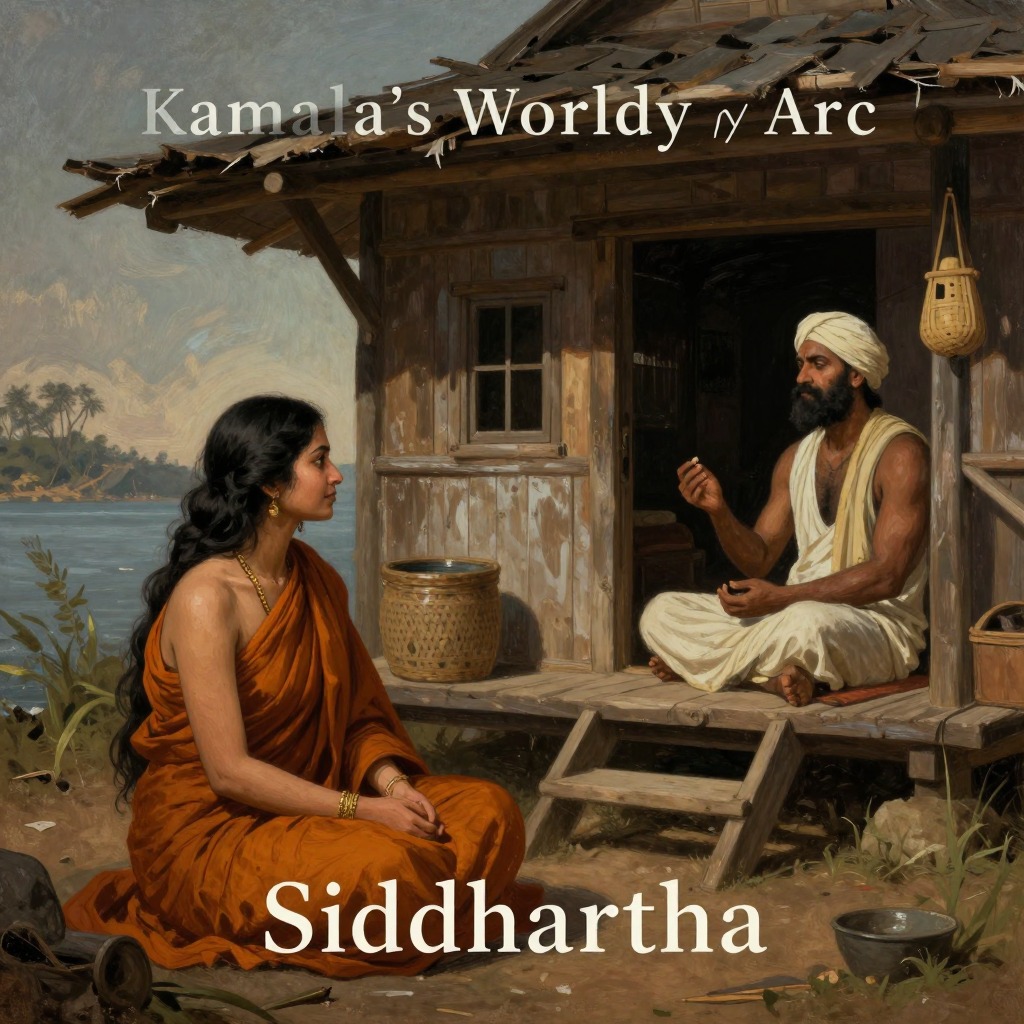
The boy is the son of Siddhartha and the courtesan Kamala, conceived during their last night together before Siddhartha disappeared from the city. Kamala, who had already retired from her former life and given her pleasure-garden to the monks of Gotama, raised him in the habits of wealth: accustomed to finer food, a soft bed, and giving orders to servants. He is described as a pampered boy, a mother's boy, and his face, when Siddhartha first sees him, wondrously reminds the father of something forgotten, a warning to remember. Kamala herself had once expressed a wish to bear Siddhartha's child, saying, "At some time, when I'll be older, I'd want to bear your child."
Arrival at the River and Kamala's Death
The boy travels with his mother on a pilgrimage to see the dying Buddha Gotama. On the path near Vasudeva's ferry, Kamala is bitten by a small black snake and collapses. Vasudeva carries her to the hut, where Siddhartha instantly recognizes both the unconscious woman and the boy, knowing that the child is his own son. Kamala dies from the snakebite, but before her death she confirms to Siddhartha, "He is your son." The boy weeps miserably, and Siddhartha takes him on his knees, letting him weep and petting his hair. Siddhartha recites a Brahman prayer from his own childhood, and with that singsong the boy becomes calm and falls asleep.
Life at the Ferry and the Son's Rebellion
Timid and weeping, the boy attends his mother's funeral. He sits pale for many days by the hill of the dead, refusing to eat, giving no open look, meeting his fate with resistance and denial. Siddhartha spares him, honors his mourning, and does many chores for him, always picking the best piece of the meal. But the boy remains a stranger, displaying a proud and stubbornly disobedient heart. He steals from Vasudeva's fruit-trees, breaks both of his rice-bowls, and refuses to do any work. Siddhartha begins to understand that his son has not brought him happiness and peace, but suffering and worry. Yet he prefers the suffering and worries of love over happiness and joy without the boy. The boy's face reminds Siddhartha of Kamala, and he recalls her long-ago words: "You cannot love." Now, Siddhartha has become completely a childlike person, suffering for the sake of another person, loving another person, lost to a love, having become a fool on account of love. The son, however, is bored by his father's kindness and patience, seeing it as a hated trick. He openly turns against his father, screaming that he would rather become a highway-robber and murderer than become like Siddhartha, and runs away, taking a small basket of coins and the ferryboat.
Departure and Siddhartha's Search
Siddhartha, shivering with grief, insists on following the boy, but Vasudeva advises him to let the boy go, saying he is doing what Siddhartha himself had failed to do: taking care of himself and taking his course. Siddhartha builds a raft and crosses the river, finding the boat abandoned with its oar missing. He searches through the forest up to the edge of the city, stopping at the entrance of Kamala's former pleasure-garden. There, he realizes that his desire to cling to his son is foolish, that he cannot help him. He feels the love for the runaway in his heart like a wound, and understands that this wound must become a blossom and shine. He returns to the ferry with Vasudeva, and neither speaks of the boy again.
The Wound and Its Healing
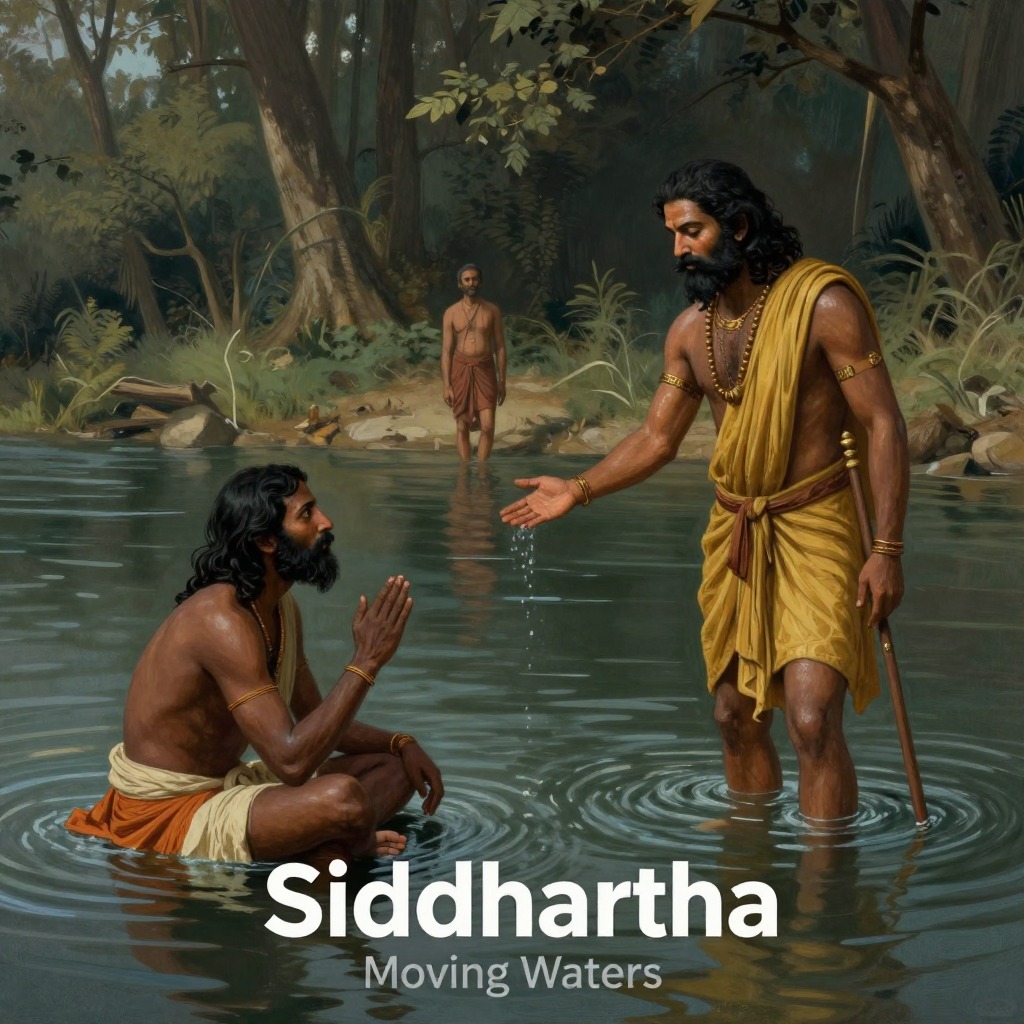
For a long time, the wound continues to burn. Siddhartha envies every traveller who has a son or daughter, thinking, "So many, so many thousands possess this sweetest of good fortunes—why don't I?" He nurtures his love and tenderness in his heart, allowing the pain to gnaw at him. One day, driven by yearning, he is about to go to the city to look for his son when the river laughs at him. He sees his own face reflected in the water and recognizes his father's face, remembering how he himself had forced his father to let him go and had never returned. He realizes that everything comes back, that the same pain is suffered over and over again. He confesses everything to Vasudeva, and through that confession, his wound is bathed in the river and begins to heal. He learns to hear the thousand voices of the river as a single word: Om. His suffering shines, his self flows into the oneness.
Narrative Role and Thematic Significance
The son is not a fully developed character in his own right but a narrative instrument that forces Siddhartha to experience the most intense and painful form of human love. Through this love, Siddhartha finally understands the childlike people he once despised, seeing their blind loyalty and tenacity as worthy of veneration. The son's rebellion and departure mirror Siddhartha's own youthful departure from his father, completing a cycle of suffering and understanding. The wound of the son's loss becomes the final obstacle to Siddhartha's peace, and its healing—through listening to the river and confessing to Vasudeva—marks his attainment of true wisdom. The boy himself, by rejecting his father's gentle path, chooses his own course, embodying the novel's central truth that no one can be spared from living their own life and making their own mistakes.