Basket
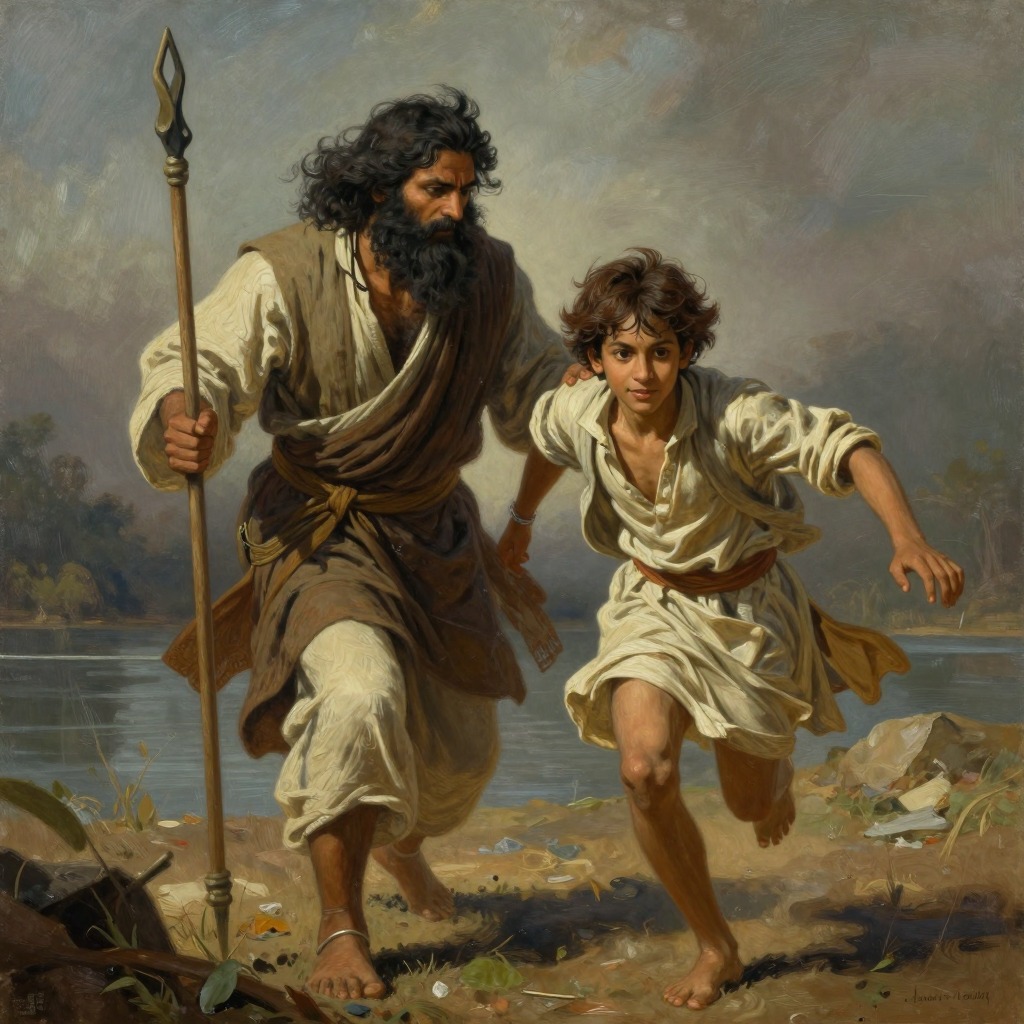
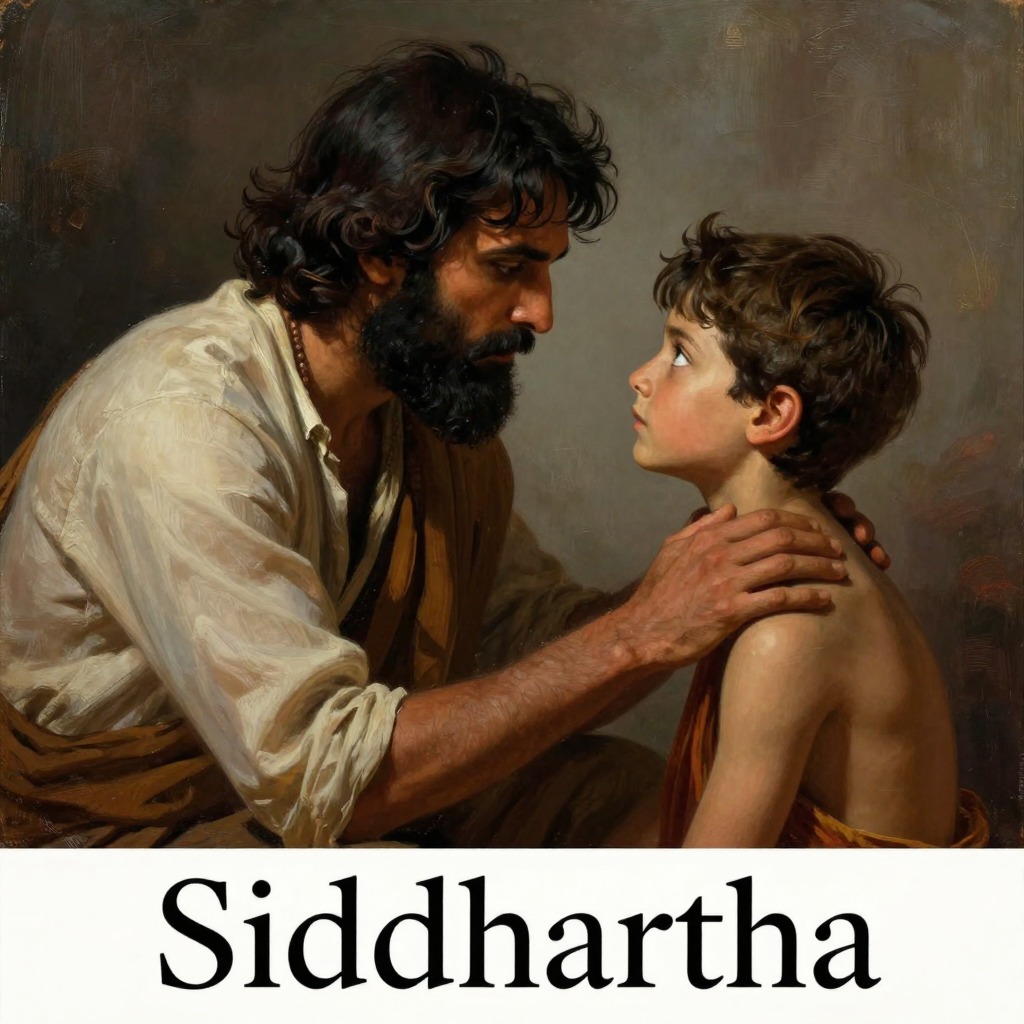
SiddharthaThe Basket is a simple, practical object—a small container woven from bast of two colours—that the ferrymen Vasudeva and Siddhartha use to hold the copper and silver coins they receive as fares from travellers crossing the river. It appears only once in the action of the story, but that single appearance carries the weight of a decisive rupture. When Siddhartha's son, the eleven-year-old boy who has been forced to leave his mother's wealthy home and live in the ferryman's hut, finally rebels against his father's patient, non-violent love, he does not merely shout his hatred and run away. He takes the basket, along with the boat, and disappears across the river. The theft is not a random act of spite: the boy chooses the one object that holds the ferrymen's small wealth, the tangible fruit of their humble labour, and he takes it to fund his escape back to the city. Siddhartha, upon discovering the loss, immediately wants to build a raft and pursue him, but Vasudeva gently points out that the boy has done what Siddhartha himself once did—he has taken his own course. The basket thus becomes the concrete token of a son's rejection of his father's world, a world of poverty, patience, and listening, in favour of the familiar comforts of the city and the life of the childlike people. It is the object through which Siddhartha experiences, in a single, sharp blow, the pain of being abandoned by someone he loves, a pain that mirrors the one he inflicted on his own father decades earlier when he left home to become a Samana.
The Basket as a Symbol of Attachment and Loss
The basket's significance extends beyond its role in the plot. It is one of the few material possessions the ferrymen own, and its theft exposes the depth of Siddhartha's attachment to his son. Throughout his life, Siddhartha has prided himself on his ability to let go—of his home, his caste, his wealth, even his friend Govinda. He has learned to think, to wait, and to fast, and he has believed that these disciplines make him immune to the clinging passions of the childlike people. But when his son steals the basket and flees, Siddhartha is overwhelmed by a blind, suffering love that he cannot control. He runs after the boy, not to save him from danger—he knows the boy will reach the city safely—but simply to see him one more time. The basket, in this context, is not just a stolen object; it is the visible sign of a wound that will not heal. Siddhartha's longing for his son, his envy of other fathers who have their children with them, and his inability to let the boy go are all crystallized in this one small, woven container. The basket is what the boy takes, and what Siddhartha cannot get back.
The Basket and the River's Teaching
Yet the basket also becomes part of the river's teaching. After Siddhartha fails to find his son and returns to the ferry, he sits by the river and listens. The river laughs at him, and he sees his own reflection in the water, which reminds him of his father's face. He realizes that he is repeating the same pattern of love and loss that his father experienced, and that the river, which flows endlessly and yet is always the same, contains all these cycles within its oneness. The basket, as a thing that can be stolen and lost, belongs to the world of time and attachment, but the river teaches that time is not real, that everything is present simultaneously. In the final vision that Govinda experiences when he kisses Siddhartha's forehead, he sees all forms—human, animal, divine—flowing into one another, and he understands that the perfected ones smile because they see the oneness beyond all separation. The basket, like the stone Siddhartha picks up and loves for its own sake, is a thing that can be loved, but it is also a thing that must be let go. Siddhartha's journey ends not with the recovery of the basket or the return of his son, but with the realization that love, even the most painful love, is part of the oneness, and that the wound itself can blossom into wisdom.