Oar
SiddharthaThe Oar is the ferryman's essential implement, the simple wooden tool by which Vasudeva and later Siddhartha propel their boat across the river that runs through the heart of the novel. More than a piece of equipment, it becomes a charged object that registers the emotional and spiritual states of those who handle it, and its presence or absence marks critical junctures in Siddhartha's journey.
The Oar as a Tool of the Ferryman's Life
When Siddhartha first approaches the ferry after his years of worldly life, he finds Vasudeva standing in the boat, and the ferryman's work with the oar immediately impresses him. Vasudeva pushes the oar from side to side with a smile, and Siddhartha remarks that it must be beautiful to live by the water every day and to cruise on it. Vasudeva's calm, brawny arms working the oar against the current embody a life of simple, devoted labor. Later, after Siddhartha has become a ferryman himself, he learns to build an oar as part of his new craft, finding joy in every skill he acquires. The oar is thus the first object of his apprenticeship under Vasudeva, a concrete skill that grounds his spiritual learning in physical practice.
The Oar as a Sign of the Son's Rebellion
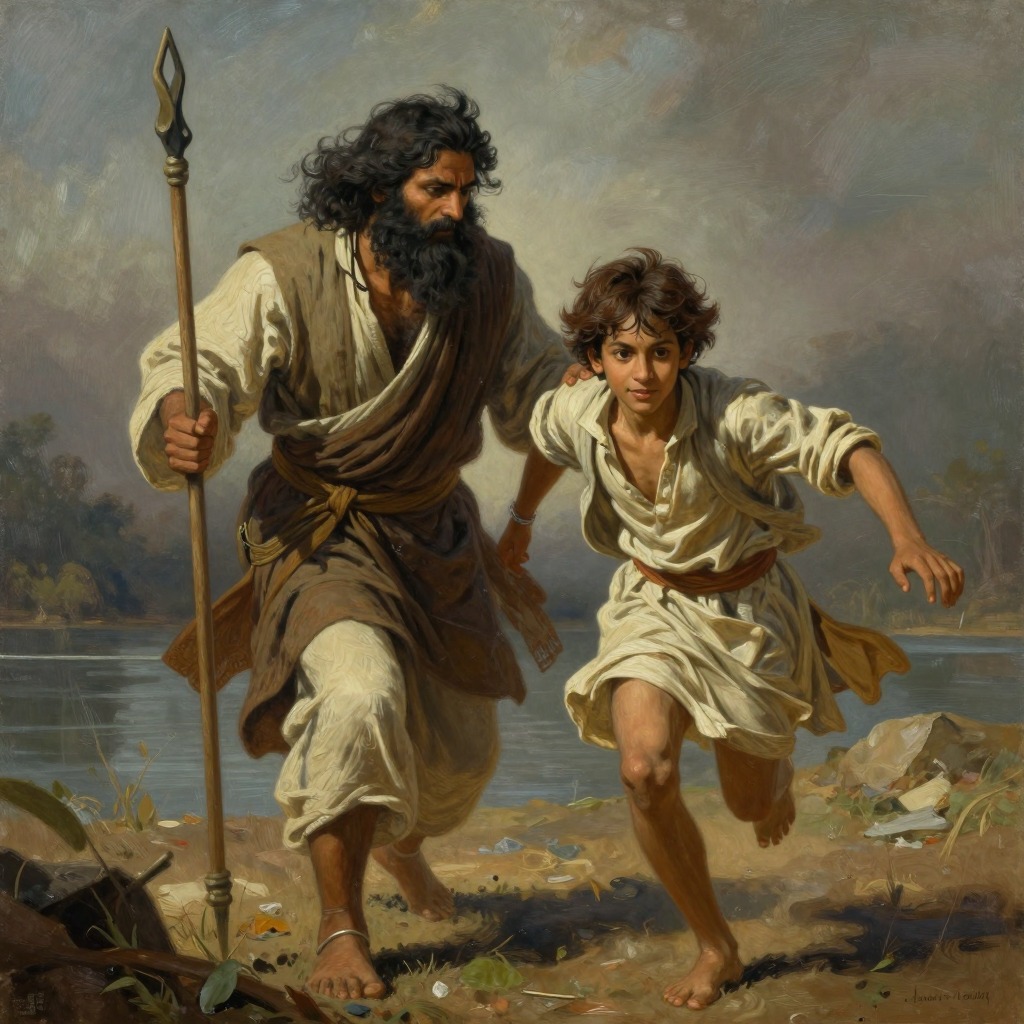
The oar's most dramatic appearance comes during the crisis with Siddhartha's son. When the boy runs away, he takes the boat and disappears across the river. Siddhartha, desperate to follow, insists on building a raft. Vasudeva asks why he has brought the axe along, and Siddhartha knows what his friend is thinking: the boy may have thrown away or broken the oar to prevent pursuit. When they reach the opposite bank, the oar is indeed gone from the boat. Vasudeva points to the bottom of the boat and looks at his friend with a smile, as if to say, "Don't you see what your son is trying to tell you? Don't you see that he doesn't want to be followed?" He says nothing in words but begins making a new oar. The missing oar is the son's final, wordless statement of rejection—a deliberate act of sabotage that severs the last physical link between father and child.
The Oar and the River's Teaching
Throughout Siddhartha's years with Vasudeva, the oar is the instrument through which he learns the river's deepest lessons. The river teaches him to listen, to pay close attention with a quiet heart, without passion or judgment. The oar is the tool of that listening—the means by which he stays near the water, crosses it daily, and absorbs its voice. When Siddhartha later tells Govinda that he has learned most of all from the river and from Vasudeva, he is speaking of a wisdom that came not through words but through the repeated, meditative act of rowing. The oar is the physical medium of that silent education.
The Oar's Narrative Significance
The oar functions as a quiet but persistent motif that traces the arc of Siddhartha's relationships. It appears first as the emblem of Vasudeva's peaceful labor, then as the object of the son's violent rejection, and finally as the symbol of a wisdom that cannot be stolen or broken. The oar that the son discards is the same kind of tool that Vasudeva used to ferry the young Samana across the river decades earlier. Its loss and replacement mirror the cycle of loss and renewal that the river itself teaches. In the end, the oar is not a symbol of power or possession but of service—the humble, repeated act of ferrying others across the water, which becomes Siddhartha's final path to peace.