Stone
SiddharthaIn the climactic final chapter of Hermann Hesse's novel, the Stone becomes the central physical object through which Siddhartha articulates the wisdom he has won after a lifetime of seeking. It is not a sacred relic or a magical talisman but an ordinary stone picked up from the ground, and its very ordinariness is the point. Siddhartha's treatment of the Stone crystallizes his rejection of abstract teachings in favor of a direct, loving engagement with the concrete world, and it serves as the final, tangible demonstration of his enlightenment to his old friend Govinda.
Appearance and Siddhartha's Earlier View
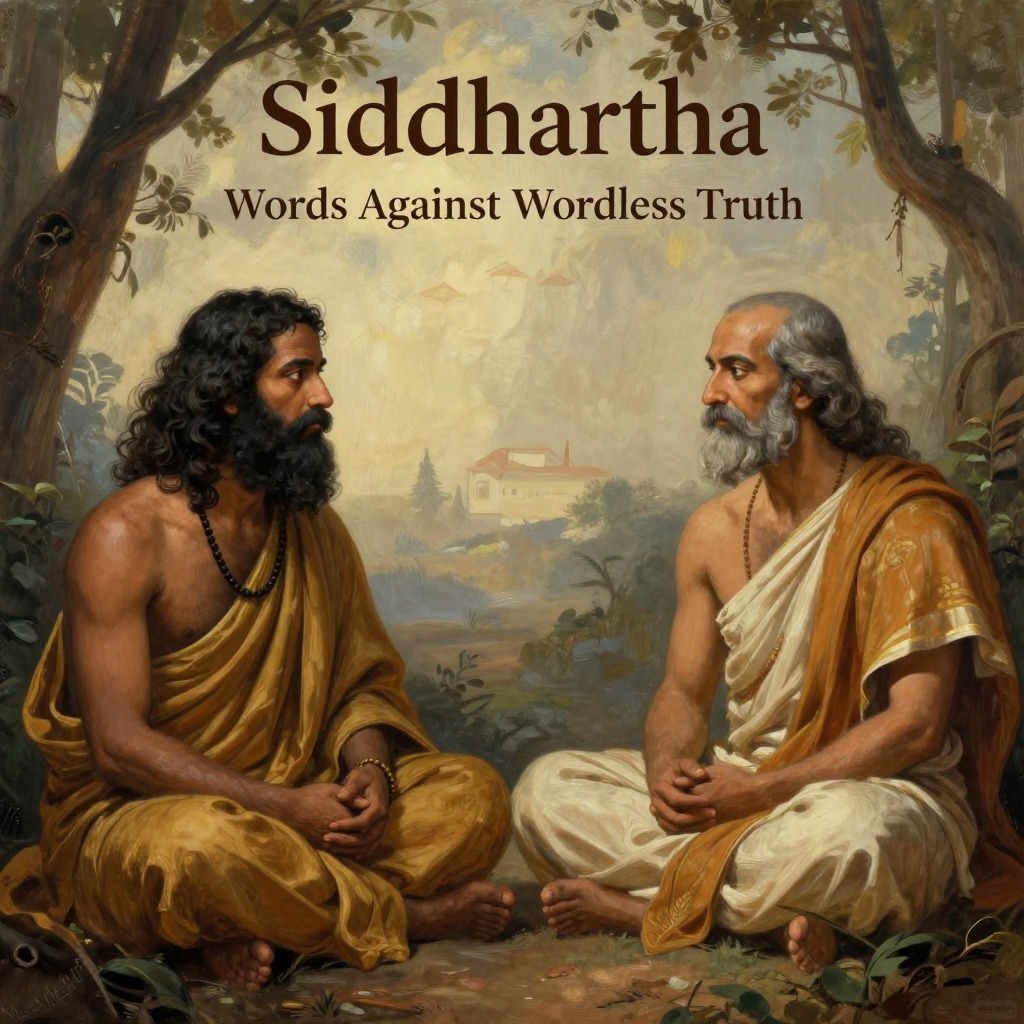
The Stone first appears in the narrative during Siddhartha's final meeting with Govinda, when the old ferryman bends down, picks up a stone from the ground, and weighs it in his hand. He contrasts his present understanding with the view he would have held in the past. Earlier in his life, Siddhartha explains, he would have seen the stone as "just a stone," worthless and belonging to the world of Maya, the veil of illusion. He might have granted it importance only because it could potentially, through the cycle of transformations, become a plant, an animal, or a human being. This earlier perspective reflects the hierarchical, teleological thinking of the Brahman and the Samana, who value things not for what they are but for what they might become, and who seek an ultimate essence behind the visible world.
Siddhartha's Transformed Understanding
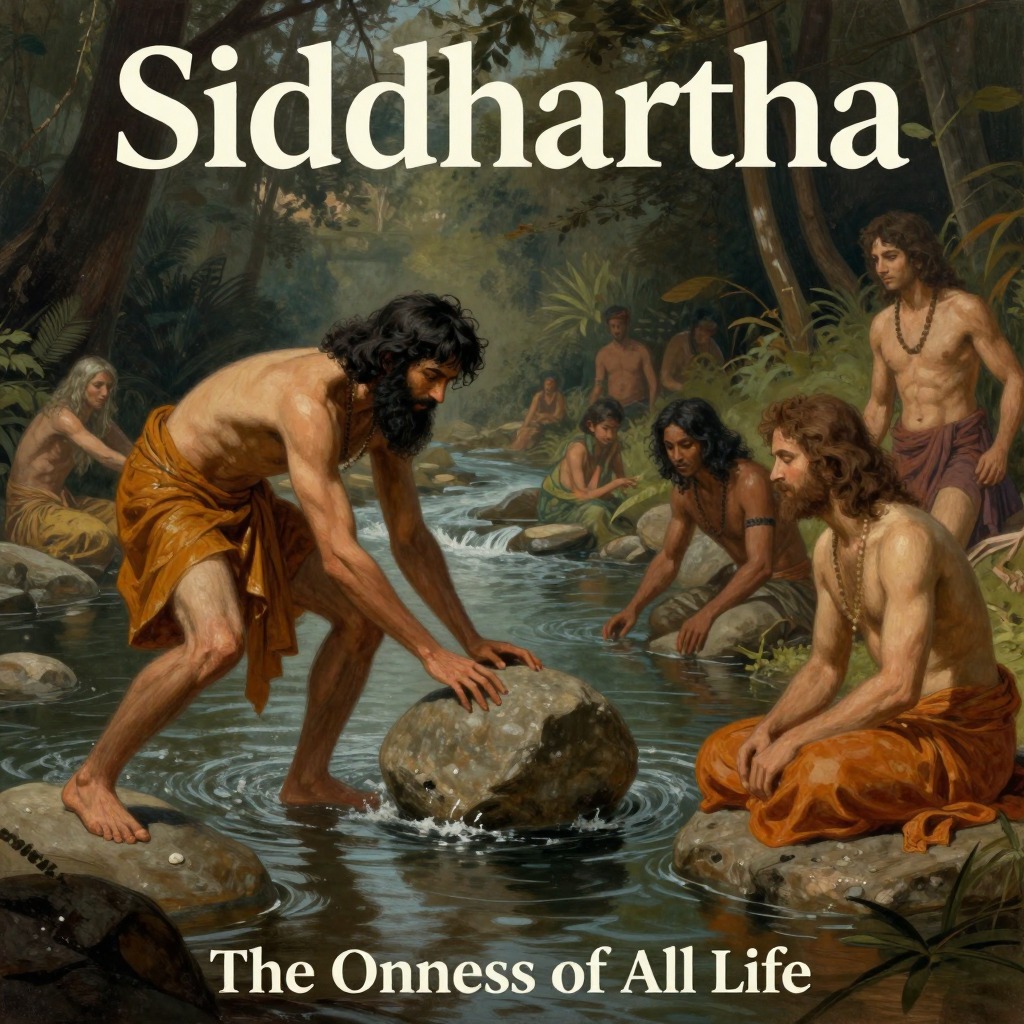
Siddhartha's mature philosophy, as demonstrated with the Stone, represents a radical shift. He now declares: "this stone is a stone, it is also animal, it is also god, it is also Buddha." He does not love it because it could turn into something else, but because it is already and always everything. He loves it precisely for its present, concrete reality: its veins and cavities, its yellow and gray colors, its hardness, the sound it makes when knocked, the dryness or wetness of its surface. Each stone is unique—some feel like oil or soap, others like leaves or sand—and each one "prays the Om in its own way." The Stone is simultaneously Brahman, the ultimate reality, and a particular, oily, juicy stone. This is the core of Siddhartha's non-dualistic vision: the universal is not found by negating the particular but by fully inhabiting it. The Stone is not a symbol pointing beyond itself; it is itself a complete expression of the divine.
The Stone as a Teaching Tool
Siddhartha uses the Stone to directly challenge the limitations of language and doctrine. When Govinda asks why he has told him about the stone, Siddhartha replies that he did so without any specific intention, or perhaps to illustrate that he can love a stone, a tree, or a piece of bark—"things" that can be loved—whereas he cannot love words. Teachings, he says, are no good for him because they have "nothing but words": no hardness, softness, colors, edges, smell, or taste. The Stone, by contrast, possesses all these tangible qualities. It is a thing that can be held, examined, and loved, and it teaches not through propositions but through its sheer, undeniable presence. This moment echoes the river's earlier teaching, which Vasudeva had said could be learned from by listening, and it reinforces Siddhartha's lifelong distrust of teachers and doctrines. The Stone is the ultimate refutation of the idea that wisdom can be passed on through speech.
Connection to the River and Other Things
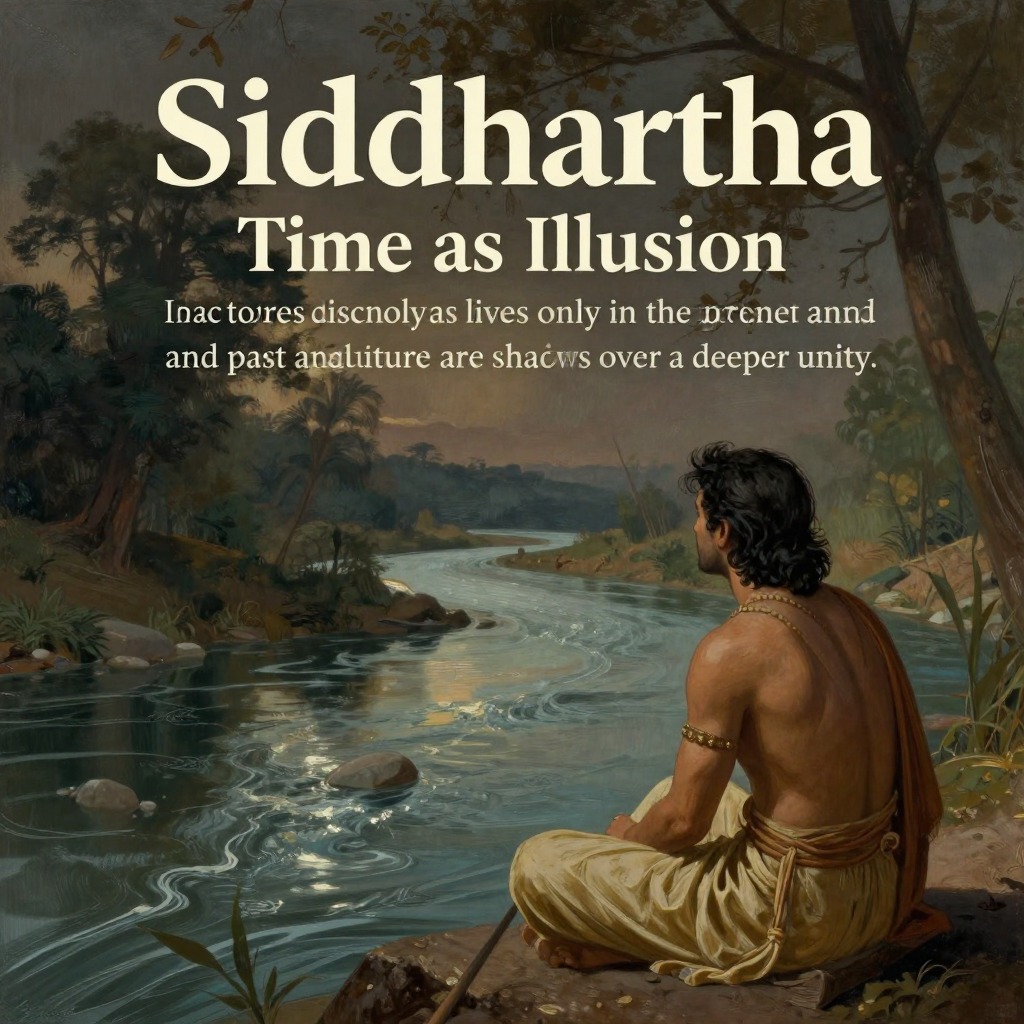
The Stone is not an isolated object but part of a broader web of non-human teachers in Siddhartha's life. The river, which he learned to listen to and which taught him that time is unreal and that everything is present simultaneously, is the primary example. Vasudeva, the ferryman, had believed in the river for many years, not realizing that every wind, cloud, bird, and beetle was just as divine and could teach just as much. The Stone belongs to this same category of "things" that, when approached with love and attention, reveal the oneness of all life. Siddhartha's ability to love the Stone is the culmination of his journey from the abstract search for Atman through asceticism, worldly indulgence, and despair, to a final, joyful acceptance of the world exactly as it is.
Narrative and Thematic Significance
The Stone episode is the final teaching of the novel. It occurs after Siddhartha has already achieved his great realization by the river, where he heard the thousand voices of the river as a single word, Om, and where his wound of love for his son finally blossomed. The Stone is not a new revelation but a concrete demonstration of that realization. It allows Siddhartha to articulate, in the most direct way possible, his philosophy of radical immanence: that the world is perfect in every moment, that sin already carries forgiveness, and that the only appropriate response to existence is love. Govinda, who has spent his life following the clear, pure teachings of Gotama the Buddha, finds Siddhartha's words strange and foolish, yet he is overwhelmed by the holiness that shines from Siddhartha's gaze, his hand, his skin, and his hair. The Stone, as a thing, embodies the truth that Siddhartha's person also embodies: a truth that cannot be captured in words but can be felt and seen. In the end, Govinda kisses Siddhartha's forehead and has a vision of the thousandfold smile of the perfected ones, a vision that the Stone, in its own way, has already prefigured.