Wynona Cannon-Longleaf-Higgins-Gunter
SpontaneousWynona Cannon-Longleaf-Higgins-Gunter is Kimani Cannon’s mother, whose history of domestic abuse and repeated marriages shapes both Kimani’s fear of marriage and Wynona’s later search for happiness in a partner. Her engagement to Edward Villarosas appears to promise a fresh start, but his jealous accusations in Las Vegas turn that promise into a crisis. Wynona’s arc connects a daughter’s childhood experience of violence with the difficult question of whether love and forgiveness can be trusted to make a relationship safe.
Identity and Family History
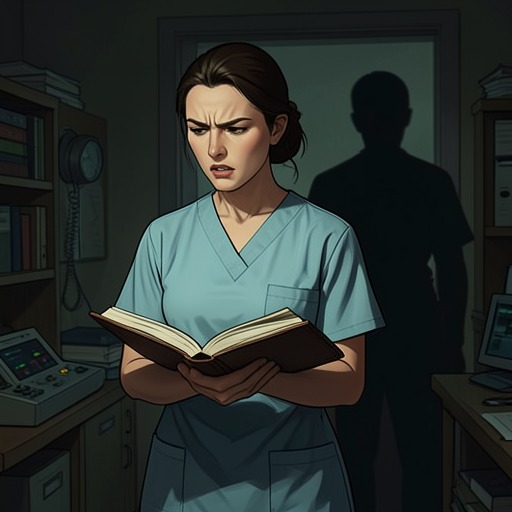
At fifty-five, Wynona is described as attractive, though Kimani Cannon had spent a long time trying to persuade her mother to believe it. That detail sits against the history of her first marriage: Kimani’s father had convinced Wynona that if she left him no other man would want her, and that she would have no one to take care of her. Wynona remained with him through physical and mental abuse. Her experience was not simply a private injury; it shaped what her daughter saw as normal, and what Kimani later feared repeating in her own relationships.
The abuse also affected Kimani’s education and ambitions. Kimani had wanted to become a doctor, and Wynona worked extra hours for years to save money for college. When it was time for Kimani to go, her husband took the savings from their bank account. Wynona’s efforts were real, but her daughter’s dream was still obstructed by the same household power that had inflicted the violence.
A particularly decisive moment came during Kimani’s senior year of high school, when one of her father’s beatings sent Wynona to the emergency room. Wynona then decided that no man would ever beat her again. She tearfully told Kimani that she did not want her daughter to think a woman should tolerate physical abuse. Leaving was therefore both an act of self-preservation and an attempt to interrupt the transmission of that lesson across generations. Kimani was grateful that her mother finally left, even as she believed Wynona should have done so for her own sake, not only for her daughter’s.
The Household Kimani Remembered
Kimani recalls the violence as a recurring weekly pattern rather than an isolated episode. Fairs were among her father’s favorite outings; after a visit, he might stay sober for a few weeks. The reprieve did not last. On Fridays he would leave work for a bar, and someone in his group would eventually bring him home rather than let him drive. That return exposed Wynona to the beatings Kimani had dreaded.
The cycle continued into Saturday. While her father slept late, Kimani bandaged her mother’s wounds. When he woke around noon and saw Wynona’s bruises, he became apologetic, asked her to forgive him, and presented himself again as a loving husband and father. Wynona hoped for the best and eventually forgave him. For Kimani, the apology did not erase the repetition: she dreaded Fridays while other children welcomed the weekend. Her account makes clear how the violence shaped both mother and daughter—Wynona repeatedly faced injury and reconciliation, while Kimani took on the work of caring for her and learned to associate family life with anticipation of harm.
After leaving her husband, Wynona married three more times. None of those marriages lasted more than a year or two, and Kimani regarded the men as lacking substance, though none was abusive like her father. The contrast matters: leaving the violent marriage ended that particular pattern, but it did not settle Wynona’s belief that a woman needed a man to survive. Kimani understood that belief as part of what kept her mother moving from one short marriage to another.
Engagement to Edward Villarosas
When Wynona could not attend Kimani’s best friend’s wedding, she had initially been secretive about the reason, promising to explain later. She eventually told her daughter she had met someone. Kimani heard excitement in her mother’s voice and recognized that a new man was involved. Wynona was enthusiastic about Edward Villarosas, whom she described as a divorcé with whom she enjoyed spending time. He proposed, she accepted, and she asked Kimani to be happy for her. She also explained that Kimani’s own reluctance to marry had made her feel responsible, because she believed that staying with Kimani’s abusive father had turned her daughter against marriage.
Wynona’s engagement therefore carries two hopes at once. She wants companionship for herself, and she wants her daughter to feel able to love and marry. Her request that Kimani be happy for her is sincere, but it also brings their different understandings of the past into direct contact: Wynona believes she has had to forgive and move on, while Kimani remains shaped by the violence she witnessed. Wynona tells her daughter that her former husband belongs to a past she will not repeat and that Edward is a good man. She plans to marry Edward within three weeks, a timetable that alarms Kimani, who asks her mother to wait until she can come to Shreveport.
When Kimani introduces Duan Jeffries as her fiancé, Wynona greets him warmly. She is pleased by what she understands as her daughter’s engagement, even though Kimani and Duan are only pretending to be engaged. At this stage Wynona does not know the arrangement is false. Her own happiness at the supposed news is tied to her earlier guilt: Kimani’s apparent willingness to marry seems to reassure her that the past has not permanently prevented her daughter from finding love.
Jealousy and the Las Vegas Crisis
Wynona’s confidence in Edward becomes more complicated when the couple travels to Las Vegas. On the way from the airport to their hotel, Edward begins acting strangely and accusing her of things. Her phone battery has died; when she asks to use his phone, he accuses her of wanting to call Bennie. She persuades Edward to stop at a fast-food restaurant because she needs to use the bathroom, then borrows a phone from a woman she meets in the ladies’ room to call Kimani.
Wynona explains that Edward’s jealousy had emerged after he unexpectedly visited her the previous night while Bennie was there. He began accusing her of having an affair with Bennie. The shift from the relationship she had described as happy to accusations and suspicion is abrupt, and it places her in a vulnerable position away from home. Kimani, hearing the account, tells her mother not to return to Edward’s car and directs her to call emergency services and report her location. Wynona resists the urgency, saying the situation is not serious and that Edward needs time to think about what he is saying. Her response recalls the earlier pattern in which harm was followed by remorse and hope for change, though the evidence does not establish that Edward has physically abused her.
Duan Jeffries hopes Edward is innocent of the disappearances of his two former wives, not for Edward’s sake but because Wynona deserves better. His concern underscores the stakes of the engagement without resolving the allegations against Edward. Wynona’s trust in him and her willingness to minimize the Las Vegas incident remain in tension with the danger Kimani recognizes.
Aftermath and Significance
Wynona returns to Shreveport on a law-enforcement plane after the Las Vegas episode. She has been given a sedative and is resting comfortably. Kimani arranges for family members to give her mother space, contacts the hospital for an additional week off work, and stays beside her while she sleeps. The immediate aftermath is therefore one of care: the daughter who once bandaged her mother’s injuries now takes responsibility for helping her recover from a frightening episode.
As she watches Wynona rest, Kimani reflects that her mother deserves a man who will love, respect, and cherish her. She also wonders whether Edward’s actions will finally help Wynona understand that happiness cannot be secured through another person alone; it must first come from within. The thought turns back on Kimani herself, who recognizes that she too will have to accept this lesson as she anticipates parting from Duan. Wynona’s experience thus prompts reflection beyond her own relationship, without implying that she has already reached a settled conclusion.
Kimani intends to tell her mother everything once Wynona wakes and they have had a chance to talk, including that Duan is not her fiancé and came to Shreveport to investigate Edward. The planned disclosure leaves Wynona’s understanding of both relationships unresolved at this point. Her significance lies in that unfinished tension: she has escaped one abusive marriage and wants to believe that a new engagement will bring lasting happiness, while the people around her confront evidence that hope and trust are not, by themselves, protection from danger.