Event 1
Austin and Thomas’s Sixth Birthday Party
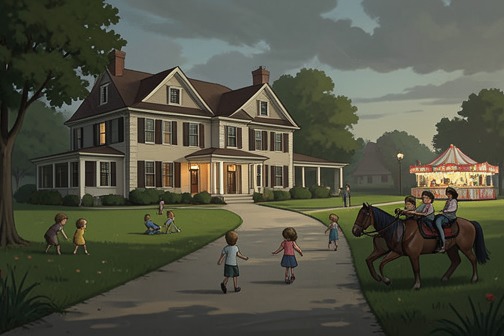
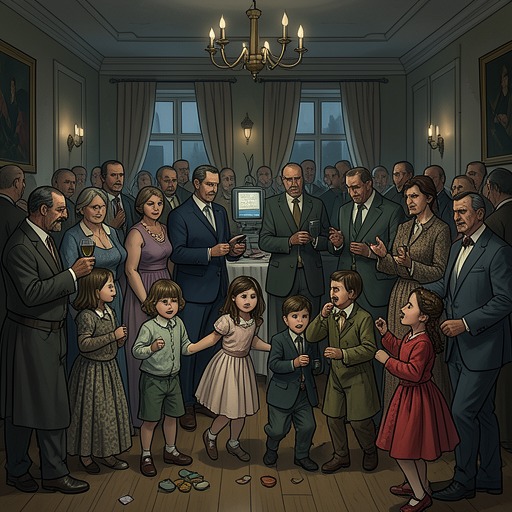
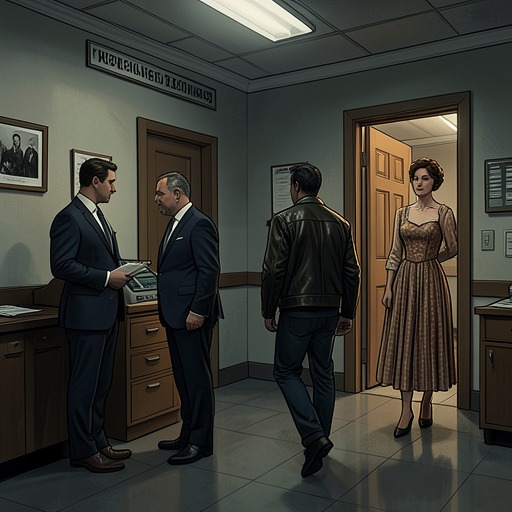
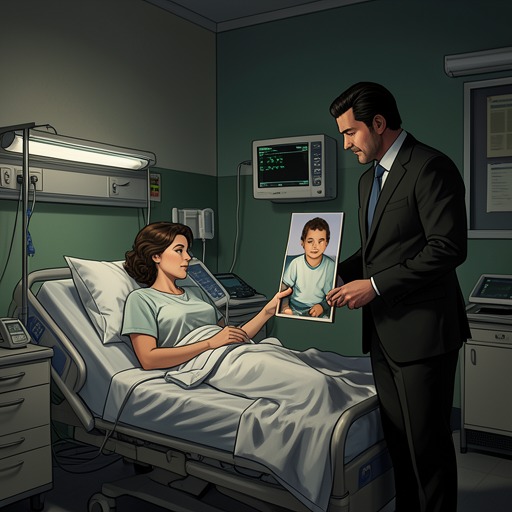
[Austin and Thomas’s Sixth Birthday Party](entity:event-recall-event-austin-thomas-71633303250e) is held at Scott Bowers’s home, where Charlie’s eagerly anticipated day out begins as an exuberant family gathering and becomes inseparable from her disappearance. Through [Kathy Hamilton](entity:character-recall-character-kathy-hamilton-3d6a08abd995)’s observations, the celebration is rendered in specific domestic details: a crowded lawn, children waiting for cotton candy, a pony ride, and gifts for the twins. In retrospect, that lively setting carries a darker significance, as the party marks the point from which the search for Charlie—and the exposure of long-hidden family truths—unfolds.
## Background and Setting
The celebration is for Scott and [Cindy Bowers](entity:character-recall-character-cindy-bowers-26fff293b895)’s twin boys, who are turning six. Scott is [Mitch Hamilton](entity:character-recall-character-mitch-hamilton-3759dd59c006)’s brother, and the boys are Charlie’s cousins. Charlie has been talking about the party for weeks. Earlier in the day, she counts the hours until it begins, giving the gathering a place in her imagination well before Kathy arrives.
The Bowers home is almost twice the size of Kathy’s, with a driveway that can hold six cars and a long path to the front door. Mature trees shade the landscaped front yard. Carnival music and bursts of laughter carry from inside, while the number of cars parked outside is lower than Kathy expects; many guests appear to have come without driving. The contrast between the spacious house and the comparatively sparse parking gives Kathy an early impression of a gathering already well underway, but not quite as she had anticipated.
## The Celebration Through Kathy’s Eyes
On the lawn, a cotton-candy machine draws a line of children. The pool and sunloungers are still empty in the heat, though Kathy expects someone will soon take advantage of them. At the back of the yard, near the woods, she spots Charlie riding a beautiful white pony as its female handler leads it around the lawn. Kathy’s first reaction is concern that Charlie might fall; seeing her in a secure child’s saddle and under the handler’s close attention reassures her.
The scene establishes the party as a place of activity spread across the property, from the lawn to the wooded edge. Kathy later passes a table covered with presents wrapped in shades of blue, and Scott and Cindy’s boys rush up to her. These details make the occasion legible as a child-centered family celebration, with Charlie moving among relatives, entertainments, and guests rather than being isolated from the gathering.
As the afternoon wears on, the party’s atmosphere changes. The sun shifts behind the woods, adult guests look sunburnt and worse for wear, and the clowns and entertainers have left. Fewer children remain in view. Kathy and the others consider that some might be upstairs in the twins’ rooms playing video games, but this is only a possibility, not a confirmed account of where they are. The party thins out by degrees, its earlier noise giving way to uncertainty about who is still present and where.
## Disappearance and the Search
The party is the setting associated with Charlie’s disappearance. Its significance rests in the reversal between what it promises and what follows: a much-anticipated birthday gathering becomes the beginning of a desperate search. The supplied account of the celebration places Charlie among the guests and activities but does not specify the precise moment or circumstances in which she disappears. The gradual reduction in the number of children and the departure of the entertainers form part of the party’s changing scene, not an explanation of what happened to her.
In the aftermath, Kathy remains under pressure as the search proceeds. When Mitch moves toward the door, she stays seated, takes a deep breath, and tells [Chase Cooper](entity:character-recall-character-chase-cooper-4f4b8e8dd415) that Charlie is adopted. Her disclosure shows how the search reaches beyond the immediate question of Charlie’s whereabouts: it forces Kathy to reveal a family fact she had kept concealed. The birthday gathering thus sits at the opening of a chain of events in which the disappearance and the family’s hidden history become entangled.
## Revelations and Retrospective Significance
Later revelations deepen the party’s importance without changing what can be observed at the celebration itself. Kathy explains that Mitch had a brief relationship with a younger woman six years earlier and that it resulted in a daughter; he had been visiting that child monthly for five years without Kathy’s knowledge. The disclosure revises the apparent boundaries of the family around Charlie, whose biological parentage had also been concealed.
[Megan Carter](entity:character-recall-character-megan-carter-830913e39252), herself adopted as a baby, eventually tells Kathy that Megan Carter is not her birth name and that she now knows her name is Hope Hamilton. This later recognition connects the search’s immediate concern with a longer history of adoption and separation. At a cemetery, Kathy considers changing her surname to Carter, an expression of how relationships and names have become newly open to negotiation. These later developments are not events at the twins’ party, but they show the breadth of the consequences set in motion by Charlie’s disappearance there: the celebration becomes the narrative hinge between a child’s eagerly awaited family occasion and the painful recovery of hidden kinship.
Event 2
Charlie Hamilton’s disappearance after the birthday party
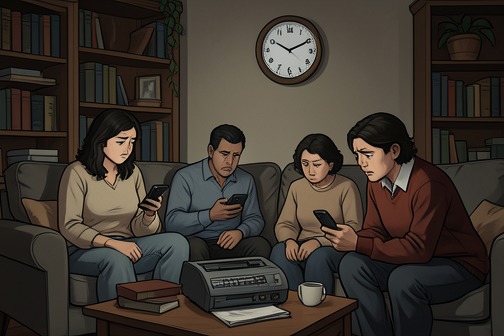
[Charlie Hamilton’s disappearance after the birthday party](entity:event-recall-event-charlie-hamilton-a36f2ecf3c9b) transforms an initially plausible delay into an urgent search. A child who was expected home with her babysitter is missing, Megan cannot be reached, and the party’s guests can offer no reliable account of when Charlie left. The crucial shift comes when Detective [Chase Cooper](entity:character-recall-character-chase-cooper-4f4b8e8dd415) learns that no one saw the babysitter: what began as a family trying to collect a late-arriving child becomes a possible abduction, demanding action before the trail grows colder.
## The Delayed Return
At home, [Kathy Hamilton](entity:character-recall-character-kathy-hamilton-3d6a08abd995) first treats Charlie’s absence as a delay rather than a crisis. She believes Megan may have let Charlie stay longer at the party and regrets not being told. Fay Hamilton interrupts that assumption: after a long drink, she says that Charlie and Megan are not at the party, where Fay herself has been since about three. Her certainty does not solve the problem; it removes the family’s simplest explanation for why Charlie is not home.
[Mitch Hamilton](entity:character-recall-character-mitch-hamilton-3759dd59c006) tries calling Megan, while Kathy says she has already called without getting an answer. When Megan also fails to answer Mitch’s call, his frustration turns into a more pointed concern: he asks when either of them last saw Charlie. Kathy remembers dropping her off at the party and leaving by two, perhaps a little earlier. The question makes the gap in their knowledge concrete. They know when they last saw Charlie, but not when she left, who was with her, or where she is now.
The family goes to the party to look for them. By then, the afternoon has visibly moved on: many adult guests look sunburnt and worn out, the sun has shifted behind the woods, and the clowns and entertainers have gone. Fewer children remain. The setting still offers ordinary possibilities—children might be upstairs playing video games—but each possibility depends on finding Charlie or Megan there.
## Searching the Party
Scott Bowers greets Mitch warmly, clapping him on the back, but the family’s purpose quickly changes the encounter. Mitch asks whether Scott has seen Charlie or Megan. Scott notices the tension in his face and asks what is wrong; Fay, meanwhile, scans the backyard for her sister. She explains that they have come to collect Charlie because she is not home yet. The conversation brings the search into the open at a party that is still busy enough to make finding the right person difficult.
[Cindy Bowers](entity:character-recall-character-cindy-bowers-26fff293b895) says she was surprised Charlie did not want to stay longer, especially because a pony had been brought in just for her. The detail gives Charlie’s presence at the party a specific point of reference, but it does not establish when she left or with whom. Scott offers Mitch a drink and food, even proposing to split a ribeye steak he had saved for later. Mitch declines: they will eat at home once they have Charlie, who should have been back two hours earlier. His answer makes the missed return time harder to dismiss.
Fay checks the house in case Charlie and Megan are upstairs. Mitch considers another ordinary explanation—that Megan may have taken Charlie to the playground—and continues looking around the gathering. But the family has not found either of them. Later, Kathy tells Chase that Scott’s wife thought Charlie had left with Megan earlier that afternoon, without knowing the time. The family had not questioned other guests because they expected Charlie and Megan to be home by then. Kathy says she would not have expected them necessarily to arrive at four on the dot, since they might have gone for ice cream or to the playground, but that they still had not returned when she and Mitch arrived home at six.
## From Uncertainty to Emergency
By almost eight, Chase treats the missing child as an urgent case. He needs to locate the babysitter and question the remaining party guests before they leave, while their memories are still fresh. He asks what Charlie was wearing, and Kathy gives him a detailed description: pink cowboy boots, yellow shorts beneath a red dress patterned with zebras, and a cowboy hat; her blonde hair was tied in pigtails with white ribbons. Chase writes the description down and asks for a recent photograph. The clothing details turn the family’s worry into information that can be passed on to others.
A private conversation with Kathy sharpens the danger. Chase explains that if no one saw the babysitter, the babysitter may never have arrived to collect Charlie; that in turn could mean someone else is with her. Kathy’s mouth goes dry. Chase acknowledges that Charlie might have left with a friend’s family rather than a stranger, but he cannot rely on that reassuring possibility. People have been coming and going from the party all day, and the front door is not locked. With the circumstances unresolved, waiting for a clearer explanation could cost time.
Chase therefore tells Kathy he must assume the worst and act quickly. He plans to brief his department, seek permission to raise an [AMBER Alert](entity:rule-recall-rule-amber-alert-04e566a2167e), and bring in backup to interview the guests. He first takes Kathy home. The emotional weight of the search briefly intersects with the strain between them: she watches him leave, wishing he would turn around and come back, but he does not. The separation in that moment does not alter the practical demands of the case; the next step is to mobilize the search.
## The Search Widens
After sending an officer to [Megan Carter](entity:character-recall-character-megan-carter-830913e39252)’s apartment to check whether she has turned up, Chase arranges for an AMBER Alert for Charlie. The alert is meant to put Charlie’s description before media outlets quickly and enlist public help in finding her before the worst can happen. Its issuance marks a change in scale: the search is no longer limited to the Hamiltons, the babysitter, and the party guests, but is being carried beyond the immediate circle of people who might know where Charlie went.
At the party, Chase has interviewed the guests who remain, trying to catch their memories before they leave. So far, no one has offered an explanation of Charlie’s whereabouts. Many people last saw her on the pony near the woods. That repeated point of reference narrows the known sequence only to Charlie’s presence at the party; it does not reveal when she disappeared or who took her away. [Detective Frank Brown](entity:character-recall-character-detective-frank-bro-d15464ba011b) is speaking with the final few guests as the search continues.
The event ends without a confirmed destination or account of what happened to Charlie. The party’s fragments of information—the pony, the uncertain report that she left with Megan, and the unanswered calls—cannot close the gap between her last known presence and her absence at home. The missing babysitter becomes the decisive warning that this gap may conceal more than a late outing. The AMBER Alert and continued interviews are responses to that uncertainty, not evidence that the search has yet found her.
Event 3
Amber Alert Issued After Charlie’s Disappearance
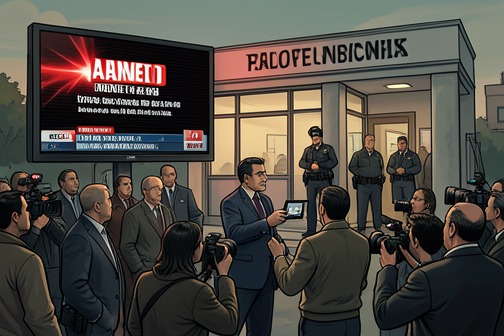
The [AMBER Alert](entity:rule-recall-rule-amber-alert-04e566a2167e) issued after [Charlie Hamilton](entity:character-recall-character-charlie-hamilton-95e2e044441f)’s disappearance turns a local search into a public appeal. [Chase Cooper](entity:character-recall-character-chase-cooper-4f4b8e8dd415) chooses the alert as a fast way to inform media outlets and enlist the public before time runs out; the search for Charlie consequently unfolds not only through police interviews, but also under the gaze of reporters and a town trying to understand what happened.
## Issuance and the Search
After sending an officer to [Megan Carter](entity:character-recall-character-megan-carter-830913e39252)’s apartment to check whether she had appeared, Chase arranges for an AMBER Alert to be issued. Its purpose is practical and urgent: get information about the missing child out quickly and use public attention to help locate her before the worst can happen. The decision comes while the circumstances of Charlie’s disappearance remain unknown.
At the party site, Chase has interviewed the guests who remain, trying to collect their memories while they are fresh. Their accounts have not revealed where Charlie is. Most last saw her riding a pony near the woods, and [Detective Frank Brown](entity:character-recall-character-detective-frank-bro-d15464ba011b) is speaking with the final guests as the investigation continues. The alert broadens the search beyond these first interviews, but the evidence available at this point offers no clear direction.
## The Appeal and Its Human Stakes
The alert’s public reach gives the search a new scale, while the family’s absence from the party becomes a question in its own right. At a police press conference, Chase stands in front of Kathy and [Mitch Hamilton](entity:character-recall-character-mitch-hamilton-3759dd59c006) and identifies them as [Charlotte Hamilton](entity:character-recall-character-charlotte-hamilton-4a3fafa09dba)’s parents. Asked whether they were present when their daughter disappeared, he says both were at work.
A reporter then challenges the account of Kathy’s whereabouts, citing sources who say she never arrived at the refuge that day. The question shifts the press conference from a straightforward appeal for help toward scrutiny of the parents’ conduct. Mitch turns sharply toward Kathy as reporters react; the search for Charlie is now entangled with public suspicion about the adults closest to her.
## Media Scrutiny and Continuing Consequences
News vans gather outside the Hamilton home, where reporters exchange information and the family’s house appears on television. A uniformed officer watches from a cruiser nearby. Chase has described the officer’s presence as protection, and the officer periodically brings updates from the investigation; nevertheless, Kathy fears the police may suspect her or Mitch. The alert’s public dimension thus has two faces: it can bring attention to Charlie’s disappearance, but that attention also makes the family feel watched and judged.
The pressure reaches the family directly when reporters call questions to Mitch outside the house. Kathy regards the press harassment as an added burden during the family’s worst crisis. The scrutiny continues beyond the initial appeal: [Susan Cartwright](entity:character-recall-character-susan-cartwright-19335e9003e1) later tells Kathy and Megan that a press release identified Megan and Mitch as Charlie’s biological parents. She says she wants to investigate their private lives, including alibis that have not held up, and presents greater openness as a way to assist Chase’s investigation. What began as an urgent effort to circulate information about a missing child has therefore become part of a wider contest over which information reaches the public, whose conduct is questioned, and how the family is seen.
Event 4
Olivia Jenkins’s Disappearance Eight Months Earlier
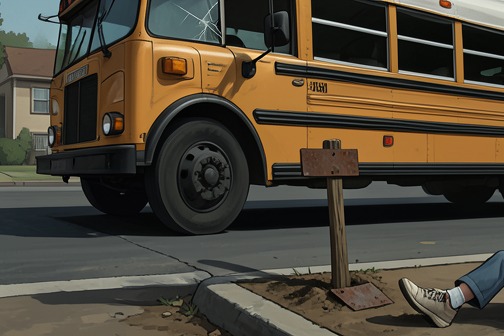
[Olivia Jenkins](entity:character-recall-character-olivia-jenkins-f6189ee5c55f)’s disappearance is an unresolved abduction from [Maple Falls](entity:location-recall-location-maple-falls-b26f669b254a) that had remained unsolved for eight months when [Charlie Hamilton](entity:character-recall-character-charlie-hamilton-95e2e044441f) vanished. Recalled by [Megan Carter](entity:character-recall-character-megan-carter-830913e39252) amid the search for Charlie, Olivia’s case becomes more than an earlier missing-child investigation: it exposes how quickly public attention can recede, and how wealth and social standing may affect which children remain visible. The possibility that the two cases share a perpetrator briefly enters the investigation, but the available evidence does not establish a connection.
## The disappearance and its unresolved status
Megan remembers that Olivia was seven years old when she was snatched after getting off a school bus in the middle of the afternoon. The account provides no confirmed explanation for who took her or where she went. Eight months later, Olivia has still not been seen. Her absence is therefore not presented as a mystery solved through retrospective knowledge, but as an open case whose unanswered questions persist into the search for Charlie.
That continuing uncertainty shapes the comparison between the two disappearances. When a reporter asks whether Charlie’s case is linked to Olivia’s, the police response is that they do not believe so at that time. The answer is cautious rather than conclusive: it gives no basis for treating the cases as connected, while leaving the uncertainty of Olivia’s disappearance intact. Megan, meanwhile, considers whether the same person could have taken both girls. Her suspicion is a possibility she weighs, not a discovery or a confirmed investigative finding.
## Media attention and unequal visibility
Olivia’s mother tried to keep the case in the news, but the media moved on quickly. Megan connects that loss of attention to the family’s circumstances: Olivia lived in a trailer park, and, in Megan’s assessment, viewers were not interested in people who lived there. The case’s fading from coverage thus carries a class dimension. The disappearance remains equally grave, but the attention available to it is not represented as equal.
The arrival of Charlie’s case makes that disparity newly immediate. Megan wonders whether Charlie will also be forgotten or whether the Hamiltons’ prominence, connections, and more affluent neighborhood will keep the search in the news. She fears that those advantages will lead the police to commit more resources to finding Charlie. This is her apprehension about how institutions and audiences might respond, not confirmation that resources have in fact been allocated differently. The contrast nevertheless puts two missing girls beside one another: one whose mother struggled to keep her case visible, and one whose family’s social position may make sustained attention more likely.
## The case as a measure of public concern
Olivia’s disappearance is raised both in a conversation with [Kathy Hamilton](entity:character-recall-character-kathy-hamilton-3d6a08abd995) and during the press questioning around Charlie’s case. [Susan Cartwright](entity:character-recall-character-susan-cartwright-19335e9003e1) invokes Olivia to challenge Kathy’s confidence that the police will find her daughter, noting that another girl from the town has been missing for eight months. The reference brings the unresolved case into Kathy’s immediate crisis, not as proof that Charlie will suffer the same fate, but as a reminder that a disappearance may remain unresolved despite a family’s hope and the presence of a search.
At the press conference, the question about a link to Olivia makes the earlier case part of the public framing of Charlie’s disappearance. The police decline to endorse a connection, while Megan’s private recollection supplies the emotional and social comparison the official answer does not address. The narrative keeps these registers distinct: a possible shared perpetrator remains unproven, but the difference in perceived public attention is already a source of anxiety.
## Narrative significance
Because Olivia’s disappearance reaches the reader through Megan’s memory and through other people’s references to the case, it is present as an absence rather than a fully recounted investigation. The facts given are spare: Olivia was seven, she was taken after leaving a school bus in mid-afternoon, and she has not been seen in eight months. That limited account preserves the case’s unresolved character while allowing its consequences to register in the present.
For Megan, Olivia’s story makes the future of Charlie’s search feel precarious. Her fear is not only that Charlie may remain missing, but that public concern may depend on the Hamiltons’ relative affluence and influence. Olivia’s case therefore functions as a warning about unequal visibility, without turning that warning into an unsupported claim about the police’s actual decisions. The distinction between suspicion and fact remains important: Megan can imagine that one person took both girls, but the police do not believe the cases are linked at this time, and the evidence presented does not resolve the question.
Event 5
Kathy’s Failure to Go to the Women’s Shelter Exposed at the Press Conference
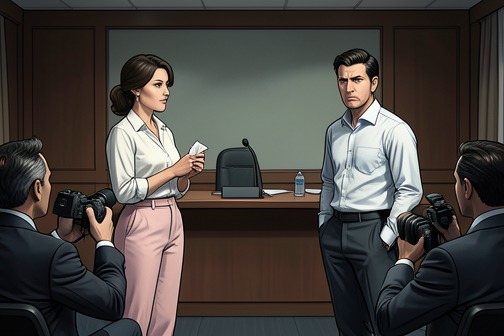
Kathy’s failure to attend the [Women’s refuge](entity:location-recall-location-54e4e0e80929) becomes public during a police press conference about [Charlie Hamilton](entity:character-recall-character-charlie-hamilton-95e2e044441f)’s disappearance, abruptly exposing a gap in the account she had given of her afternoon. The disclosure forces Kathy to explain that she chose to rest at home with a migraine, but the explanation cannot establish where she was. What begins as a reporter’s pointed question becomes a damaging alibi problem: Detective [Chase Cooper](entity:character-recall-character-chase-cooper-4f4b8e8dd415) must now treat Kathy and [Mitch Hamilton](entity:character-recall-character-mitch-hamilton-3759dd59c006) as suspects, while Kathy faces public scrutiny at the very moment her child is missing.
## The Question at the Press Conference
The disclosure reaches [Megan Carter](entity:character-recall-character-megan-carter-830913e39252) in her hospital room, where she unmutes a small television as the press conference begins. Kathy and Mitch stand behind Detective Cooper. Kathy, dressed in pale pink trousers and a white silk blouse, looks down and clutches a tissue; Mitch, in a crisp shirt and suit trousers, stares defiantly at the journalists and then into the camera. The contrast between Kathy’s visibly nervous posture and Mitch’s challenging gaze makes the family’s appearance part of the story before either speaks.
Asked where the Hamiltons were when Charlie disappeared, Cooper says that both parents were at work. He does not mention Megan, who was supposed to collect Charlie for them. Megan understands why: Cooper has told her he wants to keep her attack out of public view unless he finds evidence connecting it to Charlie’s disappearance. He fears that attention will shift from finding the child to scrutinizing Megan, and that the public will suspect her. His omission is therefore an effort to protect the investigation’s focus as well as Megan from being made its target.
The next question breaks the press conference’s carefully controlled account. A local television reporter asks whether Kathy was volunteering at the Women’s refuge that afternoon. Cooper confirms that she was. The reporter then says she has sources who claim Kathy never arrived and asks where she really was. Mitch’s head snaps toward his wife as reporters murmur. Kathy looks surprised, and Megan, watching from her bed, wonders whether Kathy has lied about her alibi. Cooper also appears surprised, but resists turning to look at Kathy; he ignores the question and invites others instead.
The attempt to move on does not contain the revelation. Another journalist asks whether Kathy will answer, and she walks off camera, followed closely by Mitch. Cooper ends the conference by asking the public to provide information and emphasizing that the priority is returning Charlie to her family. Megan recognizes the difficulty: once suspicion has attached itself to someone, it is hard to shake. The announcement has shifted attention from the missing child’s whereabouts to the credibility of one of her parents.
## Kathy Explains Her Afternoon
After the reporters leave the briefing room, Mitch demands to know what is happening and says that Kathy has made them look terrible. Cooper takes the couple into a small, windowless interview room and tells them to sit. Kathy’s hands shake; beside a discarded newspaper and dirty coffee mug, she feels as though she might be arrested. When Cooper asks what she is sorry for, she admits that she had been expected at the refuge but took the opportunity to spend a few hours alone at home.
Kathy explains that she had a migraine and wanted to lie down before the party, where music and afternoon sun would make it worse. She tells Mitch that she needed rest, and says she had not disclosed the decision because she expected to be judged. She was trying to meet the demands of full-time work, the children, and her volunteer commitment, while feeling that Mitch was rarely home and left much of the family’s work to her. Her account makes the missed shift more than a simple discrepancy: she had taken a rare interval of quiet for herself, then concealed it under the assumption that she would be condemned for doing so.
She says that she would have stayed at the party if she had known Charlie would be abducted. The statement conveys her regret, but it cannot repair the missing hours or prove what happened during them. Kathy also suspects that [Cindy Bowers](entity:character-recall-character-cindy-bowers-26fff293b895) told the reporter because Kathy had thrown her out of the house. Mitch says the disclosure does not surprise him, comparing Cindy unfavorably with his brother. In the interview room, therefore, the public revelation also sharpens an existing family conflict over who has exposed the Hamiltons’ private business.
## An Uncorroborated Alibi
Cooper tells Kathy directly that she should not have lied and that the lie makes his job harder. He explains that he now has to treat both her and Mitch as suspects, something he had been trying to avoid. Mitch objects that this will waste time while Charlie may be alone with a sex offender, though Cooper cautions that they do not know that. The shift in investigative status is immediate: Kathy’s decision to hide a few hours of rest has become a reason the police cannot exclude her.
Asked whether anyone saw her return home, Kathy can name no witness. She estimates that she arrived at about 2:15 p.m. and went straight to bed, but clarifies that she did not actually fall asleep; she rested in the silence of an empty house. She left at 3:45 p.m. for an appointment in [Glenwood](entity:location-recall-location-glenwood-4cb6ece938cb) and reports no unexpected visitors. Cooper sums up the evidentiary problem: her alibi cannot be corroborated. Kathy cannot prove she had nothing to do with Charlie’s disappearance, and the privacy she had sought has become an absence of witnesses.
## Public Suspicion and the Cost of Disclosure
For Megan, the press conference also recalls [Olivia Jenkins](entity:character-recall-character-olivia-jenkins-f6189ee5c55f), a seven-year-old who disappeared after getting off a school bus and was never seen again. Megan fears that Charlie’s case might lose public attention as Olivia’s did, while recognizing that the Hamiltons’ local prominence, connections, and affluence may attract more sustained coverage. The contrast shapes the stakes of the televised disclosure: the press can help keep a missing child in view, but its questions can also turn a family’s private conduct into the measure by which the public judges them.
That scrutiny extends beyond the conference. Reporters gather outside the Hamilton home and shout questions at Mitch, prompting Kathy to think that harassing victims’ families should be illegal. The episode’s irony is that Kathy’s absence from the refuge is real, but the public does not learn its circumstances before it becomes a suspicion. Her later explanation is specific—migraine, a need for rest, and a departure for Glenwood—yet the crucial interval remains unverifiable. The press conference thus exposes both a lie and its limits: Kathy concealed her whereabouts, but the resulting suspicion does not itself establish what happened to Charlie.
Event 6
Kathy Reveals to Police That Charlie Is Adopted
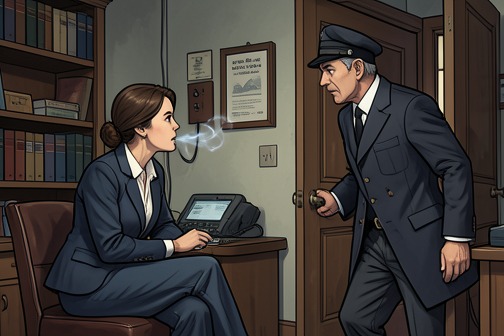
Kathy’s disclosure that Charlie is adopted is a turning point in the investigation into the child’s disappearance: it replaces a withheld family fact with information Chase can act on, while exposing the fear and secrecy shaping Kathy and Mitch’s account. At the moment she speaks, Kathy believes Charlie has no surviving biological family. Later conversations reveal that the apparent adoption story conceals a more complicated truth about Charlie’s parentage, making this disclosure both an investigative opening and an early sign of the family’s hidden history.
## Background and Pressure
The revelation comes during a tense conversation with Chase as he questions Kathy and Mitch about Charlie’s disappearance. Mitch asks whether they are free to leave, but Chase warns that the scrutiny will intensify because of what has happened in the interview. Kathy remains seated while Mitch moves toward the door. She takes a breath and tells Chase that Charlie is adopted. The decision comes at a moment when Kathy expects Chase to keep pressing until Charlie is found; she understands that continued silence may hinder the search.
Kathy explains that Charlie has lived with her and Mitch for only six months. She had not previously volunteered this information because she feared that investigators might mistake the absence of a biological relationship for an absence of love or care. She also worries that the fact could make the couple look suspicious, as though they had been careless with Charlie or involved in her disappearance. Her explanation makes clear that the secret is not evidence of indifference: Kathy insists that she and Mitch are Charlie’s parents now and want her returned safely.
The disclosure also challenges the boundary Kathy had drawn between private family knowledge and information relevant to the search. She says the adoption had seemed irrelevant before Charlie went missing for so long. Once the investigation becomes urgent, however, the fact that she had withheld it carries a different weight. Her fear of being misjudged has protected the family’s public image at the cost of giving police a fuller account.
## What Kathy and Mitch Tell Chase
Chase reacts with surprise and asks why Kathy did not tell him earlier. Kathy answers that she feared he would assume the adoptive parents loved Charlie less, had not protected her, or might have played a part in her disappearance. She emphasizes Charlie’s affection and brightness, as well as the difficult experiences the child has already endured. Her plea is personal, but it also seeks to establish a practical point: the adoption does not lessen the couple’s commitment to bringing Charlie home.
Mitch is visibly uncomfortable as Kathy speaks, and he objects when she first reveals the adoption. He nevertheless supplies what he understands to be the relevant information about Charlie’s origins: the couple were told that her biological parents were dead and that she had no biological family left. At this stage, the adults present the adoption as a settled history with no living relatives for police to investigate. That claim limits the search in their minds, even as the disclosure itself gives Chase reason to consider the question of biological involvement.
Chase says that knowing Charlie is adopted allows him to check whether her biological parents could be connected to her disappearance. His response shows why the information matters beyond the couple’s private circumstances. The disclosure changes the scope of the inquiry: investigators can now test a line of investigation that Kathy and Mitch had not previously placed before them. Kathy’s decision is therefore both a confession of omission and an act intended to help find Charlie.
## Investigation and Public Scrutiny
Chase tells Kathy and Mitch that withholding information hampers the investigation and asks them to stop keeping things from him. He also points out that Kathy should have disclosed Charlie’s adoption before the press conference. Because she did not, he plans to issue a statement confirming it before reporters learn the fact through the family’s acquaintances. He fears that the press could portray the delay as a deliberate attempt to hide Charlie’s adoption.
His advice extends beyond the statement. Chase warns the couple to avoid reporters and give no-comment answers as they come and go from home. The press already has reason to question their account after learning that Mitch’s alibi was false; Chase expects reporters to take the story in a new direction. The adoption disclosure thus moves quickly from an investigative fact to a matter of public presentation. Kathy’s effort to protect the family from suspicion has created another vulnerability: unless police establish the facts first, the media may define the omission for them.
The exchange also distinguishes two kinds of responsibility. Kathy and Mitch are responsible for having kept relevant information from Chase, and he explains the investigative cost of that choice. But the scene does not equate their silence with responsibility for Charlie’s disappearance. Kathy explicitly asks Chase to believe that they had nothing to do with it and want their daughter safe. The distinction between a damaging omission and guilt in the crime is central to the pressure of the interview.
## Later Revelations About Parentage
Later conversations complicate the account Kathy gives Chase. Kathy tells Megan that Mitch described a brief affair six years earlier that resulted in a daughter, and that he had visited the child every month for five years without Kathy knowing. Kathy then asks Megan whether it was difficult to let Mitch change the girl’s surname to Hamilton and pretend that they had adopted her. That conversation recasts the earlier disclosure: what Kathy presented to Chase as an adoption with no surviving biological family was entangled with concealed parentage and a constructed family story.
The book further places Charlie’s story beside Megan’s own discovery about her origins. Megan explains that she was adopted as a baby and had known Jeanette as her mother, without knowing her birth parents. She later tells Kathy that her birth name is Hope Hamilton. These revelations concern different children, but together they show how adoption, biological connection, caregiving, and names can diverge within the same family history. Kathy’s disclosure about Charlie opens an investigation into origins; the later disclosure to Kathy about Megan identifies a daughter she had once lost and did not recognize.
## Family Secrecy and the Meaning of the Disclosure
The scene’s importance lies partly in its reversal of what counts as protection. Kathy withholds Charlie’s adoption because she fears that others will doubt the love and legitimacy of her parenthood. Yet the silence restricts what Chase can investigate and leaves the public narrative vulnerable to rumor. Speaking gives the police a useful fact, but it also places a private family history under scrutiny. The moment does not resolve the question of Charlie’s biological family; it makes the need to ask that question unavoidable.
Later, Kathy recognizes a wider family pattern in which intimate truths have been managed, concealed, or used to control others. She reflects on the effects of her parents’ conflict on her own struggles and on Fay’s anxiety, and resolves to break that cycle. That recognition gives the earlier interview a broader resonance without changing its immediate stakes: in the room with Chase, Kathy is trying to help find Charlie and to be believed as her mother. The adoption disclosure is an incomplete first step toward truth, one that makes the search more open even as later revelations show how much remains hidden.
Event 7
Charlotte Hamilton’s Disappearance
[Charlie Hamilton](entity:character-recall-character-charlie-hamilton-95e2e044441f)’s disappearance turns an ordinary family weekend into a search marked by uncertainty, guilt, and public scrutiny. No clothing, blood trail, or eyewitness points to what happened; for investigator [Chase Cooper](entity:character-recall-character-chase-cooper-4f4b8e8dd415), that absence of clues suggests a planned abduction by someone with knowledge of Charlie’s movements and the party site, rather than an opportunistic stranger’s grab.
## The Disappearance and the Investigation
By the second morning without Charlie, the investigation has not established who took her or where she is. The absence of dropped clothing, blood trails, and eyewitnesses leaves investigators without the kinds of immediate leads that might clarify how she vanished.
Chase considers what that lack of evidence implies. A child taken from a birthday party could be removed with little trace if the abductor knew when she would be there and how to leave. He therefore weighs two possibilities: the person responsible belonged to Charlie’s family, or knew the family well enough to plan ahead. This is an investigative inference, not a confirmed identification of the abductor.
The search also includes checks of local registered sex offenders. Those not incarcerated were under parole supervision and had credible alibis for the day Charlie disappeared. The checks do not solve the case; in Chase’s assessment, an undetected offender within or familiar with the family remains a greater concern than a registered offender with no established connection.
## The Family’s First Mornings Without Charlie
The second morning brings Kathy into a house surrounded by reporters. The weekend has passed into Monday, and plans to take Charlie shopping for vacation clothes and then to Kathy’s favorite diner have been overtaken by the search. Kathy recalls the special-occasion ice-cream sundae she had often refused Charlie and grieves the ordinary treat as one more chance she wishes she had taken.
The night before, Kathy could not sleep and went to Charlie’s room. [Mitch Hamilton](entity:character-recall-character-mitch-hamilton-3759dd59c006) joined her there. Neither confronted the other: they cried for Charlie and prayed she would find her way home. Their grief is joined by guilt over the choices that preceded the disappearance—whether one of them should have stayed at the party, or whether both should have gone and been the family Charlie needed. They eventually fell asleep together on Kathy’s bed, holding on to one another.
## Public Scrutiny and Unresolved Stakes
The reporters have increased in number since the previous evening’s press conference. Kathy avoids the newspapers and television, but Mitch warns her that she may become the headline because she misled police about where she had been. The focus on her conduct adds a public dimension to an already painful search, without answering the central question of who took Charlie.
When Mitch returns, the reporters outside throw questions at him. Kathy thinks the press should not be allowed to harass victims’ families at the worst moment of their lives. The episode places the family’s private distress beside the town’s demand for answers: Charlie remains missing, the evidence points toward planning but not to a named culprit, and scrutiny of her parents threatens to become a story of its own.
Event 8
Megan Carter’s Attack
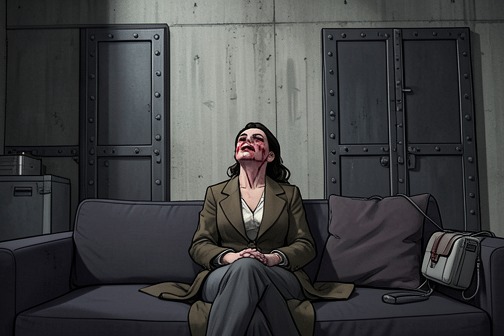
[Megan Carter](entity:character-recall-character-megan-carter-830913e39252)’s attack turns her private injuries into a public spectacle and opens a new line of inquiry into Charlie’s disappearance. Its consequences reach beyond the assault itself: Megan must manage pain while resisting medication, faces accusations from reporters and online commentators, and becomes central to investigators’ search for possible connections between the two cases.
## Attack and Immediate Aftermath
The assault took place at Megan’s apartment, where the attacker entered and left through an open fire escape, according to the information available to investigators. By the time Megan arrived at the Hamilton home, her neck was still swollen and her face bruised; the swelling had begun to subside, but her appearance showed that the attack was recent. Her throat remained sore as it gradually healed, and a persistent headache troubled her even more. A doctor had prescribed painkillers, but Megan hesitated to ask [Kathy Hamilton](entity:character-recall-character-kathy-hamilton-3d6a08abd995) or [Mitch Hamilton](entity:character-recall-character-mitch-hamilton-3759dd59c006) for them: she wanted to cope without medication, though resisting temptation grew harder as news about Charlie’s disappearance continued to appear.
## Public Scrutiny and Isolation
The attack becomes a public spectacle when reporters turn their attention to Megan after seeing her arrive at the Hamilton home. Watching from the kitchen window, she sees them treating her as responsible for what happened: their coverage casts a woman bartender who lives alone in a particular part of town as someone who invited violence. Online stories extend the blame to Charlie’s disappearance, suggesting that Megan staged her injuries to conceal having taken Charlie and harmed her. The accusations invert the facts of her victimization, making the injuries themselves suspect.
Megan wants to confront the reporters but has held back. She also fears that their inquiries could expose that Charlie is her daughter: no one has yet made the connection, but someone in [Glenwood](entity:location-recall-location-glenwood-4cb6ece938cb) who knows Megan could reveal it. In [Maple Falls](entity:location-recall-location-maple-falls-b26f669b254a), she has no friends beyond the Hamiltons. Meanwhile, the reporters’ presence steadily recedes; they arrive later and leave earlier as the days pass, a visible measure of the waning attention paid to Charlie’s disappearance. Megan reads their retreat not as reassurance but as evidence that they expect Charlie never to be found.
## Investigative Significance
The attack changes the scope of the investigation once Megan is identified as Charlie’s biological mother. Because the assailant entered and left through an open fire escape, investigators have a limited known account of how the attack was carried out; the newly understood family connection gives them reason to consider whether it is linked to Charlie’s disappearance. That link opens a new avenue for suspects: investigators plan to question Megan’s co-workers and customers from the bar, as well as any family they can locate. The assault is therefore not only an act of violence against Megan but also a possible clue to the disappearance, bringing the people in her life into the search.
## Arrival at the Hamilton Home
Mitch brought Megan to the Hamilton home with a suitcase of belongings from her apartment, which they had collected on the way. Kathy greeted her with a fixed smile, but Megan hesitated at the doorway until Mitch coaxed her into the kitchen. She blushed when she noticed Kathy’s mother on the couch. Still looking as if she had only just got out of bed, Megan wore gray sweatpants, an oversized cardigan over a white vest, and her hair in a messy topknot. Her neck was less swollen, though still visibly abnormal.
Fay had not seen Megan since Charlie disappeared. Seeing the bruises, she gasped, tears in her eyes. Megan stepped toward her and tried to reassure her that the pain was not as bad as it might look; when she admitted how badly it had hurt at first, she glanced at Kathy and apologized for swearing. The exchange brings Megan’s injuries into the family’s shared space: her effort to comfort Fay sits alongside the visible evidence of the violence she has survived.
Event 9
The Hamiltons’ Reward Offer
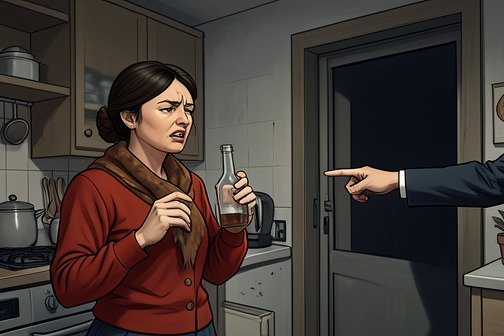
[The Hamiltons’ Reward Offer](entity:event-recall-event-the-hamiltons-reward-of-7a1d1f6e8d0c) puts a price on information, not on [Charlie Hamilton](entity:character-recall-character-charlie-hamilton-95e2e044441f)’s return: [Kathy Hamilton](entity:character-recall-character-kathy-hamilton-3d6a08abd995)’s parents promise $25,000 to anyone whose information helps locate their missing granddaughter. The decision gives a desperate family a new way to act, but also exposes the conflict between their hope that money will unlock silence and [Chase Cooper](entity:character-recall-character-chase-cooper-4f4b8e8dd415)’s concern that public attention will flood investigators with distractions. Its clearest later consequence is a lead about a little girl’s cowboy hat at a renovation property in [Glenwood](entity:location-recall-location-glenwood-4cb6ece938cb).
## Decision and Intended Purpose
Kathy’s father announces the reward before [Megan Carter](entity:character-recall-character-megan-carter-830913e39252) arrives, framing it as a practical response to the family’s helpless wait. He proposes $25,000 to start and argues that money can persuade a friend or neighbor of the perpetrator to speak. In his view, a financial incentive may bring forward someone who has relevant knowledge but has not yet contacted the police. Kathy agrees; the offer gives her fresh hope, and she embraces her father in gratitude.
The decision is made despite police reservations. Kathy tells her father that the police do not think a reward is a good idea, but he dismisses that objection and insists that the family should act. The difference is not simply between hope and pessimism: her father treats the reward as a direct means of motivating a witness, while the investigators must consider how the offer will affect the volume and usefulness of information reaching them.
## Publicity and Investigative Risks
Kathy later tells Chase about her parents’ plan and asks whether it can hurt. Chase acknowledges that the money might encourage people to come forward, but warns that a widely publicized reward could also alert people across the country that the family has money. He expects false claims from people hoping to collect it, potentially diverting investigators from genuine leads and overwhelming the team.
Even so, Chase is willing to proceed. With Charlie still missing, he says he is prepared to try anything that might bring her home and promises to have a press release issued by the end of the day. The exchange makes the reward a calculated risk rather than an uncomplicated solution: it may widen the pool of potential witnesses, but it may also make the search noisier at precisely the moment when the police need to distinguish useful information from opportunism.
## Circulation Through the Search
The reward also becomes part of [Mitch Hamilton](entity:character-recall-character-mitch-hamilton-3759dd59c006)’s own search efforts. Without telling Chase, he prints hundreds of missing-person flyers, pins them up and hands them out around town. He adds the reward money to the flyers, hoping to put Charlie’s image into as many people’s minds as possible while they search. Kathy feels better seeing him take action instead of waiting for news that never comes.
The flyers give the offer a local, repeated presence beyond the planned press release. Their purpose is both recognition and response: residents are asked to keep Charlie in view, while the money gives anyone with information a reason to contact the family or authorities. Mitch’s initiative is distinct from Chase’s management of the investigation, however; Kathy knows he has not told the detective what he is doing.
## A Lead, Not a Resolution
The reward eventually prompts a member of a contractor’s team to come forward with information about something found at a renovation property in Glenwood belonging to Mitch and Scott Bowers. Kenny, the contractor who had confirmed that Mitch’s alibi was false, calls [Detective Brown](entity:character-recall-character-detective-brown-46069947f8b4) with the report. The object is a little girl’s cowboy hat. This is the offer’s most concrete investigative consequence: a tip connected to the reward directs attention to a specific item at a specific property, rather than bringing Charlie home or resolving the case by itself.
The report joins an investigation already piecing together a narrow and uncertain timeline. Chase has pursued a caller who heard a piercing scream near the meat market between about 1:45 and 2:15 on Saturday, while his recollection places Scott at the market around 2:40. Separately, a party entertainer’s inability to recognize Charlie among the many children supports Chase’s conclusion that she was not there long enough to be noticed, helping him narrow the likely time of her abduction. The reward does not settle how these clues fit together; it helps make another physical lead visible.
That distinction matters to the event’s role in the search. The family’s money can encourage disclosure and produce a report investigators might otherwise not receive, but the value of a tip still depends on what it identifies and how it can be assessed. The later forensic finding of Charlie’s DNA on the clown mask supplies a different kind of evidence, underscoring that the reward is one channel in the investigation, not proof of guilt or a substitute for corroboration.
Event 10
The Second Clown Lead
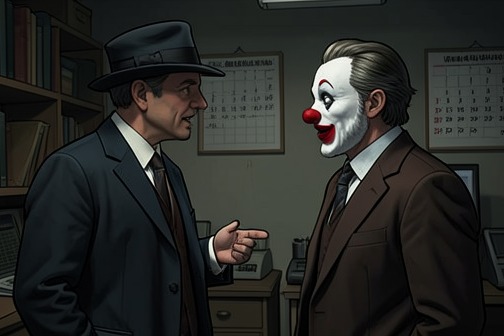
[The Second Clown Lead](entity:event-recall-event-the-second-clown-lead-72b7333da787) is the moment [Chase Cooper](entity:character-recall-character-chase-cooper-4f4b8e8dd415) learns that [Charlie Hamilton](entity:character-recall-character-charlie-hamilton-95e2e044441f)’s birthday party may have included an unidentified second clown. The discovery gives the investigation a new question to pursue: not simply when Charlie disappeared, but who had entered the party disguised behind a mask. It offers Chase a possible route toward identifying a person of interest, though nothing in the encounter establishes that the second clown was involved in Charlie’s disappearance.
## How the discrepancy emerges
Chase’s conversation with [Jim McClean](entity:character-recall-character-jim-mcclean-8ed4af37d19f) begins with a familiar difficulty in the search: guests have said that Charlie was not present long enough to attract their attention. Jim likewise says he could not pick the missing girl out of a lineup and did not recognize her picture on the news. For Chase, the similarity among these accounts is useful. If Charlie went unnoticed by multiple guests, she may have been at the party only briefly, helping him narrow the time in which she was abducted.
Chase asks when Jim and his associate started and finished work. Jim’s confused response exposes the assumption built into the question: he has no associate. Chase then explains that another clown was present that afternoon. The important shift is from timing to identity. What Chase had framed as a routine question about the hired performers now points to a person whom the hired clown says he did not know.
Jim says that he works alone. He did briefly see another clown, but did not speak to him and assumed the woman who arranged the party had hired two performers. That explanation does not resolve the discrepancy: [Cindy Bowers](entity:character-recall-character-cindy-bowers-26fff293b895) had given Chase the contact details for only one clown. The second performer was therefore not accounted for by the hiring information Chase had received.
## The masked figure
The detail that sharpens the lead is not merely that there were two clowns, but that the second one wore a mask. When Chase asks whether Jim recognized him, Jim explains that the mask made recognition impossible. Chase contrasts it with the makeup clowns usually use, and Jim agrees that the masked performer must have been sweating beneath the rubber. He also says the man did not stay long.
Jim’s explanation remains a possibility, not an identification: if Cindy had not hired the second clown, perhaps one of the children’s fathers had dressed up for fun. In Jim’s view, the masked figure was not a professional clown. But that characterization does not tell Chase who the person was, why he wore the costume, or whether he was a parent. Chase’s instinct is that the detail deserves attention, and he asks how Jim knows the masked clown was a man—leaving open whether the performer could have been a woman.
The exchange makes the mask a practical obstacle as well as a clue. It explains why the performer could not be recognized while also distinguishing him from the clown Jim knew as the hired entertainer. Yet the evidence remains incomplete: Jim saw the figure only briefly, did not speak with him, and cannot supply an identity. The lead depends on finding someone else who can connect a guest to the costume.
## From interview to urgent follow-up
After leaving, Chase contacts [Detective Brown](entity:character-recall-character-detective-brown-46069947f8b4) before getting into his hot car. He asks whether any of the guests interviewed so far have mentioned the clowns. Detective Brown reports that they have referred to only one. The contrast between the guests’ accounts and Jim’s brief sighting makes the second clown an investigative gap rather than a confirmed part of the party’s story.
Chase tells Detective Brown that there were apparently two clowns, and that the clown hired by Cindy did not know the other one. He asks for all the guests to be called again as a matter of urgency, with a specific question: does anyone know who wore the clown costume? Chase reasons that the mask makes a parent of one of the children a plausible possibility, but he does not treat that guess as settled. He also raises the alternative that, if the person was not a parent, the masked figure could be their suspect.
Detective Brown understands the possibility and says he will act straight away. Chase’s excitement is physical—his stomach flutters at the thought of having a possible suspect—but he checks himself: he does not want to get his hopes up. The distinction matters. The discovery has changed the investigation’s direction, but it has not yet produced a name or demonstrated guilt.
## Significance and limits
The lead connects two kinds of uncertainty in Charlie’s disappearance. The repeated reports that Charlie was not noticed help Chase narrow the likely period of the abduction; the second clown raises the possibility that an unaccounted-for person was present during that period. By returning to the guests with a more precise question, Chase turns a small inconsistency into a testable line of inquiry.
The event ends without identification or resolution. Chase thanks Jim for his time, leaves with cat fur on his shirt, and moves directly from the interview to the call for renewed questioning. He then asks Detective Brown whether local registered sex offenders have been checked. That question signals the investigation continuing along another line; it does not establish any connection between such a check and the masked clown. The second-clown lead is therefore a consequential opening, not an answer: it makes the party’s apparent cast less complete and gives the police a concrete detail to verify.
Event 11
Mitch Hamilton’s False Alibi Is Exposed
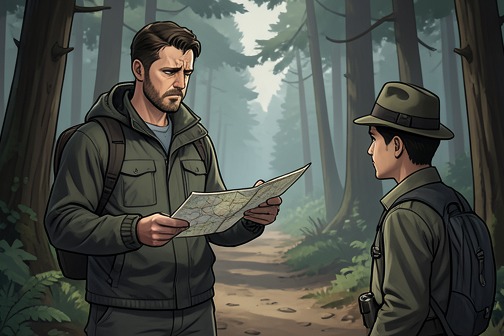
[Mitch Hamilton](entity:character-recall-character-mitch-hamilton-3759dd59c006)’s false alibi is exposed when [Detective Brown](entity:character-recall-character-detective-brown-46069947f8b4) establishes that Mitch was not at the [Glenwood](entity:location-recall-location-glenwood-4cb6ece938cb) renovation site on the Saturday Charlie disappeared. The confrontation at the station forces Mitch to replace his account of a day at work with an admission that he spent much of it on the [Overlook hiking trail](entity:location-recall-location-overlook-5dbad8879412); in the same questioning, he discloses his affair with [Megan Carter](entity:character-recall-character-megan-carter-830913e39252) and implies that Charlie is their biological daughter. The event changes the investigation’s understanding of Mitch and Charlie’s family history, but it does not establish that Mitch took Charlie.
## The Alibi and Its Unraveling
Mitch had told [Kathy Hamilton](entity:character-recall-character-kathy-hamilton-3d6a08abd995) and Detective [Chase Cooper](entity:character-recall-character-chase-cooper-4f4b8e8dd415) that he worked all day on Saturday, which was why he could not collect Charlie from the birthday party. His account depended on a visit to contractors at a renovation property in Glenwood. When Chase asks Detective Brown whether he has spoken to the contractors, Brown reports that the foreman initially corroborated Mitch’s story, placing him at the site between one and four in the afternoon.
That apparent confirmation does not survive Brown’s follow-up. The foreman seems uncomfortable, avoids eye contact when Brown asks whether he was told to cover for Mitch, and hesitates because he fears losing his job. Brown appeals to the foreman as a father worried about a little girl being kept from her family. The foreman then admits that Mitch asked him to lie. Mitch had not visited while the foreman and his team were working: they had been at the site all day and finished early, at four, because it was the weekend. The detail that first made Mitch’s story sound verifiable—the foreman’s supposed confirmation—therefore becomes the means by which its fabrication is uncovered.
## The Station Confrontation
Once Brown reports what the foreman said, Chase calls Mitch’s account a lie and asks him to come to the station for further questioning. Kathy is startled by the demand: she believes the couple has already told the investigators everything they know. Chase clarifies that he needs to question Mitch alone, then explains that her husband has been lying to them. The revelation moves the suspicion from an unverified possibility into the immediate family’s intimate circle, while leaving Kathy to confront it without yet knowing what Mitch has concealed.
At the station, Chase reminds Mitch that he had claimed to work all day and that the foreman did not see him at the site. Mitch does not look up and says he does not want to discuss the matter. Chase insists that a suspect in a child’s abduction cannot choose which questions to answer. Mitch, in turn, challenges Chase with an accusation that the detective might have killed Charlie to punish either Kathy for rejecting him or Mitch for marrying her. Chase rejects the theory and points out that Mitch is the one without a credible alibi. The exchange makes the confrontation personal, but it also keeps its central evidentiary distinction clear: Mitch’s lie demands explanation; by itself, it does not prove that he abducted his daughter.
## The Actual Whereabouts
After pressing Mitch to explain, Chase softens his approach and asks what he did that day. Mitch finally admits that he spent most of it at the Overlook hiking trail, about fifty miles north of the area. Chase knows the remote trail and asks whether Mitch chose it as a secluded place to hide a body. Mitch denies that suggestion. The scene thus replaces a false workday account with a real but initially suspicious destination, without resolving what Mitch did during every part of the day.
Mitch explains that his marriage was in trouble and that he had gone out to think about whether to keep trying to repair it or leave and begin again. His account shifts the interrogation from his location to the private history behind the marriage. He says that he had made mistakes and admits that he got drunk and slept with a bartender. Chase recognizes that he means Megan Carter, whom Mitch had got to know at the sports bar where she worked.
Mitch recounts that a house sale he had been relying on fell through and that he became drunk at the bar while Kathy was away for a few days visiting friends with Fay Hamilton. He says he spent the weekend drunk in bed with Megan. This disclosure reveals that the lie concealed more than an unexplained absence from a work site: the hidden day connects Mitch to Megan and exposes a breach of trust in his marriage. The text supplies his circumstances and confession, but does not establish that the affair was his stated reason for inventing the alibi.
## Charlie’s Parentage and the Investigation’s Turn
The affair leads Chase to ask whether Mitch had considered that Megan might become pregnant. Mitch says he did not think she would. He does not directly state that Charlie is his child with Megan; instead, his silence and refusal to meet Chase’s gaze leave Chase to draw the implication and ask whether Charlie is not adopted after all. Mitch looks away rather than answering. The distinction matters: the scene presents Charlie’s biological parentage as a conclusion Chase reaches from Mitch’s admission and reaction, not as a clear spoken confirmation from Mitch.
The sequence layers revelations rather than resolving the disappearance. First the foreman’s testimony discredits the work-site alibi; then Mitch supplies the trail as his actual destination; finally, his confession uncovers the affair and raises the possibility that Charlie is his biological daughter with Megan. Each disclosure alters the meaning of the previous one, but none identifies what happened to Charlie at the birthday party. The false alibi makes Mitch’s account of the day unreliable and intensifies the investigation’s focus on the family. It also exposes a concealed parentage story beneath the missing-child case, leaving suspicion and family history newly entangled without equating either with proof of abduction.
Event 12
Charlie’s Placement with the Hamiltons
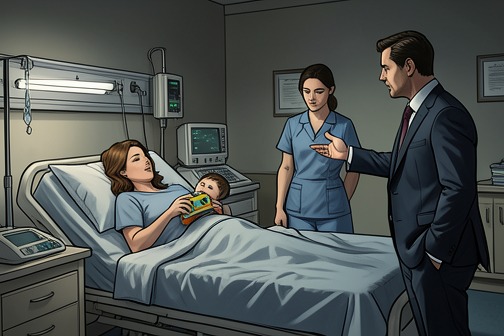
[Charlie’s Placement with the Hamiltons](entity:event-recall-event-charlie-s-placement-wit-638fbf31dbe3) began as a response to an immediate threat: after Megan overdosed, child services arrived at the hospital and said they would take Charlie from her. Mitch and Kathy agreed that Charlie would live with them, while Megan retained access to her daughter. The decision offered practical security, but it also established a concealed version of Charlie’s family history that shaped the lives and relationships of all three adults and the children in the household.
## Circumstances and Decision
Megan’s overdose occurred on [Christmas Day](entity:time-recall-time-0cffe7da2c4d), a difficult time for her as someone from a fractured family. She later explained to Kathy that the relapse was not intentional: she had believed she could control her substance use, but had been unable to resist it. When child services said they would take Charlie, Megan contacted Mitch to sort out her life. The hospital crisis thus brought into the open the precarious circumstances that had surrounded Charlie’s care.
Mitch told Chase that Megan’s overdose had made Charlie’s living situation urgent. He understood the choice as either Charlie living with him or child services taking her. Megan, looking back on the decision, described the alternative as Charlie being taken permanently or going to live with her well-off father. She wanted to raise Charlie herself, but believed that, in those circumstances, living with Mitch was the necessary choice. The placement was therefore neither a simple rejection of Megan’s motherhood nor a settled resolution of her addiction; it was a family arrangement made under pressure, with Megan’s hope of having Charlie full-time left intact.
## Terms of the Arrangement
Mitch agreed to pay Charlie’s expenses and Megan’s apartment costs on the condition that Megan stay clean. Kathy and Mitch also agreed that Megan could visit Charlie whenever she wanted. The arrangement preserved an ongoing relationship between mother and daughter even as their day-to-day lives were separated. Megan later emphasized that she wanted the ordinary work and closeness of parenting: making breakfast, shopping for clothes, and reading Charlie a bedtime story. She said she loved Charlie, while acknowledging that her Christmas relapse could make others question her ability to care for her.
Charlie already had a good relationship with Mitch, and the move meant she would spend more time with her father. Mitch said she was confused at first, but could see that Megan was struggling. He did not think Charlie understood that the change might be permanent. The difference between the adults’ understanding and the child’s understanding mattered: what the adults treated as a necessary arrangement was, for Charlie, a change whose lasting implications she was too young to grasp.
## Concealment and Family Life
The adults presented the arrangement as an adoption. Mitch said he and Kathy agreed to tell people that Charlie had been adopted and that Megan was her babysitter. Charlie took the Hamilton surname, although Megan privately wished she could be known as Charlie Carter instead. Kathy later asked Megan directly whether it had been difficult to let Mitch change Charlie’s last name and pretend they had adopted her. That question made clear that the placement involved more than where Charlie lived: it also required Megan to accept a public account that obscured her place as Charlie’s birth mother.
Mitch explained the secrecy through several pressures. He had his business to consider, and Connie did not want the family name brought into disrepute. Kathy, he said, was private and feared that the town would discuss Mitch’s affair and regard her as a doormat for remaining with him. The concealment also hid the history from Fay: Mitch said she believed Charlie was adopted, and that he and Kathy had not told her because she was already seeing a therapist and they feared the news would worsen her anxiety. Kathy treated Charlie as she treated Fay, and turned to the church and her parents for guidance, even as the false account remained in place.
## Later Consequences and Significance
The placement’s secrecy became part of a wider pattern in the family, where attempts to protect children from painful truths also left them exposed to the consequences of adult decisions. Kathy’s therapist linked Kathy’s own food-related difficulties to her parents’ arguments while she was growing up. Later, when Kathy considered the effect of her silence about Mitch’s affair on Fay, she recognized a resemblance between the marriage she had tried to preserve and the household she had grown up in. She resolved to break that cycle. Those reflections do not erase the immediate care the placement provided; they show how its surrounding concealment carried emotional costs beyond the original crisis.
The arrangement also acquired a different significance once the concealed histories came into view. Kathy confronted Connie over the earlier decision that had separated Kathy from her first daughter, and accused her of taking away her choice. Later, as the family faced Connie’s betrayal and its consequences, Fay said she no longer wanted to be a Hamilton. Kathy suggested that Fay Carter suited her, while Mitch also wanted to abandon the Hamilton name and return to Bowers. The name that had helped make Charlie’s placement look legitimate had become inseparable from secrecy and family harm. Charlie’s move into the Hamilton home had secured her care at a moment of crisis, but the false adoption story surrounding it could not remain a neutral convenience: it shaped the family’s understanding of belonging, parenthood, and what protection required.
Event 13
Mitch Reveals Charlie’s Parentage
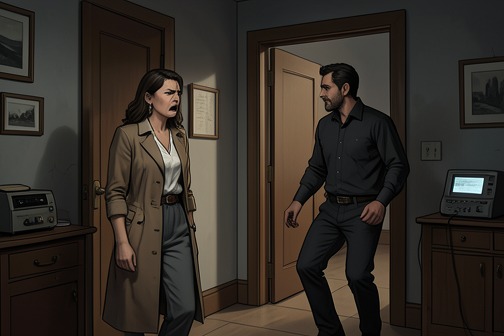
[Mitch Hamilton](entity:character-recall-character-mitch-hamilton-3759dd59c006)’s revelation that [Charlie Hamilton](entity:character-recall-character-charlie-hamilton-95e2e044441f) is his biological daughter with [Megan Carter](entity:character-recall-character-megan-carter-830913e39252) overturns the family’s account of Charlie as an adopted child. The truth emerges in stages: [Kathy Hamilton](entity:character-recall-character-kathy-hamilton-3d6a08abd995) first tells [Chase Cooper](entity:character-recall-character-chase-cooper-4f4b8e8dd415) that Charlie is adopted, then Mitch confesses his affair and its consequence to Chase, and later confirms the parentage to the detective and the family. What began as a concealed relationship becomes central to the search for Charlie and to the family’s wider reckoning with secrecy, parenthood, and belonging.
## Background and the Adoption Story
Before Mitch admits Charlie’s parentage, Kathy tells Chase that Charlie is adopted. She speaks while Mitch is moving toward the door, convinced that Chase will uncover the truth as the investigation continues. Mitch is angry at her disclosure, but Kathy explains that Chase would find out eventually and that the adoption is not, in itself, a secret. She says Charlie has lived with them for only six months. At this point, the adoption account conceals the more consequential fact: Mitch and Megan are Charlie’s biological parents.
Mitch later tells Chase that his marriage to Kathy has been in trouble and that he had been considering whether to keep trying to repair it or leave. He admits that, six years earlier, he slept with Megan, a bartender he knew from the sports bar where she worked. A house sale he had depended on fell through; after drinking heavily, he spent the weekend with her while Kathy was away visiting friends with Fay Hamilton. Mitch says he had not expected Megan to become pregnant. The confession makes clear that Charlie’s apparent adoption story was built around a past affair and its unacknowledged consequence.
## The Confession to Chase Cooper
Mitch does not initially state the parentage outright. After he admits that Megan became pregnant, he leaves the implication for Chase to recognize. Chase asks whether Charlie is therefore not adopted, but is Mitch and Megan’s biological daughter. Mitch looks away rather than answering with an immediate explanation. The exchange marks the point when the affair’s private history becomes an explicit possibility in the investigation.
The confession also changes how Mitch’s earlier conduct reads. He had been visiting Charlie every month for five years without Kathy knowing. He had allowed Charlie to take the Hamilton surname and maintained the appearance that Kathy and Mitch had adopted her. Kathy later tells Megan that Mitch described the relationship as a brief fling with a younger woman that resulted in a daughter, and that she felt naïve when she learned of the regular visits he had kept from her. The secret therefore involved more than concealed biological parentage: it shaped Charlie’s name, her place in the household, and the account Kathy believed about her arrival.
## Disclosure During the Search
The truth moves beyond Chase’s private conversation with Mitch. During a tense gathering, Mitch stops the argument and tells the others that he has told Detective Cooper that Charlie is his and Megan’s daughter. Kathy is surprised and relieved; she believes he should have told Chase from the beginning, and recognizes that both she and Mitch should have been more forthcoming. Megan immediately sees another consequence: the press may condemn her for having slept with a married man. The disclosure clarifies Charlie’s parentage while exposing Megan to public scrutiny and intensifying the family conflict around the search.
The revelation does not resolve every question in the investigation. Kathy asks Mitch why he lied about where he was on the Saturday Charlie disappeared, but he says he is not comfortable discussing it in front of the others. His confirmation of Charlie’s parentage is thus a major disclosure, not a complete account of his actions or whereabouts. The distinction keeps the family’s newly acknowledged truth separate from the unanswered questions surrounding Charlie’s disappearance.
## Wider Family Consequences
Later disclosures recast the relationship between the women at the center of the secret. Megan tells Kathy that she was adopted as a baby and that her birth name is Hope Hamilton. This establishes that Megan, Charlie’s biological mother, is also Kathy’s long-lost daughter. The parentage revelation consequently joins two concealed family histories: Mitch’s hidden paternity of Charlie and Kathy’s separation from Hope, whose identity Megan has only recently learned.
The family’s response eventually reaches beyond biological facts to questions of name and affiliation. At Charlie’s grave, Kathy asks Megan how she would feel about Kathy changing her surname to Carter. Kathy also suggests that Fay Carter has a fitting sound; Fay has already said she no longer wants to be a Hamilton after [Connie Hamilton](entity:character-recall-character-connie-hamilton-3d27ede624f4)’s betrayal. Mitch, meanwhile, is ready to leave the Hamilton name and return to Bowers, and has moved into his own place. These changes do not undo the deception or the loss that prompted the search, but they show how the revelation unsettles the identities the family had treated as settled.
Event 14
Fay Learns the Truth About Charlie
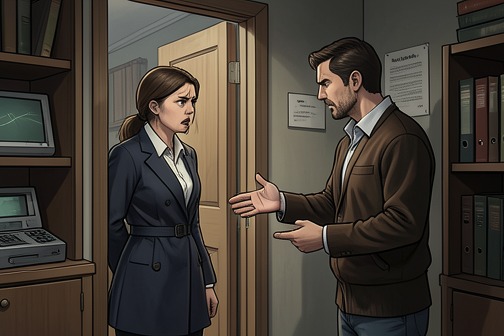
[Fay Learns the Truth About Charlie](entity:event-recall-event-fay-learns-the-truth-ab-2363cf756077) is the moment when [Mitch Hamilton](entity:character-recall-character-mitch-hamilton-3759dd59c006) tries to tell his sixteen-year-old daughter that Charlie was not adopted, only to learn that Fay had already inferred the secret from arguments she overheard at home. His confirmation turns a concealed parentage into an open family conflict: Fay condemns his affair with [Megan Carter](entity:character-recall-character-megan-carter-830913e39252), asks whether her parents are divorcing, and hears him acknowledge that separation is inevitable. The episode also shows that Fay’s suspicions had not prevented her from helping Charlie feel at home.
## Background and Intended Disclosure
Charlie had arrived at the Hamilton home after Christmas, and Mitch and [Kathy Hamilton](entity:character-recall-character-kathy-hamilton-3d6a08abd995) had presented her as an adopted child. In reality, Charlie was Mitch’s daughter with Megan. Kathy later explains to Megan that Mitch had described the relationship as a brief fling six years earlier, and that he had visited the child every month for five years without Kathy knowing. Charlie had been living with the Hamiltons for six months by the time Kathy disclosed her adoption status to Detective [Chase Cooper](entity:character-recall-character-chase-cooper-4f4b8e8dd415) during the investigation into her disappearance.
Mitch planned to speak to Fay himself. Before Kathy and Megan went out to meet a reporter, Kathy told Megan that Mitch was going to explain that Charlie had not been adopted and that Megan was Charlie’s mother. Kathy also admitted she had not told Mitch about the meeting, presenting it to him only as a chance to get some fresh air. The planned disclosure was therefore part of a broader effort to bring the hidden history into the open, even as Kathy and Megan kept their own meeting private.
## Fay’s Prior Knowledge
When Kathy later asks how the conversation went, Mitch says that Fay already knew. He traces her suspicions back to Charlie’s arrival: Fay had wondered where the little girl had come from and why her parents had not told her they were adopting. She then overheard Mitch and Kathy arguing repeatedly. Although the couple tried to keep their disputes out of the children’s hearing, Fay had heard enough to connect the arguments with Mitch’s relationship with Megan.
Fay had not confronted her father about what she suspected. Mitch says she kept the knowledge to herself throughout the period, rather than asking him to explain or making her suspicions public. His account makes the proposed confession a belated confirmation, not the beginning of Fay’s discovery. The secret had already shaped her view of Megan: Kathy considers that Fay may have blamed Megan for drawing Mitch away from the family, which helps explain why she had never been fond of her.
## The Confrontation and Its Consequences
Once Mitch confirmed the affair, Fay lashed out at him and called him a horrible person for cheating on Kathy. She had hoped the story was untrue; hearing her father confirm it upset her and, in Mitch’s view, changed how she regarded him. The confrontation was not limited to the question of Charlie’s parentage. For Fay, the truth about Charlie also exposed the betrayal within her parents’ marriage.
When Fay calmed down, she asked whether Mitch and Kathy were getting divorced. Mitch initially stayed silent when Kathy later asked what he had told her. He eventually said that divorce was inevitable after everything he had put Kathy through. The conversation therefore forced the marriage crisis into the same family discussion as Charlie’s origins: the truth about one concealed relationship made the likely future of another impossible to avoid.
Mitch nevertheless emphasizes that Fay did not take her anger out on Charlie. Despite suspecting the circumstances of Charlie’s arrival and disapproving of Megan, Fay had helped Charlie settle in and feel part of the family. That distinction matters in the aftermath: Fay could condemn her father and remain hurt by the secret while still treating the child at its center with care.
## Family Significance
The episode separates biological parentage, the story a family tells, and the everyday work of belonging. Charlie’s placement had been described as an adoption, but the explanation concealed her connection to Mitch and Megan. Fay’s actions complicate any simple division between truth and acceptance: she had guessed the truth without being told, yet continued to help Charlie feel at home. Her welcome was real even while the adults’ account of Charlie’s place in the family was false.
For Kathy, Mitch’s report also clarifies why Fay had been hostile toward Megan and why the affair could not remain an adult secret with no effect on their children. Later, Kathy reflects on how her own parents’ marital conflict affected her and recognizes a resemblance between that history and the harm Fay may be experiencing. She resolves to break the cycle rather than continue to hide the damage. The disclosure thus marks more than the end of Fay’s uncertainty: it exposes how secrecy and marital conflict have already reached the next generation.
Event 15
Kathy and Megan Form an Alliance
[Kathy and Megan Form an Alliance](entity:event-recall-event-kathy-and-megan-form-an-798e33e86ad4) when their grief over Charlie’s disappearance becomes a decision to act together rather than wait for news. The turning point is a private exchange in which Kathy acknowledges her failure to protect Charlie and welcomes both Megan and her daughter into her home, while Megan makes clear that she no longer trusts Mitch or the police to secure Charlie’s life. Their agreement turns a strained connection between Charlie’s birth mother and adoptive mother into a shared search, beginning with an approach to investigative reporter [Susan Cartwright](entity:character-recall-character-susan-cartwright-19335e9003e1).
## Causes and Background
The alliance grows amid public scrutiny and conflicting pressures on the investigation. At the police press conference, [Chase Cooper](entity:character-recall-character-chase-cooper-4f4b8e8dd415) presents Mitch and Kathy as Charlie’s parents and tells reporters that both were at work when she disappeared. A reporter then challenges the account that Kathy had gone to a refuge that afternoon, asking where she had really been. Megan watches from her hospital bed as Mitch turns sharply toward Kathy and the room’s attention shifts to the disputed account. The exchange exposes how quickly questions about the adults’ whereabouts can overtake the search for Charlie.
Megan already knows that she was supposed to collect Charlie from the birthday party, but Chase has kept that fact—and Megan’s attack—out of the public account. He believes that publicizing the attack could shift attention from finding Charlie to questioning Megan, and that the press might treat her as responsible. Megan understands his choice as evidence that he does not suspect her, but it also leaves her in the uneasy position of watching a search shaped by information she knows has been withheld.
The publicity carries a further inequality for Megan. She remembers [Olivia Jenkins](entity:character-recall-character-olivia-jenkins-f6189ee5c55f), abducted after getting off a school bus when Megan was seven. Olivia’s mother tried to keep the disappearance in the news, but attention faded; Megan fears that Charlie’s case might suffer the same fate. She wonders whether the Hamiltons’ connections and more affluent neighborhood will keep Charlie in the public eye, and whether the two disappearances might be linked. Against this uncertainty, working with Kathy offers a way to pursue the search beyond simply awaiting police updates.
## Kathy’s Apology and Megan’s Response
Kathy’s apology is specific: she says she should have stayed with Charlie, regrets that Megan was not invited to the party, and tells her that she loves Charlie. She recognizes that her love is not the same as Megan’s, but stresses that Charlie has blended easily into the Hamilton family and will always be welcome in her home, regardless of whether Kathy and Mitch save their marriage. Kathy extends that welcome to Megan as well. The gesture reaches beyond an expression of sympathy: she affirms Megan’s place in Charlie’s life at a moment when the family’s future is uncertain.
Megan is moved because she has never received this kind of kindness. She hugs Kathy and tells her that Charlie loves the family and has enjoyed living with them. That affection complicates Megan’s feelings about taking Charlie away from the Hamiltons, but it does not lessen her urgency. She says she does not want to trust Mitch or the police with her daughter’s life and is tired of being let down; she wants them to do something themselves. Kathy immediately agrees that waiting for news is intolerable. Megan feels some of the weight lift: they can now face the search together.
## From Private Agreement to Investigation
Kathy’s next steps show that the alliance becomes practical, not merely emotional. She finds the contact details for Susan Cartwright, the investigative reporter who had approached her in the cemetery the morning after Charlie vanished. Kathy remembers Susan as adamant that she could help and intends to contact her without telling Chase or Mitch. She specifically wants to pursue this avenue with Megan, making the decision a joint one rather than an attempt to bypass the investigation alone.
The two women drive in Kathy’s Mercedes to meet Susan at a coffee shop on the edge of town. Megan is still visibly affected by her assault: her throat is sore and dry, and bruising remains on her neck. When she tries to hide the marks with her collar, Kathy gives her a silk scarf and helps her tie it. The small act of care accompanies the larger change between them: they are no longer meeting only through Charlie or through the Hamilton household, but traveling together to ask for help.
Megan remains wary of reporters. They have nearly been run over by journalists while backing out of the driveway, and she questions how Susan will differ from the others. Kathy’s confidence in the meeting does not erase Megan’s caution, but Megan is prepared to tell Susan what she needs to know. Their cooperation rests not on uncomplicated trust in the press, but on a shared willingness to risk probing questions for the possibility of useful information.
## Disclosure, Stakes, and Significance
Susan frames the meeting as a search for facts that might assist both the women and Chase Cooper’s investigation. She has read Chase’s press release identifying Megan and Mitch as Charlie’s biological parents, knows that he has no serious suspects, and wants to examine their private lives. She also raises earlier problems with alibis. Kathy squirms at this reference, linking the private investigation back to the public challenge over her account of where she had been. Susan promises to share what she learns with Chase rather than compete with him, but makes openness the condition of her help.
The alliance therefore begins without resolving the questions that prompted it. Kathy’s disputed whereabouts remain a point of pressure, and Megan’s distrust of the official search persists. What changes is their willingness to confront those uncertainties together. The story places media attention on both sides of the partnership: reporters can turn partial information into suspicion, yet Susan’s questions may also produce information the search needs. Kathy and Megan’s decision is an effort to reclaim agency within that exposed, imperfect process and to keep Charlie—not the adults’ reputations—at its center.
Event 16
The Search of the Hamilton House
The search of the [Hamilton House](entity:location-recall-location-5b318e8646d2) is a turning point in the investigation into [Charlie Hamilton](entity:character-recall-character-charlie-hamilton-95e2e044441f)’s disappearance: suspicion enters the family’s private space, but the exhaustive search produces no evidence against anyone who lives there. Its physical intrusion and public visibility deepen the family’s distress even as its empty result leaves Charlie’s fate unresolved.
## Background and Arrival
The search starts at night, while [Kathy Hamilton](entity:character-recall-character-kathy-hamilton-3d6a08abd995) and the others are discussing the possibility that Charlie may still be alive. A knock interrupts them. Outside, raised voices mingle with the flash of blue and red lights; Scott Bowers reluctantly answers the door and asks, “What do you want now?” [Chase Cooper](entity:character-recall-character-chase-cooper-4f4b8e8dd415) then enters the living room and requests permission to search the house with officers. He apologizes for disturbing them again, explaining that he needs to make sure nothing happened there.
[Mitch Hamilton](entity:character-recall-character-mitch-hamilton-3759dd59c006) reacts angrily, calling the search harassment. Scott says the officers will need a warrant. Chase draws a piece of paper from his pocket and looks at Kathy; she notices regret in his eyes. The narrative does not specify the document’s wording, but the search proceeds. Kathy stands on unsteady legs and asks where they want to start. She is grateful that Fay Hamilton is spending the night with a friend and will not be present for the search.
## The Search Inside the House
The operation continues late into the night. Four officers and two dogs search the house, and Kathy hears them moving around upstairs. Chase has promised that the officers will be careful, but one knocks a framed family portrait off the wall beside the stairs. The glass shatters. The photograph was taken before Charlie joined the family, so she does not appear in it. As Kathy picks up the broken pieces, the absent child and the damaged image merge into an omen in her mind: she wonders whether Charlie had been the force holding the family together.
[Megan Carter](entity:character-recall-character-megan-carter-830913e39252) offers to help collect the glass, saying she has plenty of experience with broken glass, and smiles. Kathy warns her to be careful. Exhaustion makes Kathy’s body feel heavy; she longs for an uninterrupted night of sleep, then feels guilty at the thought because she does not know whether Charlie can sleep wherever she is or whether someone is keeping her awake. Fighting back tears, Kathy takes the glass to the kitchen and drops it into the bin. The search thus damages more than a household object: its intrusion sharpens the family’s fear and Kathy’s helplessness, while Megan’s practical offer briefly places the two women together in the aftermath.
## Scope and Result
The search lasts until 2 a.m. Officers examine the couple’s two vehicles, the double garage, and the backyard as well as the house itself. The effort is fruitless: they find no clown mask and nothing else to suggest that Charlie was harmed in the home or by someone who lived there. The absence of evidence is important but limited. It does not establish what happened to Charlie or identify whoever took her; it only leaves the search of the household without the incriminating result the investigation was seeking.
## Public Aftermath and Significance
The search quickly becomes a spectacle beyond the house. Reporters double in number once they realize what is happening, and the public reward adds to the attention. By the time Chase leaves, news crews swarm Kathy’s street. They appear disappointed when he emerges without arresting any of the residents, and he answers none of their questions.
The sequence moves from a private family conversation to a police operation and then to a street crowded with reporters. Its outcome reverses the pressure placed on the household: the search exposes the family to public suspicion, but yields no mask, evidence of harm, or arrest. The broken portrait gives that failure an intimate counterpart. The officers leave without solving Charlie’s disappearance, while the family is left with the damage of being searched, watched, and still unable to know where she is.
Event 17
The Discovery of a Headless Child’s Body
The discovery of a headless child’s body at the old brewery marks the search for Charlie with the possibility of a death that the investigation cannot yet confirm. Detective [Chase Cooper](entity:character-recall-character-chase-cooper-4f4b8e8dd415) finds a small female corpse in a shipping container, but the missing head prevents immediate identification. The scene turns his hope of finding Charlie alive into a fear he cannot yet substantiate, while making the next task—not a pronouncement about identity, but a careful search for evidence—the condition of what can be told to her family.
## The Call and Its Uncertainty
The news reaches Chase while he is at home with [Patrick](entity:character-recall-character-patrick-cc207070a4bb) and [Shannon](entity:character-recall-character-shannon-74ad857d1bed). Patrick has just run back into the living room, where Shannon is wiping her face with a dirty dishcloth, when Chase answers a call from [Detective Frank Brown](entity:character-recall-character-detective-frank-bro-d15464ba011b). Brown says that they have found a body. Chase’s first response is dread and a question about whether the victim is a child. When Brown confirms that she is, Chase asks where she was found and learns that the team has been dispatched behind the old brewery, beside the railroad tracks.
Brown adds that the child’s head is missing. The detail makes the discovery more disturbing, but it does not identify the victim: at this point, no one has said that the body is Charlie’s. Chase leans against the wall and reaches for his forehead, trying to steady himself. His reaction carries the strain between professional duty and personal hope. He had genuinely hoped Charlie would be found alive; now the possibility that the body is hers demands attention, but the evidence is not yet enough to say so.
## At the Brewery
Chase drives to the scene and parks hurriedly near a rusting train carriage. The discovery site is a derelict, contaminated setting: the brewery went out of business years earlier, and illegal dumping has left trash, flies, and the smell of rotting waste around the railroad tracks. Addicts and homeless people have also been drawn to the abandoned property. The setting establishes why finding a body there cannot, by itself, establish where the child died or who brought her there.
Beyond the tracks, officers are searching behind yellow crime-scene tape. [Detective Brown](entity:character-recall-character-detective-brown-46069947f8b4) and Chief Wilkins are at the site; Brown looks dejected. When Chase asks whether the body is Charlie, Brown says its condition makes that impossible to determine and offers to show him. They go to a metal shipping container near the brick brewery building. The container is dark, and its heat intensifies the stench. Chase covers his mouth and nose with a mask, recognizing that it offers little protection from the smell and serves mainly as a psychological barrier. The physical conditions make the examination difficult without answering the question that brought him there.
## What the Body Can and Cannot Show
In a dark corner of the nearly empty container, Brown points out a shape on the floor. Chase switches on his flashlight and sees a small, headless female body. Its skin has a green tint and the corpse is bloated. He closes his eyes for a moment to pray for the child. Though he is a lapsed Catholic, prayer still comforts him; when he looks again, he turns from that private response to the work of examining the evidence.
The neck is the most consequential visible injury. Chase studies the cut, which is messy, and observes that the skin is shriveled; on that basis, he thinks a handsaw may have been used. This is an initial inference, not a confirmed finding. He also judges, from his limited experience with cadavers, that the body seems relatively fresh. Detective Brown cautions that it is hard to tell how long the child has been there. The scene therefore gives the investigation details to pursue while leaving both the timing and identity unresolved.
## Search, Identification, and the Families
Without the head, the investigators expect that DNA confirmation could take days. Chase considers Megan, who will need to hear an update, and worries about what the news might do to her. He also thinks of Mitch, hoping he will support her: whatever the state of their relationship, Chase regards them both as Charlie’s parents. His hesitation is not a decision to keep the discovery from Megan indefinitely; rather, he wants to avoid alarming her before they can say whether the body is her daughter. At the same time, he recognizes that families are entitled to updates, even when an update brings fear instead of certainty.
Chief Wilkins says the property owner is on his way and has no criminal record. Wilkins thinks the body was probably dumped at the site by someone else and says the owner will open the buildings so officers can search for the rest of the child’s remains. Chase calls for cadaver dogs and says he would prefer to find the head before contacting [Megan Carter](entity:character-recall-character-megan-carter-830913e39252), hoping they can identify the child first. Wilkins agrees to alert the team and keep reporters away, while acknowledging that the discovery may soon become town gossip. The immediate aftermath is thus divided between two needs: pursuing evidence that could establish who the child is, and limiting the distress and public scrutiny that must follow even before that answer is known.
Event 18
Kathy and Mitch Decide to Separate
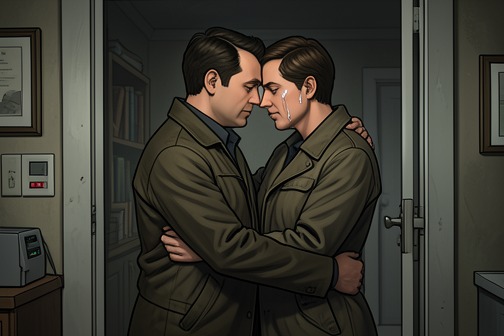
[Kathy and Mitch Decide to Separate](entity:event-recall-event-kathy-and-mitch-decide-8332b5a59a02) is the moment Kathy accepts that her marriage to Mitch cannot continue. The immediate catalyst is Fay’s discovery of Mitch’s infidelity: confronted with the effect on their daughter, the couple can no longer leave the question of divorce unspoken. Their separation becomes a painful recognition rather than a sudden rupture, and their final embrace points toward an attempt to part without hostility.
## The Question Raised by Fay
Fay has lashed out at Mitch for cheating on Kathy, saying she had hoped the affair was untrue and that having him confirm it deeply upset her. She fears she will never see him in the same way again. After calming down, she asks whether her parents are getting divorced. Her reaction makes the marital crisis immediate not only for Kathy and Mitch but for their daughter, whose trust in her father has also been shaken.
Kathy asks Mitch what he told Fay. The question brings the couple to the subject they have both been avoiding: the future of their marriage. Mitch’s admission that divorce is inevitable follows a long silence, making the answer feel less like a new decision than the naming of a conclusion already reached through what he has put Kathy through.
## Recognition and Grief
Mitch says he told Fay that separation was inevitable after everything he had put Kathy through. Kathy nods, accepting that he is right. She recognizes that she no longer feels the same about him and that they cannot stay together. That recognition does not make the separation easier; she understands that the upheaval ahead will be painful for the whole family, covers her eyes with her palms, and cries.
Mitch gets up and holds her, apologizing and wishing none of it had happened. His tears fall onto Kathy’s hands. She stands and hugs him back. The gesture carries their grief without undoing the decision: affection remains between them, but it cannot restore their marriage.
## An Amicable Parting
The scene distinguishes the end of the marriage from a declaration of enmity. Kathy believes there is no way to save their relationship, but that they can at least end it amicably. Their mutual embrace becomes the closest thing to agreement the moment offers: neither can reverse what has happened, yet both can acknowledge its cost and meet each other in sorrow.
When they step apart, Kathy asks whether Fay is upstairs so she can see her. Mitch explains that Fay wanted to see Christine and that he had dropped her off about forty minutes earlier; he plans to collect her soon. The exchange turns from the couple’s separation back toward the family they still share. Their marriage is ending, but their immediate concern remains their daughter.
Event 19
Kathy and Chase’s Teenage Breakup
[Kathy and Chase’s Teenage Breakup](entity:event-recall-event-kathy-and-chase-s-teena-99fc508dbcc1) is the rupture of [Kathy Hamilton](entity:character-recall-character-kathy-hamilton-3d6a08abd995) and [Chase Cooper](entity:character-recall-character-chase-cooper-4f4b8e8dd415)’s first serious romance: an eagerly anticipated night together turns into a humiliating separation, and the distrust it leaves behind shapes the course of both their lives. Recalled from Kathy’s perspective, the episode turns on the collision between her expectation of intimacy and a cascade of claims she cannot verify. Its aftermath is not a clean resolution but a lasting wound, reinforced by family judgment, professional advice, and Chase’s eventual retreat from her home.
## Causes and Background
Kathy has gone to a hotel expecting Chase to join her. She is excited and nervous about the prospect of spending the night with him, imagining the intimacy of sleeping beside him and waking together. Though she has been taught that sex belongs within marriage, she has begun to question that rule; she is certain enough of her feelings that, if Chase proposed, she says she would wait. Marriage itself seems out of reach: they are young, her parents would not approve, and she believes she must escape their control before making the relationship public, even if they withdraw financial support.
The waiting carries a double meaning. To Kathy, the hotel represents a private future with Chase, apart from her parents’ authority. To her mother, the same place is evidence of behavior that threatens the family’s standards and reputation. Kathy’s backpack falls to the ground when headlights appear, and she smiles, believing Chase has arrived. Instead, the passenger window comes down and her mother tells her to get in the car. The abrupt reversal replaces anticipation with exposure: the person who has found her is not her lover but the parent whose permission she had hoped to escape.
## The Hotel Night
[Connie Hamilton](entity:character-recall-character-connie-hamilton-3d27ede624f4) says Chase is at the police station, arrested after a patrol officer stopped him while looking for a stolen car. According to Connie, Chase told the officer he was on his way to spend the night with a girl and gave Kathy’s name. The officer contacted Connie discreetly, she says, because Kathy’s father would have disowned her for being at the hotel. Kathy is stunned that her mother knows about the relationship, and initially rejects the news that Chase has been arrested.
The car story unsettles Kathy for a specific reason: Chase had told her that his boss at the auto repair shop was lending him a car. Now she wonders whether he lied about that as well. Connie then presents a much wider accusation, saying that Chase has a record, has been pulled over before, and has had a different girl riding beside him each time. She frames Kathy as one in a succession of girlfriends and invokes the Hamilton name and Reverend Holbrook’s likely judgment. The scene leaves Kathy with an allegation, not independent confirmation of Chase’s supposed affairs, but Connie’s confidence makes the accusation feel decisive to her in the moment.
Connie’s response shifts from reproach to consolation. She calls Chase a liar who has led Kathy astray, says he is only a boy, promises not to tell Kathy’s father, and proposes that they pretend they had gone out to dinner together. She also promises to arrange for Kathy to see her therapist that week, and suggests wiping off her makeup on the way home. The gestures offer protection while also defining the episode as something shameful to conceal. Kathy pushes away from her mother’s embrace, feels cheap and worthless, and questions whether she can trust anyone again. She chooses the back seat rather than sitting beside Connie in front, then sobs during the drive home.
## Conflicting Accounts and Separation
The arrest and the accusations do not settle into a single uncontested account. A few days after the hotel night, Kathy goes to school with puffy eyes and a hardened resolve not to speak to Chase; he does not appear. The following week he returns with fading bruises and tries repeatedly to speak with her. He says he was on his way to the hotel in a car his boss had lent him, not a stolen one, and insists the arrest was not his fault. He also denies having other girlfriends, but offers no explanation for his bruises.
Kathy cannot accept his explanation. In her recollection, the relationship has already been ruined both by his failure to arrive that night and by the distress that followed her belief that he had cheated and stolen a car. The gap between Connie’s account and Chase’s denial remains unresolved; the narrative establishes what each says, but does not make Kathy’s suspicion an independently confirmed fact. Her response is shaped by the sequence itself: a promise of closeness gives way to an arrest, an accusation of repeated infidelity, and then a denial arriving after trust has broken.
Chase later comes to the Hamilton home and asks Kathy through the back door whether this is the last time he will try to see her. He protests that he did not steal the car and that he thought she felt as he did. He asks whether she was using him to anger her parents, then proposes renting an apartment so they can live together away from both families. Kathy does not answer him directly. Her mother speaks with him out of Kathy’s hearing; Kathy can only make out Chase’s protest, “No way! I don’t want…” Her father then threatens him, says the police are on their way, and orders him to stay away from his daughter.
Chase pauses, turns toward the door, and tells Kathy he will not try again. She watches him leave before sinking to the floor and sobbing. Connie comforts Kathy afterward, speculating that Chase has been rejected by his other girlfriends and now understands what he has lost. Connie does not know that Chase has come to the house regularly, at least twice a month; this is the first time he has been caught. Her certainty about his motives therefore differs from the private history Kathy has witnessed, even as Kathy herself remains unable to restore her trust in him.
## Consequences and Significance
The breakup extends beyond the failed hotel meeting. Kathy’s therapist agrees with her mother that she is better off not seeing Chase because the relationship has caused too much psychological damage. Connie also tells Kathy’s father what happened, explaining why Kathy has been miserable. Her father is furious at Chase for luring her to a hotel, but his anger also alters his relationship with Kathy: she no longer feels like the apple of his eye and interprets his disappointment as evidence of her own worthlessness.
The episode’s defining change is from imagined shared future to enforced separation. Kathy’s plans had included a life with Chase; instead, she returns home in tears, withdraws from him, and finally hears him promise not to come back after her father’s threat. The breakup is driven not by a settled account of what Chase did, but by the speed with which arrest, accusation, family authority, and shame close off the possibility of trust. In the remembered scene, the hotel’s expected welcome becomes a site of exposure, while the back door at the Hamilton home becomes the place where the relationship ends without Kathy and Chase ever managing a direct, mutually accepted reckoning.
Event 20
Olivia Jenkins’s Disappearance
[Olivia Jenkins](entity:character-recall-character-olivia-jenkins-f6189ee5c55f)’s disappearance is an unresolved missing-child case that exposes how public sympathy can depend on judgments about a child’s family. Although the disappearance receives little sustained attention, police continue to search, and reporter [Susan Cartwright](entity:character-recall-character-susan-cartwright-19335e9003e1) sees the case as important in its own right and potentially connected to [Charlie Hamilton](entity:character-recall-character-charlie-hamilton-95e2e044441f)’s disappearance.
## Circumstances and Public Attention
Olivia went missing the previous November. When [Kathy Hamilton](entity:character-recall-character-kathy-hamilton-3d6a08abd995) asks [Chase Cooper](entity:character-recall-character-chase-cooper-4f4b8e8dd415) whether Olivia’s disappearance could be connected to Charlie’s, Chase says he does not think so. He does not elaborate on the possible connection, but explains that his department has done everything it can to find Olivia, whether or not the media reports that work.
The case quickly faded from the news. Chase attributes the public’s lack of concern to the way people regarded Olivia’s mother: she was a drug user with questionable boyfriends, and Olivia suffered because the public did not care for her mother. The account does not establish that the mother’s circumstances caused Olivia to disappear; it shows how stigma around the family shaped attention to the missing child.
## Investigation and Possible Connection
Susan Cartwright, an investigative reporter at the Vermont Daily News, has been looking into missing-child cases since joining the paper. She has helped find a missing twelve-year-old boy alive and has been liaising closely with Olivia’s mother. Susan suspects Olivia’s disappearance could be linked to Charlie’s, but stresses that she would investigate Charlie’s case even if no connection appeared likely. Her interest is therefore not limited to pursuing a theory about the two cases.
The possible link remains unconfirmed in these conversations. Chase is not persuaded that the disappearances are connected, while Susan’s continuing inquiry keeps the question open. The contrast is not presented as proof that either investigator is right; it shows the case being approached both as part of police work and as a lead a reporter considers worth pursuing.
## Personal Grief and Narrative Significance
Susan’s attention to missing children is also personal. Her sister’s son was abducted nine years earlier and never found. Unable to bear the uncertainty, Susan’s sister died by suicide four years before the conversation. Susan draws on that family experience to explain to [Megan Carter](entity:character-recall-character-megan-carter-830913e39252) that she understands the disbelief and heartache of having a child missing.
Kathy’s response to the case shifts from asking whether it connects to Charlie’s disappearance to considering Olivia’s mother’s isolation. After hearing how quickly the public stopped caring, Kathy wonders whether she should contact her to offer support. Olivia’s case thus widens the story’s concern beyond the immediate search for Charlie: it makes visible the unequal attention given to missing children and the lasting uncertainty borne by their families.
Event 21
Charlie Hamilton is abducted and murdered at the birthday party
[Charlie Hamilton](entity:character-recall-character-charlie-hamilton-95e2e044441f) is abducted from the birthday party and later killed, an event whose circumstances emerge in a tense interview between [Chase Cooper](entity:character-recall-character-chase-cooper-4f4b8e8dd415) and [Evan Harris](entity:character-recall-character-evan-harris-11583f814ad2). Chase accuses Evan of taking Charlie, bringing her to a fixer-upper that same day, and concealing her body beneath concrete. Evan’s response to Chase’s question about how he persuaded Charlie to go with him connects the crime to an earlier belief that he had killed her mother.
## The Accusation and Its Stakes
Chase lays out a specific account: Evan abducted Charlie from the birthday party, took her later that day to a fixer-upper, placed her body in the basement, and poured concrete over it. Chase identifies Charlie as Evan’s granddaughter, making the accusation one of violence within the family as well as a crime against a child. The account is presented as Chase’s accusation during the interview; these details are not independently narrated in the supplied scene.
## The Interview’s Turning Point
After Evan turns his head away, he remains face-down and silent under Chase’s grip. Later, three minutes pass without either man speaking. Chase treats the pause as a delicate point in the interview, then urges Evan to explain how he convinced Charlie to go with him. The extended silence and the careful shift to a direct question make the interview itself the scene through which the abduction’s circumstances are disclosed.
## Evan’s Response and the Earlier Threat
Evan answers that he used the same means by which he had thought he killed Charlie’s mother. The brief reply links Charlie’s abduction to an earlier episode involving her mother, while stopping short of explaining that earlier episode in detail. In the context of Chase’s accusation, it also points toward Evan’s role in getting Charlie to leave the party with him.
## Consequences and Significance
The scene joins the disappearance, the killing, and the concealment of Charlie’s body into a single alleged sequence: she is taken from the party, brought to the fixer-upper that day, and hidden beneath concrete in its basement. Evan’s silence does not resolve every detail of Chase’s account, but his answer gives the interview a consequential new connection to the danger faced by Charlie’s mother. The family relationship Chase invokes sharpens the stakes: the accused is not presented as a stranger, but as Charlie’s grandfather.
Event 22
Olivia Jenkins’s Body Is Found and Identified at the Old Brewery
The discovery and identification of [Olivia Jenkins](entity:character-recall-character-olivia-jenkins-f6189ee5c55f)’s body at the [Old Brewery](entity:location-recall-location-fa6f254afe4b) turns an unresolved disappearance into a confirmed death while deepening the uncertainty surrounding [Charlie Hamilton](entity:character-recall-character-charlie-hamilton-95e2e044441f). Found without her head, the body cannot initially be identified, leaving Kathy and her family to confront the possibility that it is Charlie even as the police continue searching for both missing children.
## Background and Initial Uncertainty
Olivia Jenkins has been missing for eight months when [Chase Cooper](entity:character-recall-character-chase-cooper-4f4b8e8dd415) tells Kathy, [Mitch Hamilton](entity:character-recall-character-mitch-hamilton-3759dd59c006), and [Megan Carter](entity:character-recall-character-megan-carter-830913e39252) that police have found a child’s body at the Old Brewery. The discovery was made that morning, but Chase cannot yet confirm the child’s identity. The medical examiner’s initial assessment is limited: the body belongs to a female under eight. With Charlie also missing, the age estimate makes the discovery immediately relevant to the Hamilton family without resolving whose child has been found.
The absence of the head is the crucial obstacle. Chase explains that the body has been decapitated, so the police cannot identify the child from her face. This detail transforms what might have been a straightforward announcement of a death into a period of suspended recognition: the family must hear that a child has been found dead while still not knowing whether Charlie is among the dead or remains somewhere else.
## The News Reaches the Family
Chase delivers the news directly, before the family encounters it through the media. He had hoped to obtain confirming information first, but news vans have already arrived at the scene, and he expects speculation to begin soon. His decision to tell them in person gives Kathy a familiar presence in an otherwise unbearable moment; she is grateful that he is the one who has to deliver the news, rather than a stranger.
The family’s reactions unfold in the room as the uncertainty becomes physical. Kathy is already crying as she looks at Chase. Mitch puts an arm around Megan, then squeezes her tighter when the discovery is announced. Megan turns to him and sobs; Kathy places a hand on Mitch’s back. When Chase explains that the head is missing, Megan lets go of Mitch and sinks silently to the floor. Kathy crouches beside her but has no words that can comfort her. Mitch walks to the couch and sits speechless. The news does not yet establish which family is grieving, but it makes the possibility of Charlie’s death impossible to set aside.
## Identification as Olivia Jenkins
The identification comes later, after the body is discussed as the one found in a shipping container. Chase reads a note left by another detective and confirms that the body is not Charlie. For Kathy, that distinction does not bring uncomplicated relief: Charlie’s dress has since been found elsewhere, so the discovery cannot be treated as reassuring evidence that her daughter is safe. Kathy asks whether the dead child is Olivia Jenkins. Chase looks away, and his expression confirms the answer even though he cannot say it aloud.
Olivia’s identification resolves one part of the mystery while leaving another open. Her disappearance, which had remained unresolved for eight months, now has a known outcome, and Chase must go to Olivia’s mother to tell her. The same confirmation that ends uncertainty for Olivia’s family therefore sharpens the Hamiltons’ fear: Charlie is not the child in the container, but her whereabouts and fate remain unknown.
## Consequences for the Search
Before the identification, police officers are searching the area in the hope of identifying the child as soon as possible. Once the body is confirmed as Olivia’s, Kathy briefly considers whether the same person might have taken Olivia and Charlie. She imagines that a serial killer could explain Charlie’s disappearance and end the accusations surrounding Mitch and his brother-in-law, Scott Bowers. Chase’s look of pity makes clear that he does not regard this possibility as an answer; he tells Kathy that the hypothetical killer could be her husband.
The event thus produces two sharply opposed outcomes. Olivia’s identity is established, allowing her disappearance to be understood as a death, while Charlie’s absence remains unresolved and becomes more frightening. The headless body first makes identification impossible, then becomes the point around which the families’ different losses separate: Olivia has been found, but the confirmation offers Kathy no certainty about her own child.
Event 23
Charlie’s Body Found and Identified in the Glenwood Basement
[Charlie Hamilton](entity:character-recall-character-charlie-hamilton-95e2e044441f)’s body is found concealed beneath a recently repaired section of concrete in the basement of the unfinished [Glenwood renovation house](entity:location-recall-location-2859b9ad9470). The discovery begins not with visible remains but with a tiny red fragment trapped in the floor, a clue that connects the building to Charlie’s red party dress. DNA later confirms the child’s identity. The search thus turns a missing-person case into a death confirmed, while making the family secrets surrounding Charlie’s parentage and care newly painful.
## The Clue in the Basement
The discovery unfolds during a search of the empty house belonging to [Mitch Hamilton](entity:character-recall-character-mitch-hamilton-3759dd59c006) and Scott Bowers. The building is still under renovation: upstairs, parts of the floors are missing and boards lean against the walls. Outside, rain darkens the day, but the basement is sealed from the weather and has no windows. Its power has not yet been connected, so the man checking it switches on his phone’s flashlight and sends [Detective Brown](entity:character-recall-character-detective-brown-46069947f8b4) a message to say he is at the house.
The basement appears largely bare. A few unopened paint cans stand in one corner, and one has to be shifted before the searcher notices something caught beneath it. At first the speck seems like lint. It will not move when he blows on it, nor can he pull it free. The floor around it is visibly different from the rest of the basement: the concrete is newer, uneven in places, and looks as if it has been repaired recently. In the flashlight beam, the speck resolves into a small piece of red material submerged in the concrete.
That fragment changes the meaning of the room. Charlie wore a red dress at the birthday party, so the material is not simply debris from a renovation. It is a physical trace of the missing child embedded in the floor. The man tries again to tug it loose, but it remains trapped. He understands that the repair may have covered something far more terrible than a flaw in the concrete and is left confronting the possibility that he is kneeling above Charlie Hamilton’s grave. The body is not exposed in this initial discovery; the clue is the fabric, fixed in place beneath the surface.
## From Suspicion to Identification
The sequence makes the confirmation a process rather than a single revelation. The altered concrete first indicates that something in the basement has been concealed. The red fragment then links that hidden space to Charlie’s clothing. What had been an unfinished house, its paint cans and repaired floor ordinary features of renovation, becomes evidence of a burial. The scene’s restricted light and the piece of fabric that cannot be lifted make the concealment materially present before the remains themselves are confirmed.
Later, Chase brings the identification to [Megan Carter](entity:character-recall-character-megan-carter-830913e39252), [Kathy Hamilton](entity:character-recall-character-kathy-hamilton-3d6a08abd995), and Fay Hamilton at home. He tells them that Megan’s daughter has been found and that DNA has confirmed her identity. Charlie was encased in concrete in the basement of Mitch and Scott’s empty house. This announcement closes the central uncertainty of the search: the child whose whereabouts had been unknown is dead, and the remains belong to Charlie. The earlier suspicion prompted by the red material is no longer only a possibility.
The setting also gives the confirmation a particular force. Charlie’s remains were hidden inside a house still being worked on, beneath a repair that made the basement look newly finished in one corner. The construction work did not erase the trace completely; a piece of the red dress remained visible enough to be noticed. The discovery therefore turns the house’s unfinished state into part of the evidence: the repaired patch, different in color and uneven at its edges, marks an attempt to cover what the surrounding room did not reveal.
## A Family History Exposed by the Loss
Charlie’s identification arrives against a history of secrecy about who she is and how she came to live with the Hamiltons. During questioning, Kathy had told Chase that Charlie was adopted and had been living with her and Mitch for only six months. Mitch objected angrily to Kathy’s disclosure, but Kathy believed the police would learn the truth eventually. Her admission exposed that the family’s public account did not explain Charlie’s full history.
Kathy had also told Megan that Mitch’s brief relationship with a younger woman had resulted in a daughter, and that he had visited the child monthly for five years without Kathy knowing. The child’s surname was changed to Hamilton, and the arrangement was presented as an adoption. These facts do not make the discovery in the basement less direct: DNA identifies Charlie. They do, however, place her death inside a story in which biological ties, a changed surname, and the family that raised her had been kept apart by concealment.
Megan’s own history echoes that pattern. She tells Kathy that she was adopted as a baby and had believed Jeanette was her mother. After Susan reveals the name of her birth mother, Megan tells Kathy that her real name is Hope Hamilton. The parallel is not that the two women share the same experience in every respect, but that both Charlie’s and Megan’s identities have been shaped by information withheld and by the names through which their families were understood. Charlie’s confirmed death makes those hidden connections part of the grief the family must now acknowledge.
## The News and Its Aftermath
When Chase delivers the news, Megan’s distress is already visible in her bloodshot eyes and the fresh breakouts on her cheeks. She recoils when she sees him, then steps aside and lets him into the kitchen. Kathy has an arm around Fay. After Chase tells them about the DNA confirmation and the concrete in the basement, Kathy and Fay embrace Megan. Megan says she has many questions but cannot ask them then; she covers her face and breaks down. The finding changes the immediate task from searching for Charlie to mourning her, while leaving Megan unable to process the confirmation all at once.
The aftermath later gives Megan a place to speak to her daughter. At the cemetery, she says she is glad to have somewhere to come and talk to Charlie. Mitch tells Megan that Charlie was lucky to have had her as a mother and recognizes the difficult decision to let Charlie live with the Hamiltons when Megan could not care for her herself. Kathy then asks whether Megan would accept her changing her surname to Carter. She says that she wants to do it, but asks her father whether it is all right; the exchange presents the change as a wish, not as an already completed act.
The proposed name change is a small but consequential response to the concealments surrounding Charlie. The DNA result establishes the child’s identity, while the cemetery becomes a place where Megan can address her as her daughter. Kathy’s wish to take Megan’s surname gestures toward kinship through recognition and connection, rather than treating the family story as settled by biology or legal labels alone. The basement discovery ends the uncertainty about Charlie’s fate; its consequences continue in the living family’s effort to name their relationships and make room for grief.
Event 24
Kathy Forced to Give Her Daughter Hope Up for Adoption
[Kathy Forced to Give Her Daughter Hope Up for Adoption](entity:event-recall-event-f3cddea163c9) is a separation that shapes the family’s future long after the birth itself. In the winter of 1994, [Kathy Hamilton](entity:character-recall-character-kathy-hamilton-3d6a08abd995) gives birth to a daughter she names Hope, but the decision about whether to raise the child has already been taken from her. The scene’s central contrast is between the unmistakable tenderness of their first meeting and the pressure to part: Kathy experiences holding Hope as natural and reassuring, yet the adults and arrangements around her treat separation as settled. Years later, the concealed adoption history resurfaces when Hope, now known as [Megan Carter](entity:character-recall-character-megan-carter-830913e39252), finds her birth mother, turning a private loss into a relationship the family must reckon with openly.
## Birth and Immediate Separation
The birth takes place in winter 1994. Kathy is frightened by the pain of labor and exhausted by the experience. The nurses’ sideways looks deepen her shame: she understands that they are judging her both for becoming pregnant so young and for giving up her baby. She feels she has neither the energy to challenge their judgment nor control over the decision that has brought her to the hospital.
Before the baby is brought in, Kathy stops a woman from fetching her, asking that her daughter not be brought to her until it is time. The social worker seems uneasy but grants the request. When a nurse eventually places the swaddled baby in Kathy’s arms, Kathy is struck by how natural it feels to hold her. The baby’s weight reassures her; she notices Hope’s reddish-purple skin and bald head, then puts a finger into the baby’s grasp. Hope closes her hand around it and slowly opens her eyes. Kathy names her Hope Hamilton and calls herself the baby’s mother.
The moment of recognition does not change the arrangements. The social worker warns that holding Hope longer will make the parting harder, while the doctor says Kathy must deliver the placenta and a nurse says the baby needs feeding. These practical demands converge with the adoption plan: Kathy understands that the baby will be taken regardless of her pleas. She kisses Hope, promises not to forget her, and asks her daughter to find her when she is older. Her words express both an enduring claim of love and the distance being imposed between them.
## Family Pressure and the Meaning of Choice
Kathy’s mother, [Connie Miller](entity:character-recall-character-connie-miller-ca9d13fdf55c), arrives after Hope has been carried from the room. She reassures Kathy that the adoptive couple has been checked and will provide for the baby, then urges her daughter to begin again—to go to college, return to church, and stop being fussy with food. Connie frames the relinquishment as a path toward a respectable future, including career prospects and the possibility of finding a husband. Kathy, however, turns away from this reassurance, wondering whether what Hope needs is her own mother.
The conflict between these positions becomes clearer years later. Kathy says Connie made her give Hope up and took away her choice; Connie later acknowledges that she believed the baby would eventually destroy the family. Kathy also connects the decision to the circumstances of her pregnancy: she says that if she had been allowed to be with [Chase Cooper](entity:character-recall-character-chase-cooper-4f4b8e8dd415) that night at the hotel, she would not have slept with her therapist, [Evan Harris](entity:character-recall-character-evan-harris-11583f814ad2). The later account identifies the pregnancy as the result of a therapist-client boundary violation, but the birth scene itself keeps its focus on Kathy’s loss and the pressure surrounding her.
## A Concealed Adoption
The separation is compounded by a lie about what kind of adoption had been arranged. Kathy later learns that Hope’s adoptive parents had wanted an open adoption, with the possibility of letters, photographs, and occasional visits. Connie knew their names but told Kathy the adoption was closed, insisting that a complete break would let her move on and keep other people from finding out. She also admits that Hope’s adoptive mother, Jeanette, sent photographs over the years. Connie kept them from Kathy and ultimately burned them.
That deception changes the meaning of the original farewell. Kathy had asked Hope to find her when she was older, but the adults around her had concealed a route by which the two might have maintained contact. The loss was not only the enforced separation at the hospital; it was also the years in which the possibility of knowing how her daughter was growing up was withheld. Connie’s claim that she was helping Kathy achieve closure stands against the concrete evidence of the photographs she received and destroyed.
## Hope’s Identity and the Reunion
The adoption history later intersects with the search for [Charlie Hamilton](entity:character-recall-character-charlie-hamilton-95e2e044441f). During questioning, Kathy admits to Chase Cooper that Charlie is adopted and explains that she and [Mitch Hamilton](entity:character-recall-character-mitch-hamilton-3759dd59c006) have raised her for only six months. She later tells Megan that Mitch had described a brief relationship with a younger woman six years earlier that resulted in a daughter, and that he had visited the child monthly for five years without Kathy’s knowledge. These disclosures expose a family structure built around concealed parentage and the outward appearance of adoption.
Megan eventually tells Kathy that she, too, was adopted as a baby and had never known her birth parents. After learning her birth mother’s name from [Susan Cartwright](entity:character-recall-character-susan-cartwright-19335e9003e1), Megan reveals that her real name is Hope Hamilton. The age fits, and Kathy recognizes that the daughter she surrendered is the woman standing before her. The reunion does not erase the years apart, but it gives Kathy and Megan the chance to acknowledge the relationship that had been hidden from both of them in different ways.
## Consequences Across Generations
The adoption’s effects extend beyond Kathy and Hope. Reflecting on her own childhood, Kathy recalls her therapist’s view that her parents’ arguments contributed to her problems with food. She realizes that, by concealing the damage in her marriage to Mitch rather than confronting it, she has repeated part of the family pattern, with consequences for her daughter Fay Hamilton. Kathy resolves to do better and break the cycle. The thought links her past loss to her responsibilities in the present: the secrets imposed around Hope’s birth have not remained confined to one mother and child.
After the reunion, family belonging is reconsidered through names as well as biology and care. At the cemetery, Kathy asks Megan how she would feel about Kathy changing her surname to Carter. She also suggests that Fay Carter has a pleasing sound; Fay has said she no longer wants to be a Hamilton after learning of Connie’s betrayal. Mitch, meanwhile, is ready to return to the Bowers name and has moved into his own place, with a spare room for Fay. These choices do not undo the adoption or settle the family’s wounds, but they mark a deliberate departure from the Hamilton identity Connie had treated as a source of prestige and control.
Event 25
Kathy Reunites with Hope and Confirms She Is Megan
Kathy’s reunion with Megan transforms an old, concealed adoption into a newly acknowledged family bond. When Megan tells Kathy that her birth name is Hope Hamilton, the revelation identifies the woman Kathy has known as [Megan Carter](entity:character-recall-character-megan-carter-830913e39252) as the daughter she lost years earlier. A child-services document supports the identification, and the two women’s recognition of their relationship immediately expands the meaning of Megan’s place in the family: Charlie is Kathy’s granddaughter, and Fay is Megan’s half-sister.
## Background and concealed histories
The disclosure takes place against a tangle of secrets about parentage and adoption. Kathy has recently learned that [Mitch Hamilton](entity:character-recall-character-mitch-hamilton-3759dd59c006) concealed a brief affair and the daughter who resulted from it. He had been visiting that child regularly without Kathy’s knowledge, and the couple had presented the child as adopted into their family. When questioned by [Chase Cooper](entity:character-recall-character-chase-cooper-4f4b8e8dd415) about Charlie’s disappearance, Kathy finally disclosed that Charlie was adopted and had been living with the Hamiltons for six months. That admission makes adoption an immediate, painful family reality before Kathy learns that her own first daughter was also adopted.
Megan, meanwhile, has understood herself through the story she was given by her adoptive mother, Jeanette. She had been told that her birth parents did not want a relationship with her. Megan connects that rejection to the difficult period of her adolescence and the beginning of her drinking, followed by marijuana and pills. She tells Kathy that she had been adopted as a baby, but had never known her biological parents or previously identified Jeanette as anything other than her mother when asked about family.
## The disclosure and its confirmation
The discovery begins when Megan explains that [Susan Cartwright](entity:character-recall-character-susan-cartwright-19335e9003e1) asked about her biological family during a meeting at a coffee shop, while Kathy was away from the table. Susan managed to identify one birth parent: Megan’s biological mother. She could not find the father, whose name was absent from the birth certificate and who had not been recorded as part of the adoption process. The information therefore narrows the mystery to a maternal connection without supplying a corresponding answer about Megan’s father.
Megan then tells Kathy that Susan gave her the name of her birth mother and that her own name is not Megan Carter but Hope Hamilton. Kathy recognizes what the name means: Hope is the baby she gave up, now an adult living nearby. The revelation overturns the assumption that the two women are connected only through the crisis surrounding Charlie and Megan’s attack. It makes their relationship biological as well as newly personal, while also forcing Kathy to confront the years in which she did not know where her daughter had gone.
Megan shows Kathy the child-services document Susan sent her. It records Megan’s birth date, the hospital where she was born, her birth weight, and her mother’s name, [Kathy Hamilton](entity:character-recall-character-kathy-hamilton-3d6a08abd995). It also identifies Bob and Jeanette Carter as the couple who took Megan home from the hospital. Megan explains that Bob and Jeanette later split up and that Jeanette raised her alone until asking her to move out. The document gives Kathy concrete details of the birth and placement, while Megan’s account supplies the later family history behind the Carter name.
## Recognition and a changed family map
Kathy studies Megan’s face and hears her own family history in the details Megan describes. She recalls that her mother had not allowed her to try black hair dye, while Megan’s dyed hair is beginning to show lighter roots. Megan also shows a phone photograph copied from a print of herself as a toddler, with long auburn hair and a smile that reminds Kathy of both Fay and Charlie. These details do not replace the document’s confirmation; they give the documentary proof a personal, visual counterpart.
Kathy asks whether Megan is Hope and whether she is her daughter. Megan breaks down and cannot speak through her tears, and Kathy embraces her. Kathy responds not only with recognition but with relief that the daughter she had believed lost to her is alive and within reach. Megan asks whether Kathy looked for her, giving the reunion an unresolved question about the past as well as the discovery of a relationship in the present.
The identity revelation also reorders the family’s other connections. Megan tells Kathy that Charlie is her granddaughter. Kathy realizes that she is Charlie’s grandmother and recalls how quickly she came to love Charlie for her lively, kind character. She adds that Fay also loved Charlie immediately, then recognizes that Megan is Fay’s half-sister. The reunion therefore joins two generations of daughters: Hope, whom Kathy lost to adoption, and Fay, whom she raised, as well as Charlie, whose place in the family is clarified through Megan.
## Consequences and family change
The reunion’s consequences extend beyond the moment of identification. Kathy later asks Megan how she would feel about Kathy changing her surname to Carter. Kathy says she wants to do so, and checks with her father, [Jack](entity:character-recall-character-jack-b5a26722c3ea), who supports the idea despite the pain associated with the family’s recent revelations. The proposed name change makes belonging something Kathy seeks to express publicly, not only a biological fact established by a record.
The Hamilton name has also lost its former standing for other family members. Fay has said she does not want to remain a Hamilton, and Kathy suggests that Fay Carter would suit her. Mitch, too, is ready to leave the Hamilton name and return to Bowers, seeking a fresh start after the affair and the damage it caused. These are intentions and discussions rather than a completed account of every legal name change, but they show how the revelations unsettle the inherited family identity that had concealed the truth.
Kathy’s later confrontation with her mother makes the history behind Hope’s adoption explicit: Kathy accuses her mother of taking away her choice and giving the baby up, with consequences that reached both Kathy and Megan. The reunion thus reveals more than a hidden biological connection. It exposes how decisions and silences made by one generation shaped the next, while giving Kathy and Megan the opportunity to recognize one another outside the story of rejection that Megan had been told. The document names the connection; their response to each other begins to make it a lived relationship.
Event 26
Connie Hamilton Orchestrates the Plot to Kill Megan and Charlie
[Connie Hamilton](entity:character-recall-character-connie-hamilton-3d27ede624f4)’s secret meeting with [Evan Harris](entity:character-recall-character-evan-harris-11583f814ad2) turns a concealed family history into a threat against [Megan Carter](entity:character-recall-character-megan-carter-830913e39252) and [Charlie Hamilton](entity:character-recall-character-charlie-hamilton-95e2e044441f). By revealing that Megan was [Kathy Hamilton](entity:character-recall-character-kathy-hamilton-3d6a08abd995)’s daughter and warning that both Megan and Charlie could expose Evan, Connie used the family’s buried past as leverage—and, as Kathy comes to understand, encouraged a plot to remove them. The disclosure also exposes how Connie’s pursuit of family reputation and control made the danger surrounding her own descendants possible.
## Background and Hidden Relationships
The plot depended on a chain of secrets Connie had helped create. Kathy had become pregnant after Evan, then her therapist, exploited their therapeutic relationship. Connie forced Kathy to give up the baby, and the child grew up as Megan Carter, unaware of her birth family. Kathy later married [Mitch Hamilton](entity:character-recall-character-mitch-hamilton-3759dd59c006), whose affair with Megan resulted in Charlie. Mitch and Kathy raised Charlie as their adopted daughter, while keeping her parentage concealed. Thus Megan was Charlie’s birth mother, and Evan was Megan’s biological father; Charlie connected the two generations whose identities could reveal Evan’s conduct.
The family secret began to surface during the search for Charlie. Under pressure from [Chase Cooper](entity:character-recall-character-chase-cooper-4f4b8e8dd415), Kathy admitted that Charlie was adopted, explaining that the child had lived with her and Mitch for only six months. Later, Megan disclosed that she too had been adopted as a baby and learned from [Susan Cartwright](entity:character-recall-character-susan-cartwright-19335e9003e1) that her birth name was Hope Hamilton. Kathy’s realization that Megan was the daughter she had lost brought the concealed relationships into the open. For Connie, those revelations created a perceived danger to the family’s standing and to Evan’s professional security.
## Connie’s Meeting with Evan Harris
Connie learned that the [University of Vermont](entity:organization-recall-organization-university-of-ve-da64ba6003d4) had offered Evan tenure before the news was publicly confirmed. She also knew, through an indirect acquaintance, that Kathy was not the only client Evan had coerced over the years. The information gave her reason to understand that exposure could threaten his career, but her response was not to bring his conduct to light or protect those affected by it.
Instead, Connie arranged to meet Evan at his home under the pretense of making a donation to the university’s psychology department. She insisted on a private location so that others would not see them together. Evan believed she had come to praise him and offer financial support; he did not know that Connie had guessed what had happened between him and Kathy. His partner, [Christine Stiles](entity:character-recall-character-christine-stiles-ed1d3af5deb2), unexpectedly arrived during the meeting and saw Connie there. Once they were alone, Connie told Evan about Kathy’s baby and the woman she had become. She also explained that Megan was entering Kathy’s life through Charlie, Evan’s granddaughter.
Connie did not merely reveal identities. She presented Megan and Charlie as evidence that could connect Evan to what he had done: Megan was his biological daughter, and Charlie was his granddaughter. If Kathy identified Evan as Megan’s father, Connie warned, the family connection could expose him. Her account makes the meeting a deliberate intervention: she brought together the facts Evan needed to fear discovery and directed his attention toward the two people whose existence could substantiate it.
## Advice, Threat, and Kathy’s Conclusion
When Kathy confronts Connie, she asks whether her mother put the idea of killing Megan and Charlie into Evan’s mind in order to hide the trail. Connie acknowledges that she advised him to eliminate the problem, while distinguishing that advice from specifying how he should act. The admission establishes Connie’s role in urging a violent solution, even though the account does not establish that she devised every operational detail or personally carried out an act against either woman.
Kathy also suspects that Connie wanted Mitch framed. In Kathy’s reading, removing Megan and Charlie would have taken them out of the family’s life, while framing Mitch could have sent him to prison for crimes he had not committed. Connie does not confirm that accusation. She says that she never spoke to Evan again and made clear she would deny their conversation. The distinction matters: the plot to silence Megan and Charlie is supported by Connie’s admission of her advice, whereas her responsibility for a plan to frame Mitch remains Kathy’s inference rather than a confession.
The reward offered for information about Charlie acquires a different meaning in this light. Kathy concludes that Connie knew it was unlikely to be claimed and therefore used the offer as a public appearance of concern while privately encouraging the danger. The reward’s seeming generosity contrasts with Connie’s concealed knowledge and her effort to make the family’s crisis appear to have a legitimate search for answers.
## Family Reputation and Consequences
Connie’s choices grow out of a family culture in which reputation and the Hamilton name are treated as things to protect. When Kathy asks why her mother forced her to give up the baby, Connie says she believed the child would eventually destroy the family. She also makes clear that a boy might have been allowed to stay because he could have carried on the Hamilton name. The contrast reveals that Kathy’s loss was shaped not only by secrecy but by a hierarchy of family value and inheritance.
Kathy recognizes another inheritance in the episode: the pattern of harm across generations. Her therapist had connected her adolescent distress around food to her parents’ marital conflict. Looking at Fay’s anxiety, Kathy fears that concealing her own marital problems with Mitch has reproduced the conditions that hurt her. She resolves to break that cycle. Connie’s conduct sharpens the stakes of that decision: silence and the preservation of appearances have not protected the family; they have concealed abuses and exposed its younger members to further harm.
The aftermath also changes what the family name signifies. After Connie’s betrayal becomes known, Fay says she does not want to remain a Hamilton. Kathy proposes changing her surname to Carter, a choice Megan welcomes, while Mitch plans to return to Bowers. These decisions do not undo the past, but they make visible a break with the identity Connie tried to defend. The episode’s central reversal is that her attempt to preserve family respectability by containing the truth instead makes that respectability untenable—and turns the concealed family bond between Kathy, Megan, and Charlie into the evidence around which the danger gathers.
Event 27
Evan Harris Arrested and Confesses to Killing Charlie
[Evan Harris](entity:character-recall-character-evan-harris-11583f814ad2)’s capture and confession turn the search for [Charlie Hamilton](entity:character-recall-character-charlie-hamilton-95e2e044441f) into a confrontation with the person who abducted and killed her. The arrest follows a brief struggle in a neighbor’s backyard; the subsequent interrogation links Charlie to the second clown, establishes Evan’s relationship to her, and reveals how he persuaded her to leave the birthday party. His answers also implicate [Connie Hamilton](entity:character-recall-character-connie-hamilton-3d27ede624f4) in disclosing the family connection that [Chase Cooper](entity:character-recall-character-chase-cooper-4f4b8e8dd415) believes helped motivate the crime.
## Capture and confrontation
As Chase Cooper leads Connie Hamilton away through the front door, a dark figure darts between two houses toward a neighbor’s backyard. Chase draws his weapon and pursues him, briefly warning an older woman watching from a living-room window to stay inside. In the yard, Chase cannot immediately tell where the fleeing figure has gone. Evan then emerges from behind a large maple tree and tries to climb the fence.
Chase catches Evan at the fence and pulls him down. Evan lands hard on his back and kicks, knocking Chase’s gun from his hand. The two struggle on the ground: Chase tries to turn Evan over and control his arms, while Evan resists and attempts to get back up. A nearby gunshot interrupts the fight. Chase braces for impact, then sees that [Kathy Hamilton](entity:character-recall-character-kathy-hamilton-3d6a08abd995) has fired his gun into the air. She is pale, but keeps the weapon trained upward while Chase pins Evan’s hands behind his back. He has no handcuffs with him and expects other officers to arrive after hearing the shot.
Kathy walks toward Evan and says she should kill him for what he did to Charlie and to her family, but that doing so would make her no better than him. Her anger gives way to tears as she stops short of killing him. Evan turns his face away and submits to Chase’s hold without speaking. The moment places the prospect of revenge directly beside the act of restraint: Kathy has the weapon, but does not use it against him.
## Evidence against the second clown
In the later questioning, Evan initially denies having children or ever seeing Charlie, claiming that he knows who she is only because of the news. Chase leaves the interview and goes next door, where [Detective Brown](entity:character-recall-character-detective-brown-46069947f8b4) tells him that forensics has found Charlie’s DNA on the clown mask taken from Evan’s office. Detective Brown adds that Charlie’s skin cells are all over it, consistent with her having tried to push the wearer away. The mask provides physical evidence against Evan while his denials remain unsupported.
Chase returns to the unresolved question of the second clown at the birthday party. The person had not been hired by the family, had not asked for payment, and disappeared; Chase proposes that this was the person who coaxed Charlie away. He then confronts Evan with the DNA result. Evan visibly slumps, a change that follows the forensic evidence and precedes his disclosure of his relationship to Charlie.
## Confession and family connection
Asked whether he raped Charlie, Evan responds with contempt and denies touching her that way, then calls her his granddaughter. The admission contradicts his earlier claim that he had no children and had never seen her. Chase recognizes the relationship as the breakthrough in the interview. He waits through three minutes of silence before asking how Evan persuaded Charlie to go with him.
Evan says he told Charlie there was a unicorn in the woods. She had already seen a pony and was not interested in another one, but the prospect of a unicorn made her run toward him and take his hand. He describes her trust with a sneer and blames [Megan Carter](entity:character-recall-character-megan-carter-830913e39252) for not teaching her about strangers. Chase rejects that logic: Charlie was at a family birthday party and believed she was safe. Asked how he killed her after taking her into the woods, Evan says he did it the same way he had thought he killed her mother; the exchange identifies a method by reference but does not specify it here.
Chase then asks how Evan knew about Megan and Charlie when Kathy had not told him she was pregnant and had not known that Megan was her daughter. Evan names Connie Hamilton. Chase treats the answer as a damning link and advances a theory: Connie told Evan about the relationship, and he feared that Megan’s return to Kathy’s life could lead to questions about her biological father. Chase further suggests that public exposure could cost Evan his job and wealth, threaten his freedom, and encourage other victims to come forward. He suspects a pattern of abuse involving teenagers or younger girls and argues that Megan and Charlie represented evidence of what he had done to Kathy. Those broader claims are Chase’s interpretation; Evan does not deny it in this exchange.
## Consequences and significance
The confession resolves the central question of how Charlie was taken from the party: Evan used a unicorn story to exploit a child’s trust, rather than relying on the presence of a legitimate hired entertainer. The mask’s DNA, his attempted flight, and his admission that Charlie was his granddaughter form distinct parts of the case against him. His disclosure of Connie’s name also extends the investigation beyond the killer, connecting the crime to the concealed family history and the information that reached him.
The capture ends with Evan alive and in police custody, not with Kathy carrying out the revenge she briefly voices. The emotional and investigative turns occur together: Kathy’s choice not to kill Evan prevents vengeance from replacing justice, while Evan’s own words expose both the deception used against Charlie and the family secret behind his knowledge of her. The event therefore brings the immediate hunt to a close while widening the reckoning to include Connie’s alleged role and the consequences of the abuse Chase believes Evan tried to conceal.
Event 28
Connie Hamilton Taken in for Questioning over Alleged Involvement in the Plot
[Connie Hamilton](entity:character-recall-character-connie-hamilton-3d27ede624f4) is taken in for questioning after [Chase Cooper](entity:character-recall-character-chase-cooper-4f4b8e8dd415) is told by [Kathy Hamilton](entity:character-recall-character-kathy-hamilton-3d6a08abd995) that Connie was involved in the plot to kill [Megan Carter](entity:character-recall-character-megan-carter-830913e39252) and [Charlie Hamilton](entity:character-recall-character-charlie-hamilton-95e2e044441f). The confrontation turns a private accusation into a public reckoning: Connie objects to being embarrassed before the news crews, while Megan directly challenges her over Charlie’s death and the threat to her own life.
## The Accusation and Decision
Chase approaches Connie as she sits finishing a cigarette. He tells her that Kathy has identified her as responsible for the events targeting Megan and Charlie, and says that he must take her in for questioning. The stated action is an inquiry, not a declaration of guilt or a report that Connie has been formally arrested.
Kathy’s father turns away in visible distress, reacting to the accusation with disbelief. His response makes the charge register not only as a law-enforcement matter but as a rupture within the family gathered at the scene.
## Public Confrontation
Connie slowly pushes back her chair and struggles to stand. She addresses Chase by name and suggests that he is using the moment to handcuff and humiliate her before the news crews. Chase rejects that interpretation, telling her that he will not act dishonestly. Their exchange places Connie’s concern with public embarrassment against Chase’s stated insistence on proper conduct.
Megan reacts with shock when she learns of Connie’s alleged role. She asks what she and Charlie had done to deserve it, stresses Charlie’s innocence, and condemns Connie for the harm directed at them. Megan is sobbing as she speaks; Connie remains unmoved by the confrontation but cannot look at her.
## Removal for Questioning
With tears streaming down her face, Kathy watches as Chase nods to [Jack](entity:character-recall-character-jack-b5a26722c3ea) and then leads Connie into the house and out through the front door. A patrol car is waiting outside, and Chase instructs the female officer there to take Connie in. The scene therefore ends with the accusation producing an immediate formal consequence, while leaving Connie’s alleged involvement to be investigated.
The event shifts the scene from suspicion to official action without resolving the case in this moment. Its public setting intensifies the conflict: Connie frames the intervention as an attempt to shame her, whereas Chase presents it as a necessary response to Kathy’s account, and Megan’s grief makes the stakes of that account personal and unmistakable.
Event 29
Charlie Hamilton’s funeral

[Charlie Hamilton’s funeral](entity:event-recall-event-ed46ece4bcfe) takes place three weeks later, after the heatwave has eased. At the graveside, the family’s grief is accompanied by an act of remembrance: flowers, stuffed animals, and a red balloon rising above the mourners. The gathering also brings a change in Kathy’s understanding of Charlie’s belongings and offers a moment of recognition for the choice Kathy made when she could not care for Charlie herself.
## Setting and Remembrance
The epilogue places the funeral on a clear, gentle day. The cemetery is quiet as the congregation walks away from the grave, leaving the graveside surrounded by flowers and stuffed animals, most of them horses. The objects give visible form to affection for Charlie; the gathering is not defined only by her absence, but also by the things associated with her and the people who had come to know her.
One red balloon filled with glitter floats above the flowers and toys, slowly rising away from them. Its movement sets a small, upward motion against the stillness of the grave and the family’s grief. The scene does not suggest that loss has been resolved. Instead, it closes on a departure that continues even as the mourners remain together: the balloon climbs out of view while the congregation leaves the graveside.
## Kathy’s Changed Understanding
Kathy asks Megan whether she is all right. Megan answers that the minister’s words were perfect. Hearing this, Kathy feels guilty for having suspected that [Reverend Stanley](entity:character-recall-character-reverend-stanley-ff30c98fac23) might have harmed Charlie. She now believes his claim that he did not give Charlie the toys she had brought home. Kathy concludes that Charlie must have taken them from the church herself, even though Charlie had plenty of toys after moving in with the Hamiltons. Kathy’s reflection allows for a child’s capacity to give in to temptation without turning that act into evidence against the minister.
This reconsideration is a quiet but meaningful shift. Kathy’s suspicion had made the toys carry a darker implication; at the funeral, she accepts an explanation that removes Reverend Stanley from that suspicion. Her belief changes, but it does not erase the grief or make the past fully knowable. The scene presents this as Kathy’s understanding now, rather than as a new investigation or a definitive account of how Charlie acquired the toys.
## Mitch’s Recognition of Kathy
Kathy turns to Mitch and tells him that he described Charlie and the light she brought into their lives perfectly. Mitch puts a hand on her shoulder and answers by affirming both Kathy’s love and the difficult decision behind Charlie’s life with the family. He recognizes that Kathy let Charlie live with them when she could not look after her herself, and tells her that many parents would not have made that choice.
His words place Kathy’s decision within the family’s grief: it is not treated as a failure of love, but as an expression of care under difficult circumstances. Kathy’s response to Mitch’s description of Charlie also shows that, at the graveside, she can acknowledge the family’s shared attachment to her. The exchange offers recognition rather than a resolution; the loss remains, but Mitch makes explicit what Kathy’s place in Charlie’s life meant to him.
## The Family’s Farewell
Megan hugs Kathy and Fay, then steps back to address everyone. She says she is glad they all got to know Charlie. The remark gathers the mourners into a shared memory without claiming that their relationships to Charlie were identical. Mitch nods and calls Charlie one of a kind, but grief overwhelms him before he can say more.
The funeral thus ends on a contrast between words that can be offered and what remains difficult to express. Megan speaks directly to the family’s experience of knowing Charlie; Mitch confirms her singularity, then falls silent. The scene’s closing emphasis is not on an explanation of Charlie’s death, but on the family’s recognition of her life and the bond that remains among those gathered at her grave.