Albert de Morcerf
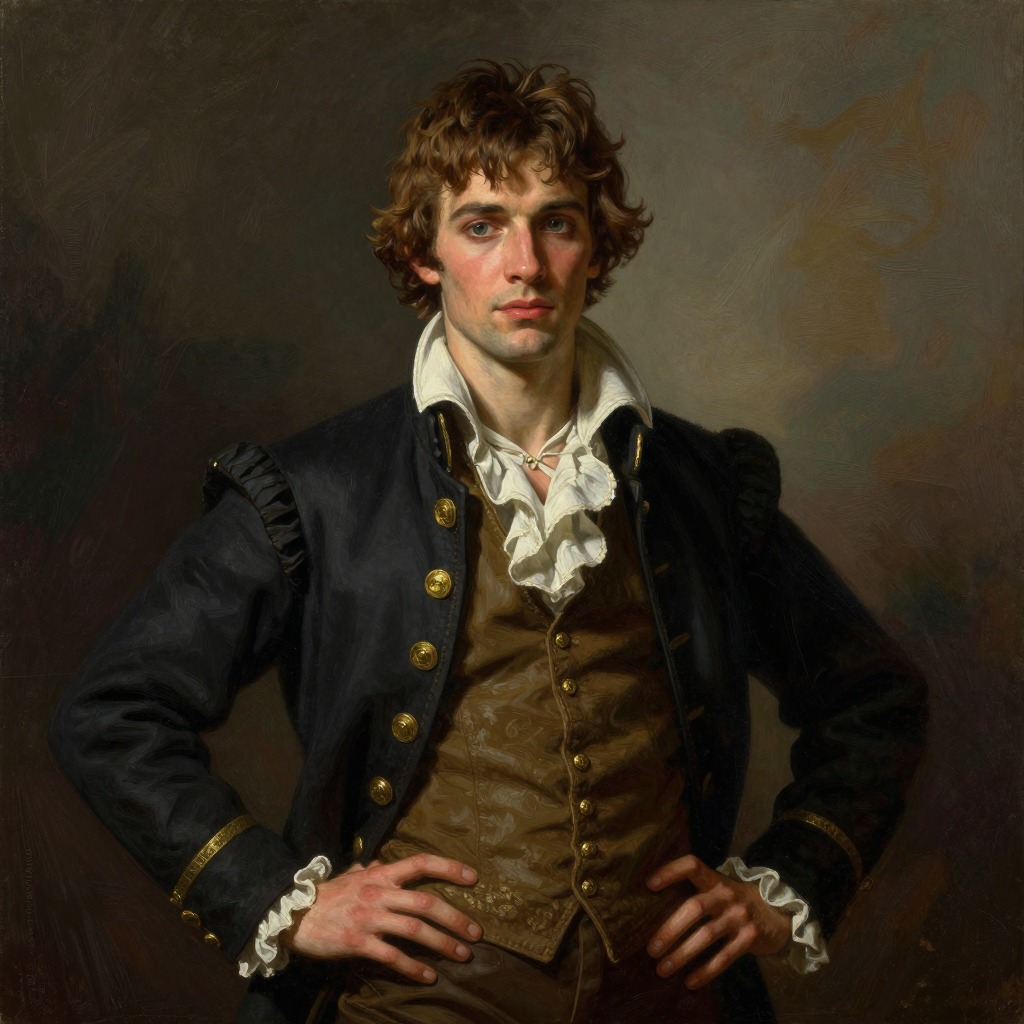
The Count of Monte CristoAlbert de Morcerf, the Vicomte de Morcerf, is introduced as a handsome, spirited young man of nineteen or twenty, with black eyes and hair as dark as a raven's wing, whose whole appearance bespeaks the calmness and resolution of one accustomed to danger. He is the only son of Count Fernand Mondego and Mercedes, and his life in Paris is one of fashionable ease, filled with friends, travel, and the expectation of a wealthy marriage to Eugenie Danglars.
Identity and Background
Albert is the product of a union between a Spanish-born Catalan fisherman who rose to become a peer of France and a beautiful woman from the Catalans village. He lives in a pavilion at his father's grand house on the Rue du Helder, a space filled with the trappings of a young man of leisure: hunting-horns, easels, foils, and a piano. He is a member of the Jockey Club, frequents the opera, and counts among his close friends Lucien Debray, Beauchamp, and Raoul de Chateau-Renaud. His engagement to Mademoiselle Danglars is a matter of family arrangement, though Albert himself feels no deep passion for her, finding her too masculine and independent for his taste.
Arc Through the Plot
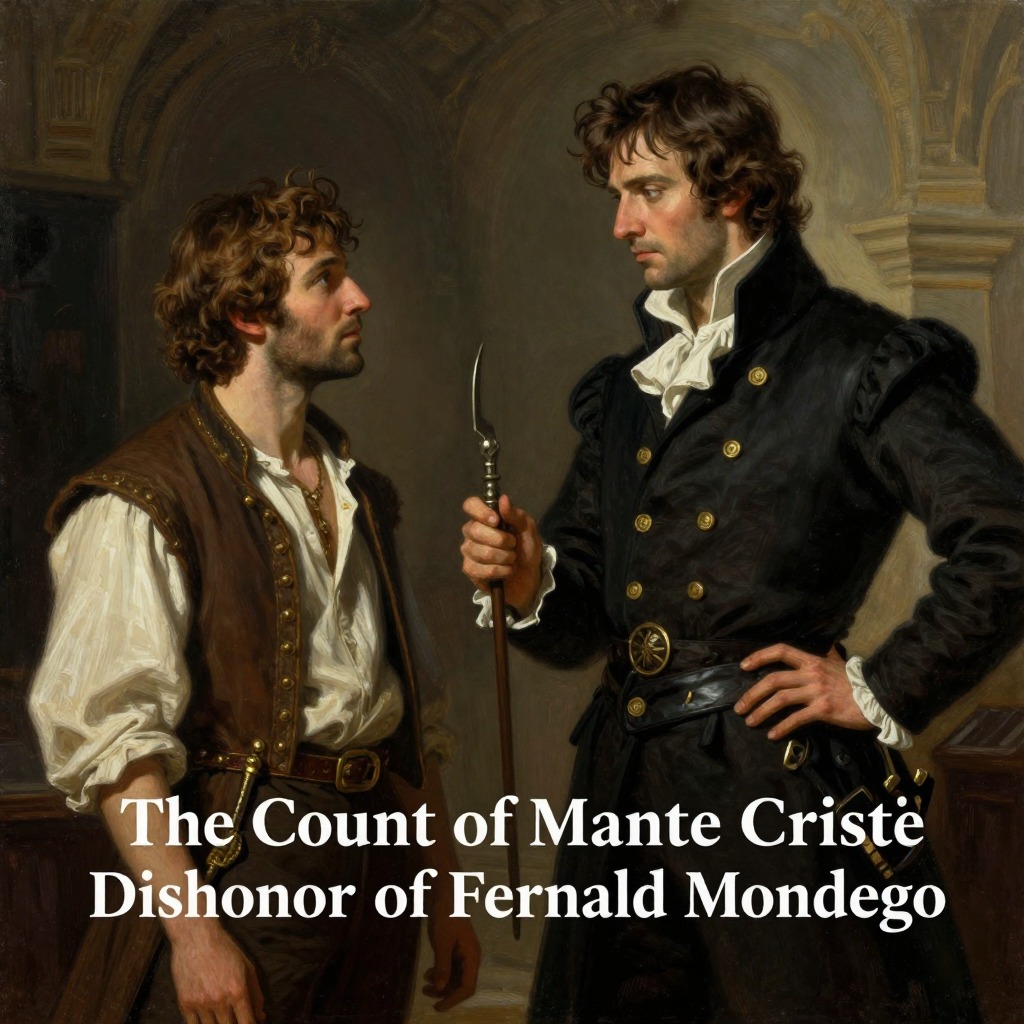
Albert's trajectory is defined by his relationship with the Count of Monte Cristo. He first encounters the count during the Roman Carnival, where Monte Cristo rescues him from the bandit Luigi Vampa. Grateful and fascinated, Albert invites the count to Paris and becomes his enthusiastic champion, introducing him to his circle. However, the friendship sours when a newspaper reveals that Albert's father, Fernand Mondego, betrayed and murdered his benefactor, Ali Pasha of Yanina. Albert, believing Monte Cristo to be the source of the revelation, publicly insults him at the opera, throwing down his glove. This leads to a planned duel. The crisis forces Albert to confront the truth: his father is indeed the traitor Fernand. Beauchamp, his friend, brings back irrefutable proof from Yanina, and Albert, instead of fighting, makes a stunning public apology to Monte Cristo, acknowledging that the count was justified in his vengeance.
Key Actions and Objectives
Albert's primary objective shifts from maintaining his social standing and pursuing a comfortable marriage to defending his family's honor. His key actions include: challenging Monte Cristo to a duel; traveling to Normandy with the count in a moment of apparent friendship before the crisis; and, most crucially, appearing at the dueling ground not to fight, but to apologize. He declares before witnesses that Monte Cristo was right to avenge himself on his father, and thanks him for not using greater severity. This act of moral courage, which he himself calls a confession of a fault, is a turning point. He then decides to renounce his title and fortune, giving his mother's share to the hospitals and enlisting as a common soldier in the Spahis in Africa, selling himself for two thousand francs to begin a new, honorable life.
Relationships and Conflict
The central conflict is between Albert and his father, Fernand. Albert's love for his father is shattered by the revelation of his treason. He also experiences a profound conflict with Monte Cristo, whom he initially idolizes and then hates, before finally understanding and respecting him. His relationship with his mother, Mercedes, is one of deep, protective love; he supports her through the family's disgrace and arranges for their departure from Paris. His engagement to Eugenie Danglars is a source of social obligation rather than affection, and it dissolves when her father's bankruptcy and her own flight end the match. His friendships with Beauchamp, Chateau-Renaud, and Franz d'Epinay are tested but ultimately prove loyal, with Beauchamp traveling to Yanina to uncover the truth for Albert's sake.
Change and Ending
Albert undergoes a complete moral transformation. He begins as a frivolous, privileged young man and ends as a principled one willing to sacrifice everything for honor. After his public apology, he leaves Paris with his mother, sells his possessions, and enlists in the African army. He is last seen on a ship leaving Marseilles for Algiers, waving goodbye to his mother, who watches from the shore. The Count of Monte Cristo, in his final letter, refers to Albert and Valentine as his "beloved children," having ensured their happiness. Albert's story concludes with him embracing a life of hardship and purpose, having rejected the corrupt world of his father.
Narrative Role and Evaluation
Albert de Morcerf serves as a foil to the Count of Monte Cristo, representing the innocence and potential for goodness that can emerge from a corrupt family. His arc is one of the few in the novel that demonstrates the possibility of redemption and moral growth, contrasting with the fates of his father, Danglars, and Villefort. He is a round character, capable of surprising the reader with his depth of feeling and his ultimate act of self-sacrifice. His journey from a carefree dandy to a man of honor underscores the novel's themes of justice, forgiveness, and the possibility of building a new life on the ruins of the old.